

Few museums tell the story of the United States as powerfully as the Charles H. Wright Museum of African American History in Detroit. Located in the heart of Midtown’s Cultural Center, this institution combines immersive storytelling, community energy, and striking architecture to explore the African American experience from its African roots to the present day. Whether you have two hours between meetings or a full day to explore, knowing what to see and how to navigate the museum will help you turn a simple visit into one of the most memorable stops on your Detroit itinerary.
Why the Charles H. Wright Museum Matters
The Charles H. Wright Museum, often called simply “The Wright,” is one of the largest museums in the world dedicated to African American history and culture. Founded in 1965 by Detroit physician Dr. Charles H. Wright, it grew from a small, community-driven collection into a 125,000-square-foot cultural anchor in Midtown. Today, visitors walk through centuries of history set within a building designed specifically to hold stories that are often overlooked in mainstream narratives.
Stepping inside, you immediately feel that this is not just another museum of artifacts in glass cases. The space is organized to move you through time and experience, from Africa to the Middle Passage, from slavery to freedom struggles, and into contemporary life and creativity. Exhibits are built as environments you enter rather than aisles you simply pass by, which makes a visit here feel closer to a guided journey than a static history lesson.
The museum also plays an active role in Detroit’s civic and cultural life. From hosting Kwanzaa celebrations to film screenings, Juneteenth events, and community dialogues on race and justice, The Wright is often where Detroiters gather to process history and consider the future. For travelers, that means your visit can easily coincide with programming that adds extra depth, whether it is a curator-led tour or a conversation with local artists featured in a temporary show.
Because of its stature and the issues it confronts, a visit to The Wright can be intense as well as inspiring. Many travelers describe leaving with a mix of sorrow, admiration, and renewed curiosity. Planning your time, building in breaks, and knowing what to expect will help you make the most of the emotional weight and richness of what you will see inside.
Planning Your Visit: Hours, Tickets, and Practical Details
The Wright is located at 315 East Warren Avenue in Detroit’s Midtown Cultural Center, a walkable district that also includes the Detroit Institute of Arts, the Detroit Historical Museum, and the Michigan Science Center. Visitors typically combine two or more institutions in a single day, especially if they are staying in nearby neighborhoods such as Downtown, Brush Park, or New Center.
As of early 2026, general admission prices at The Wright for standard day visits are similar to other major city museums: adults are in the low-to-mid teens, with slightly reduced prices for seniors and youth, and free entry for young children and museum members. Group tour rates published by the museum list adults at around 14 dollars, seniors and children at around 11 dollars, with children under five and members free; walk-in individual tickets may be comparable or slightly adjusted, so it is wise to confirm current prices with the museum before you go. Purchasing tickets online in advance can help you avoid lines during school field trip days and on weekends.
Opening hours typically follow a late-morning to late-afternoon schedule, with extended hours on certain days tied to special events or community programs. Many travelers aim for a late-morning arrival, around 11 a.m., which leaves enough time for a thorough visit before a late lunch in Midtown. If you are visiting during Black History Month, Juneteenth, or major Detroit event weekends, build in extra time for crowds, as tour groups and school buses are common.
Parking in Midtown is a mix of paid surface lots, structured garages, and metered street spaces. There is commonly a paid lot adjacent or very close to the museum, and many visitors also use nearby cultural center parking or private lots, paying in the range of about 7 to 15 dollars for several hours depending on demand. The city’s ParkDetroit app is a practical tool to manage meters and check rates in real time. If you prefer to avoid parking altogether, the QLine streetcar, ride-hailing services, and local buses all connect Midtown with Downtown and surrounding neighborhoods, making it easy to reach the museum without a car.
The Heart of the Museum: “And Still We Rise”
The signature experience at The Wright is “And Still We Rise,” a long-term exhibition that spans roughly 22,000 square feet and more than 20 galleries. It is designed as a chronological journey through African and African American history, from ancient African civilizations to contemporary life. Many travelers spend the majority of their visit in this single exhibition, and it is entirely possible to dedicate two to three hours here alone without feeling rushed.
Your journey begins in Africa. Instead of a single generic overview, the exhibition highlights multiple civilizations to challenge stereotypes of Africa as a monolith. You might encounter representations of empires like Mali or Benin and see how trade, scholarship, and art flourished long before European contact. For many visitors, this opening section reframes everything that follows: the story of African Americans begins with thriving societies, not enslavement.
From there, the mood shifts as you enter the section on the transatlantic slave trade and the Middle Passage. The Wright uses immersive design to convey the horror of captured Africans packed into ships. Travelers often describe this gallery as one of the most powerful and difficult moments in the museum, similar in emotional weight to the lowest levels of the National Museum of African American History and Culture in Washington, D.C. It is a space where you may want to move slowly, step away for a breath, or sit briefly on a bench if you are visiting with children or anyone who is sensitive to graphic historical material.
Later galleries trace the development of slavery in North America, resistance and rebellion, the Civil War, Reconstruction, Jim Crow, the Great Migration, and the Civil Rights Movement. Along the way you will see recreated environments, such as period streets or domestic interiors, as well as artifacts, photographs, and multimedia stations. For instance, you might pass a diorama of an Underground Railroad safe house, then turn a corner into a gallery that features 1960s protest photos and audio of speeches and songs from the era. The curators interweave national milestones with Detroit-specific stories, so you will also learn how auto plants, labor struggles, and Motown shaped African American life in this particular city.
Temporary Exhibitions and Contemporary Art Highlights
Beyond “And Still We Rise,” The Wright maintains a rotating schedule of temporary exhibitions that keep the museum’s galleries fresh and closely connected to current conversations. These shows range from historical photography surveys to cutting-edge contemporary art by Black artists from Detroit and beyond. Checking the museum’s exhibition calendar before you visit can be just as important as looking at the ticket prices, especially if you are interested in art.
One recent example is “Luminosity: A Detroit Arts Gathering,” a major exhibition mounted to celebrate the museum’s 60th anniversary. This show, scheduled to run through March 31, 2026, brings together works by Black Detroit artists across generations. Visitors can encounter everything from ceramic sculpture, such as Austen Brantley’s striking figures, to paintings that have long been part of the museum’s permanent collection. Exhibition titles and specific works change over time, but this kind of show gives travelers a direct window into Detroit’s vibrant Black creative community rather than only presenting nationally famous names.
The museum also uses temporary exhibitions to spotlight single artists, themes, or traveling collections. In recent years, African American art shows around the country have highlighted quilts, civil rights photography, and Afrofuturist visions, and The Wright’s own programming often intersects with these themes. For example, a temporary exhibition might focus on Black women artists in Detroit, or on visual responses to contemporary issues such as environmental justice or policing. If you are a photography or design enthusiast, plan on dedicating at least an hour to whichever temporary show is on view during your visit.
Because these exhibitions are time-limited, they often come with related programs: opening talks, panel discussions, artist-led tours, or family studio days. Travelers who enjoy deeper engagement should look at the museum’s calendar for the exact dates of their trip and consider timing a visit to coincide with an evening program or a weekend workshop. Attending a public talk by an artist whose work you just saw on the walls is one of the quickest ways to transform a standard museum stop into a memorable cultural experience.
Architecture, Public Spaces, and the Museum’s Surroundings
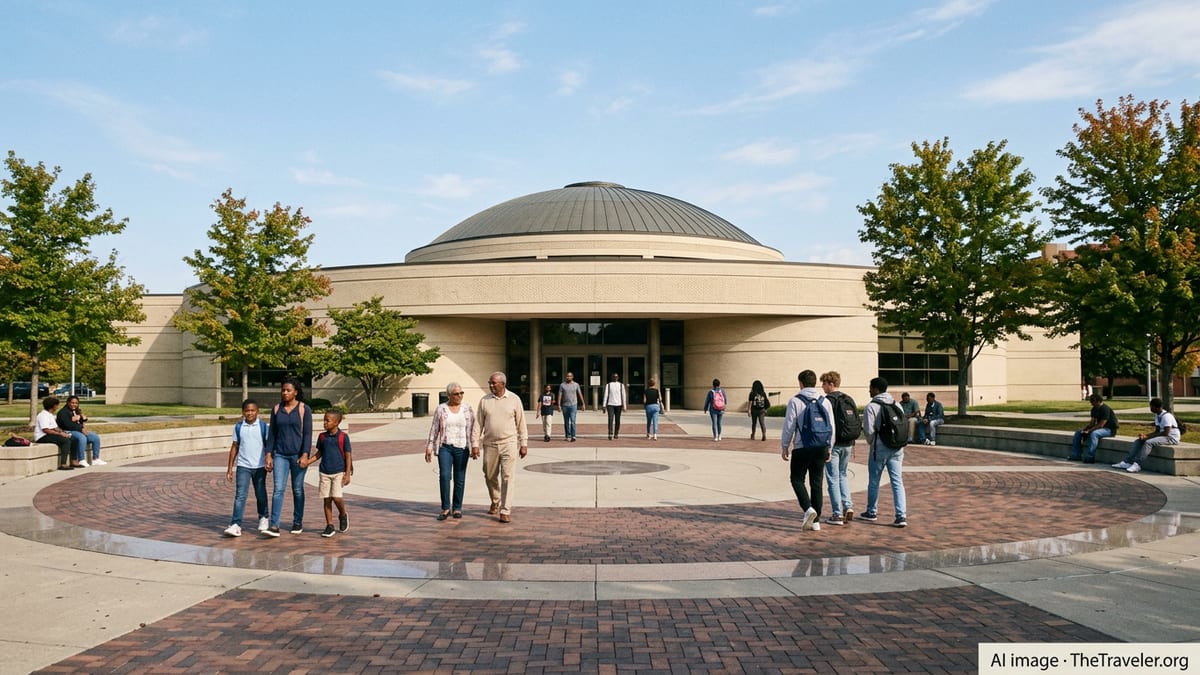
Even before you enter the galleries, the building itself is worth your attention. Designed in the 1990s by Detroit architects Sims-Varner & Associates, the structure features a circular central dome that has become one of Midtown’s most recognizable landmarks. Many visitors first encounter The Wright by walking across its spacious plaza, where events and festivals are sometimes held in warm weather. On a clear summer day, the reflecting surfaces of the building catch Detroit’s big sky, creating a dramatic backdrop for photos.
Inside, the central rotunda space often houses sculpture, banners, or installations that set the tone for your visit. Natural light filters in from above, creating shifting patterns throughout the day. Look for subtle design details that nod to African and African American aesthetics, from the geometry of the floor to the colors used in wall treatments and signage. These elements are not just decorative; they help to distinguish The Wright from more generic museum designs and underscore its specific cultural mission.
The museum sits within walking distance of several other key institutions, which makes planning your day relatively straightforward. A common pattern for visitors is to spend a long morning at The Wright, break for lunch at a nearby café or restaurant on Woodward Avenue or in the Cass Corridor area, and then spend an afternoon hour at the Detroit Institute of Arts. Another option is to pair The Wright with the Detroit Historical Museum for a broader look at the city’s evolution and how African American history fits into Detroit’s overall story.
In warmer months, the neighborhood is also pleasant to explore on foot. You can wander through Wayne State University’s campus, stop for coffee at an independent shop, or browse small galleries and design stores in Midtown. For travelers who like to balance heavy museum content with lighter strolls and people-watching, planning short walks around the block between exhibits can be a simple way to reset.
Visiting With Kids, Students, and Multigenerational Groups
The Wright is a strong choice for families and school-age visitors, but the subject matter requires some thoughtful planning. Many Detroit school groups visit as part of their curriculum, and the museum’s education team offers guided tours, summer programs, and age-appropriate activities. If you are traveling with children, you may find yourself sharing the galleries with classes of local students, which can add energy and a sense of shared discovery.
For younger children, pace and framing are key. The Africa galleries and sections that focus on community life, music, and cultural achievements are often good entry points. Parents might explain that the museum tells both difficult and inspiring stories, and that it is okay to feel sad, angry, or confused during parts of the visit. When you reach the Middle Passage and slavery sections, consider your child’s comfort level; some families move quickly through these areas, while others pause to answer questions and connect the history to what kids may have learned in school.
Teens and university students can benefit from a more structured approach. Many educators build assignments around The Wright, asking students to focus on one period, artifact, or personal story. If you are visiting with a multigenerational group, you might encourage each person to pick a single object or gallery that resonated and discuss it over lunch afterward. A grandparent might gravitate toward exhibits on the Great Migration or the Civil Rights era, while a younger visitor might be drawn to contemporary artworks or media installations dealing with current issues.
Because some galleries can be crowded or emotionally heavy, it is wise to plan regular breaks. The museum’s public areas, including seating in the lobby or near the gift shop, can be good spots for regrouping and checking in. Bringing a small notebook for older kids or teens to jot down reactions or questions can also turn the visit into a more reflective experience rather than a rush from one display to the next.
Events, Programs, and Community Life at The Wright
One of the distinctive aspects of The Wright is how actively it functions as a community hub rather than just a static exhibition space. Throughout the year, the museum hosts lectures, film screenings, concerts, book talks, and festivals that bring Detroiters and visitors together. If your travel dates are flexible, it is worth checking the events calendar and planning your visit around a program that matches your interests.
Signature annual events often include Kwanzaa celebrations in late December, special programming in February for Black History Month, and Juneteenth events in June. These occasions might feature spoken word performances, children’s activities, market stalls with local vendors, or panel discussions with historians and activists. For travelers, attending such an event can offer a more immersive experience of contemporary Black culture in Detroit than simply moving through exhibits on your own.
The Wright also collaborates with local schools, universities, and cultural organizations on everything from teacher training workshops to artist residencies. You might find a weekend event where a Detroit jazz ensemble performs in the museum, or a film series that explores a specific theme like Black science fiction or documentary storytelling. Programs like these tend to draw mixed-age audiences and can be an efficient way to meet locals and hear perspectives that go beyond guidebooks.
If you are a repeat visitor to Detroit, consider supporting the museum as a member. Memberships typically include free or discounted admission, reduced prices on ticketed programs, and invitations to opening receptions. For frequent travelers who pass through the city regularly, a membership can be a cost-effective way to stay connected and to structure future visits around new exhibitions and events.
How to Make the Most of a Half Day or Full Day
Your approach to The Wright will look different depending on how much time you have. With only two or three hours, your priority should be the “And Still We Rise” exhibition, moving steadily but allowing yourself to pause in the galleries that resonate most. Many travelers start at the early Africa sections, slow down through the Middle Passage and slavery galleries, then skim a bit faster through later sections if time is tight, returning to any areas of interest if there is time left at the end.
If you have a half day, consider adding at least one temporary exhibition and a short break in the lobby or café area if available. A practical schedule might look like this in real terms: arrive shortly before lunch, spend about 90 minutes in “And Still We Rise,” pause for 15 minutes to rest and reflect, then dedicate another 45 to 60 minutes to the current art or thematic exhibition. Allow a final 15 to 20 minutes to browse the museum shop, which often stocks books, children’s titles, jewelry, textiles, and Detroit-made products that relate to the exhibits.
With a full day in Midtown, you can embed your museum visit into a broader neighborhood experience. One strategy is to start at The Wright when it opens, spend your morning in the long-term exhibition and one temporary show, then head out for lunch at a nearby restaurant. Afterward, you could walk or ride a short distance to the Detroit Institute of Arts to see its renowned collection, including works by artists such as Diego Rivera, or cross the street to the Detroit Historical Museum for a city-focused perspective. Ending the day with a casual stroll around Wayne State University’s campus or coffee at a local café can help you process what you have seen.
For travelers who like to document their trips, consider setting specific intentions for photos. The museum’s exterior and plaza make excellent backdrops, but it is important to follow staff guidance on photography inside galleries, especially around sensitive historical material. When in doubt, ask a staff member or docent. Writing brief notes on your phone or in a small travel journal as you move through the exhibition can also help you remember specific details and stories, which can blur together by the end of a powerful visit.
The Takeaway
A visit to the Charles H. Wright Museum of African American History is both an education and an experience. It takes you from ancient African civilizations through the trauma of enslavement, the struggles of Reconstruction and Jim Crow, the surge of the Great Migration, and the creativity and activism of modern Black life. Rather than presenting this history at arm’s length, the museum surrounds you with it, using immersive environments, personal stories, and carefully chosen objects.
For travelers, The Wright offers more than a checklist of exhibits. It is a place to listen, to reflect, and to connect Detroit’s present to centuries of resilience and creativity. You leave not just with dates and names, but with vivid scenes in your mind: a recreated slave ship hold, photographs of civil rights marches, the confident gaze of a contemporary sculpture or painting by a Detroit artist. Those images stay with you long after you have stepped back into the sunlight of Midtown’s Cultural Center.
With a bit of advance planning around tickets, timing, and transportation, you can shape your visit to fit your interests and your group, whether you are traveling solo, as a couple, or with kids and grandparents in tow. Pairing The Wright with nearby museums, local restaurants, and neighborhood walks turns a single museum stop into a full Detroit cultural day.
Above all, expect to be moved. The Wright is not a neutral space: it invites you to consider injustice, survival, and joy, and to carry those reflections back into your everyday life. That is what makes it one of Detroit’s essential stops and one of the most important African American history museums in the country.
FAQ
Q1. How long should I plan to spend at the Charles H. Wright Museum?
Most visitors are comfortable with two to three hours, which allows enough time for the main “And Still We Rise” exhibition and a quick look at a temporary show. If you are an avid museum-goer, plan for three to four hours to move at a relaxed pace and take breaks.
Q2. What is the best time of day to visit to avoid crowds?
Late mornings on weekdays outside of peak school field trip season are typically calmer. Weekends and afternoons in February, June, and on holiday weekends can be much busier, so arriving close to opening time usually provides a more relaxed experience.
Q3. Is the museum suitable for young children?
The museum welcomes families, and many sections are appropriate and engaging for children, but some galleries deal with slavery and racial violence in ways that can be intense. Parents should be prepared to guide kids through these areas, skip particular sections if needed, and build in time afterward to talk about what they have seen.
Q4. Do I need to buy tickets in advance?
While same-day walk-up tickets are often available, purchasing tickets in advance is recommended during busy periods, such as Black History Month or special exhibition openings. Buying ahead can reduce wait times and help you secure your preferred arrival window, especially if you are visiting with a group.
Q5. Is photography allowed inside the museum?
Photography is generally permitted in some public spaces and selected galleries, but it may be restricted in sensitive areas or temporary exhibitions. Always check posted signs and follow staff instructions; if you are unsure, ask a museum employee before taking photos.
Q6. What should I wear for a visit?
Wear comfortable shoes and layered clothing. You will spend a lot of time on your feet moving through galleries, and interior temperatures can vary slightly between exhibition spaces. Casual, respectful attire is standard; there is no formal dress code.
Q7. Is the museum accessible for visitors with mobility needs?
The building is designed with accessibility in mind, with ramps, elevators, and accessible restrooms. Wheelchairs and other accommodations may be available on request. If someone in your party has specific needs, contacting the museum ahead of time can ensure the smoothest visit.
Q8. Can I combine a visit to The Wright with other nearby attractions?
Yes. The museum sits in Detroit’s Midtown Cultural Center, close to the Detroit Institute of Arts, the Detroit Historical Museum, and the Michigan Science Center. Many travelers pair The Wright with at least one of these institutions and enjoy lunch at a nearby café or restaurant in Midtown.
Q9. Are there food and drink options at or near the museum?
The museum sometimes offers on-site options such as a café or vending, but choices can be limited and may vary over time. Fortunately, Midtown has numerous spots within a short walk or drive, ranging from casual coffee shops and bakeries to sit-down restaurants along Woodward Avenue and nearby streets.
Q10. Is The Wright appropriate for international visitors who are new to U.S. history?
Absolutely. The exhibitions are designed to be accessible to visitors without prior knowledge of American history, providing clear timelines and context. Audio-visual materials, personal stories, and visual displays help international travelers understand both the broad sweep of events and the human experiences at the center of African American history.