

More news on this day
Charleston International Airport is facing one of its most turbulent weeks in recent memory, as a wave of weather-related disruptions and nationwide aviation strain converge to strand thousands of travelers and trigger an extraordinary number of flight cancellations and delays.
Get the latest news straight to your inbox!
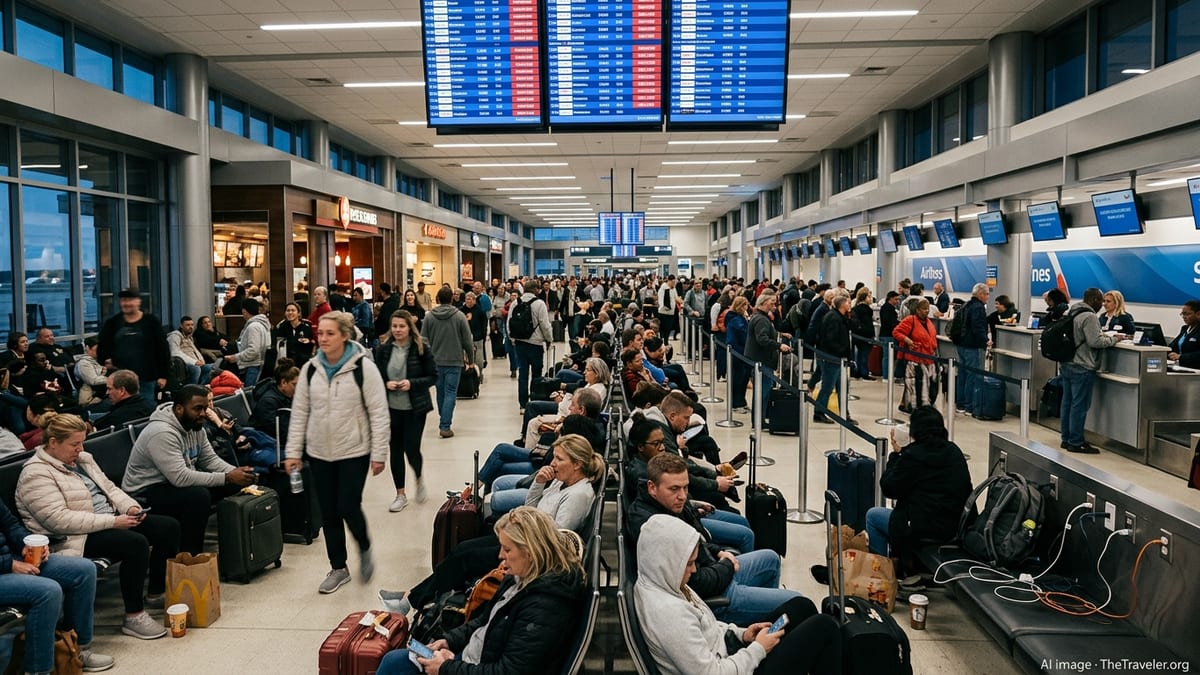
How the Chaos Unfolded at Charleston International
The disruption at Charleston International Airport began building over the weekend and intensified as a powerful storm system swept across large sections of the United States between March 13 and March 17, 2026. As airlines struggled to keep up with rapidly changing conditions at major hubs, secondary airports such as Charleston were hit by rolling cancellations, diversions and schedule cuts.
Publicly available flight-tracking data shows that carriers serving Charleston trimmed schedules and preemptively canceled flights as storms disrupted operations at key connecting airports along the East Coast and in the Midwest. Even when Charleston’s runways and weather remained within operational limits, aircraft and crews were frequently stuck elsewhere in the network, preventing flights from arriving or departing on time.
Reports from passengers on social media describe hours-long waits to rebook tickets, heavily crowded gate areas and long lines at check-in counters and customer service desks. Many travelers connecting through Charleston found themselves unexpectedly stuck overnight when onward legs were scrubbed or significantly delayed, compounding the local strain on services and facilities.
The meltdown has been especially jarring given Charleston International’s steady growth in recent years. Passenger volumes have more than doubled over the past decade, making the airport an increasingly important gateway for leisure and business travelers across the Southeast. That growth has also left the facility more exposed when nationwide aviation systems come under pressure.
Nationwide Storms, Shutdown Pressures and a Fragile System
The turmoil in Charleston is part of a broader pattern of disruption across the country. A powerful storm complex has hammered portions of the Midwest and East Coast with heavy snow, high winds, ice and severe thunderstorms, leading to thousands of cancellations at major hubs. Airlines then reduced schedules and repositioned aircraft to protect operations at their largest bases, leaving smaller markets with fewer options and a higher risk of prolonged interruptions.
At the same time, a protracted partial federal government shutdown has put additional strain on airport staffing, including security screening and air traffic functions. Published coverage has highlighted extended lines at some security checkpoints and growing concern about fatigue and staffing gaps, particularly during peak spring travel and sports tourism periods.
The combination of extreme weather and systemic stress has exposed how quickly the U.S. air travel network can seize up. When a handful of major hubs slow or shut down, the ripple effects cascade outward to airports like Charleston that rely heavily on connections through cities such as Atlanta, Charlotte, New York and Washington. Even a relatively modest local disruption can escalate into what feels like a full-scale collapse for travelers when there are few alternative routes or spare seats.
Recent winters have already produced several “historic” aviation meltdowns tied to large-scale storms, and analysts note that Charleston is now clearly within the orbit of those nationwide shocks. As the airport’s traffic volume climbs, each national disruption leaves a larger local footprint.
Impact on Travelers: Long Lines, Limited Options and Overflowing Hotels
Across Charleston International, the human impact of the disruption has been plain to see. Travelers report sprawling lines at airline counters, with some waiting several hours to speak to an agent as carriers worked through long lists of rebookings, refunds and missed connections. Self-service kiosks and mobile apps eased the burden for some, but many passengers with complex itineraries or family groups needed individual assistance that was slow to arrive.
With flights canceled or fully booked for subsequent days, rebooking options quickly narrowed. Families trying to return from spring break, business travelers facing critical meetings and tourists headed for cruises or events all found themselves competing for a shrinking pool of available seats. Some travelers turned to rental cars and long-distance buses to salvage their journeys, often at significant additional cost.
The surge of stranded passengers also placed pressure on local accommodations. Hotels near the airport and in popular tourist districts around Charleston reported heavy last-minute demand, with limited remaining availability on short notice. Travelers without travel insurance or flexible fares faced difficult choices about whether to pay out of pocket for extra nights or attempt to sleep in the terminal while waiting for new flights.
For many visitors, the experience has reshaped perceptions of what had been seen as a relatively convenient and manageable airport. While Charleston has cultivated a reputation for shorter lines and a calmer atmosphere than some larger hubs, this episode has shown how quickly that calm can give way under extreme operational stress.
What Stranded Passengers Can Do Right Now
For travelers currently stuck at Charleston International, immediate priorities revolve around securing updated travel plans, access to basic services and a safe place to rest. Airline mobile apps and official customer portals remain the fastest way to check rebooking options, same-day standby lists and available routes through alternative hubs. Publicly available data indicates that some carriers are gradually restoring schedules as the storm system moves away and national operations stabilize, but backlogs mean that open seats may be scarce for several days.
Travel experts generally recommend that passengers confirm the status of both their departing and connecting flights before heading to the airport, and continue to monitor updates frequently. In the current environment, a flight that appears on time in the morning can shift to delayed or canceled by afternoon as aircraft and crews are reassigned across the network.
Stranded travelers without confirmed onward seats are often advised to speak with airline agents about nearby alternate airports, especially in regions with multiple options within driving distance. For Charleston-area passengers, this can sometimes include looking at flights from other regional airports if road conditions are safe and rental cars or rideshare options are available.
Those facing overnight stays should also keep receipts for hotels, meals and local transportation, as individual airlines may later provide vouchers or reimburse certain expenses when disruptions are linked to factors within the carrier’s control. In severe weather scenarios, policies vary widely, and travelers are encouraged to review their ticket conditions and any coverage provided by credit cards or standalone travel insurance.
What This Means for Future Travel Through Charleston
The current crisis raises broader questions about how Charleston International and its airline partners prepare for and respond to large-scale shocks. The airport is in the midst of expansion and modernization projects aimed at handling higher passenger volumes, including terminal improvements and upgraded parking and roadway infrastructure. These investments are designed to improve capacity and comfort during normal operations, but the latest meltdown underscores the importance of resilience planning for extraordinary events.
Aviation analysts note that regional airports increasingly face “network risk,” where events far beyond their local control can abruptly overwhelm facilities. In Charleston’s case, heavy reliance on connections through a small set of major hubs means that disruptions in those cities can rapidly cascade into extensive local cancellations, even when the weather in South Carolina is relatively stable.
As climate patterns continue to produce intense winter storms, powerful wind events and severe convective weather, observers expect more frequent periods of aviation turmoil similar to the current episode. That reality is prompting a renewed focus on schedule buffers, aircraft positioning strategies and passenger communication tools that can help reduce the severity of future crises.
For travelers, the events of March 2026 serve as a stark reminder that even popular, fast-growing airports like Charleston are deeply intertwined with a national system that can quickly become fragile. Building extra time into itineraries, considering flexible tickets and monitoring conditions at key hubs are likely to remain essential habits for anyone flying through the Lowcountry in the months ahead.