

More news on this day
Charleston International Airport is facing one of its most disruptive days in recent memory, with thousands of passengers stranded after a wave of flight cancellations and delays linked to a powerful late-winter storm and nationwide airline schedule turmoil.
Get the latest news straight to your inbox!
Historic Disruption Hits a Growing Southeast Hub
Charleston International Airport, which typically handles a steady mix of leisure and business traffic along South Carolina’s coast, has been pushed to breaking point as cascading cancellations ripple through its schedule. Publicly available flight-tracking data on March 18 indicates that dozens of departures and arrivals have been scrubbed or severely delayed, an unusually high number for an airport of Charleston’s size during a non-holiday period.
The immediate trigger is the March 13–17 North American storm complex, a sprawling system that dumped several feet of snow across the Upper Midwest and disrupted operations at major hubs across the eastern United States. National coverage describes the storm as one of the winter’s most impactful, with thousands of flights canceled nationwide as airlines struggled to keep aircraft and crews in the right cities. Charleston, heavily reliant on connections through larger hubs, is now experiencing the knock-on effects.
Although the storm’s worst weather has stayed well north of coastal South Carolina, the airport’s schedule depends on aircraft and crews cycling through cities that were hit hard by snow, ice, and high winds. As those hubs work to recover, smaller airports such as Charleston are seeing gaps in service, reduced frequencies, and stretched capacity on the flights that do operate.
Travel industry observers note that Charleston’s rapid growth as a tourism and tech destination has increased its vulnerability when national aviation shocks occur. With more nonstop routes but still limited backup capacity compared with major hubs, the airport can quickly shift from smooth operations to gridlock when weather and staffing disruptions compound.
Why So Many Flights Are Being Canceled
Reports from aviation analysts and national news outlets point to a combination of factors behind the current chaos. The powerful March storm system disrupted operations at hub airports in the Midwest and Northeast, where blizzard conditions and heavy ice forced airlines to cancel thousands of flights over several days. As planes and flight crews fell out of position, subsequent legs on their schedules, including those serving Charleston, were also canceled.
This sort of cascading disruption is familiar in modern aviation. When large numbers of flights are canceled in a short window, aircraft and crew assignments across the network can unravel. Even after the worst of the weather passes, it can take days for airlines to rebuild schedules, move planes back to where they are needed, and ensure that crew duty-time rules are met. During that recovery phase, regional airports often bear the brunt as airlines prioritize restoring core hub operations first.
The current chaos is unfolding against a backdrop of wider strain on the U.S. aviation system. Recent winters have seen multiple large-scale storms that triggered historic cancellation numbers in January and February, while ongoing staffing pressures at some airlines and at airport security checkpoints have limited flexibility. Publicly available federal documents and travel-industry analyses have noted an increase in extended cancellation events in recent years compared with pre-pandemic norms.
At Charleston, the result is a patchwork of last-minute schedule changes, rolling delays, and aircraft arriving late from previously disrupted cities. For travelers on spring break or heading to and from conferences along the coast, these upstream issues translate into long lines at check-in desks, crowded gate areas, and limited same-day alternatives.
What Stranded Passengers Are Facing on the Ground
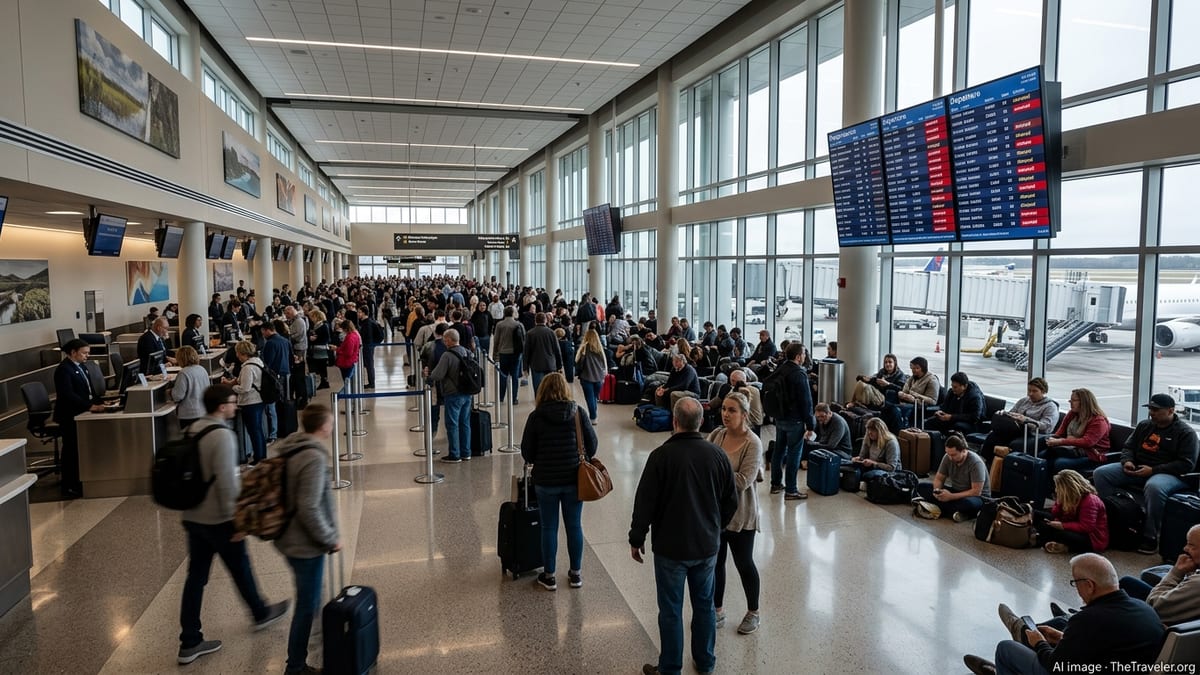
While Charleston International is known for being relatively compact and manageable, images and descriptions shared publicly on social media platforms show unusually crowded concourses, full seating areas, and travelers stretched out on the floor near power outlets. With cancellation waves hitting over multiple days, many visitors are reporting difficulty finding hotel rooms within easy reach of the airport.
Consumer travel guidance from agencies and advocacy groups highlights several immediate challenges for stranded passengers: long customer-service wait times, limited rebooking options on already-full remaining flights, and confusion about compensation or meal and lodging support. As airlines prioritize rebooking disrupted travelers, later flights into and out of Charleston are filling quickly, leaving some passengers facing waits of 24 hours or more to secure a seat.
Rental cars are also under pressure. In similar disruptions earlier this winter, reports from other U.S. airports described customers encountering sold-out rental fleets or sharply higher last-minute rates as travelers turned to the road to complete trips. Early accounts suggest a similar pattern emerging around Charleston, particularly for one-way rentals to major hubs such as Atlanta or Charlotte.
For international visitors or cruise passengers connecting through Charleston, the stakes can be higher. Missed cruise departures, tour start dates, or nonrefundable accommodations elsewhere along the coast can add significant expense to an already stressful experience, especially when multiple cancellations compound over several days.
Key Steps Travelers Can Take Right Now
Travel experts and consumer advocates recommend that passengers affected by the Charleston disruption take a proactive, multi-channel approach. Public guidance stresses the importance of confirming flight status frequently through airline apps or websites rather than relying solely on airport departure boards, which can sometimes lag behind real-time operational decisions.
In many large disruption events, rebooking through digital tools can be faster than waiting in line at an airport service desk or on hold by phone. Travelers are encouraged to search for alternative routings, including connections through less-affected hubs, and to consider nearby regional airports if surface transport is feasible. Same-day standby options can help some passengers move earlier, although heavy loads on remaining flights limit availability.
Travel industry advisories also emphasize the value of understanding each airline’s published policies on cancellations and delays. Depending on the carrier, passengers may be entitled to meal vouchers, hotel accommodations, or fee-free rebooking when disruptions are within the airline’s control. During severe-weather events, financial support can be more limited, but many airlines still offer flexible change policies, waiving fare differences for customers willing to shift their travel dates.
Those with travel insurance are being urged to review their coverage carefully, as some policies provide reimbursement for additional lodging, meals, or alternative transport when trips are significantly delayed. Keeping documentation of cancellations, delays, and extra expenses is important for any later claims.
What This Means for Upcoming Trips Through Charleston
For travelers with flights scheduled through Charleston International over the next several days, publicly available forecasts and industry analysis suggest a slow but steady recovery as airlines reposition aircraft and crews. However, residual delays and scattered cancellations are likely to persist even after the storm system itself has moved off the East Coast.
Experts advise building extra time into itineraries that connect through multiple hubs, particularly for those with tight international connections or critical events at their destination. Early-morning departures are often recommended during recovery periods, as these flights are less likely to be affected by the day’s accumulating delays.
The current episode also underscores the broader fragility of the U.S. air travel network during peak seasons and severe-weather windows. Charleston’s experience shows how a storm centered hundreds of miles away can still trigger a local crisis when schedules are finely tuned and backup capacity is limited. For a city that has increasingly marketed itself as a year-round destination, understanding and planning for these risks is becoming part of the modern travel landscape.
As airlines and airports across the country work to restore normal operations, passengers moving through Charleston International in the coming days will need patience, flexibility, and contingency plans. While the disruption is expected to ease, the fallout from this historic cancellation wave will likely shape traveler behavior and airline planning along the South Carolina coast for the rest of the season.