

More news on this day
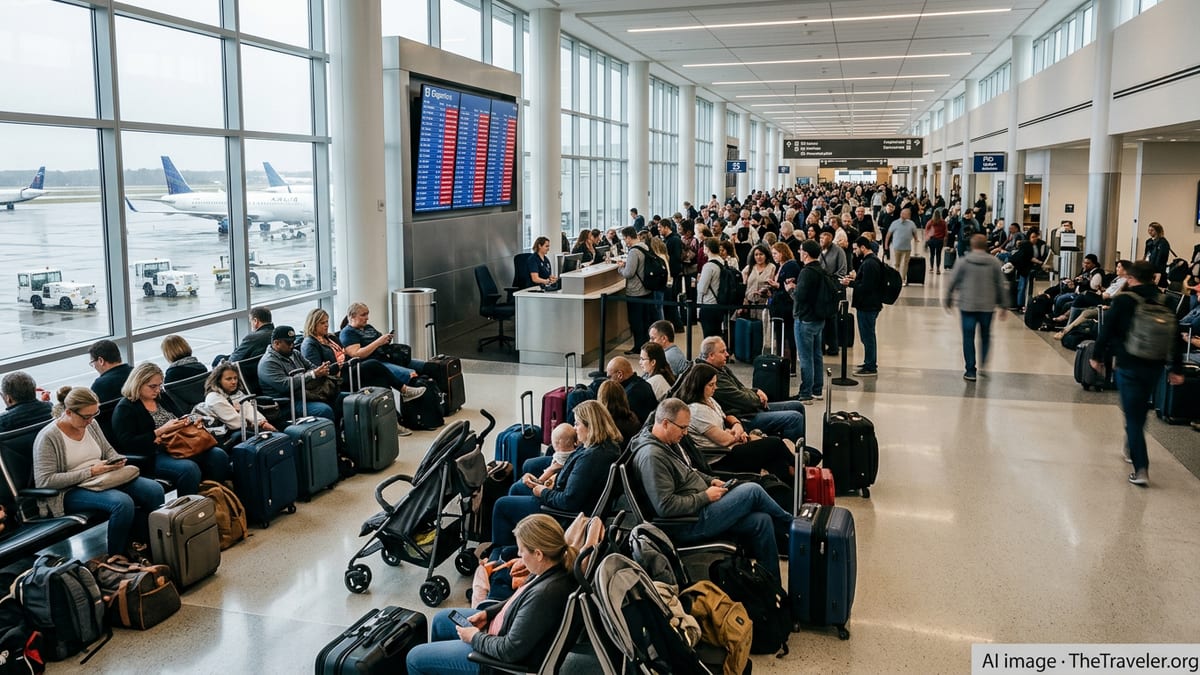
Travelers passing through Charleston International Airport on March 16 are facing hours-long waits and last-minute cancellations as severe weather across the Eastern United States ripples through airline networks, turning a normally manageable regional hub into a scene of mounting frustration and uncertainty.
Get the latest news straight to your inbox!
Stormy Systems Create a Perfect Disruption Zone
The latest round of turbulence for Charleston International Airport comes as a powerful storm system sweeps across large parts of the country, bringing a mix of thunderstorms, heavy rain, and severe weather risk to the Carolinas and the broader East Coast. Publicly available meteorological summaries describe a sprawling low-pressure system affecting the Central and Eastern United States, with hazardous conditions reported from the Mississippi Valley through the Mid Atlantic states.
While Charleston itself has avoided the worst of the blizzard conditions striking the Upper Midwest, the city sits at a critical junction in airline route maps serving hubs such as Atlanta, Charlotte, Chicago, and Washington. As storms batter these larger airports, cancellations and delays quickly cascade into Charleston’s schedule, slashing departures, disrupting arrivals, and leaving aircraft and crew out of position.
Weather-related travel waivers issued by major carriers for March 16 and 17, which list Charleston among affected airports, indicate that airlines anticipated significant disruption before the day even began. Those waivers typically allow passengers to rebook without change fees within a limited window, but they also signal that operations are likely to be unstable, with schedules subject to rapid change.
In Charleston, that instability is manifesting as abrupt cancellations posted on departure boards, rolling delays, and multi-hour waits as airlines attempt to reshuffle aircraft and flight crews caught on the wrong side of the storm line.
Passengers Stuck for Hours as Schedules Collapse
By midday, travelers at Charleston International reported crowded gate areas, long customer service queues, and a growing number of passengers camped out on the concourse with laptops and phone chargers competing for scarce outlets. Social media posts and message board discussions describe travelers being notified of cancellations only shortly before boarding, followed by rebookings pushed a day or more into the future.
Some passengers attempting to connect through major hubs, particularly Chicago and other storm-exposed cities, appear to be among the hardest hit. Accounts circulating online describe travelers who successfully made it as far as Charleston on earlier legs, only to discover that onward flights had been cancelled or substantially delayed because inbound aircraft never arrived. Others say that even flights listed as operating have been subject to rolling departure times as crews and equipment are shuffled.
These experiences align with broader airline operations patterns on severe weather days. Industry analyses show that when a hub is hit by storms, aircraft rotations are disrupted for the rest of the day, and smaller airports like Charleston experience secondary impacts. As a result, passengers who have already cleared security may find themselves effectively stranded, with limited same-day options and mounting crowding around rebooking counters.
For those stuck in the terminal, options are often constrained by capacity at nearby hotels and the timing of replacement flights. With a storm complex affecting multiple regions at once, competition for remaining seats can be intense, especially at the start of the spring travel period.
Why Charleston Feels the Shockwaves So Intensely
Charleston International is a growing airport serving both the city’s booming tourism industry and a rising number of business travelers, but it remains dependent on connections through a handful of large hubs. Airline schedules for March show frequent service between Charleston and Atlanta, Charlotte, and other major connection points, which makes the airport particularly sensitive to disruptions in those cities.
When storms disrupt operations at a hub, airlines often cancel flights proactively to avoid having aircraft and crew stranded in smaller markets. Travel forums focused on Charleston have previously noted that carriers sometimes choose to pull aircraft out of the city ahead of approaching bad weather, even when local conditions remain flyable, to preserve fleet flexibility elsewhere. On a day like March 16, with severe weather spanning multiple regions, that strategy can translate into a high number of cancellations in Charleston despite relatively moderate local conditions.
Construction and ongoing terminal expansion work at Charleston, highlighted in recent local discussions about the airport’s rapid growth, may also be adding pressure at the margins. While there is no indication that construction is directly responsible for cancellations, periods of heavy demand in a partially reconfigured terminal can intensify the sense of congestion and make rebooking and customer service lines feel even more overwhelming.
Combined, these factors mean that when the national aviation system is stressed, Charleston can feel the impact quickly and acutely, with fewer alternative routes and backup flights than travelers might find at larger hubs.
Is Your Charleston Flight at Risk Next?
With weather-related travel waivers in effect and a large-scale storm system still evolving, passengers booked to fly into or out of Charleston over the next 24 to 48 hours face heightened risk of disruption. Historical patterns from comparable storm events suggest that cancellations and delays often continue even after the worst local weather has moved on, as airlines work through aircraft repositioning and crew duty limitations.
Travel industry guidance generally emphasizes the importance of monitoring flight status early and often on days like this. Same-day schedule changes are common, and flights that appear on time in the morning can be delayed or cancelled later if inbound aircraft are caught behind weather elsewhere. Travelers with tightly timed connections, particularly through storm-affected hubs, are especially vulnerable.
Passengers also need to pay close attention to their carrier’s waiver policies. Published information indicates that many airlines are allowing Charleston customers traveling within a defined date range to rebook to alternate days or, in some cases, nearby airports without change fees, provided the new itinerary falls within the specified window. Seats on those alternatives can go quickly, meaning that travelers who act early generally have more flexibility.
For those with nonessential trips, travel planners often recommend considering voluntary changes to avoid the peak of the disruption. For others who must travel, building extra time into itineraries and being prepared for extended waits at the airport may be the only realistic ways to manage the risk.
How Travelers Can Navigate the Ongoing Meltdown
As Charleston’s latest airport meltdown unfolds, experienced travelers are leaning on familiar tactics to cope with the chaos. Many turn first to their airline’s mobile app or website, which typically updates flight status and rebooking options more quickly than airport display boards. Same-day changes, stand-by lists, and automated rebooking tools can sometimes secure a new seat without waiting in long lines at the gate or check-in counters.
Another practical step is to map out backup routes before leaving for the airport. On days when cancellations pile up, it may be easier to route through a different connecting city that is less affected by storms, even if it means a longer travel day. Some travelers also explore nearby airports within driving distance if conditions and schedules allow, although that option depends heavily on road safety during severe weather.
Experts who analyze airline performance data frequently underscore that not all disruptions are driven purely by weather. Even when skies clear over Charleston, the lingering effects of earlier storms on crew availability, maintenance schedules, and aircraft rotations can keep the system fragile. That reality helps explain why flights may still be cancelled or heavily delayed under relatively calm local skies.
For now, with a significant storm complex still influencing large portions of the national airspace, anyone with an upcoming trip through Charleston International should treat their plans as tentative. The situation is fluid, and as airlines work to reset their operations, the question many travelers are asking is simple and urgent: if flights are being cancelled today, will mine be next?