

More news on this day
Charleston International Airport is experiencing a wave of cancellations and long delays, leaving passengers stranded for hours and raising fresh concerns about how fragile U.S. air travel remains during periods of bad weather and operational stress.
Get the latest news straight to your inbox!
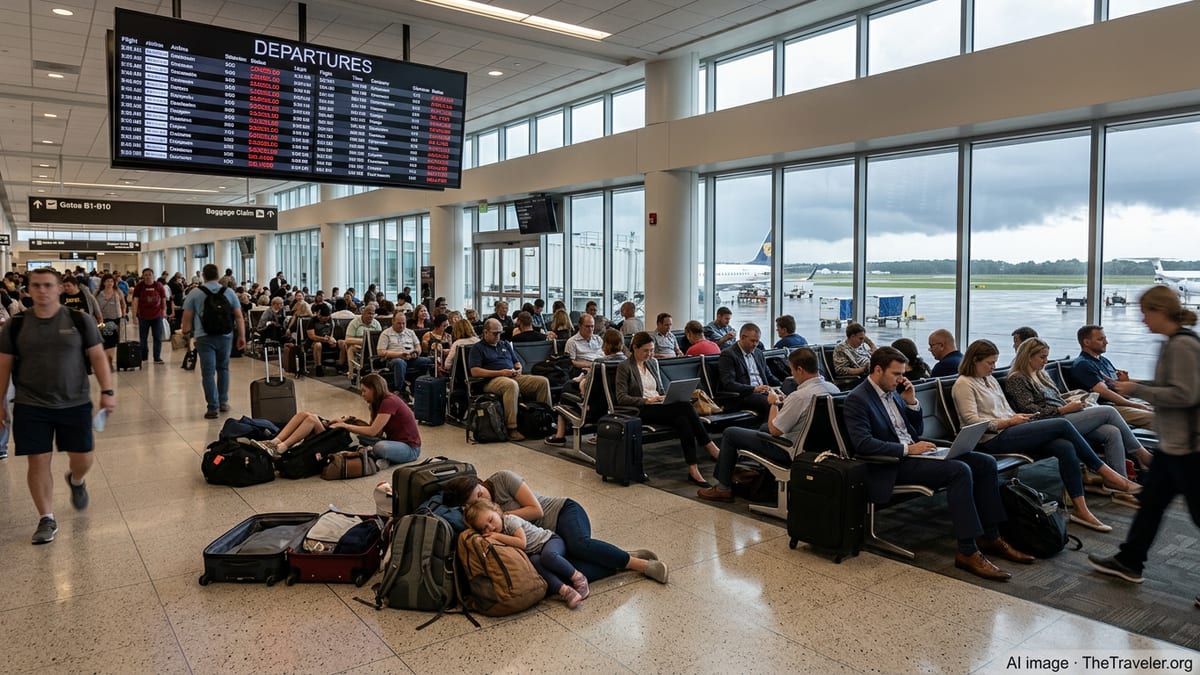
What Triggered the Latest Turmoil at Charleston International
Charleston International Airport, serving South Carolina’s busiest coastal city, has been grappling with significant disruption as thunderstorms and wider East Coast weather patterns collide with existing operational bottlenecks. Publicly available airline advisories show that carriers operating at Charleston, including major U.S. airlines, have issued waivers for travel on March 16 and March 17, allowing passengers to change flights without fees if they are flying through affected cities such as Charleston, Charlotte and other East Coast hubs.
These weather systems have reduced available takeoff and landing slots along key corridors, forcing airlines to trim schedules at secondary airports like Charleston. When flight banks are tightly scheduled, even modest restrictions can ripple quickly, causing cascading delays and cancellations as aircraft and crews fail to arrive in position on time.
What might look like an isolated problem at a single regional airport is often the visible edge of a much larger network disruption. Aircraft bound for Charleston may be held or diverted upstream, while crews face duty-time limits that prevent them from operating subsequent legs. The result is mounting cancellations late in the day, often with limited same-day rebooking options from a smaller airport.
Scenes on the Ground: Crowded Gates and Hours of Waiting
Travelers passing through Charleston report crowded gate areas, long customer service lines and mounting frustration as departure boards fill with delay notices and cancellations. When several flights in a short window are scrubbed or significantly delayed, the compact terminal at Charleston can quickly feel overwhelmed, particularly around shared gate areas.
Compounding the stress, some passengers are experiencing extended waits with limited real-time information. Airline apps and airport displays may lag behind operational decisions, meaning boarding times inch forward in small increments before a final cancellation appears. For travelers who have already cleared security, that can translate into hours spent in limbo with few alternative options.
Checked luggage is a particular pain point. Charleston’s baggage handling system has long been described by frequent travelers as a weak spot, and during major disruptions it can become even more strained. Bags from canceled flights may need to be manually pulled and re-sorted, slowing down returns to passengers who decide to abandon their trip or rebook for another day.
How Charleston’s Airport Design and Growth Add Pressure
Charleston has enjoyed a rapid rise in passenger numbers in recent years, helped by the city’s popularity as a leisure destination and expanding route maps from low-cost and legacy carriers. At the same time, the physical terminal and support infrastructure are still catching up. Local discussions around airport expansion and new parking decks highlight that Charleston is in transition from a small regional facility to a busier coastal hub.
Construction and incremental upgrades, while essential for long-term capacity, can introduce short-term constraints. Temporary gate changes, rerouted passenger flows and reduced curb space may not cause large problems during normal operations, but they can make it harder to absorb a sudden surge of stranded travelers during a day of widespread cancellations.
Charleston also relies heavily on connections through larger hubs rather than hosting a large base of spare aircraft or crew. That means the airport has less flexibility to recover when a thunderstorm cell, a regional equipment outage or air traffic control restrictions force airlines to reset their schedules. Passengers are then more likely to be rolled to flights the following day rather than re-accommodated within a few hours.
What This Means if You Are Flying Through Charleston Next
For travelers holding tickets into or out of Charleston over the next several days, the main risk is not only a single canceled flight but a chain reaction across their entire itinerary. When an outbound leg from Charleston is canceled, onward connections via hubs such as Atlanta, Charlotte or Washington can quickly unravel, especially on peak days when remaining seats are already full.
Publicly available guidance from airlines suggests that passengers should monitor their reservations closely and take early advantage of any flexible change options or weather waivers. Rebooking to an earlier departure, even by a few hours, can improve chances of leaving before conditions worsen or before downstream cancellations reduce options. Conversely, those with nonessential trips may benefit from proactively shifting their travel to less affected days when possible.
Travelers should also be prepared for long waits if things go wrong. Charging devices ahead of time, carrying essential medications and keeping a change of clothes and basic toiletries in a carry-on can make an unplanned overnight stay or extended terminal wait more manageable. With hotels in a popular destination like Charleston filling quickly when irregular operations strike, early planning becomes increasingly important.
Strategies to Navigate Ongoing Flight Disruptions
While no individual traveler can prevent cancellations, there are concrete steps that can reduce the odds of being stranded in Charleston or any other airport coping with operational stress. Booking morning flights can help, as early departures are less exposed to delays that accumulate throughout the day. Nonstop routes, where available, eliminate the risk of missed connections at crowded hubs and shorten recovery times if a flight is disrupted.
Travelers are increasingly encouraged by consumer advocates to rely on airline apps and text alerts as primary sources for live updates, while cross-checking with airport departure boards. If a delay stretches beyond a couple of hours, passengers can use publicly available information to search for alternative flights or nearby airports within driving distance, while simultaneously queuing for assistance at a service desk.
Finally, the recent turmoil at Charleston underscores broader questions about resilience in the U.S. aviation system as climate-driven weather extremes, staffing constraints and aging infrastructure intersect. For travelers, that reality translates into a need for more buffer time, flexible plans and an acceptance that even a sunny forecast in Charleston does not guarantee a smooth departure when the wider network is under stress.