

More news on this day
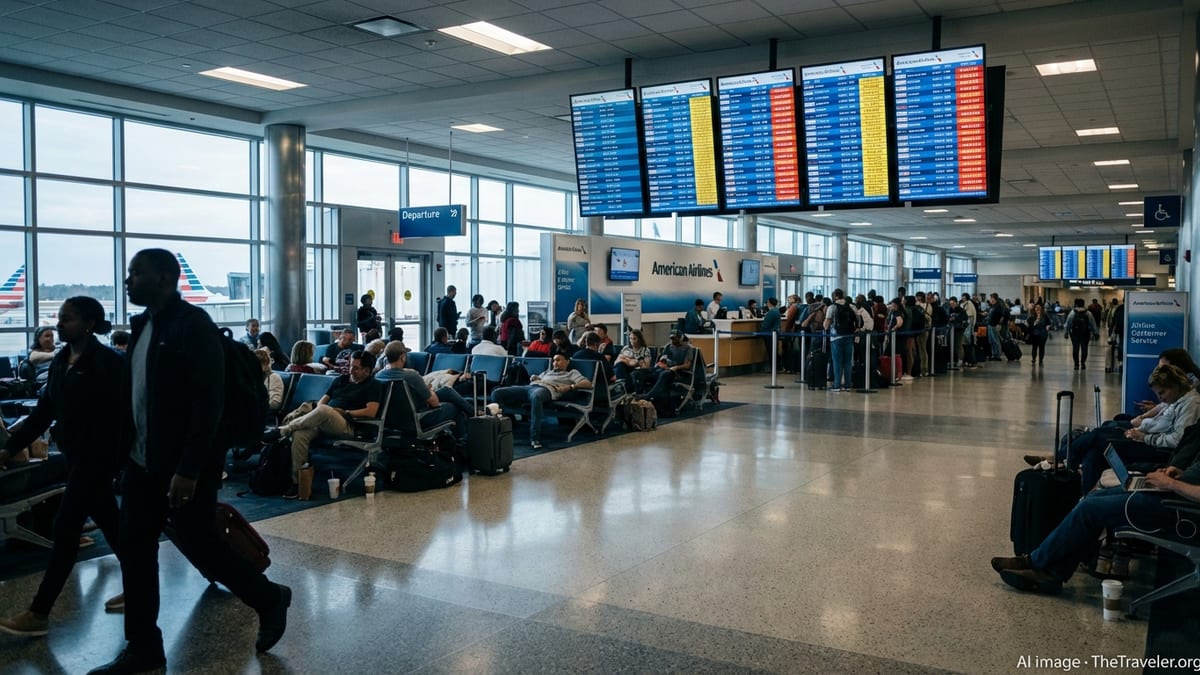
Hundreds of travelers were left stranded at Charlotte Douglas International Airport on Sunday as 132 flights were delayed, rippling across American Airlines, Delta Air Lines, United Airlines and other carriers on busy domestic and international routes to New York, Chicago, London and Frankfurt.
Wave of Disruptions Hits Major Carriers
The disruption unfolded through the morning rush and into the afternoon, as departure and arrival boards at Charlotte Douglas International Airport filled with delayed notices. Airport operations remained technically open, but airline schedules were heavily out of sync, creating long queues at ticket counters and service desks.
American Airlines, the dominant carrier in Charlotte, bore the brunt of the delays, though flights operated by Delta, United and several regional partners were also affected. Key domestic connections to New York and Chicago saw multiple late departures, while transatlantic services to London and Frankfurt were pushed back for hours, leaving passengers in limbo at the gates.
Travelers reported receiving rolling delay notifications on airline apps and text messages, often with little explanation beyond generic references to operational constraints. Some passengers who had already boarded were instructed to remain seated on aircraft as crews waited for release times and updated slot allocations.
The cascading impact extended beyond Charlotte, as late departures from the hub disrupted onward connections throughout airline networks. Passengers arriving from smaller regional cities reported missed links to long haul flights, with rebookings stretching into the following day on some routes.
Passengers Face Long Lines, Missed Connections and Uncertain Plans
Inside the terminal, the human cost of the disruption was evident. Lengthy customer service lines formed as travelers tried to salvage vacation plans, business trips and family visits. Parents with young children sought out quiet corners near power outlets, while international passengers clustered near airline desks seeking hotel vouchers and meal assistance.
At the security checkpoints and concourses, announcement systems urged passengers to stay close to their gates and monitor airline updates. Some travelers complained of receiving conflicting information, with gate agents, apps and call centers offering different expected departure times for the same flights.
For those connecting through Charlotte, the delays quickly translated into missed onward flights. Customers heading to New York and Chicago faced particularly tight options as later departures filled up, while passengers bound for London and Frankfurt confronted the prospect of rebooking on already busy transatlantic services.
Hotel availability near the airport began tightening as airlines arranged overnight accommodation for those who could not be rebooked the same day. Ride share pickup zones swelled with frustrated travelers deciding to abandon air travel altogether in favor of driving to regional destinations within a day’s reach.
Operational Strain at a Key Southeastern Hub
The latest disruption underscores the vulnerability of one of the nation’s busiest connecting hubs. Charlotte Douglas International Airport serves as a major transfer point linking smaller Southeastern cities with large coastal and Midwestern markets, as well as Europe. When operations falter, delays can spread quickly through the broader national network.
Airline and airport staff worked through the day to restore order, coordinating revised crew schedules, aircraft assignments and departure slots. Ramp crews and gate agents faced the dual pressure of handling delayed flights while preparing for the next wave of scheduled departures, often with aircraft and crews out of their usual sequence.
Industry analysts note that major hubs such as Charlotte operate with little slack built into schedules during peak travel periods, leaving them susceptible to bottlenecks when even a few flights encounter issues. Once a threshold is crossed, the compounding effect of late arriving aircraft, displaced crews and full passenger loads can make recovery slow and uneven.
While the airport itself remained operational, the day’s events highlighted how closely airport performance is tied to airline scheduling decisions and network resilience. Travelers caught in the middle frequently receive limited insight into whether the root problems stem from weather, staffing, air traffic constraints or congestion elsewhere in carriers’ systems.
Domestic and International Networks Feel the Ripple Effect
The impact of Charlotte’s delays extended well beyond North Carolina, touching some of the busiest corridors in the United States and across the Atlantic. New York and Chicago, both major hubs in their own right, saw knock on effects as late arriving aircraft from Charlotte compounded already tight turn times.
Passengers traveling from smaller cities in the Carolinas, Georgia and Tennessee reported missed connections to New York’s main airports and Chicago O’Hare, with some rerouted through alternative hubs or placed on standby lists for late evening departures. Business travelers in particular expressed concern about lost meetings and added costs as they scrambled to adjust itineraries.
On the international side, delayed departures to London and Frankfurt disrupted not only point to point journeys but also connecting traffic over those European hubs. Some passengers faced the possibility of missing onward links to destinations across Europe, the Middle East and Africa, with airline agents attempting to thread limited rebooking options through complex global networks.
By late afternoon, airline operations teams were focused on rebalancing aircraft and crew resources to protect the upcoming morning schedule, even if it meant accepting continued delays and sporadic misconnects through the evening. For many stranded travelers, that calculus translated into another night away from home or their intended destination.
Airlines Urge Passengers to Monitor Flights and Expect Ongoing Delays
As the disruption wore on, airlines serving Charlotte advised customers to closely monitor their flight status and, where possible, take advantage of same day change options within their mobile apps and websites. Some carriers opened limited fee waivers for affected routes, allowing passengers to move to later flights without additional charges when seats were available.
Airport officials emphasized that they were working with airline partners to manage gate allocations and passenger flows, but cautioned that delays could continue as carriers worked through backlogs. Travelers with flexible plans were encouraged to consider adjusting departure days or times to avoid the highest peaks of congestion.
Consumer advocates reiterated standard advice for dealing with disruptions, including keeping receipts for out of pocket expenses, documenting communications with airlines and understanding the difference between compensation policies for delays caused by controllable operational factors compared with those linked to weather or air traffic control restrictions.
With schedules still fragile across much of the national air network, the day’s events at Charlotte served as a reminder that even a single hub’s difficulties can have far reaching consequences. For the stranded passengers watching departure boards flicker from one revised time to the next, the priority remained simple: finding a reliable way to their destination, however long it might take.