

More news on this day
Charlotte’s travel economy is surging on the back of record airport traffic and billion-dollar visitor spending, and the city is increasingly reshaping that growth around the people who power and experience it.
Get the latest news straight to your inbox!
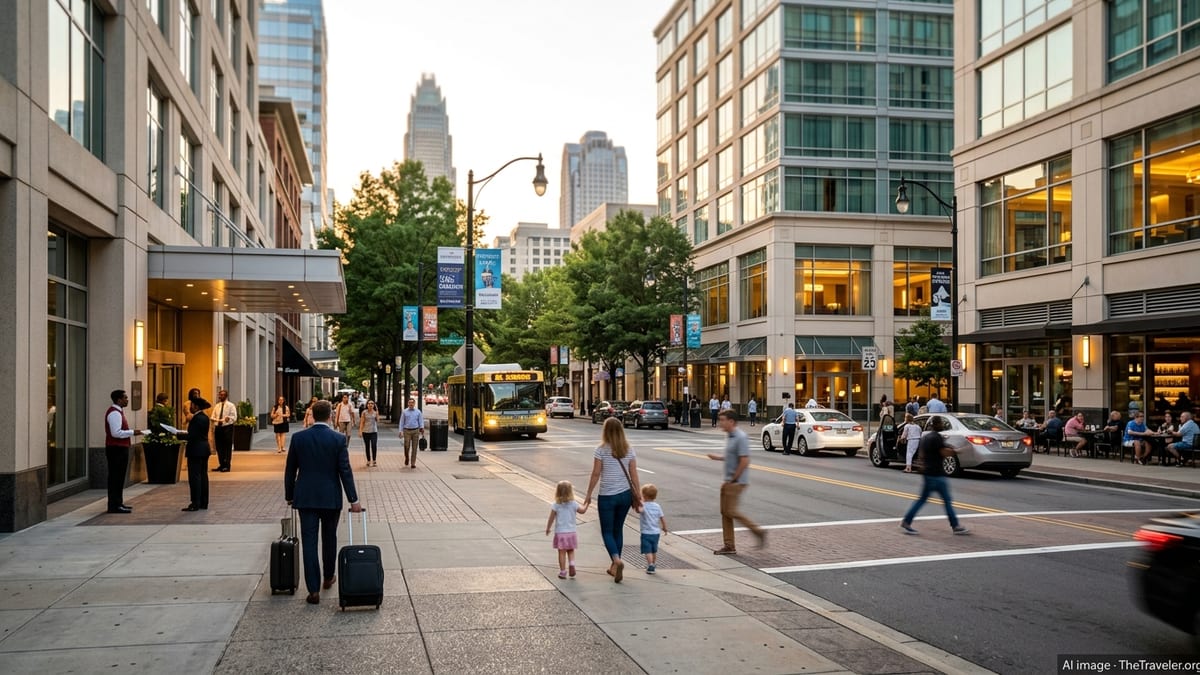
Visitor Spending Surges as Charlotte Refocuses on Experience
Recent tourism reports indicate that Charlotte has entered a new phase as a visitor destination, with growth no longer measured only in passenger counts or hotel-room nights. The Charlotte Regional Visitors Authority has reported that the region generated about 1.2 billion dollars in tourism-driven economic impact in fiscal year 2025, up from roughly 1.1 billion dollars the year before. Publicly available data shows that major events, conventions and leisure travel are driving not just headline numbers, but deeper conversations about how visitors actually experience the city.
Earlier figures compiled for Mecklenburg County pointed to about 5.8 billion dollars in visitor spending for 2023 and an estimated 31 million visitors, placing Charlotte among North Carolina’s leading tourism counties. Statewide data from North Carolina’s commerce agency shows that visitor spending reached a record level in 2024, with Mecklenburg County hosting the largest number of tourism jobs in the state and adding thousands of hospitality positions year over year. Those employment gains, concentrated in hotels, restaurants, attractions and event services, are increasingly framed as part of a people-first strategy rather than a byproduct of growth.
Local officials and industry groups have highlighted the way large-scale events can translate into tangible benefits for residents, from tax revenues that support public services to year-round jobs in service and operations. Charlotte’s tourism narrative has started to shift from a focus on big numbers alone to a recognition that the long-term health of the visitor economy depends on the quality of the experience for both guests and workers.
CLT Airport Growth Spurs Investments in Comfort and Flow
Charlotte Douglas International Airport sits at the heart of the region’s travel economy, and recent years have underscored its scale. Publicly available figures from the airport show that CLT handled a record 58.8 million passengers in 2024, and nearly 54 million in 2025, making last year the second busiest on record. Industry coverage notes that the airport remains among the busiest hubs in the United States, even as 2025 volumes settled just below the 2024 peak.
That rapid growth has tested the passenger experience, with crowding, long taxi times and congestion frequently highlighted in public forums and local coverage. In response, CLT has advanced a multiyear capital program that includes a completed terminal lobby expansion, new security checkpoints, upgraded concessions and modernized gate areas. Reports on the first major holiday periods after the lobby expansion describe a brighter, more open check-in hall and additional room for passengers to queue, sit and move between concourses.
The evolution at CLT extends beyond infrastructure. Airport communications emphasize investments in wayfinding, accessibility and amenities aimed at easing stress for travelers passing through one of the country’s most heavily used connecting hubs. Combined with forthcoming long-haul routes, including new international service planned to start in 2026, CLT’s strategy reflects a shift toward making volume sustainable by making the journey more human.
Events, Sports and Culture Bring Human Scale to Big Numbers
Charlotte’s event calendar has become a central driver of its visitor economy, and recent impact studies illustrate how those gatherings shape neighborhoods as much as spreadsheets. According to published coverage of Charlotte Regional Visitors Authority data, the city’s convention and events portfolio helped generate more than one billion dollars in economic impact in fiscal 2024, including spending tied to concerts, festivals and large meetings spread across Uptown and surrounding districts.
Sports tourism has played a distinctive role in that shift. Reporting on the Charlotte Sports Foundation’s 2024 activities indicates that seven major events, including college football games and new running and invitational competitions, generated more than ninety million dollars in economic impact. Those events collectively drew over 200,000 fans and filled tens of thousands of hotel rooms, pushing weekend occupancy near capacity in some cases.
Beyond headline figures, local coverage has highlighted how specific events reshape the energy of Uptown for a few days at a time. High-profile concerts, visiting baseball exhibitions and marathon weekends have turned Charlotte’s streets into shared spaces for residents and visitors, with bars, restaurants and public plazas acting as informal meeting points. This emphasis on experiences rooted in culture and sport illustrates how the city is trying to link visitor spending directly to memorable, human-scale moments.
Neighborhoods, Attractions and the Push for Inclusive Growth
Charlotte’s visitor strategy is also moving beyond the traditional Uptown core. Destination marketing materials and recent tourism recaps increasingly feature neighborhoods such as South End, NoDa and the historic West Side, positioning them as extensions of the city’s hospitality footprint. New hotels, adaptive reuse projects and small-scale entertainment venues are drawing visitors into areas where local businesses, art and food scenes give a more intimate view of the city.
Flagship attractions continue to anchor this broader map. Published reports on the latest economic impact study note that the NASCAR Hall of Fame drew more than 200,000 visitors in fiscal 2025, with a majority traveling from out of town, and generated well over 60 million dollars in related spending. Museums, performance venues and emerging cultural districts are similarly being framed as parts of a wider ecosystem that blends resident life with visitor interest.
City and county planning documents highlight an emphasis on accessibility, walkability and public space improvements that benefit both communities and guests. Investments in transit corridors, greenways and streetscape upgrades are often justified in part by tourism’s contribution to tax revenues, but they are also intended to create everyday amenities for locals. This blend of aims reflects a growing recognition that a sustainable travel economy must feel welcoming and livable for the people who call Charlotte home.
Hospitality Workforce and Service Culture Move to the Forefront
As visitor volumes grow, attention in Charlotte is increasingly turning to the workforce that makes the travel economy function. State tourism data shows that Mecklenburg County leads North Carolina in direct tourism employment, with nearly 38,000 jobs tied to the sector in 2024 and year over year growth in hospitality roles. Local business coverage indicates that hotel companies, restaurants and attractions are responding with enhanced training programs, new recruitment strategies and retention incentives after several tight labor years.
Industry groups in the region have emphasized service culture in public statements, pointing to investments in customer service training, language skills and career development pathways. For many hospitality workers, the rebound in visitor demand has brought more predictable hours and opportunities for advancement, while employers see improved guest satisfaction as essential to maintaining Charlotte’s competitive edge among regional destinations.
Publicly available information from civic and tourism organizations also highlights efforts to promote diversity and inclusion within the sector, from supporting minority-owned tourism businesses to encouraging local hiring for major events. These initiatives aim to ensure that the benefits of Charlotte’s visitor economy are more evenly distributed, reinforcing the idea that growth should feel human not only to travelers, but to the communities that host them.