

More news on this day
A rapid rise in charter flights to Oman is beginning to reshape the country’s hospitality and investment landscape, channeling visitor demand into emerging coastal hubs and accelerating tourism projects aligned with the sultanate’s long-term diversification goals.
Get the latest news straight to your inbox!
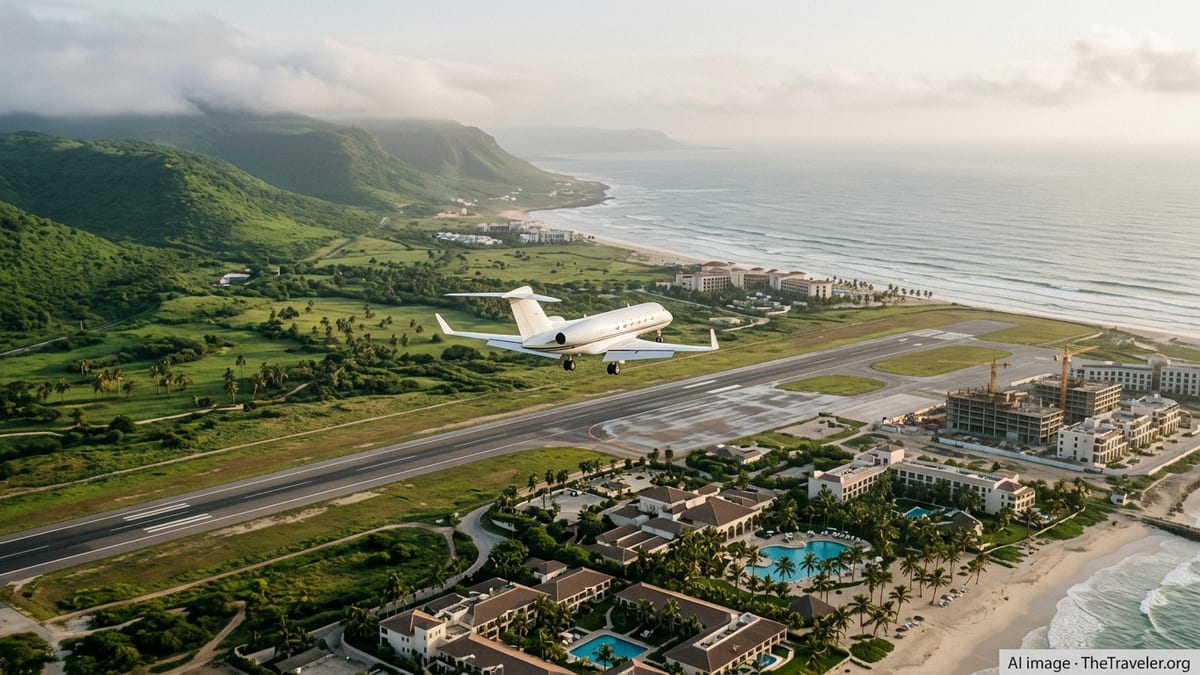
Charter Growth Becomes a Strategic Tourism Lever
Recent tourism seasons have seen a marked increase in charter activity across Oman, with Ministry of Heritage and Tourism figures indicating a double-digit rise in charter arrivals and associated spending. Publicly available data for the 2024 to 2025 season point to a 26 percent increase in charter flights, generating tens of millions of dollars in revenue from accommodation, transport, and tours. Reports indicate that authorities now view charters as a core tool to fill capacity outside traditional network schedules and reach high-potential source markets more directly.
This shift comes as Oman Vision 2040 positions tourism as a central pillar of economic diversification. Aviation policy documents and the newly released National Aviation Strategy 2040 highlight charter and seasonal operations as critical enablers of inbound tourism, particularly for non-stop connections to secondary airports. The focus is on attracting higher-spending visitors, extending stays, and distributing tourism flows beyond Muscat to coastal and heritage regions.
Industry coverage shows that the national carrier, Oman Air, and low-cost operators such as SalamAir have progressively integrated charters into their broader network strategies. In practice, this means tailoring flight programs to specific seasons, such as the Khareef monsoon in Dhofar, and working with travel organizers to guarantee blocks of seats tied directly to hotel and resort inventory. The resulting traffic is helping to stabilize occupancy levels and underwrite new hospitality investments.
Salalah’s Khareef Season Becomes a Charter Testbed
Dhofar’s Khareef season has emerged as the clearest example of how charter flights are transforming local hospitality dynamics. Salalah Airport has recorded a growing mix of scheduled and charter operations from regional and international markets during the summer monsoon, including non-stop services from Gulf cities and seasonal charter links from Europe and Central Asia. Coverage of recent seasons shows inbound flights from Kuwait, the United Arab Emirates, and Russia feeding directly into coastal resorts and city hotels.
Oman Air’s introduction of direct charter services between Moscow and Salalah, combined with plans for additional Russian and European charters, illustrates how airlines are targeting specific high-yield segments. Corporate statements indicate that these services are expected to attract hundreds of thousands of additional visitors to Salalah by the end of the decade, generating hundreds of millions of Omani rials in tourism revenue. This forecast is underpinned by the growing visibility of Dhofar’s cooler climate and green landscapes as an alternative summer escape for Gulf and European travelers.
According to figures published by local media, charter flights into Dhofar during the 2023 to 2024 tourist season generated tourism receipts of more than 23 million Omani rials. The revenue has had a measurable impact on hotel occupancy, transport providers, and excursion operators across the governorate. Investors are responding with plans for new beachfront hotels, eco-lodges, and serviced apartments positioned to capture Khareef demand while extending the season into shoulder months.
The Khareef model is also influencing how developers think about product mix. Operators in Salalah are increasingly combining resort-style properties with furnished apartments and branded residences that cater to repeat charter guests and long-stay families. This blend of short-term tourism and quasi-residential stays is beginning to blur traditional lines between hospitality and real estate investment.
New Aviation Links Rebalance Hotel Development Hotspots
The charter surge is not confined to Dhofar. National aviation and tourism strategies emphasize the importance of building traffic at secondary airports, including Duqm and Suhar, to support regional development zones and coastal tourism clusters. While these airports still handle lower volumes than Muscat and Salalah, increased interest from operators in seasonal and ad hoc charters is drawing investor attention to adjacent hotel and mixed-use sites.
In Duqm, the combination of a special economic zone, industrial projects, and emerging tourism initiatives is shaping a dual-track demand profile. Corporate travel associated with energy, logistics, and infrastructure is being supplemented by early-stage leisure charter interest, particularly for coastal retreats along the Arabian Sea. Publicly available investment plans reference mid-scale business hotels near the port and airport, alongside potential resorts in more secluded coastal locations that could benefit from targeted charter operations.
In northern Oman, Suhar and nearby coastal areas are being positioned as weekend and short-break destinations reachable via road from the United Arab Emirates and, increasingly, potential charter arrivals. Although still nascent, hospitality feasibility studies cited in local business reports suggest that improved aviation connectivity could unlock opportunities for beachfront hotels, marina developments, and boutique properties built around Omani heritage architecture. The pattern emerging across these locations is that even modest charter volumes can provide enough predictable demand to make new hospitality projects bankable.
This rebalancing of development hotspots is also evident in Muscat, where hotels are repositioning to capture both scheduled and charter traffic. City and beach properties are tailoring packages around multi-stop itineraries that combine the capital with Salalah, the desert interior, and coastal stays, supported by domestic sectors that may operate partly on a charter or block-booked basis during peak periods.
Investment Models Adapt to Charter-Driven Demand
The rise of charter flights is prompting investors and hotel operators in Oman to adapt their models. Market analyses show a growing use of guaranteed allotment contracts and longer-term partnerships between airlines, tour operators, and resorts, particularly in Dhofar. These arrangements provide developers with greater visibility on occupancy and cash flow, which can support financing for new projects or refurbishments.
There is also a noticeable shift toward mixed-use and asset-light structures. Developers are pairing hotels with branded residences, serviced apartments, and retail components that can benefit from charter-driven visitor flows while diversifying revenue beyond seasonal peaks. For international and regional investors, Oman’s evolving regulatory environment and incentives linked to Vision 2040 are adding to the appeal, especially in designated tourism zones and free zones.
At the same time, local coverage indicates that policymakers are keen to ensure that charter growth supports sustainable, higher-value tourism rather than purely volume-driven models. This is reflected in efforts to attract visitors with higher spending power, promote cultural and nature-based experiences, and encourage longer stays that spread benefits across communities. The result is a gradual move from short, package-only visits toward more flexible itineraries that still rely on charter access but generate broader economic returns.
For hotel owners, the new environment requires more sophisticated revenue management and closer collaboration with aviation partners. Seasonal charter blocks must be balanced against direct bookings and distribution through online channels, while product offerings need to match the expectations of diverse source markets, from Gulf families to European leisure travelers seeking cooler climates and authentic cultural experiences.
Balancing Connectivity, Capacity, and Sustainability
As charter operations expand, questions of capacity and sustainability are coming into sharper focus. Public aviation planning documents underscore the need to align route development with airport infrastructure upgrades, air traffic management, and environmental considerations. This includes ensuring that Salalah and secondary airports can handle peak charter waves during Khareef and other seasons without compromising service quality.
Tourism planners are also paying closer attention to the carrying capacity of natural sites and coastal ecosystems. In Dhofar, green hillsides, waterfalls, and coastal plateaus that feature prominently in charter marketing campaigns require careful management to prevent overcrowding and environmental degradation. Reports indicate ongoing efforts to enhance visitor facilities, regulate access to sensitive areas, and promote off-peak visitation that smooths demand curves.
For investors, these sustainability measures are increasingly seen as part of long-term asset protection. Resorts and mixed-use projects that integrate environmental design, water conservation, and community engagement are more likely to retain their appeal as charter traffic scales up. In this sense, the charter boom is not only reshaping where and how hotels are built in Oman, but also encouraging a more deliberate, resilience-focused approach to tourism development that aligns with the broader ambitions of Oman Vision 2040.