

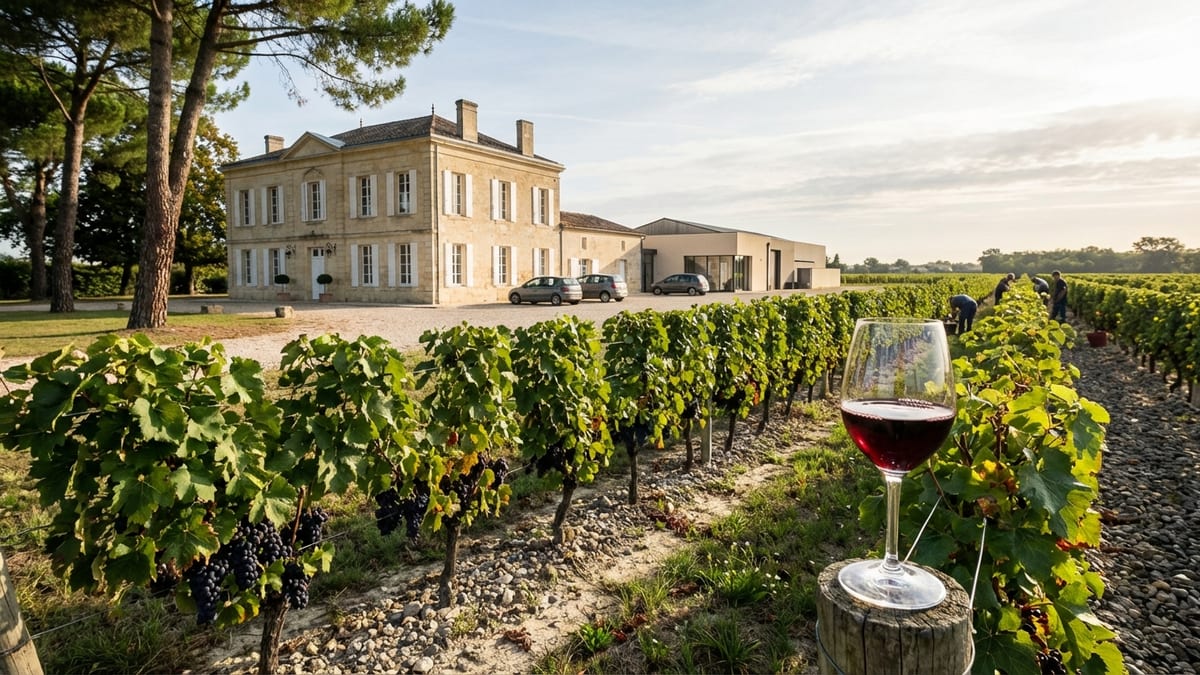
On the left bank of the Gironde estuary, framed by pines and cooling Atlantic breezes, Château Dauzac has quietly built a reputation for wines that combine classic Margaux finesse with striking precision and modern technical ambition.
For travelers who plan their trips around vineyards and cellars as much as museums and markets, understanding the style, grape varieties and aging potential of Château Dauzac is essential to appreciating both a visit to the estate and the bottles you might bring home. This guide unpacks how the wines are grown, made and matured, and how long you can expect them to evolve in your cellar.
Château Dauzac in Context: A Margaux Fifth Growth with a Restless Spirit
Château Dauzac is a Fifth Growth estate under the historic 1855 Classification and lies in the Margaux appellation of the Médoc, a short drive northwest of Bordeaux. It is firmly Cabernet Sauvignon country, where deep gravel soils over sand and clay create ideal conditions for slow, even ripening and excellent drainage. The proximity to the Gironde estuary moderates temperature extremes, protecting the vines from frost in spring and providing cooling influences in summer. This mild, luminous microclimate is one reason the estate regularly reports healthy, evenly ripened fruit even in challenging seasons.
The property has a long history of innovation. In the 19th century, work at Dauzac contributed to the development of the Bordeaux mixture, the copper sulfate and lime spray that became a groundbreaking defense against vine diseases. Today that spirit carries through in an approach that marries technology and ecology. The team relies on detailed plot studies, intra-plot selections and carefully timed picking to capture optimal ripeness, while using plant-based teas and low-impact treatments to bolster vine health. Vintage reports emphasize the use of herbal teas and natural preparations that reduce chemical inputs and help the vines withstand disease pressure and climatic stress.
For visitors, this context matters because it shapes the glass of wine you receive in the tasting room. When you taste a vertical of Château Dauzac, you are not only comparing vintages; you are also seeing an estate steadily refining how it expresses its terroir. Across recent years, the wines have become both more precise and more supple, offering generous fruit, polished tannins and a very characteristic freshness on the finish that bodes well for aging.
Grape Varieties and Terroir: Cabernet-Framed, Merlot-Rounded, With a White Surprise
The core of Château Dauzac’s red wine identity is Cabernet Sauvignon. The grand vin typically contains a majority of Cabernet Sauvignon, often in the range of roughly two-thirds, with the balance made up of Merlot. Recent technical sheets for vintages such as 2021 and 2022 list blends of about 63 to 70 percent Cabernet Sauvignon with 30 to 37 percent Merlot, underlining just how central Cabernet remains to the estate’s style. Cabernet brings structure, acidity, blackcurrant fruit and that graphite-and-cedar profile that marks classic left-bank Bordeaux. Merlot contributes flesh, red-fruit notes and a generous mid-palate that helps the wines feel approachable even in their youth.
Underneath these varieties lies a tapestry of gravel, sand and clay. The most prized parcels rest on deep gravel that stores and radiates heat, encouraging full ripeness, while ensuring quick drainage so rain never sits long around the roots. This combination favors Cabernet Sauvignon’s late-ripening nature and explains the estate’s ability to harvest fully mature tannins even in cooler years. Other plots with more clay are better suited to Merlot, giving fruit that is plush, aromatic and expressive at lower alcohol levels. Wines like Labastide Dauzac, which draws heavily on clay-based sites, showcase Merlot’s floral, plummy éclat supported by the verve of Cabernet Sauvignon.
Although the estate is best known for its reds, there is also a small production of dry white Bordeaux under the label D de Dauzac white. This wine is based predominantly on Sauvignon Blanc, typically over 90 percent, with a small portion of Sémillon. The white parcels harness slightly cooler exposures and soils that favor aromatic intensity and crisp acidity. In the glass, this translates to citrus, white flowers and exotic fruit on a bright, mouthwatering frame. The white is designed for earlier drinking than the reds but reflects the same focus on balance and precision.
House Style: How Château Dauzac Wines Taste in the Glass
Tasting through Château Dauzac’s range, a clear stylistic line emerges: these are wines built on purity of fruit, well-calibrated tannins and a fresh, often mint-tinged finish that keeps the palate lively. The grand vin Château Dauzac often opens with aromas of blackcurrant, blackberry and ripe cherry, layered with floral notes and subtle spice. In warmer vintages you may find touches of cocoa and dark chocolate, while cooler years lean more toward red fruit, graphite and crushed violets. Despite this range, the overriding impression is one of clarity and definition rather than opulence for its own sake.
On the palate, the reds are typically medium to full-bodied, with a silky or velvety texture that has become more prominent in recent vintages. The estate’s own tasting notes emphasize silky tannins, full yet supple attacks and long, elegant finishes. Even vintages renowned for power, such as 2018 and 2022, are described as powerful yet silky, underlining the balance between concentration and refinement. The tannin profile is particularly important for aging, and at Dauzac those tannins are firm but finely grained. That means the wines can be enjoyed in their youth after a short decant, but they also have the backbone to evolve gracefully in bottle.
Second and satellite wines such as Labastide Dauzac, Haut-Médoc de Dauzac and Aurore de Dauzac present a slightly more immediate expression of the house style. Labastide Dauzac, often Merlot-led, tends to show plush dark fruit, hints of tobacco and spice, and a juicy, mouth-filling palate with supple tannins and a fresh finish. Haut-Médoc de Dauzac, with its high proportion of Cabernet Sauvignon, is typically a touch firmer and more linear, offering peppery red fruit and elegant tannins in a frame that drinks well a few years after harvest but can hold longer. These wines are excellent introductions to the estate’s profile and can be ideal companions for restaurant meals during a Bordeaux trip, where you may want something accessible without sacrificing complexity.
Winemaking and Aging: From Vineyard to Barrel to Bottle
Château Dauzac’s winemaking is designed to preserve the character of each parcel and harvest date as faithfully as possible. Grapes are picked plot by plot, often on specific biodynamic fruit days, to capture optimal ripeness. Careful sorting in the vineyard and winery ensures that only healthy, fully ripe berries move on to fermentation. The estate’s communication highlights the use of natural yeasts selected from their own vineyards for fermentations in many vintages, which helps reinforce a sense of place and maintain aromatic complexity.
Fermentation typically takes place in temperature-controlled vats, with extraction tailored to the vintage. In ripe, powerful years, the team can afford to be gentle, relying on fewer pump-overs and more infusion-style maceration to avoid over-extracting tannin. In cooler seasons, a slightly more assertive approach may be used to build mid-palate volume and texture. Once primary fermentation is complete, the wines undergo malolactic fermentation that softens acidity and adds creamier mouthfeel.
Barrel aging is crucial to the Dauzac style. The grand vin normally spends well over a year in oak, much of it in French barriques, with a proportion of new wood that varies according to the power and concentration of the vintage. The goal is not to overwhelm the fruit but to wrap it in fine-grained tannins and subtle notes of toast, cedar and sweet spice. Tasting notes from multiple vintages speak of integrated wood and delicate spice rather than overt vanilla or char, which suggests a careful hand in both barrel selection and élevage.
Racking and blending are carried out based on constant tasting, allowing the team to fine-tune the shape of the wine over time. Second wines and branded cuvées such as Labastide Dauzac and Haut-Médoc de Dauzac generally see slightly less new oak and somewhat shorter aging durations, which keeps fruit at the forefront and makes these bottlings accessible earlier. The white D de Dauzac is vinified to emphasize freshness, with aging regimes aimed at preserving its acidity and aromatic lift. The result is a portfolio where each wine has a clear role: the grand vin built for decades, the second wines designed for earlier pleasure and the white positioned as a vibrant, food-friendly companion.
Aging Potential: How Long Can Château Dauzac Wines Evolve?
Château Dauzac publishes detailed technical sheets for its wines, which are valuable guides to aging potential. For the grand vin, recent vintages are consistently rated as best between about 5 and 20 years from harvest, with the possibility of aging up to 20 to 30 years in top seasons. That means a well-stored bottle from a strong vintage like 2018 or 2022 should show beautifully from its early second decade and can continue developing tertiary notes of leather, tobacco and truffle into its third decade, especially in magnum.
Second wines such as Labastide Dauzac and Bacchus de Dauzac are given recommended drinking windows in the range of approximately 3 to 15 years, with the best examples capable of holding for up to about 20 years. These wines are often at their most charming between 5 and 10 years of age, when primary fruit remains vibrant but the tannins have relaxed and the oak has fully integrated. Haut-Médoc de Dauzac, depending on the vintage, is typically framed as best enjoyed within 3 to 10 or 15 years, with some capacity to age beyond in particularly balanced harvests. For many travelers, these second wines offer a practical sweet spot: you can purchase a case at the estate and begin enjoying it within a relatively short time after your trip, while still tracking its evolution over a decade.
The white D de Dauzac is intentionally crafted for early drinking. Recent vintages are described as expressing themselves best between 1 and 3 years from release. The emphasis is on freshness, citrus and floral notes, with a long, crisp finish driven by high acidity. While some dry Bordeaux whites can age for a decade or more, the style here favors youthful energy over prolonged cellaring. If you enjoy white Bordeaux at its most aromatic and vibrant, plan to open D de Dauzac within a few summers of your visit and pair it with seafood or shellfish.
One particularly intriguing expression of aging potential at Dauzac is the Franc de Pied cuvée, made from ungrafted Cabernet Sauvignon vines rooted directly in the estate’s fine gravel. Technical information positions this wine as capable of evolving for an exceptionally long time: it is described as reaching peak expression decades after bottling, with a potential lifespan stretching from 5 to 20 years in its first phase and well beyond that into the 40 to 50 year range in great vintages. In the glass, Franc de Pied shows a distinctive combination of dazzling minerality, mentholated black fruit, floral lift and very fine tannic structure, which together create a wine that is both intense and ethereal. For serious collectors, this is a compelling bottling to lay down for the long term.
Reading Vintages: How Weather Shapes Style and Longevity
In Bordeaux, vintage variation matters, and the estate’s vintage reports for Château Dauzac tell a clear story of climate shaping character. Warm, dry years such as 2018 and 2022 produced grapes with high concentration, ripe tannins and ample sugar, resulting in wines that are powerful yet balanced by surprisingly bright acidity. These vintages are typically associated with dark-fruited aromas, opulent texture and long-term aging capacity. They also tend to absorb a higher proportion of new oak gracefully, which amplifies their structure and depth.
By contrast, cooler or more challenging seasons like 2021 demanded constant vigilance in the vineyards. Frequent rain and disease pressure required attentive canopy management and targeted treatments, often relying on plant-based preparations to bolster vine defenses. Yet even in such years, the estate reports subtle, complex wines with beautifully fresh fruit, silky textures and minty or floral high notes. The best bottles from these vintages reward patience, gaining aromatic nuance and finesse as the years in bottle accumulate, even if they do not always match the sheer density of the warmest years.
One key constant across vintages is the moderating effect of the Gironde estuary and the estate’s gravel bench. During cold snaps and frost events, the nearby water mass acts as a natural thermal regulator, gently buffering temperature drops and helping protect delicate young shoots. In hot summers, the same proximity and the surrounding forest encourage air circulation and nighttime cooling. This combination contributes significantly to the consistency of ripeness and acidity across vintages, which is crucial for predictable aging potential. For collectors, it means that while year-to-year differences remain pronounced, the underlying balance required for graceful evolution is reliably present.
Understanding these patterns can inform your buying strategy. Travelers who prefer fruit-forward, plush Margaux might gravitate toward wines from warmer, sunnier harvests, while those who value classical structure and aromatic complexity may seek out cooler years. In both cases, the estate’s own suggested drinking windows offer a solid reference point. Pair that guidance with your personal taste and cellar conditions, and you can confidently plan when to open your bottles over the next decade or two.
Visiting and Serving: Bringing Château Dauzac Wines to the Table
For many wine travelers, the goal is not only to understand an estate but also to integrate its wines into everyday life once you return home. Château Dauzac’s reds are highly versatile at the table. The grand vin, with its combination of black fruit, refined tannins and fresh finish, pairs naturally with classic French dishes such as roast lamb, game birds, duck breast and aged cheeses. The structure and acidity also work well with grilled beef, mushroom-based dishes and richly sauced poultry, especially when the wine has a few years of bottle age to soften its youthful edge.
Second wines like Labastide Dauzac and Haut-Médoc de Dauzac lend themselves to slightly more casual meals. Their generous fruit and earlier-drinking profiles make them ideal for weeknight steaks, roast chicken, charcuterie platters or rustic vegetable gratins. These wines often show charming minty or spicy notes on the finish, which can complement herbs like rosemary, thyme and tarragon. Serving temperatures around 60 to 64 degrees Fahrenheit are ideal for the reds, allowing their aromatics to open without emphasizing alcohol or tannin.
The white D de Dauzac is a natural partner for seafood and lighter fare. Its Sauvignon Blanc core brings citrus, white flowers and a crisp, saline edge that flatters oysters, grilled fish, sushi and shellfish pastas. It also sits comfortably alongside fresh goat cheese, young Comté or lightly dressed salads. Serve it chilled but not icy, around 46 to 50 degrees Fahrenheit, so the fruit and floral notes can express themselves fully. Because the wine is meant to be enjoyed within a few years of vintage, it is an excellent candidate for immediate enjoyment after purchase, perhaps as an apéritif on a warm evening.
Decanting is a useful tool with Château Dauzac reds. Young vintages of the grand vin benefit from at least an hour in a decanter to encourage the tannins to relax and the bouquet to expand. Even the second wines can open significantly with 30 to 45 minutes of air, revealing layers of spice, tobacco and floral character that may be muted on first pour. Older bottles, particularly those over 15 years of age, generally need gentler handling: a brief decant to remove sediment and a careful pour can be enough to awaken their mature aromatics without stripping away fragile nuances.
The Takeaway
Château Dauzac occupies a compelling niche in Margaux: a historic Fifth Growth that combines classic left-bank structure with a modern, detail-driven approach to viticulture and winemaking. Cabernet Sauvignon provides the spine, Merlot rounds out the mid-palate, and carefully judged oak adds polish rather than weight. Across the range, from the grand vin to Labastide Dauzac, Haut-Médoc de Dauzac, D de Dauzac white and the rare Franc de Pied cuvée, the common threads are purity of fruit, refined tannins and a distinctive freshness that carries through to the finish.
For wine lovers and travelers, the estate’s detailed guidance on drinking windows removes much of the guesswork around cellaring. The red grand vin is typically at its best from five to twenty years, with capacity for longer aging in great vintages, while second wines offer an enjoyable, more approachable expression over three to fifteen years. The white is crafted for near-term pleasure, best within a few summers of release. Whether you are planning a visit to Margaux or assembling a mixed case to savor at home, understanding these stylistic and structural elements will help you select, store and serve Château Dauzac wines at their peak.
FAQ
Q1. What grape varieties are used in Château Dauzac’s main red wine?
The grand vin Château Dauzac is based primarily on Cabernet Sauvignon, typically around two-thirds of the blend, with Merlot making up the balance. This combination yields wines with firm structure, dark fruit and freshness from Cabernet, plus suppleness and red-fruit charm from Merlot.
Q2. How long can I age a bottle of Château Dauzac?
In recent vintages, the estate indicates that Château Dauzac shows at its best between about 5 and 20 years after harvest and can age up to roughly 20 to 30 years in top years if stored in good conditions. Strong vintages with high concentration and balanced acidity are especially suited to long-term cellaring.
Q3. When should I drink Château Dauzac’s second wines like Labastide Dauzac or Haut-Médoc de Dauzac?
Second wines are generally crafted for earlier enjoyment. Labastide Dauzac and Haut-Médoc de Dauzac are often described as reaching peak expression between 3 and 15 years from vintage, with many bottles showing their most attractive balance of fruit and softness between 5 and 10 years.
Q4. What is the style of D de Dauzac white and how long does it keep?
D de Dauzac white is a dry Bordeaux blend dominated by Sauvignon Blanc with a small proportion of Sémillon. It is refined, aromatic and fresh, with citrus and white flower notes. The estate suggests drinking it young, usually within 1 to 3 years of harvest, to enjoy its brightest aromatics and crisp acidity.
Q5. What food pairs best with Château Dauzac’s red wines?
The reds pair beautifully with roast lamb, grilled or braised beef, game birds, duck, and aged cheeses. Their combination of dark fruit, spice and fresh finish also works well with mushroom dishes, herb-roasted poultry and savory tarts, especially as the wines gain complexity with age.
Q6. Do Château Dauzac wines need decanting?
Young vintages of the grand vin benefit from decanting for about an hour to soften tannins and open the bouquet. Second wines typically improve with 30 to 45 minutes of air. Older bottles, especially those over 15 years old, should be handled gently, with a short decant mainly to remove sediment.
Q7. What makes the Franc de Pied cuvée special?
Franc de Pied is produced from ungrafted Cabernet Sauvignon vines rooted directly in the estate’s deep gravel soils. The wine is noted for its intense minerality, complex black fruit and floral aromas, and extremely fine tannins. It is also remarkable for its very long aging potential, with the best vintages expected to reach peak maturity several decades after bottling.
Q8. How does Château Dauzac’s location influence its wine style?
Situated on a gravel bench near the Gironde estuary, the estate benefits from excellent drainage, heat-retaining soils and a moderating maritime influence. This combination allows Cabernet Sauvignon to ripen fully while preserving acidity and protecting vines from frost. The resulting wines balance ripe fruit and structure with a characteristic freshness and elegance.
Q9. Are Château Dauzac’s wines suitable for people building a cellar for the first time?
Yes. The grand vin offers clear aging potential for collectors, while the second wines provide earlier-drinking options that still evolve nicely over a decade. The estate’s detailed vintage and aging guidance make it easier for new collectors to decide when to open bottles and how long to keep them.
Q10. What serving temperature is best for Château Dauzac wines?
For the reds, a serving temperature of about 60 to 64 degrees Fahrenheit helps highlight their aromatics and smooth tannins without emphasizing alcohol. The white D de Dauzac shows best at around 46 to 50 degrees Fahrenheit, cool enough to be refreshing while still allowing its citrus and floral notes to express.