

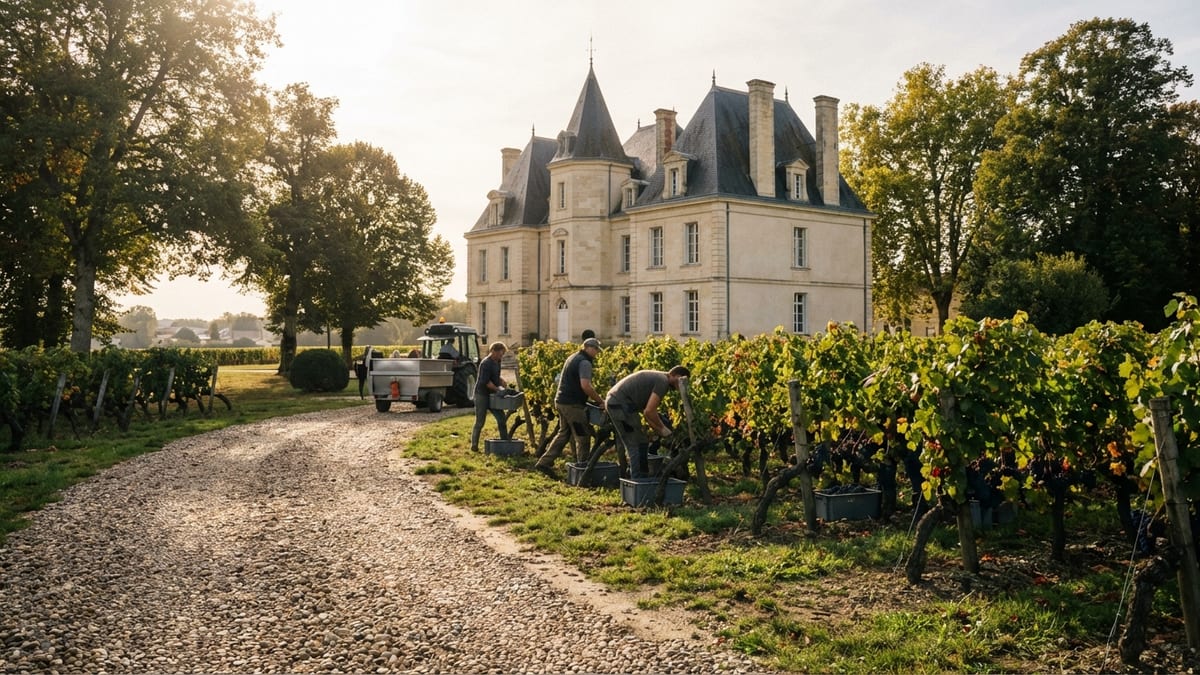
Château Haut Brion occupies a rarefied place in the world of wine. More than just a Bordeaux First Growth, it is a living piece of French history, an estate where Roman-era gravels, Renaissance architecture and cutting edge cellar technology converge in the glass.
For travelers who love great wine and want to understand what makes this château so singular, visiting Haut Brion is as much a cultural experience as an oenological one. This guide unpacks the history, terroir and signature wines of this remarkable estate and offers practical context so you can better appreciate every sip, whether you are tasting on site in Pessac or opening a cherished bottle at home.
The Legacy of a Bordeaux Pioneer
The story of Château Haut Brion stretches back nearly two millennia. Archaeological and historical research suggests that vines were cultivated on these gravelly rises near Bordeaux as early as the first century AD, when the Romans recognized the unique virtues of the local quartz pebbles. By the early 16th century the estate had entered written history. A document dated 1521 is widely cited as the oldest known mention of a wine identified specifically by its terroir of origin rather than by its owner or parish, effectively making Haut Brion one of the first true wine brands in the world.
The modern identity of the château was forged in 1533, when Jean de Pontac acquired the Haut Brion lands and began assembling a coherent estate. The construction of the château itself followed in 1549. Over the next century the Pontac family expanded the vineyards and systematically cultivated a reputation abroad. By the mid 1600s Haut Brion was being poured at the English court, and a fashionable London tavern called Pontack’s Head helped to establish the name among British elites.
Contemporary accounts underline how distinctive the wine already was. In 1663 the diarist Samuel Pepys famously noted a glass of “Ho Bryan” and praised its curious yet charming character. More than a century later, in 1787, Thomas Jefferson visited Bordeaux as American minister to France. He examined the soil at Haut Brion in detail, noting its sand and gravel composition, and placed the wine among the four estates he considered first quality in the region. Jefferson shipped cases home to Virginia, making Haut Brion arguably the first First Growth Bordeaux to reach the United States in a clearly documented way.
The 19th century confirmed what connoisseurs already knew. When the famous 1855 classification of Bordeaux was drawn up for the Exposition Universelle in Paris, Haut Brion was named a Premier Grand Cru Classé. It was the only wine outside the Médoc to achieve that status, and remains today the sole First Growth within the Pessac Léognan appellation. Subsequent owners battled phylloxera and economic upheavals, but the estate’s position at the summit of Bordeaux never truly slipped.
The Clarence Dillon Era and Modern Renaissance
The 20th century brought both challenge and renewal. By the interwar period Haut Brion had endured phylloxera, replanting, two major conflicts and a volatile market. In 1935 Clarence Dillon, an American financier with a deep love of French culture, purchased the property. His acquisition marked the start of a comprehensive restoration that would set the course for the château’s modern era.
Dillon’s vision was to restore Haut Brion to its rightful place among the world’s most revered wines. Investment flowed into the vineyards and cellars, and by 1923 bottling at the estate had already become systematic, a practice that helped guarantee both quality and authenticity. Under the Dillon family, these efforts were intensified, with meticulous work in the vines, improved selection and modernized vinification facilities. The estate also gradually expanded its holdings within the best gravelly parcels surrounding the château.
Technical leadership fell to the Delmas family, who would become nearly as synonymous with Haut Brion as the Dillons themselves. George Delmas, and later his son Jean Bernard and grandson Jean Philippe, guided the property through an era of scientific advances in viticulture and oenology. They were early adopters of temperature controlled fermentation and were instrumental in refining canopy management, yield control and selection techniques that are now standard in top Bordeaux estates.
Today Haut Brion is owned by Domaine Clarence Dillon, with Prince Robert of Luxembourg, great grandson of Clarence Dillon, serving as chairman and chief executive since 2008. Under his stewardship the group has acquired additional properties, including neighboring Château La Mission Haut Brion, while continuing to invest heavily in the Bordeaux vineyards, winery infrastructure and environmental initiatives. The result is a consistently high standard of quality across vintages, with recent years often garnering some of the highest critical scores in Bordeaux.
A Unique Terroir in the Heart of Pessac Léognan
One of the vital keys to understanding Haut Brion is its geography. Unlike the other First Growths, which lie along the Médoc’s left bank north of the city, Haut Brion is situated in the commune of Pessac, just a few kilometers southwest of central Bordeaux. This area forms the core of the Pessac Léognan appellation in the northern Graves, a zone that historically predates the Médoc as a source of fine claret.
The vineyard covers just over 50 hectares, making Haut Brion by far the smallest of the First Growths. Yet it occupies a privileged position on two gentle gravel “croupes,” or rises, flanked by small watercourses that help regulate temperature and drainage. The gravels themselves run exceptionally deep, up to many meters, and are composed largely of quartz pebbles mixed with sand and varying proportions of clay and some limestone beneath. This deep, well drained profile forces the vines to drive their roots downward in search of moisture and nutrients, a factor that many tasters associate with the wine’s mineral complexity and longevity.
The terroir is particularly marked by the classic Graves gravel stones, which absorb heat during the day and slowly radiate it back at night. This moderating effect promotes even ripening and reduces disease pressure, especially in years with challenging weather. The nearby urban environment also contributes a subtle heat island effect, often making Pessac marginally warmer than more rural areas of the Médoc at key points in the growing season.
Beneath the surface, the patchwork of clay and sand pockets further nuances vine behavior. Clay helps retain water and acts as a reserve in drier vintages, giving the wines depth and flesh. Sandier portions promote good drainage and can yield more aromatic finesse. The combination of these elements, along with careful parcel by parcel management, gives Haut Brion its hallmark balance between power and elegance, structure and suppleness.
Vineyard Practices and Environmental Stewardship
The cépage composition at Haut Brion reflects both tradition and the specificities of its terroir. For the red wines, the vineyard is planted mainly to Merlot and Cabernet Sauvignon, with smaller proportions of Cabernet Franc and a hint of Petit Verdot. The exact percentages vary slightly by source and over time, but Merlot often occupies a surprisingly prominent share for a First Growth on the left bank. This higher Merlot component contributes to the wine’s silky mid palate and early approachability, while Cabernet Sauvignon and Cabernet Franc bring structure, aromatics and aging capacity.
For the whites, a very small surface area is devoted to Sémillon and Sauvignon Blanc, along with traces of Sauvignon Gris. These white vines occupy some of the estate’s most prized parcels, where the gravels sit over especially nuanced clay and sand subsoils. Yields are extremely low and the total production of the grand vin blanc is tiny compared with the red, making Haut Brion Blanc one of the rarest and most coveted white wines of Bordeaux.
Vine age at the estate is substantial, averaging more than three decades, with some parcels rooted for close to a century. Rather than relying solely on commercial clones, the estate maintains what it calls a “mother vineyard,” a reservoir of massale selection plant material derived from its own best vines. This approach aims to preserve genetic diversity and the unique character of the property’s old vine stock. Replanting is gradual and carefully planned to maintain a mosaic of vine ages across the plots.
In recent decades the team at Haut Brion has intensified its focus on environmental stewardship. Insecticides are not used, interventions in the soil are minimized and cover crops and biodiversity corridors are encouraged. A portion of the estate’s grounds is devoted to parkland and woodland that provides habitat for birds and other wildlife. Regular biodiversity inventories have documented dozens of species, including numerous protected and heritage varieties. These practices are seen not as a marketing tool but as a logical extension of the estate’s centuries long mission to preserve and express its terroir.
In the Cellar: From Grape to Grand Vin
Once harvested, grapes from each plot are vinified separately to capture the nuance of site and variety. At Haut Brion the red grapes are traditionally fermented in temperature controlled vats, combining stainless steel and in some cases concrete, with a focus on gentle extraction. The Delmas team has long favored relatively warm but carefully managed fermentations, which can encourage aromatic complexity and structural depth while avoiding harsh tannins.
After maceration and pressing, the red wines undergo élevage in a high proportion of new French oak barrels. For the grand vin red, aging typically extends over roughly 18 to 22 months, with fine grained barrels sourced from top coopers. The objective is not to imprint obvious oak flavors but rather to frame the wine, refine its tannins and provide oxygen exchange that supports long term development. Fining, when used, is carried out traditionally using egg whites, and the wines are bottled at the château, a practice firmly established in the early 20th century.
The white wines follow a different path. Grapes are pressed as whole clusters to preserve freshness and reduce phenolic bitterness, then fermented in oak barrels, many of them new. Haut Brion Blanc usually ages on its fine lees in barrel for well over a year, with periodic stirring to build texture and complexity. This combination of barrel fermentation and extended lees aging gives the wine its creamy mouthfeel, layered aromatics and capacity to evolve in bottle much like a fine white Burgundy.
At every stage, selection is ruthless. Not all lots make it into the grand vin. Portions that are judged less representative of the style or slightly less concentrated may be directed into the second wines. This strict triage contributes to the striking consistency of Haut Brion’s flagship cuvées, even in more challenging vintages. Over the last few decades the overall volume of the grand vin has been significantly reduced compared with earlier eras, a deliberate choice aimed at maximizing quality over quantity.
Signature Wines: Red, White and Second Labels
For most wine lovers, Château Haut Brion means the grand vin red. This is the wine that earned Premier Grand Cru Classé status in 1855 and continues to define the estate’s style. In youth, it often shows a dark ruby to garnet color with aromas of blackcurrant, plum, tobacco leaf, graphite and the distinctive smoky, earthy notes associated with Graves gravels. On the palate it tends to be full bodied yet refined, with silky tannins, a supple mid palate and a long, savory finish. With age, tertiary notes of cedar, cigar box, truffle and leather emerge, and the best vintages can easily reward several decades of cellaring.
Château Haut Brion Blanc is the estate’s other jewel, though produced in vastly smaller quantities. Built primarily on Sémillon with a significant proportion of Sauvignon Blanc, it offers an array of citrus, stone fruit and exotic notes alongside floral and subtly smoky nuances. Barrel fermentation and lees aging lend it texture, while the underlying acidity and minerality keep it vibrant. Young vintages can display aromas of lemongrass, lychee, white peach and grapefruit zest, gradually evolving toward honey, lanolin, toasted nuts and waxy complexity with time in bottle.
The second wines provide a more accessible, often earlier drinking introduction to the estate’s style. For red, this role is played by Le Clarence de Haut Brion, a label introduced in the late 2000s as the successor to the former Bahans Haut Brion. It is sourced from the same vineyards as the grand vin and vinified with similar care, but composed of lots that are selected out during blending. Typically somewhat more forward and approachable in youth, Le Clarence still benefits from a few years of bottle age and can show many of the telltale gravely, smoky notes of its elder sibling.
On the white side, La Clarté de Haut Brion acts as the second wine for both Château Haut Brion and neighboring Château La Mission Haut Brion. Formerly known as Les Plantiers du Haut Brion, it took on its current name with the 2009 vintage. La Clarté emphasizes brightness and immediate charm, while still reflecting the same meticulous vineyard and cellar work that define the grand vin whites. For travelers and collectors, these second labels often represent a more affordable gateway into the Haut Brion universe, especially in highly acclaimed vintages where demand for the flagship wines is intense.
Tasting Haut Brion: Style, Vintages and Food Pairings
Encountering Château Haut Brion for the first time can be a revelation. While its status and price naturally create expectations, the wine itself often surprises with its harmony rather than mere power. Compared with some Left Bank peers that emphasize backbone and austerity in youth, Haut Brion tends to show a plush, almost Burgundian texture, a reflection of its Merlot content and warmer microclimate, yet it never lacks for depth or structure.
In classic vintages, the young red wine presents aromas of dark berries, cassis, plum and cherry wrapped in aromatic tobacco, cedar, graphite and the faintly smoky, almost grilled note associated with Graves soils. On the palate, there is usually an interplay between ripe fruit sweetness and savory earthiness, framed by fine but persistent tannins. With proper cellaring, the wine can develop over 20, 30 or more years, gradually shifting toward notes of forest floor, dried flowers and spice. Recent acclaimed vintages, such as late 2010s and early 2020s, have combined concentration with remarkable freshness, making them strong candidates for long term aging.
Haut Brion Blanc, by contrast, is often showier in its youth. Recent vintages have drawn praise for their complex bouquets of citrus, tropical fruit and subtle smoky reduction supported by vibrant acidity and a saline, mineral edge. Despite their richness, these whites remain precise and long, and top years have demonstrated an impressive ability to mature gracefully for a decade or two, developing more honeyed, nutty and waxy nuances over time.
At the table, the red wine naturally lends itself to classic dishes of southwest France, such as lamb roasted with herbs, duck with a reduction sauce, or entrecôte grilled over vine cuttings. Its combination of fruit, structure and earth tones also makes it a superb partner for aged hard cheeses and dishes featuring mushrooms or truffles. The white wine is remarkably versatile, pairing well with rich seafood preparations like lobster or scallops in butter sauce, roasted poultry, veal in cream sauces and many refined vegetarian dishes based on root vegetables, asparagus or morels. For travelers enjoying a meal in Bordeaux or at a top restaurant elsewhere, spotting Haut Brion on a list is often an invitation to plan a meal around the wine itself.
Visiting Château Haut Brion as a Traveler
For visitors to Bordeaux, Haut Brion holds a particular allure. Its location in Pessac places it within easy reach of the city center, making it a feasible half day excursion even on a short stay. Unlike more distant Médoc châteaux, reaching Haut Brion can involve a short drive or car service transfer rather than a full day’s journey up the peninsula.
The estate combines historic charm with modern polish. The château’s architecture, with its distinctive Renaissance elements, offers a striking contrast to the sleek winery facilities and carefully tended vineyards. Tours typically highlight the estate’s long history, from its early Gallo Roman roots to its 16th century construction and its recognition in the 1855 classification, before leading visitors through the cellars where modern vinification equipment stands alongside rows of traditional oak barrels.
Because production is limited and global demand is high, visits need to be arranged in advance and are often subject to availability. Travelers planning a visit should consider reaching out well ahead of time, especially during peak periods such as the en primeur season in spring or the harvest period in early autumn, when the estate is particularly busy. A well organized visit can offer not only a glimpse into the winemaking process but also a rare opportunity to taste the wines in situ, often guided by staff who can provide insight into vintage variation, blending choices and cellaring recommendations.
Beyond the estate itself, the surrounding Pessac Léognan region offers a concentration of other noteworthy properties, including Château La Mission Haut Brion and several classified growths. Combining a visit to Haut Brion with stops at neighboring châteaux can give travelers a broader sense of the appellation’s styles, especially its unique talent for both red and white wines. Afterward, returning to Bordeaux city for dinner offers the chance to encounter Haut Brion on some of the region’s most impressive wine lists, completing a day steeped in the terroir of Graves.
The Takeaway
Château Haut Brion is far more than one of Bordeaux’s famous First Growths. It is a foundational estate whose history mirrors the evolution of fine wine itself, from Roman gravels and Renaissance nobles to modern scientific viticulture and global renown. Its unique situation in Pessac Léognan, on deeply rooted gravel rises just outside the city of Bordeaux, gives rise to wines that combine density and elegance, power and grace, in a way that feels distinctly its own.
For travelers and wine enthusiasts, understanding Haut Brion means tracing the threads that run from its ancient soils through centuries of human stewardship to the glass on the table. The interplay between Merlot and Cabernet, Sémillon and Sauvignon Blanc, old vines and precise cellar work all find expression in bottles that can age for decades yet rarely feel severe. Whether you visit the château in person or simply open a bottle at home, approaching these wines with a sense of their context deepens the experience. In the end, Haut Brion’s true greatness lies not only in its critical accolades but in its capacity to convey a singular place and tradition with every sip.
FAQ
Q1. What makes Château Haut Brion different from other Bordeaux First Growths?
Château Haut Brion is the only historic First Growth located outside the Médoc, in the Pessac Léognan area of Graves, and it is one of the earliest documented terroir named wines. Its warmer microclimate, deep Graves gravel over clay and sand, and relatively high proportion of Merlot in the red blend contribute to a style that is often more supple and smoky than many Left Bank peers while still offering great longevity.
Q2. What grape varieties are used in the red and white wines of Haut Brion?
The red grand vin is based primarily on Merlot and Cabernet Sauvignon, with smaller amounts of Cabernet Franc and a touch of Petit Verdot, though exact proportions vary by vintage. The white grand vin, Haut Brion Blanc, is built mainly from Sémillon complemented by a substantial share of Sauvignon Blanc and a small presence of Sauvignon Gris, creating a rich yet vibrant white wine.
Q3. How long can Château Haut Brion wines age?
In strong vintages, the red Château Haut Brion can age gracefully for several decades, often 20 to 30 years or more, developing complex tertiary aromas of truffle, leather and cigar box while retaining core fruit. Haut Brion Blanc also has notable aging potential, with top vintages evolving positively for 10 to 20 years, gaining honeyed, nutty and waxy notes while maintaining freshness when properly stored.
Q4. What is the difference between Château Haut Brion and Le Clarence de Haut Brion?
Château Haut Brion is the grand vin, composed of the estate’s best lots and intended for long aging. Le Clarence de Haut Brion is the red second wine, sourced from the same vineyards but made from parcels or lots that are not selected for the grand vin. It generally offers a more approachable style in youth, often at a lower price, while still reflecting the estate’s smoky Graves character and meticulous winemaking.
Q5. Why is Haut Brion Blanc considered so rare?
Haut Brion Blanc comes from a very small portion of the estate’s vineyard, just a few hectares planted to white varieties, and yields are kept deliberately low to maximize concentration and quality. As a result, the number of bottles produced each vintage is tiny compared with the red wine, making Haut Brion Blanc one of the scarcest and most sought after white wines in Bordeaux.
Q6. What food pairs well with Château Haut Brion red?
The red wine’s combination of structure, fruit and savory, smoky notes makes it an excellent partner for classic dishes such as roast lamb, grilled or braised beef, duck and game birds, especially when prepared with herbs, mushrooms or truffle accents. It also pairs elegantly with aged hard cheeses and refined preparations that allow its complexity to shine without overwhelming it with excessive spice or sweetness.
Q7. What dishes work best with Haut Brion Blanc?
Haut Brion Blanc’s richness and fresh acidity make it highly versatile. It pairs beautifully with lobster, scallops and other rich seafood dishes, roasted or poached poultry, veal in cream based sauces and many fine vegetable dishes involving asparagus, artichokes or morels. The wine’s depth and texture also allow it to complement subtly spiced Asian inspired cuisine where citrus and herbal notes are prominent.
Q8. How should I serve and decant Château Haut Brion?
Younger vintages of the red wine generally benefit from decanting, often for one to two hours, to allow the aromatics to open and the tannins to soften. Mature bottles should be handled more gently with shorter decanting times, mainly to remove sediment. Serving temperature around 60 to 64 degrees Fahrenheit usually shows the wine at its best. Haut Brion Blanc is typically served cooler, around 50 to 54 degrees Fahrenheit, and may or may not require decanting depending on age and personal preference.
Q9. Can travelers easily visit Château Haut Brion?
Yes, Château Haut Brion is relatively accessible compared with many Bordeaux estates, as it lies in Pessac just a short drive from Bordeaux city center. However, visits are by prior arrangement and subject to availability, given the estate’s limited capacity and busy schedule during key periods like harvest and en primeur tastings. Travelers should plan ahead and allow time to explore both the château and its cellars for a complete experience.
Q10. Is Château Haut Brion a good choice for someone new to fine Bordeaux?
For a newcomer with an interest in top tier Bordeaux, Haut Brion can be a compelling choice because its style often emphasizes harmony and texture rather than sheer power. While older vintages and the grand vin can be costly, the estate’s second wines and younger releases may offer a more accessible entry point. Exploring these in the context of a broader tasting, or during a well planned visit, can provide a memorable introduction to what makes great Bordeaux so enduring.