

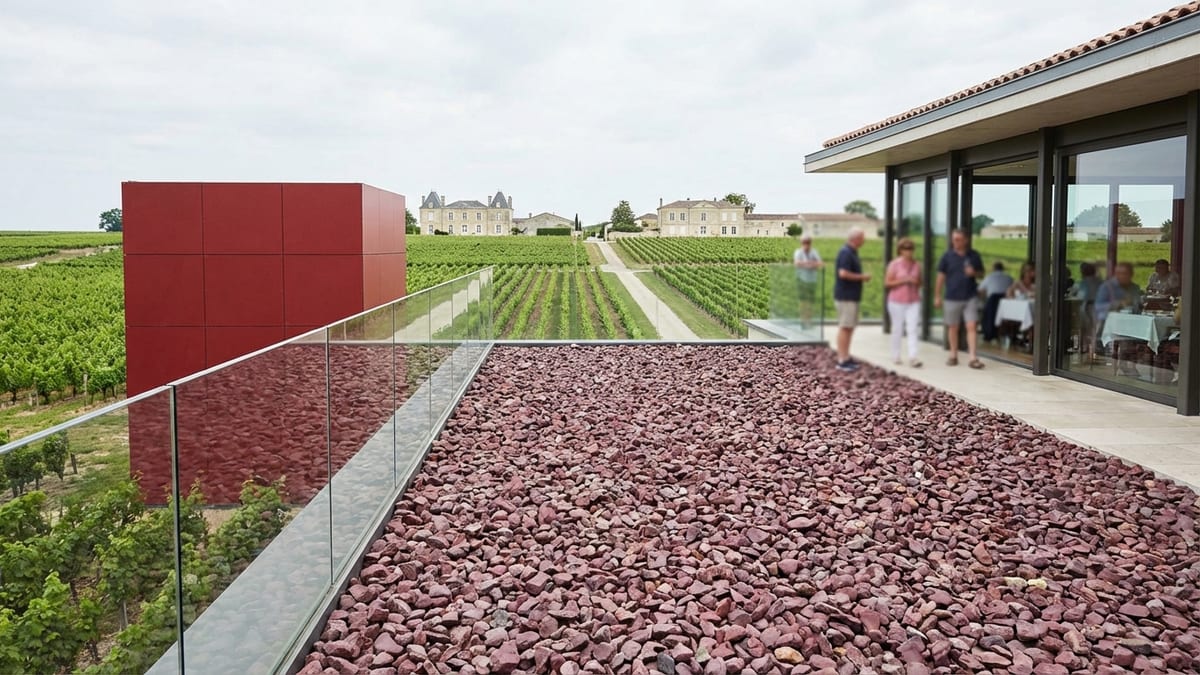
I visited Château La Dominique on a recent trip to Saint Emilion with that classic mix of wine-tourist excitement and mild skepticism. The photos of the bright red, ultra-modern winery cube sitting among rows of vines had hooked me long before I booked. The question I wanted to answer in person was simple: behind the striking architecture and the rooftop restaurant, is Château La Dominique actually worth visiting for the wine and the tour experience, or is it mostly a photo stop with a Grand Cru label attached?
Booking, Access and First Impressions
Before I even set foot on the estate, I had to navigate the booking process, which already tells you a lot about how a château thinks about visitors. At Château La Dominique, tastings and visits are officially “by appointment only,” and this is not one of those loose suggestions you can ignore. The online reservation system offers several named experiences, each with a clear price per person. As of early 2026, basic tastings in the shop start around 20 euros per person, and guided tours with tastings run from roughly 40 to 70 euros depending on the format and number of wines.
I booked through their online platform several weeks in advance, which was straightforward. I received an immediate confirmation and a reminder closer to the date. What did surprise me was how little flexibility there seemed to be if your schedule shifts. When I emailed to ask about moving my slot by an hour, the response was polite but quite firm: the schedule is tight, especially in high season, and changes are “subject to availability.” In practice, it felt like there was not much room to maneuver. If you like spontaneous wine touring, Château La Dominique will likely frustrate you.
Getting there by car from Saint Emilion was easy enough, about a 10-minute drive. Parking was ample and free, which is not a given in this area. The first impression on arrival is striking: the contemporary red-clad winery designed by Jean Nouvel rises from the vineyards like a minimalist sculpture. It is bold and unapologetically modern, playing off the more traditional stone buildings around it. I liked the visual statement, although it does announce very clearly that this is a curated “experience” as much as a working winery.
Opening Hours, Practicalities and Seasonal Quirks
The practical side of visiting can make or break the experience, especially if you are planning around lunches and multiple châteaux in a day. When I visited, the boutique and welcome area operated different hours depending on the season. From April to October the shop is open every day roughly from 10 am to 7 pm, and from November to March it shifts to Tuesday through Saturday and closes earlier, around 5 or 6 pm depending on the latest update from the estate. The key detail is that the shop can be open even when there are no more tours available that day, so you cannot rely on simply showing up and getting the full experience.
I found the hours slightly confusing because the tourism office information, the château’s own site, and third-party listings did not always match exactly. In practice, the best rule is to trust the château’s own booking calendar and consider everything else as approximate. I saw at least two couples arrive hoping to join a tour or tasting on the spot and be turned away or offered only a quick shop tasting. The staff were polite but clearly bound by a strict schedule. For a Grand Cru Classé that leans heavily into hospitality, there was still a noticeable gap between how organized the internal logistics are and how clearly they are communicated to casual visitors.
If you are the kind of traveler who likes to improvise, this will feel rigid. If you are a planner, it works fine, but you need to lock in times and build your day around them. Personally, I would have appreciated a bit more walk-in flexibility, especially in shoulder season when the estate is not at full summer capacity.
The Château Tour: Architecture vs Vineyard Story
I chose the mid-range “Charm of La Dominique” tour, which is marketed as a tailor-made private visit with a guided tasting of three wines. The tour was indeed private for my small group and lasted about an hour. It began with a walk through the vines, a quick explanation of the estate’s location between Saint Emilion and Pomerol, and an overview of the terroir and grape varieties. The view across to famous neighbors like Cheval Blanc is genuinely impressive, but the storytelling about the vineyard itself felt slightly rushed.
Once inside, the focus turned to the contemporary architecture: the gleaming red steel facade, the carefully lit vat room, and the way the building plays with reflections of sky and vines. The guide clearly had a script that leaned heavily on design and awards, and only secondarily on farming details. I did learn that the property has High Environmental Value and ISO 14001 certifications for environmental management, which is commendable, but the explanations stayed at a high level. If you are deeply interested in viticulture and winemaking decisions, you might find yourself wanting more concrete detail.
The vat room and barrel cellar are visually impressive and photogenic. Stainless steel, perfectly aligned barrels, red accents and a precise sense of order all reinforce the sense that this is a polished, modern operation. At the same time, the tour felt somewhat choreographed, with fixed stops and little time for lingering questions. My guide was friendly and spoke fluent English, but I sensed a desire to keep things moving to stay on schedule for the next group. I have had more relaxed and conversational tours at less famous estates that felt more genuinely educational.
The Tasting: Quality, Quantity and Expectations
The tasting took place back in a dedicated area, seated, with proper glassware and individual pours. For my visit, the “Charm” package included three wines: one from Château La Dominique and two from other properties in the Fayat family group. This is a model used by several Bordeaux châteaux that are part of larger groups, but it can be disappointing if you came specifically to taste multiple vintages of the estate’s flagship wine.
The pours were moderate, not stingy but not generous either, which is in line with most serious estates that see a high volume of visitors. The guide took time to walk through basic tasting notes, which made sense for less-experienced wine drinkers, but for someone who already knows Bordeaux styles, the explanations felt a bit generic. On the positive side, the wine quality itself was solid. Château La Dominique showed good structure and fruit without excessive oak. It was a confident, well-made Saint Emilion Grand Cru Classé, if not a mind-blowing revelation.
Where my expectations and reality diverged was in the depth of the tasting. At the price point of around 40 euros per person, I had hoped for at least two vintages of Château La Dominique for comparison, or a more distinctive educational angle. Instead, the tasting felt closer to a nicely presented brand introduction across a group portfolio. I did not feel rushed during the tasting, but there was a clear endpoint, and the move toward the shop felt a little mechanical. I never felt overtly pressured to buy, but the flow nudges you naturally from glass to counter.
Rooftop Views and La Terrasse Rouge Restaurant
One of Château La Dominique’s big draws is the rooftop terrace and its restaurant, La Terrasse Rouge. Even if you are not dining, the rooftop is a highlight of the visit, offering a panoramic view of surrounding vineyards and châteaux. The red, stone-like pebbles covering the rooftop mirror the color of wine in a visual metaphor that sounds a bit gimmicky on paper but is surprisingly effective in person. Standing there, looking out over Cheval Blanc and the patchwork of vines, I had one of those rare moments where the hype actually aligned with reality.
For lunch, I had booked a table at La Terrasse Rouge. The restaurant operates on its own schedule, typically open every day for lunch from around 12 pm to 2:30 pm, and for dinner on Fridays and Saturdays from about 7:30 pm to 9:30 pm, at least according to the most recent information when I visited. These hours can shift seasonally and for special events, so advance booking is important. I saw more than one walk-in turned away or offered a late slot that did not work with their tour time.
The setting is excellent: floor-to-ceiling windows, wide views of the vines, and a clean, contemporary design that matches the rest of the estate. The menu leans toward modern French with a focus on local produce. Prices are not cheap but not outrageous by Bordeaux wine-country standards. My lunch was well executed, with particularly good cooking on the main course, and the wine list naturally favors the estate’s own wines along with other Bordeaux references. Service, however, was slightly uneven. At times it was attentive and charming, at other moments I waited long stretches for basic things like water refills or the bill.
Overall, I considered the restaurant a strong addition to the visit rather than an essential destination on its own. If you are already at Château La Dominique, eating here makes sense and enhances the experience. I would not necessarily make a special trip from Bordeaux city just for La Terrasse Rouge alone, unless you are specifically chasing vineyard views at lunch.
Service, Atmosphere and Crowd Management
Service at Château La Dominique sits in an interesting middle ground between polished professionalism and a certain distance. Staff at reception were efficient, checked my booking quickly, and switched easily between French and English. The guide on my tour clearly knew the material and was friendly. Yet I did not feel the same warm, relaxed hospitality that I have experienced at some smaller, family-run estates in Saint Emilion and nearby Pomerol.
This may simply be the trade-off of running a high-volume, architecturally iconic destination. Château La Dominique is not a sleepy farmhouse with a couple of barrels in the back. It is a well-oiled tourism machine that handles groups, restaurant guests, and boutique visitors all day. The result is an atmosphere that is organized and visually impressive, but occasionally impersonal. I did not feel unwelcome, but I also did not get the sense of being a truly valued guest in the way that some less famous but more intimate estates manage to convey.
Crowd management was generally good. Even with multiple tours and restaurant seatings happening at once, the property never felt packed. The private structure of the tour helped, as I never had to jockey for space with other groups in the same room. The only time it felt slightly congested was in the boutique, where tasting counters and retail space overlap and visitors cluster around displays. If you dislike crowded shops, it might be worth lingering on the terrace and only heading into the boutique when you are actually ready to buy.
Value for Money and How It Compares
Evaluating whether Château La Dominique is “worth it” depends heavily on what you are comparing it to. In the context of Bordeaux wine tourism, prices have risen across the board, especially at well-known names and design-driven estates. A 40 to 70 euro tour with three or four wines is no longer exceptional. From that perspective, Château La Dominique falls in the middle to upper range but not at the very top. You are, however, paying for more than just wine. You are paying for architecture, views, and the status of a Grand Cru Classé address.
In terms of pure educational value and intimacy, I have had richer experiences at slightly less famous châteaux in Saint Emilion where tours cost less and included more flexible tastings or multiple vintages of the same wine. On the other hand, those estates rarely offer an on-site restaurant with panoramic views and a contemporary art-meets-wine aesthetic. If you see your visit as a half-day “experience” that combines architecture, art, vineyard views, wine, and a good meal, the overall package at Château La Dominique can feel reasonable.
Where I felt the value proposition slightly faltered was in the content depth of the tour and the limited range of the tasting. If you are a serious wine enthusiast who wants to understand the nuances of specific vintages, vineyard plots and winemaking choices in detail, this is not the most rewarding stop in the region. If you are a broader traveler who enjoys a visually striking setting, a guided introduction to Bordeaux wineyards, and a pleasant lunch overlooking vines, the price may feel justifiable.
What I Would Do Differently Next Time
Looking back, there are a few things I would change if I were to visit Château La Dominique again. First, I would plan the timing more carefully. My tour and lunch were booked too closely together, which left little breathing room and created unnecessary stress when the tour ran slightly over time. I would now allow at least 30 to 45 minutes between the end of the tour and a restaurant reservation to account for delays, photos, and a relaxed stroll through the boutique.
Second, I would choose a different tour format. If I returned, I would likely opt for one of the more in-depth vertical tastings or the experience that includes blind tasting, even at a higher price. My sense is that these premium options might offer more insight and more estate-focused wines, which would go a long way toward making the visit feel special rather than formulaic.
Third, I would pair La Dominique with a very different style of château on the same day to balance the experience. For example, combining this modern, architectural estate with a small, more traditional property in the area would provide an interesting contrast. On its own, Château La Dominique risks feeling a bit like a polished, curated bubble. Set against a more old-school neighbor, its strengths and weaknesses become clearer and more interesting.
The Takeaway
So, is Château La Dominique worth visiting? My answer is a qualified yes, with several important conditions. It is worth it if you value design, architecture and scenic vineyard views as much as, or more than, deep-dive wine education. It is worth it if you are willing to book ahead, accept a structured schedule, and treat the outing as a polished, half-day experience that includes a meal at La Terrasse Rouge. It is worth it if you enjoy contemporary takes on heritage estates and do not mind a slightly curated, “designed” feeling to your visit.
It may not be worth it if your main goal in Saint Emilion is to explore as many wines and vintages as possible in a highly technical way, or if you prefer low-key, spontaneous visits where you can linger in the cellar and chat with the winemaker. It may also disappoint if you expect the tasting to focus exclusively on multiple expressions of Château La Dominique, or if you are particularly sensitive to any sense of being guided toward the shop at the end.
Personally, I am glad I went. The rooftop terrace alone, with its view over the vines and neighboring icons of Bordeaux, provided one of the most memorable visual moments of my trip. The wine was solid, the food at the restaurant was good, and the architecture delivered on its promise. At the same time, I left feeling that I had visited a carefully curated stage set rather than been invited fully behind the scenes of a great Bordeaux estate.
If you go in with realistic expectations, book strategically, and perhaps combine it with a more intimate château elsewhere in Saint Emilion, Château La Dominique can absolutely earn a place on your itinerary. It is not the soul of Bordeaux, but it is a striking, enjoyable window into one very modern face of it.
FAQ
Q1: Do I need to book in advance to visit Château La Dominique?
Yes. Tours and structured tastings are by reservation only, and slots can fill up quickly, especially in high season. The boutique may accept walk-ins, but you should not count on joining a tour without a prior booking.
Q2: What are the current opening hours for visits and the boutique?
The boutique typically opens daily from around 10 am to 7 pm between April and October, and from Tuesday to Saturday with shorter hours between November and March. Exact hours can shift, so it is best to check the château’s own information shortly before your visit.
Q3: How much does a tour and tasting cost?
Standard tastings start around 20 euros per person, while guided tours with tastings generally range from about 40 to 70 euros depending on the format and number of wines. More elaborate experiences such as vertical or blind tastings are at the higher end of that range.
Q4: Is the tour suitable for people who are already knowledgeable about wine?
Yes, but with reservations. The tour is polished and informative at a general level, but it can feel a bit basic if you already know a lot about Bordeaux. Choosing one of the more advanced or premium tasting formats may make it more satisfying for experienced wine enthusiasts.
Q5: Can I visit only the restaurant La Terrasse Rouge without doing a tour?
Yes. The restaurant operates on its own schedule and can be booked independently. However, it is still advisable to reserve in advance, especially for lunch during peak season and for the limited dinner services.
Q6: Are children welcome on the tour?
Children are generally allowed on tours, but the content is adult-focused, and tastings are for legal drinking age only. It is a structured visit with indoor and cellar portions, so parents should consider whether their children will be comfortable and patient for about an hour to ninety minutes.
Q7: Is Château La Dominique accessible without a car?
It is technically possible to reach the area by taxi or hired driver from Saint Emilion or Libourne, but public transport is limited. Realistically, having a car or arranging a private transfer or wine tour driver is the most practical option.
Q8: Can I just taste the wines without taking a full tour?
Yes, there is an option for a tasting in the shop without the full estate visit, usually by reservation. This is a good choice if you are short on time or have already toured several châteaux and mainly want to sample the wines.
Q9: How does Château La Dominique compare to other nearby estates?
Château La Dominique stands out for its contemporary architecture and rooftop views, as well as its on-site restaurant. Some other nearby estates offer more intimate or in-depth wine-focused experiences but lack the same visual drama and dining options. It depends whether your priority is design and ambiance or deep wine immersion.
Q10: Would I visit Château La Dominique again?
I would, but with a different approach: booking a more advanced tasting format, allowing more time between tour and restaurant reservations, and pairing the visit with another, more traditional château on the same day. Taken on those terms, I think a return visit could be very rewarding.