

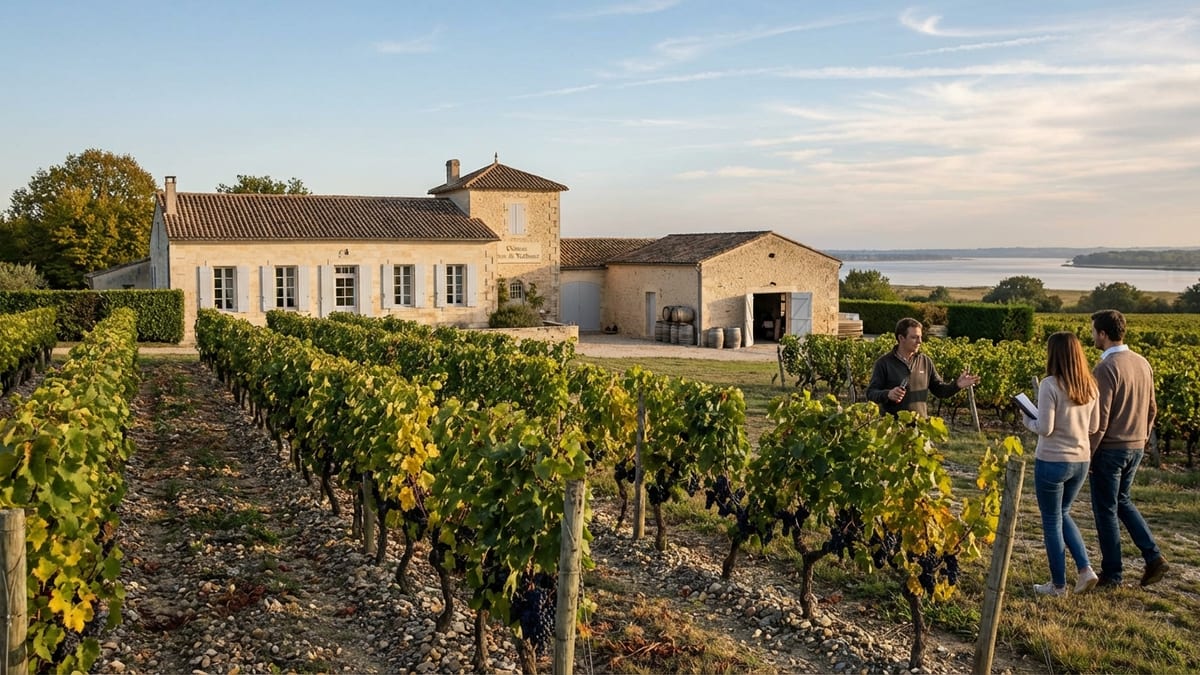
Château Tour de Marbuzet is one of those Bordeaux names that quietly rewards travelers who look beyond the most famous grand châteaux. Tucked into the Saint Estèphe appellation on the left bank of the Gironde estuary, this Cru Bourgeois estate combines a storied past with hands-on winemaking and intimate visitor experiences. For wine lovers planning a route through the Médoc, it offers a chance to taste serious Saint Estèphe character in a setting that still feels personal and family run.
A Brief History of Château Tour de Marbuzet
Château Tour de Marbuzet’s story begins in the shadow of a much larger neighbor. The land was originally part of the vast Château MacCarthy estate, one of the prominent properties in Saint Estèphe during the 18th and 19th centuries. When MacCarthy was divided and sold off in 1854, a portion of its vineyards and buildings formed what would later become Tour de Marbuzet. Under the ownership of the viticulturist Laurent Mathé, the site was recognized early on for the quality of its gravel and clay limestone soils, a key reason it appeared in the 1932 Cru Bourgeois classification.
In the 20th century, the Duboscq family emerged as the defining force behind the estate. Hervé Duboscq revived nearby Château Haut Marbuzet in the 1950s, and over time the family acquired surrounding parcels and several other properties in the hamlet of Marbuzet. In 1981, Hervé’s son Henri Duboscq purchased Château Tour de Marbuzet, bringing it fully into the orbit of Haut Marbuzet. From that point on, Tour de Marbuzet would share not only a name with its illustrious neighbor, but also a winemaking philosophy and an owner known throughout Bordeaux for his sensual, fruit driven style of Saint Estèphe wines.
Tour de Marbuzet’s Cru Bourgeois status, awarded in 1932 and later elevated to Cru Bourgeois Supérieur in the 2003 revision of the classification, affirmed its standing among the better properties of the Médoc that sit just outside the famous 1855 ranking. While the official Cru Bourgeois system has been periodically reformed, the historical designation still signals that this is a serious estate with a track record of quality and a focus on terroir rather than high volume production.
Today, Château Tour de Marbuzet is firmly a family owned property. Henri Duboscq and his sons oversee it alongside Haut Marbuzet and other nearby vineyards, treating Tour de Marbuzet as a distinct expression of their Saint Estèphe holdings. The continuity of family ownership is part of the appeal for visitors, who often find that the same people presenting the wines are also deeply involved in making them.
Terroir: The Plateau of Marbuzet and Saint Estèphe’s Character
Château Tour de Marbuzet sits on the plateau of La Peseille, on the eastern side of the Saint Estèphe appellation with a view towards the Gironde estuary. This position matters. The estuary moderates temperatures, helping to protect vines from spring frosts and extreme heat. The plateau itself is composed of deep gravels laid over a clay and limestone subsoil, a classic combination in the Médoc that allows for both excellent drainage and water retention when the growing season turns dry.
Saint Estèphe is often described as the most robust and structured of the Médoc’s famous communes. Compared with Margaux or Saint Julien further south, Saint Estèphe’s wines historically showed firmer tannins and a certain austerity in youth, then blossomed into complex, age worthy reds. The presence of more clay in the subsoils is a major factor. Clay tends to favor Merlot and can give Cabernet Sauvignon an extra sense of power and depth. At Tour de Marbuzet, this is balanced by the gravelly topsoil, which forces vines to send roots deep and contributes to the finesse and mineral detail of the finished wine.
The vineyard area is compact, typically cited at around 4 to 8.5 hectares depending on the reference point and recent acquisitions. What matters more than the exact size is that this is a small, concentrated estate with one primary focus: a single Saint Estèphe red wine. The grape plantings skew toward balance between Merlot and Cabernet Sauvignon, usually around 40 percent of each, with approximately 20 percent Cabernet Franc completing the blend. This is slightly more Merlot than at some Médoc neighbors and reflects the Duboscq preference for a lush, approachable style, even when working in a commune known for its backbone.
For travelers interested in terroir, a visit to Tour de Marbuzet provides a tangible sense of what makes Saint Estèphe different. The soils underfoot are visibly stonier than in many inland Bordeaux vineyards, and the proximity to the wide, slate colored estuary is immediately apparent. This combination of gravel, clay and water influences not just the wine’s structure but also its aromatic profile, often seen in notes of cassis, dark berries, graphite and a saline, crushed stone quality on the finish.
Winemaking Style and What Is in the Glass
Under the Duboscq family, Château Tour de Marbuzet is made using resolutely traditional Bordelais methods, but with a clear preference for ripe fruit, generous texture and careful oak influence. Harvesting is carried out by hand, which allows pickers to sort bunches directly in the vineyard. This selectivity is important in Saint Estèphe, where uneven ripening can be a challenge in cooler years. Once the grapes reach the cellar, complete destemming and wild yeast fermentations are the norm, followed by long macerations at relatively high temperatures.
Those long macerations extract ample color, tannin and flavor from the thick skinned Bordeaux varieties, giving Tour de Marbuzet its deep garnet hue and full bodied profile. Pumping over the fermenting wine each day helps circulate the juice over the cap of skins, further enhancing concentration and structure. After fermentation and maceration, the wine is aged partly in small oak barrels and partly in larger wooden vats. A typical regime might see about one quarter of the volume in new oak barrels, with the remainder in seasoned wood, for roughly 14 to 18 months depending on the vintage.
This approach yields a wine that combines traditional Saint Estèphe grip with a notably polished, modern feel. Tasting notes for recent vintages often mention aromas of blackcurrant, black cherry and blueberry, alongside hints of plum, vanilla, cedar and subtle toasted spice from the barrels. On the palate, the wines are usually described as medium to full bodied with ripe, grainy tannins, enough freshness to keep everything in balance and a long, slightly earthy finish. Alcohol levels in recent ripe vintages have hovered in the mid 14 percent range, adding to the sense of richness and warmth.
Because of its structure and the care taken in élevage, Château Tour de Marbuzet is not a simple second label designed for immediate consumption. It is capable of several years of aging, with well regarded vintages often drinking well from around five to ten years after harvest. In youth, expect vibrant fruit and pronounced oak spice; with time, more savory notes of tobacco leaf, underbrush, truffle and cigar box emerge, alongside softer tannins and a more harmonious profile.
How Château Tour de Marbuzet Fits into the Haut Marbuzet Family
When travelers research Saint Estèphe, they quickly encounter the name Haut Marbuzet. This is the flagship estate of the Duboscq family, and it has developed a reputation for lush, seductive wines that diverge slightly from the more austere style often associated with the appellation. Tour de Marbuzet sits within this family of properties, alongside Chambert Marbuzet and MacCarthy, all located in the same general sector of Saint Estèphe.
Tour de Marbuzet can be considered a sibling to Haut Marbuzet rather than a simple offshoot. It shares ownership, a broadly similar grape mix and a related winemaking philosophy centered on ripe fruit and fine tannins. However, there are important distinctions. The terroir is slightly different, and the élevage uses a smaller proportion of new oak compared with the grand vin of Haut Marbuzet. The vineyard size is also more modest, contributing to smaller production levels that usually total around 30,000 bottles per year. This scale gives the wine a certain insider character; it is significant but not mass produced.
From a stylistic standpoint, many tasters find that Haut Marbuzet is the most opulent and dramatic expression in the family, while Tour de Marbuzet offers a slightly more classical, structured take on Saint Estèphe that is nonetheless generous and approachable. For travelers who enjoy comparative tasting, booking a visit that includes both labels can be an instructive way to explore how nuances of site and barrel regime influence wines made under the same guiding hand.
The Duboscq family’s philosophy emphasizes pleasure in drinking and a sense of hospitality toward visitors. That approach is evident in how the wines are presented. During tastings, hosts often speak about texture, seduction and charm as much as structure and age worthiness. Tour de Marbuzet benefits from this mindset, positioned as a wine that is both serious enough for the cellar and enjoyable enough to pour generously in its relative youth alongside a meal of grilled lamb or roast beef.
Planning Your Visit: Practical Tips and Expectations
Château Tour de Marbuzet is located in the commune of Saint Estèphe, in the northern Médoc, about an hour and a half’s drive from central Bordeaux city depending on traffic. Most visitors combine it with a day or two spent exploring other Médoc appellations such as Pauillac, Saint Julien and Margaux. The landscape is gently rolling, lined with vineyards, with small hamlets and estuary views that give the area a quiet, rural charm.
Unlike some of the larger classified growths that operate fixed schedule tours in multiple languages, Tour de Marbuzet and its sister estate Haut Marbuzet typically welcome guests by appointment. This allows the staff to manage small group visits and maintain a more intimate atmosphere in the cellars and tasting rooms. As a traveler, you should plan ahead, especially during the busy months of May through October and in the weeks of the Bordeaux harvest, which usually falls between late September and early October.
Visits often include a walk through the winery to see fermentation tanks and barrel cellars, accompanied by an explanation of the estate’s history and winemaking approach. The tasting will normally feature the current release of Château Tour de Marbuzet and sometimes other wines from the Duboscq portfolio. Fees vary and may be waived if you purchase bottles on site, although policies can change from season to season, so it is wise to confirm at the time of booking. English is commonly spoken in Médoc wine tourism, but French remains the primary language, so a few basic French phrases are always appreciated.
Many Médoc estates, including those in Saint Estèphe, maintain regular opening hours from Monday to Saturday, closing on Sundays and public holidays. Midday breaks are also common, with cellars closed between late morning and early afternoon. If your schedule is tight, aim for late morning or mid afternoon time slots, and always build in some margin for driving on narrow country roads. Should you visit during the harvest, expect a more fast paced environment where tours might be shorter or focused on tastings rather than extended cellar walks, as winemakers are fully occupied in the vines and at the presses.
Tasting Château Tour de Marbuzet: Flavors, Food Pairings and Vintages
In the glass, Château Tour de Marbuzet is a textbook expression of modern Saint Estèphe that still respects tradition. Typical color ranges from deep ruby to garnet purple in younger vintages, with a bright, reflective core. On the nose, you can expect ripe black fruits such as cassis, black cherry and blackberry, often backed by notes of blueberry preserve, plum and sometimes a hint of wild raspberry or redcurrant. Barrel aging adds layers of vanilla, toast, cedar, pencil shavings and gentle spice, while bottle age can bring truffle, cigar box and earthy undergrowth notes.
The palate is usually medium to full bodied, with generous fruit upfront and a firm but polished tannic backbone. The Merlot component brings flesh and roundness, while Cabernet Sauvignon and Cabernet Franc contribute structure, acidity and aromatic lift. Recent tasting reports describe wines that are muscular yet balanced, with grainy tannins that become silkier after a few years of cellaring. The finish tends to be long, with lingering notes of dark fruit, cocoa, licorice and a distinctive mineral or graphite edge that many associate with the gravel and clay soils of Saint Estèphe.
For food pairings, Tour de Marbuzet naturally gravitates toward classic Bordeaux cuisine. It works beautifully with grilled or roasted red meats such as ribeye steak, entrecôte bordelaise, lamb chops and slow cooked lamb shoulder. Game dishes, from venison to duck, also find a good partner in the wine’s structure and savory depth. On the cheese board, it favors aged, firm varieties like Comté, Ossau Iraty, mature Gouda and classic French cheeses such as Cantal or Saint Nectaire. For a local touch, pairing a bottle of Saint Estèphe with entrecôte cooked over vine cuttings is a memorable way to experience Bordeaux tradition.
When it comes to choosing vintages, your priorities matter. Warmer, riper years such as 2009, 2010, 2016, 2018 and 2019 have produced particularly generous, concentrated wines with rich textures and often higher alcohol, making them appealing both in restaurants and for cellaring. Cooler, more classic vintages such as 2014 or 2017 can show a slightly fresher profile with vibrant acidity and a more moderate body, which some travelers may prefer for daytime tastings or pairings with lighter dishes. If you are visiting the estate, take advantage of the chance to ask which older vintages they might still offer at the cellar door; often, a short vertical tasting can reveal how the wine evolves with time.
Making the Most of a Wine Day in Saint Estèphe
While Château Tour de Marbuzet may be your main target, Saint Estèphe as a whole rewards a full day of exploration. The appellation sits just north of Pauillac and is dotted with a mixture of historic classified growths and family run Crus Bourgeois. The village of Saint Estèphe itself remains modest in size, with a church, a few small eateries and views that open toward the estuary. The atmosphere is less polished than in some southern Médoc communes, which many wine travelers consider part of the charm.
Arrange your itinerary with geography in mind. Tour de Marbuzet and Haut Marbuzet are located close to one another, making them convenient to visit back to back. From there, you can drive a short distance to other estates, stopping for lunch in a nearby village or even planning a picnic with supplies from a Médoc market, if weather allows. The light over the Gironde, especially in late afternoon or early evening, adds a dramatic backdrop to vineyard photos, so consider timing at least one outdoor stop around that golden hour.
Transportation is an important practical consideration. Public transport into the Médoc wine country is limited, and taxis can be sparse at short notice. Many visitors rent a car in Bordeaux or arrange a private driver or small group tour that covers several châteaux in one day. If you plan to taste at multiple estates and swallow rather than spit, hiring a driver is the safest choice. Roads in the Médoc are generally well maintained but can be narrow when approaching vineyard lanes, so allow extra time and drive slowly around blind curves.
Finally, keep your expectations flexible. Smaller properties sometimes adjust schedules last minute due to weather, harvest timing or family commitments. Confirm appointments a few days before arrival, keep the estate’s phone number or email handy, and always let them know if you are running late. A respectful approach will usually be met with genuine hospitality, and many travelers report that their most memorable Médoc experiences occur during unhurried, conversational tastings at places like Tour de Marbuzet.
The Takeaway
Château Tour de Marbuzet may not have the instant name recognition of the grandest Médoc estates, but for travelers, that is exactly its appeal. It offers access to authentic Saint Estèphe terroir, crafted by a family known for both quality and warmth, in a setting that still feels grounded and human scaled. The vineyard’s gravel and clay limestone soils, its balanced blend of Merlot, Cabernet Sauvignon and Cabernet Franc, and its traditional yet fruit focused winemaking combine to produce a red wine that is both structured and inviting.
As part of the broader Haut Marbuzet family, Tour de Marbuzet stands at an interesting intersection between classic Cru Bourgeois roots and a modern, pleasure driven philosophy. For visitors, this translates into tastings where you can speak directly with people deeply involved in the wine, learn about the particularities of Saint Estèphe and compare styles across neighboring labels. The experience is immersive without being intimidating, making it suitable for both seasoned collectors and travelers just beginning to explore Bordeaux.
If your itinerary takes you up the left bank of the Gironde, setting aside time for Château Tour de Marbuzet adds depth and nuance to your understanding of the region. You will leave with more than a few tasting notes and bottle photos; you will carry a clearer sense of how history, family stewardship and terroir intersect in this quiet corner of Saint Estèphe, and how those forces translate into the glass in front of you at dinner long after the trip has ended.
FAQ
Q1: Where exactly is Château Tour de Marbuzet located?
Château Tour de Marbuzet is in the commune of Saint Estèphe in the Médoc, on the left bank of the Gironde estuary in southwestern France. It sits on the plateau of Marbuzet, surrounded by other vineyards owned by the Duboscq family.
Q2: Do I need an appointment to visit Château Tour de Marbuzet?
Yes. Like many medium sized Bordeaux estates, Château Tour de Marbuzet generally welcomes visitors by prior appointment. This allows them to organize small group tours and ensure that a guide is available to show you the cellars and conduct a tasting.
Q3: What kind of wine does Château Tour de Marbuzet produce?
Château Tour de Marbuzet produces a single red wine under the Saint Estèphe appellation. It is a Bordeaux blend made primarily from Merlot and Cabernet Sauvignon, with a significant share of Cabernet Franc contributing aromatic complexity and structure.
Q4: How long should I age a bottle of Château Tour de Marbuzet?
The ideal drinking window depends on the vintage, but many bottles show well from about five years after harvest and can continue to evolve positively for a decade or more. In warmer, concentrated vintages, the wine can handle additional cellaring, while lighter years may be more enjoyable a bit earlier.
Q5: Is Château Tour de Marbuzet considered a second wine of Haut Marbuzet?
Château Tour de Marbuzet is closely linked to Haut Marbuzet through ownership and style, and some sources describe it as a related or complementary label. However, it is also a distinct estate with its own vineyard parcels, Cru Bourgeois status and identity within the Duboscq portfolio.
Q6: What is the typical grape blend of Château Tour de Marbuzet?
The vineyard is generally planted to about 40 percent Merlot, 40 percent Cabernet Sauvignon and 20 percent Cabernet Franc. This balanced mix gives the wine both richness and structure, as well as lifted aromatics from the Cabernet Franc component.
Q7: What does Château Tour de Marbuzet taste like?
In most vintages, the wine is deep ruby to garnet in color, with aromas of blackcurrant, black cherry and plum, accented by notes of vanilla, toasted oak and sometimes graphite or truffle. On the palate it is medium to full bodied, with ripe tannins, good freshness and a long, slightly earthy finish.
Q8: What foods pair best with Château Tour de Marbuzet?
Château Tour de Marbuzet pairs excellently with grilled or roasted red meats such as steak, lamb and game, as well as hearty stews and aged hard cheeses. Its structure and savory character also make it a natural match for dishes like duck, braised beef and traditional Bordelais fare.
Q9: Can I buy older vintages directly at the estate?
Availability of older vintages varies from year to year and depends on the estate’s stocks. Some visitors find that the château has limited back vintages available for purchase or for tasting as part of a special visit. It is best to inquire in advance if you are particularly interested in mature bottles.
Q10: How does Château Tour de Marbuzet compare in price to other Bordeaux wines?
Relative to the classified growths of the Médoc, Château Tour de Marbuzet is generally more affordable while still offering serious quality and aging potential. Prices are influenced by vintage conditions, demand and where you purchase the bottle, but many enthusiasts view it as a strong value within the Saint Estèphe category.