

Spain’s housing market has tightened significantly since 2022, but there are still cities where overall living costs remain comparatively low. For relocation planning, the key differentiator between “cheap” and “expensive” locations in Spain is housing, particularly long-term rental prices. This briefing provides a data-led overview of the cheapest cities to live in Spain in 2026, focusing on where rents and property values are lowest and what that means for prospective movers.
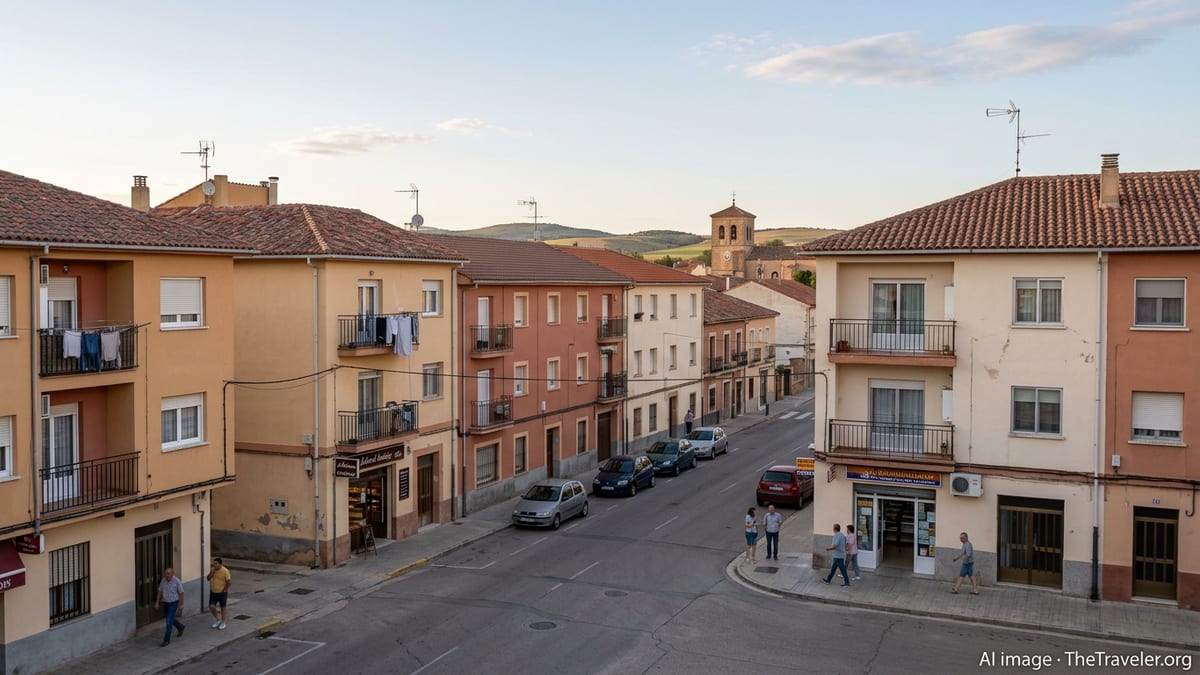
Methodology and Data Considerations for Identifying Cheap Cities
When assessing the cheapest cities to live in Spain, housing costs dominate the calculation. Rent is typically the single largest monthly expense for both locals and foreign residents, and in the current Spanish context rental inflation has outpaced wage growth in many regions. This analysis therefore centres on average long-term rental prices per square metre, complemented by headline information on purchase prices in selected markets where relevant for longer-term planning.
Recent data from Spanish and international sources shows that average national rents have climbed to around the mid-teens per square metre in the largest cities, while the cheapest provincial capitals often remain closer to half that level. For example, various 2025 and early 2026 reports based on real estate portal data indicate that cities such as Barcelona and Madrid now commonly exceed 20 euros per square metre, whereas several smaller inland cities cluster between roughly 7 and 9 euros per square metre. This creates a substantial gap in monthly housing cost for similar property sizes.
The cities highlighted here are drawn primarily from the latest national and regional rankings of rental affordability, which consistently place smaller provincial capitals and certain mid-sized inland cities among the lowest in Spain for both rents and purchase prices. Because methodologies differ between data providers and the market is still volatile, figures in this briefing are best understood as indicative ranges rather than exact quotes for any specific property.
It is also important to distinguish between absolute cheapest municipalities, including small towns, and the cheapest cities that still function as regional service hubs. For relocation decisions, especially for workers and families, this briefing emphasizes provincial capitals and mid-sized cities that combine relatively low costs with a reasonable level of infrastructure and services.
National Rental Context: Why Smaller Inland Cities Stand Out
Spain is currently experiencing a structural housing affordability strain, with national indicators showing sustained increases in both rental and purchase prices between 2022 and 2025. Major metropolitan areas and high-demand coastal regions have seen particularly intense growth. In several of the largest cities, long-term rents have risen by 30 percent or more since mid‑2021, and leading markets such as Barcelona and Madrid have reached record highs per square metre.
By contrast, provincial capitals in sparsely populated interior regions and in parts of northwestern Spain have seen more modest rental inflation and in some cases only limited growth in purchase prices. National and property portal statistics from 2025 and early 2026 typically show average asking rents in the cheapest provincial capitals around 7 to 8 euros per square metre per month, compared with well above 15 euros in large coastal and metropolitan markets. That differential can translate to several hundred euros of monthly savings for standard apartment sizes.
These cheaper cities tend to share several structural characteristics: slower population growth, lower tourism intensity, more balanced local rental demand relative to supply, and less penetration by short‑term rental markets. From a relocation cost perspective, this means that internal Spanish migrants and international newcomers can secure larger living spaces or central locations for materially lower outlays than in the country’s globalised hotspots.
However, the same structural features that keep rents low can also limit local salary levels and job opportunities. Anyone evaluating these cities purely through the lens of “cheapness” should balance housing savings against potential trade‑offs in income, sectoral depth and international connectivity, which fall outside the scope of this strictly cost‑focused briefing but remain relevant for overall relocation feasibility.
Cheapest Provincial Capitals for Rent in 2026
Recent Spain‑wide analyses of rental markets consistently identify a cluster of provincial capitals as the cheapest cities for long-term rent. Data compiled in late 2025 and early 2026 indicates that cities such as Ciudad Real, Zamora, Lugo, Cuenca and Cáceres typically record average advertised rents below or around 8 euros per square metre per month. These figures contrast sharply with the national leaders, where averages above 20 euros per square metre are increasingly common.
For practical benchmarking, this means that a standard 80 square metre apartment in one of these cheaper capitals might carry a headline monthly rent in the approximate range of 600 to 700 euros, depending on property condition and neighbourhood. In larger coastal cities, a similar property can easily exceed 1,200 euros and may reach 1,600 euros or more in prime districts. The cost difference is particularly significant for households requiring two or three bedrooms or for those prioritising central locations.
Several independent media and market reports published in early 2026 list Zamora in Castilla y León as one of the very cheapest provincial capitals in Spain by average rent, with typical monthly costs for a mid‑sized unit estimated in the low 600‑euro range. Other low‑cost provincial capitals, including Ciudad Real and Cáceres, also generally remain in the 500 to 700 euro band for similar properties, despite some year‑on‑year increases.
Although precise rankings fluctuate with each new data release, the pattern is stable: inland provincial capitals away from major tourist routes and global commercial centres form Spain’s core group of cheapest cities for renters. For individuals or families whose primary objective is minimising housing expenditure while retaining urban amenities, these cities merit priority attention in relocation research.
Selected Low‑Cost Cities: Comparative Rent Benchmarks
The following table synthesises indicative rent benchmarks for commonly cited low‑cost Spanish cities, based on 2025 and early 2026 market reporting. Figures are broad averages intended for comparison; actual offers will vary significantly by district, building quality and contract conditions.
| City (provincial capital) | Approx. average rent €/m² | Indicative rent for 80 m² flat |
|---|---|---|
| Zamora | around 7.5–8 | about 600–640 €/month |
| Ciudad Real | around 7.5–8 | about 600–640 €/month |
| Cáceres | around 7.5–8 | about 600–640 €/month |
| Lugo | around 7.5–8 | about 600–640 €/month |
| Cuenca | around 7.5–8 | about 600–640 €/month |
These ranges reflect advertised asking prices across entire municipal markets rather than negotiated final rents. In practice, specific properties may be available below these levels, particularly outside the most central districts or in older buildings. Conversely, newly renovated apartments, properties with parking or units in especially desirable micro‑locations can command higher rents even in these otherwise cheap cities.
For comparison, contemporaneous data from the same sources often cites Barcelona with average rents well above 20 euros per square metre and Madrid only slightly lower, implying indicative monthly rents of 1,600 euros or more for an 80 square metre central apartment. Secondary coastal cities such as Valencia, Málaga or Bilbao typically fall in the intermediate band, around the mid‑teens per square metre, remaining materially more expensive than the interior provincial capitals but cheaper than the top tier.
The spread between these low‑cost cities and Spain’s premium markets has widened in the last several years, partly because tourist and international demand has been concentrated in a limited number of coastal urban centres. Unless there is a significant policy shift or construction surge in the larger cities, this divergence is likely to persist in the medium term, preserving the relative advantage of the cheaper provincial capitals for cost‑driven relocations.
Cheapest Municipalities Beyond the Provincial Capitals
While this briefing focuses on cities, it is relevant to note that some of Spain’s very lowest rents are recorded not in provincial capitals but in smaller municipalities. National datasets that rank municipalities by monthly rent show that certain non‑capital towns, particularly in regions such as Murcia, Andalusia and inland Galicia, can record average monthly rents around or even below 300 euros for standard housing units.
Examples drawn from 2023 and 2024 rental statistics include municipalities such as Cieza in Murcia, Priego de Córdoba in Andalusia and A Estrada in the province of Pontevedra, all of which have been identified as having some of the lowest average monthly rents in the country. In these locations, the cost of a typical long‑term rental can be less than half of what is common in mid‑range provincial capitals and a fraction of the cost in Spain’s largest cities.
However, these ultra‑low‑cost municipalities introduce different relocation dynamics. They are usually smaller, with more limited labour markets, fewer higher‑education institutions and less diversified local services. For fully remote workers or retirees whose income is not tied to the immediate locality, these municipalities can represent extreme budget options. For those requiring local employment or specialised services, the trade‑offs may outweigh the savings.
Prospective movers considering such areas should factor in the additional costs associated with more frequent travel to larger cities for services or work. Even after accounting for transport, the total monthly outlay can still be significantly lower than in Spain’s metropolitan areas, but the non‑financial implications of relative isolation and reduced choice of amenities require careful evaluation.
Purchase Price Patterns in Spain’s Cheapest Cities
Although ongoing costs of living are dominated by rent for most newcomers, purchase price levels provide an additional lens on the relative cheapness of different cities and their long‑term affordability. National summaries of property markets in 2025 and early 2026 show average sale prices around the mid‑2,000 euros per square metre level nationally, with major cities like Madrid and Barcelona moving above the 5,000 euros per square metre mark.
In contrast, several of Spain’s cheapest provinces by property price, such as Ciudad Real, Cuenca and Jaén, report average sale prices under 900 euros per square metre. Within these provinces, provincial capitals and larger towns often sit slightly above the provincial average but still well below 1,500 euros per square metre. This places the total purchase cost for a standard 80 to 100 square metre apartment dramatically below that of similar homes in large coastal cities.
Market reports specifically listing the provincial capitals with the cheapest housing in 2025 highlight cities in inland regions and parts of Galicia and Castile, where average prices for existing homes often remain near or below 1,500 euros per square metre. Even where prices have risen by 8 to 10 percent year‑on‑year, these levels remain structurally low in comparison to national averages and especially to the top tier metropolitan markets.
For relocation projects with a medium‑term ownership horizon, such price differentials can materially reduce capital requirements and mortgage burdens if financing is involved. Nevertheless, it is important to account for local liquidity and resale prospects. Cheaper cities can have slower transaction speeds and more modest capital appreciation profiles, which may affect long‑term investment outcomes even if day‑to‑day housing costs are far lower.
The Takeaway
On a national comparison, the cheapest cities to live in Spain are predominantly smaller provincial capitals and selected inland municipalities where housing costs remain structurally lower than in metropolitan and coastal markets. Cities such as Zamora, Ciudad Real, Cáceres, Lugo and Cuenca repeatedly appear near the bottom of rent and purchase price rankings, with typical monthly rents for standard apartments often in the 600 to 700 euro range and purchase prices far below the levels seen in Madrid, Barcelona or the main Mediterranean coastal hubs.
For relocation planning, this translates into substantial potential savings on housing, which is the central driver of overall living cost differentials within Spain. However, these savings must be weighed against the economic and lifestyle trade‑offs inherent in smaller, less globally connected markets. From a purely financial perspective, the case for these cheaper cities is strong, especially for remote workers, retirees and households that place a premium on space and budget discipline over access to top‑tier urban amenities.
Given the persistent structural shortage of affordable housing in Spain’s largest cities and the ongoing upward pressure on rents in high‑demand areas, it is likely that the relative affordability of these cheaper cities will remain a defining feature of the Spanish housing landscape in the near future. Prospective movers who are flexible on location can leverage this differential by targeting the inland provincial capitals and low‑cost municipalities that consistently register at the bottom of national housing cost tables.
Because individual circumstances, income sources and housing preferences vary, final decisions should always be based on current local listings and, where possible, short exploratory stays. Nonetheless, the patterns outlined in this briefing provide a robust starting point for identifying which Spanish cities offer the lowest structural housing costs and therefore the most favourable baseline conditions for low‑budget relocation.
FAQ
Q1. Which cities are generally considered the cheapest to live in Spain in 2026?
Cities such as Zamora, Ciudad Real, Cáceres, Lugo and Cuenca are consistently identified as among the cheapest provincial capitals, primarily because their average long‑term rents per square metre remain well below the levels seen in Madrid, Barcelona and major coastal hubs.
Q2. How much does rent typically cost in Spain’s cheapest cities?
In the cheapest provincial capitals, indicative average advertised rents often range around 7 to 8 euros per square metre per month. For a standard 80 square metre apartment, this translates to an approximate monthly rent in the region of 600 to 700 euros, depending on the specific property and location within the city.
Q3. Are there municipalities even cheaper than these provincial capitals?
Yes. National rankings of municipalities show that some smaller towns, particularly in regions such as Murcia, Andalusia and inland Galicia, can record average monthly rents close to or even below 300 euros. However, these locations generally have much smaller labour markets and more limited services than the provincial capitals.
Q4. How do rents in the cheapest cities compare with Madrid and Barcelona?
Average rents in the cheapest cities are often less than half of those in Madrid and Barcelona. While low‑cost cities may sit around 7 to 8 euros per square metre, leading metropolitan markets frequently exceed 20 euros per square metre, resulting in several hundred euros difference each month for typical apartment sizes.
Q5. Are property purchase prices also lower in these cheap cities?
Yes. Property market data from 2025 and early 2026 shows that provinces such as Ciudad Real, Cuenca and Jaén have some of the lowest average sale prices in Spain, often under 900 euros per square metre. Provincial capitals in these regions still price below national averages and far below Madrid and Barcelona.
Q6. Have prices in the cheapest cities been stable or rising?
Even in the cheapest markets, both rental and purchase prices have generally risen in recent years, although from a lower base. Year‑on‑year increases in some provincial capitals have been in the high single digits, but these cities remain significantly cheaper than the national high‑cost centres.
Q7. Do cheaper cities in Spain offer enough rental supply?
Most cheaper provincial capitals still provide a reasonable supply of long‑term rentals, although local conditions vary by neighbourhood. While competition is typically lower than in major cities with very tight rental markets, desirable central units and high‑quality renovated apartments can still be scarce and attract significant interest.
Q8. Are coastal cities ever among the cheapest places to live?
Generally not. Coastal and island locations in Spain tend to be more expensive due to strong demand from tourism and second‑home buyers. The cheapest cities and municipalities are predominantly inland, away from major beach destinations and international tourist flows.
Q9. How reliable are average rent figures when planning a relocation budget?
Average rent figures provide a useful benchmark but should be treated as indicative only. Actual rents depend on property condition, micro‑location, building age and negotiation. For detailed budgeting, it is advisable to cross‑check multiple sources and review current local listings shortly before a move.
Q10. Will the cheapest cities in Spain likely remain cheap in the coming years?
Current structural trends suggest that smaller inland cities will continue to be relatively cheap compared with Spain’s largest metropolitan and coastal markets. However, ongoing national housing pressures mean that even these cheaper cities may experience gradual price increases, so timely and location‑specific research remains essential.