

For value-focused expatriates, Thailand offers a spectrum of secondary and regional cities where monthly living costs remain substantially below Bangkok and major resort destinations. Evaluating the cheapest cities is less about finding the absolute lowest prices and more about identifying locations where rent, daily expenses, and infrastructure combine to deliver sustainable low-cost living. This briefing outlines several of Thailand’s most cost-effective urban centers for expats and compares typical budgets, rent ranges, and structural cost drivers in each.
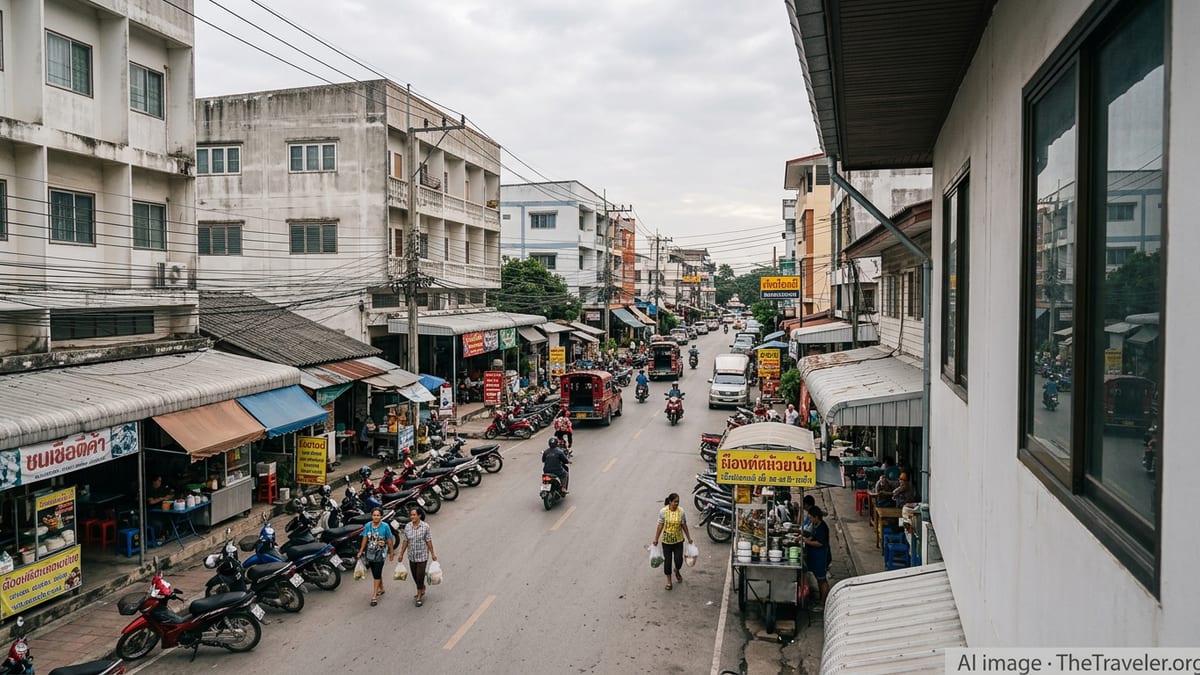
Framework for Identifying Thailand’s Cheapest Expat Cities
When assessing the cheapest cities in Thailand for expatriates, the principal drivers are accommodation, everyday consumption (food, transport, utilities), and how strongly local prices are influenced by tourism. Cities with sizeable local populations, universities or regional government functions but relatively low international tourism pressure typically deliver the best value. Housing in these locations often remains far below the levels seen in Bangkok, Phuket, or Koh Samui, even after recent post-pandemic price adjustments.
For a single expat in 2026, a workable cost benchmark in low-cost Thai cities is often in the range of roughly 20,000 to 35,000 Thai baht per month, excluding international flights and long-term savings. Within this range, accommodation is frequently the dominant expense category. One-bedroom apartments outside city centers in cheaper provinces can start near 4,000 to 6,000 baht monthly, with many expats opting for units in the 6,000 to 12,000 baht band for improved standards. Food and local transport are comparatively modest line items, particularly for those who rely on Thai eateries and public or informal transport networks.
It is important to distinguish between “can survive” and “can live comfortably.” While ultra-frugal individuals may target monthly spending closer to local wage levels, the figures referenced in this briefing are oriented toward expats seeking a basic but comfortable standard of living, including some discretionary spending and occasional domestic travel.
The cities highlighted below are representative rather than exhaustive. They are selected because recent data points indicate persistently lower living costs relative to Thailand’s national urban average, while still offering the core services expats typically require.
Chiang Rai: Northern City With Some of the Lowest Urban Rents
Chiang Rai, a provincial capital in northern Thailand, consistently appears among the country’s lower-cost urban environments. Recent 2026 data suggests that overall living costs there sit roughly 10 to 15 percent below the national average, with accommodation as the key savings driver. One-bedroom apartments in the city center average around 8,000 to 8,500 baht per month, while equivalent units outside the center can fall closer to 3,800 to 4,500 baht, provided the tenant accepts basic finishes and limited amenities.
For houses, typical reported rental bands place small one-bedroom homes in the 8,000 to 10,000 baht range, and two-bedroom houses in roughly the 10,000 to 18,000 baht range depending on proximity to town and furnishings. Larger family homes of three to four bedrooms are commonly available between 15,000 and 30,000 baht, still substantially below comparable stock in Bangkok or Chiang Mai. These figures position Chiang Rai as a strong option for expats seeking larger living spaces on constrained budgets.
Everyday expenses in Chiang Rai also track on the lower side of Thai urban norms. Local Thai meals from street vendors or simple restaurants often fall between approximately 25 and 60 baht per dish, with most expat budgets for groceries and dining out falling somewhere around 8,000 to 12,000 baht per month for a single person who mixes markets and supermarkets. Utility costs in modest apartments with air conditioning used conservatively can often be kept in the 2,000 to 4,000 baht monthly band.
For planning purposes, a single expat willing to live outside the central areas, rely largely on Thai food, and use a motorbike or local transport can realistically target a total monthly spend in the vicinity of 20,000 to 28,000 baht in Chiang Rai. Those seeking a newer city-center condo, frequent international dining, and more extensive leisure activities might budget closer to 30,000 to 40,000 baht.
Chiang Mai: Economical Medium-Sized City by International Standards
Chiang Mai is not the absolute cheapest location in Thailand, but it remains significantly less expensive than Bangkok and coastal resort areas while offering a larger city environment. Several recent expat-oriented budget breakdowns place Chiang Mai’s average expat cost of living around 700 to 800 US dollars per month for a modest but comfortable lifestyle, which translates to approximately 25,000 to 30,000 baht at prevailing exchange rates. One comparative analysis suggests Chiang Mai’s overall cost of living is roughly 30 to 40 percent lower than that of major resort destinations such as Phuket.
Accommodation costs illustrate why Chiang Mai still qualifies as a “cheap city” by international standards. Simple studios and older one-bedroom apartments outside prime neighborhoods can start as low as about 4,000 to 7,000 baht per month. Modern one-bedroom condos in popular central areas typically range from roughly 10,000 to 20,000 baht, with premium developments and high-demand neighborhoods commanding upwards of that. Despite steady demand from digital workers and retirees, local incomes and available housing stock have so far kept many segments of the rental market within reach for budget-conscious expats.
Non-housing expenses in Chiang Mai are broadly comparable to Chiang Rai, though usually a little higher. Local meals in non-tourist areas still often fall in the 40 to 80 baht range, with supermarkets and imported goods pushing costs up for those who favor international products. Regular groceries for one person, skewed toward local items, often fall near 6,000 to 10,000 baht per month, while utilities for an air-conditioned one-bedroom apartment usually total 1,500 to 3,500 baht depending on usage and building charges.
For a single expat seeking to minimize spending, a realistic working budget in Chiang Mai might be around 25,000 to 32,000 baht per month, assuming a basic apartment outside the most popular districts and predominantly local dining. A more typical comfort-oriented expat lifestyle, including a newer condo and frequent dining out in central neighborhoods, can push monthly costs into the 35,000 to 50,000 baht range, which is still modest compared with many Western cities.
Hat Yai: Low-Cost Large City in Southern Thailand
Hat Yai in Songkhla Province is one of Thailand’s largest urban centers yet remains largely outside the mainstream expat tourism circuit. This combination of scale and relatively low foreign visitor pressure has kept the cost of living unusually low for a city of its size. Recent expat analyses describe Hat Yai as one of the most affordable major cities in the country, with comfortable one-bedroom apartments commonly advertised at approximately 200 to 350 US dollars per month, corresponding to roughly 7,000 to 13,000 baht.
Supplementary data from local guides places studio apartments in central areas in the approximate range of 150 to 250 US dollars per month, translating to around 5,000 to 9,000 baht. As in many Thai cities, older non-luxury buildings offer the lowest rents, especially when contracts are signed directly with local owners. Utilities for a single person in a small apartment, including electricity, water, and basic internet, often total around 1,500 to 3,000 baht per month depending on air conditioning use.
Day-to-day expenses in Hat Yai are reported to be among the lowest of Thailand’s regional cities. Local meals in non-tourist neighborhoods often cost in the range of 35 to 70 baht, with extensive options well under 100 baht. A monthly food budget of roughly 5,000 to 9,000 baht is generally achievable for a single expat focused on Thai cuisine and markets. Transport costs are also moderate, as many residents rely on motorbikes, songthaews, or private-hire vehicles over relatively short distances in the compact urban core.
For practical planning, a single expat in Hat Yai can target a total monthly spend of around 20,000 to 30,000 baht for a comfortable but not luxurious lifestyle, including a modest modern apartment, utilities, basic medical out-of-pocket spending, and occasional social activities. Those choosing older accommodation, minimizing discretionary entertainment, and prioritizing local food may be able to operate closer to 18,000 to 22,000 baht per month.
Khon Kaen: Affordable Northeastern Hub With Rising Development
Khon Kaen, the principal city in Thailand’s northeastern region (Isan), is another prominent candidate for expats pursuing low living costs. With a large university and status as a regional administrative and commercial hub, Khon Kaen supports modern infrastructure while retaining price levels anchored by local incomes rather than international tourism. User-contributed cost of living datasets from mid-2024 indicate that Khon Kaen’s price levels for everyday goods and services remain significantly below Bangkok and slightly below the Thai national urban average.
Housing is still affordable despite recent reports of growing real estate activity and infrastructure projects. Older one-bedroom apartments or basic condos in non-prime areas can often be found in the 4,000 to 7,000 baht monthly range, with more modern one-bedroom units in central districts typically ranging from about 8,000 to 15,000 baht. Family houses in suburban areas may start around 10,000 to 12,000 baht, rising with size and proximity to key institutions. While there is upward pressure as new developments come online, overall rental levels remain low in comparison with similarly sized cities in many other countries.
Daily expenses in Khon Kaen reflect the broader Isan cost profile, with very accessible local pricing. Basic meals from markets or simple restaurants commonly cost around 30 to 60 baht, enabling a frugal yet nutritionally adequate diet on a monthly food budget as low as 4,000 to 7,000 baht for a single person. Routine services and small purchases, such as haircuts, basic clothing, and local transport, likewise trend below national averages. University cost-of-living materials for international students in the city reinforce the perception of Khon Kaen as a low-cost environment for long-term stays.
Typical total monthly budgets for expats in Khon Kaen fall broadly within the 20,000 to 30,000 baht zone for a modest lifestyle, assuming a simple apartment and regular but not extravagant socializing. Even with a higher-end condo and more frequent leisure spending, many expats report difficulty exceeding 35,000 to 40,000 baht per month without deliberate luxury consumption, underscoring Khon Kaen’s value proposition as a low-cost, non-touristic regional center.
Comparative Cost Overview: Key Indicators by City
The following table summarizes indicative cost ranges for the cities discussed. Figures are approximate and intended for comparative rather than contractual use. They assume a single expat in 2026, renting long term and primarily using local services and food.
| City | Typical 1BR Rent (monthly) | Indicative Total Monthly Budget | Relative Cost vs Thai Urban Average |
| Chiang Rai | 4,000–8,500 baht | 20,000–30,000 baht | Lower than average |
| Chiang Mai | 6,000–20,000 baht | 25,000–40,000 baht | Moderately below major-city average |
| Hat Yai | 5,000–13,000 baht | 20,000–30,000 baht | Lower than average for large cities |
| Khon Kaen | 4,000–15,000 baht | 20,000–30,000 baht | Lower than average |
These ranges demonstrate that rent is the most variable and decisive cost component across cities. For expats who are flexible on housing type and neighborhood, particularly those willing to consider older buildings or peripheral districts, monthly expenditure can be compressed significantly, sometimes by 30 percent or more relative to centrally located modern condos in the same city. Conversely, those seeking newly built, centrally located, amenity-rich units will find less difference in total costs between these cheaper cities and larger destinations like Bangkok.
In practice, the cheapest city for any given expat will depend on personal trade-offs. For example, an individual who can comfortably live in a low-rise building outside Chiang Rai’s center may achieve a lower absolute monthly spend than in Chiang Mai, even if Chiang Mai offers more diverse services. A family requiring international schools, specific healthcare providers, or particular amenities may find that the “cheapest” workable city shifts once these constraints are factored into the budget.
The Takeaway
Thailand continues to offer multiple cities where expats can maintain long-term residence at costs that are low by global standards. Among these, Chiang Rai, Hat Yai, and Khon Kaen stand out for particularly low rent levels and everyday expenses, while Chiang Mai offers a slightly higher but still economical profile with a larger expat-oriented service ecosystem. In all of these cities, careful neighborhood selection and realistic expectations regarding housing standards can materially reduce monthly outlays.
At a strategic level, expats evaluating relocation to Thailand on a budget should prioritize detailed housing research for each candidate city, including on-the-ground price checks where possible. The difference between a basic apartment in a local neighborhood and a modern condo in a premium area can exceed the entire cost gap between two cities. For those prepared to adapt to local norms, a stable and comfortable lifestyle in these cheaper Thai cities is often achievable within a monthly budget of approximately 20,000 to 30,000 baht, leaving additional capacity for savings or travel.
Ultimately, the cheapest city to live in Thailand is not defined solely by headline cost indices but by how well an individual or family can align housing, daily spending patterns, and service requirements with the cost structure of a particular location. The cities highlighted here demonstrate that, with adequate research and flexibility, Thailand remains a compelling option for expats seeking to minimize living expenses while maintaining an acceptable standard of living.
FAQ
Q1. Which city in Thailand is generally the cheapest for expats?
There is no single definitive answer, but Chiang Rai, Hat Yai, and Khon Kaen consistently emerge as among the cheapest due to relatively low rents and modest everyday prices compared with Bangkok and major resort areas.
Q2. What monthly budget should a single expat expect in a cheap Thai city?
For a basic but comfortable lifestyle in cities such as Chiang Rai, Hat Yai, or Khon Kaen, many expats can plan for a total monthly budget in the range of roughly 20,000 to 30,000 baht, assuming modest housing and primarily local food.
Q3. How much does rent typically cost in these cheaper cities?
Rents vary by city and neighborhood, but basic one-bedroom apartments in local or peripheral areas often start around 4,000 to 6,000 baht per month, with more modern or central one-bedroom units usually ranging between 8,000 and 15,000 baht in the cities highlighted.
Q4. Is Chiang Mai still considered a cheap city for expats?
Chiang Mai remains relatively inexpensive compared with Bangkok and beach destinations, though it is usually more expensive than Chiang Rai, Hat Yai, or Khon Kaen. A realistic single-expat budget for Chiang Mai is often closer to 25,000 to 40,000 baht per month depending on housing choices and lifestyle.
Q5. Are southern cities like Hat Yai cheaper than northern cities?
Hat Yai is one of the most affordable large cities in Thailand, with rents and food prices that are highly competitive with northern cities, but whether it is cheaper than a northern city for a specific expat depends on housing preferences, transport habits, and targeted neighborhoods.
Q6. How much can housing choices change the total monthly budget?
Housing choices are often the single largest lever. Opting for an older apartment outside the city center rather than a new condo in a prime district can reduce rent by several thousand baht per month and may lower the overall budget by 20 to 30 percent.
Q7. Are utility costs significantly different between these cities?
Differences in utility pricing are generally modest across the cities discussed. The main driver of utility costs is personal behavior, particularly air conditioning use and building efficiency, rather than city-level tariffs, so expats can often manage utilities within similar ranges in all locations.
Q8. How do food costs compare between cheap Thai cities?
In local markets and non-tourist eateries, food costs are broadly similar across the highlighted cities, with basic meals commonly priced between roughly 30 and 70 baht. Variations arise mainly from differing reliance on imported goods and international restaurants.
Q9. Can a couple live comfortably in these cities on a single modest income?
Many couples report managing comfortably on combined monthly budgets in the 30,000 to 45,000 baht range in cheaper cities, particularly when sharing accommodation and favoring local services, although individual circumstances and expectations vary widely.
Q10. How stable are these low costs over time?
While inflation and development, especially in growing regional hubs, exert upward pressure on rents and some services, the underlying economic structure of these cities, which is not heavily dependent on international tourism, has so far helped keep living costs comparatively low by global standards.