

More news on this day
Travelers heading to Tehran via Istanbul are being urged to double-check their flight status as Turkish Airlines and airport authorities in Türkiye adapt schedules on the volatile Istanbul–Tehran corridor amid rising regional tensions and fast-changing security assessments.
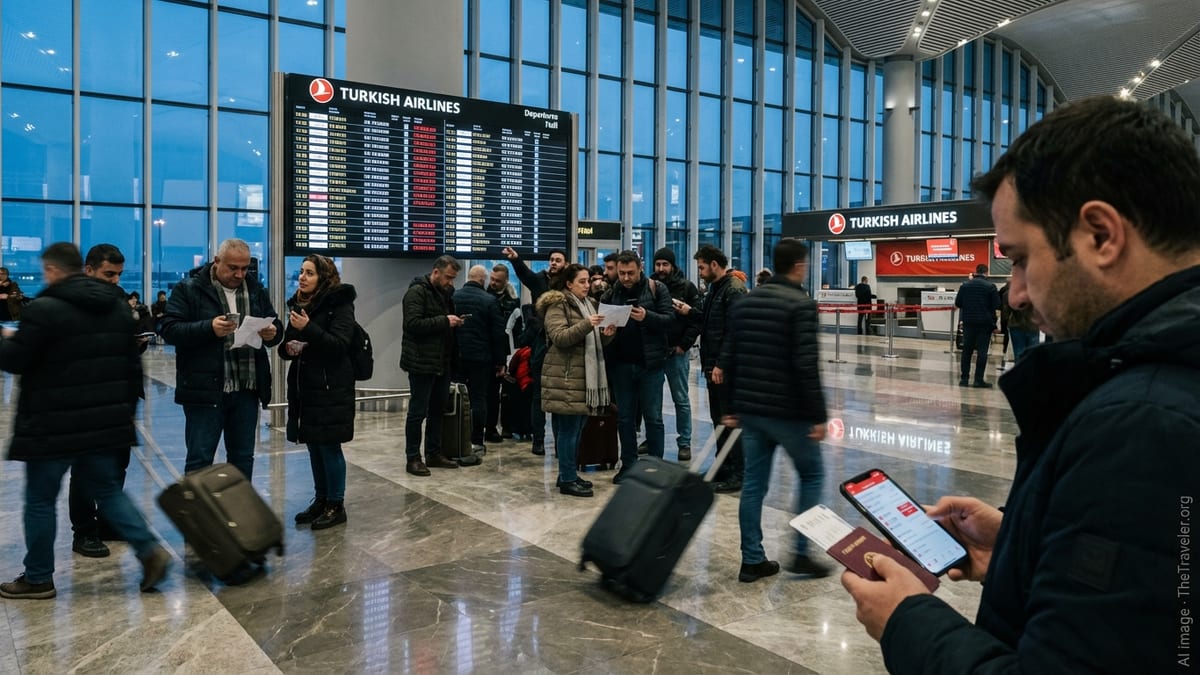
Night Flights Curtailed as Tensions Rise
Turkey’s aviation authorities have confirmed that night services between Istanbul and Tehran have been pulled back, with several Friday evening departures canceled in recent days as the regional security picture worsens. Data from Istanbul Airport and regional aviation outlets show late-night flights on the high-traffic route being removed from departure boards at short notice as officials cite operational and safety grounds for limiting movements in Iranian airspace.
The latest wave of disruptions on February 27 and 28 followed weeks of turbulence for Iran-bound traffic, as protests inside Iran, military posturing in the wider Middle East and warnings from international regulators combined to make routing decisions more complex. While many daytime services are still operating, the Istanbul–Tehran link is now subject to what airport sources describe as day-by-day, sometimes hour-by-hour adjustments.
For passengers connecting through Istanbul, especially those originating in Europe or North America, that shift matters. Istanbul Airport functions as a major hub funnelling long-haul traffic to Iran, and even a single cancelled sector can strand travelers mid-journey. Industry analysts say that as long as airspace risk assessments remain fluid, the Istanbul–Tehran route will be among the most exposed to sudden schedule changes.
Conflicting Signals From Airlines and Airport Apps
Adding to the uncertainty are mixed messages between official airline statements and airport or tracking data. In recent days, airport screens and independent trackers have reported multiple Istanbul–Tehran flights as cancelled, including some Turkish Airlines departures, alongside services by Iranian carriers. Yet Turkish Airlines’ senior communications executives have publicly pushed back on claims of broad cancellations, insisting that their Iran operations continue under “daytime conditions” and that rumors circulating on social media do not reflect the full picture.
This divergence highlights a key risk for travelers who rely solely on social media or third-party apps. Airport data may show an individual flight as cancelled or removed from the schedule, while the carrier frames the change as a limited, time-of-day adjustment rather than a suspension of the route. In some cases, operational decisions are being taken so close to departure time that earlier snapshots of the schedule quickly become outdated.
The result is a confusing landscape in which an Istanbul–Tehran flight might appear on sale when a ticket is booked, show as operating when baggage is checked at the origin airport, and then be delayed, retimed or cancelled by the time a passenger reaches Istanbul. Aviation experts stress that only the airline’s live systems and official updates should be treated as definitive, and that travelers should refresh this information repeatedly on the day of travel.
Why Tehran‑Bound Passengers via Istanbul Are Uniquely Exposed
Tehran-bound passengers connecting through Istanbul face a more fragile itinerary than most regional travelers. The route runs through or adjacent to airspace that has attracted repeated safety advisories from international regulators, and Iran’s internal unrest has at times spilled over into its aviation system in the form of airspace restrictions, communications blackouts and security alerts. Turkish Airlines has previously confirmed blocks of cancellations to Iranian destinations, including Tehran, Mashhad and Tabriz, when protests and internet shutdowns made safe and predictable operations harder to guarantee.
Unlike point-to-point flyers, connecting passengers are particularly vulnerable to missed onward legs. A traveler originating in New York, London or Berlin may complete the long-haul sector to Istanbul only to discover that their night-time Istanbul–Tehran connection has been cancelled or retimed into a narrow daytime window. Rebooking options can be limited, especially when other regional carriers have also trimmed or suspended Iran services, and hotel capacity around Istanbul Airport can quickly come under strain during disruption spikes.
There is also the challenge of information flow once travelers reach Iran. With authorities in Tehran periodically restricting mobile data and messaging apps, receiving updated boarding times, gate changes or rebooking notifications can become difficult, particularly for foreign passengers unfamiliar with local workarounds. Those constraints are a key reason aviation analysts argue that Tehran-bound journeys via Istanbul require closer pre-trip planning and more frequent status checks than comparable connections elsewhere in the region.
How Turkish Airlines Communicates Travel Updates
Turkish Airlines publishes travel alerts and route-specific updates through its official channels, including its website, mobile application and customer communication teams. In recent weeks, the flag carrier has emphasized that any modifications to its Iran schedule are being made within a broader safety and risk-management framework, with a preference for operating daytime flights where risk assessments allow and trimming or cancelling operations when conditions deteriorate.
When blocks of flights to Iran were cancelled in January, the airline issued formal statements outlining the affected dates and destinations and advising passengers to monitor their reservations and contact customer service for rebooking options. Similar messaging is expected whenever there are systemic changes to the Tehran operation, such as a prolonged overnight suspension or significant capacity reduction. However, not every single flight-level change is accompanied by a prominent public announcement, which places the onus on passengers to track their individual booking.
Customer advocates note that Turkish Airlines, like many full-service carriers, generally offers free rebooking or refunds when a flight is cancelled by the airline, but warn that passengers may face long waits to reach call centers during periods of mass disruption. They recommend that travelers use the airline’s mobile app and manage-booking tools as a first resort, since these systems typically update more quickly than generic flight-tracking sites and can display rebooking options in real time.
Practical Steps for Travelers Before Heading to Istanbul
For anyone planning to reach Tehran via Istanbul in the coming days and weeks, aviation experts recommend treating live flight status checks as non-negotiable. That means confirming the status of both the long-haul leg into Istanbul and the onward Istanbul–Tehran segment repeatedly in the 24 hours before departure, and again before leaving for the airport. Passengers are advised to pay particular attention to departure times that fall in the late evening or early-morning hours, which are currently most exposed to operational cuts.
Travel planners also highlight the importance of building extra buffer time into itineraries. Opting for an earlier connection into Istanbul, choosing daytime Tehran arrivals where possible and avoiding the tightest permissible minimum-connection times can all reduce the risk of being stranded if one leg is disrupted. In the current environment, a longer layover in Istanbul may offer greater peace of mind than a marginally faster itinerary that leaves little room for delays or last-minute equipment changes.
Finally, passengers should ensure that Turkish Airlines has multiple ways to reach them, including updated email and mobile contact details, and that they have access to the airline’s app or online account tools while on the move. With night flights curtailed and the wider regional situation still fluid, the Istanbul–Tehran route is likely to remain unpredictable. Those who stay closely engaged with their booking, and verify status before even heading to Istanbul, will be best positioned to adapt quickly if their plans are suddenly upended.