

Spending several days tasting across both the Chehalem Mountains and the smaller Ribbon Ridge AVAs in Oregon’s Willamette Valley forced me into a surprisingly tough choice: if I only had limited time, which one would I go back to, and who should prioritize which side of this ridge-and-valley puzzle? Going in, I assumed Chehalem Mountains would automatically win because it is bigger, closer to Portland and more famous.
After a string of tastings, a few booking hiccups, and a couple of very long gravel drives, the reality turned out to be more nuanced. Here is how these two neighboring regions actually compare when you are on the ground with a glass in hand.
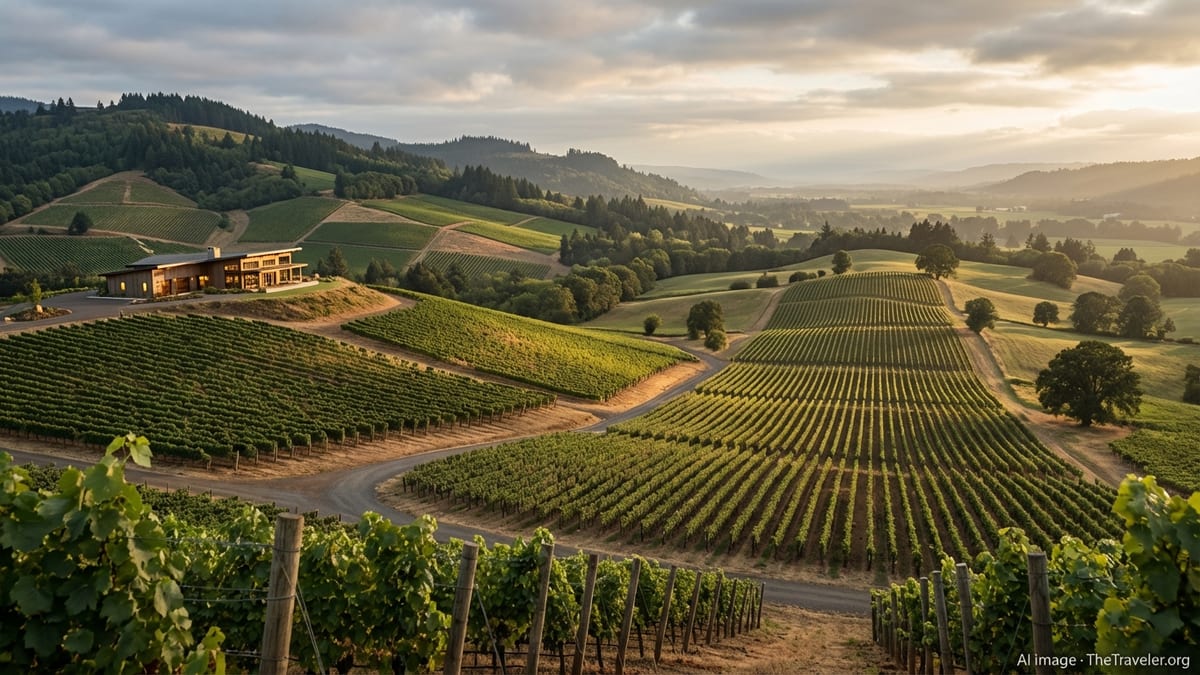
Getting Oriented: How Chehalem Mountains and Ribbon Ridge Fit Together
The first thing I had to wrap my head around was that Ribbon Ridge is not a separate world; it is actually nested inside the larger Chehalem Mountains AVA. Chehalem Mountains stretches across parts of Yamhill, Washington and Clackamas counties and covers more than 100 square miles, making it the largest of the northern Willamette Valley subregions. Ribbon Ridge, by contrast, is a compact spine of hills at the western edge, roughly 3.5 miles long and less than 2 miles wide, with only a few thousand acres total and a fraction of that planted to vines. Driving it, I could feel the scale difference immediately: Chehalem felt like a patchwork of hilltops and valleys, while Ribbon Ridge felt like a self-contained island of vines.
In practical terms, that geography shaped almost every part of my experience. In Chehalem Mountains, my day zigzagged between elevations, exposures and soil types. One tasting room looked out over forested slopes, the next across more open farmland. Ribbon Ridge, on the other hand, was more tightly focused. Nearly every stop sat on similar marine sedimentary soils, with gentle slopes rolling off the single ridge spine. This translated into more consistency in the wines but also a different vibe: Chehalem felt expansive and varied, Ribbon Ridge intimate and concentrated.
Another thing that surprised me was how each area framed its identity. Chehalem Mountains wineries leaned heavily into diversity, talking about how three major soil types and a big elevation range allow them to make everything from bright, high-acid Pinot Noir to richer, darker versions, along with serious Chardonnay, Riesling and even Gamay. Ribbon Ridge tasting rooms were more single-minded: their story was almost always about Pinot Noir grown on marine sediment, with a through-line of darker fruit and savory, sometimes earthy notes. If you like the idea of exploring contrast in a single day, Chehalem Mountains delivers that better. If you would rather taste subtle variations on a specific theme, Ribbon Ridge makes more sense.
Going in, I expected the smaller AVA to feel like a side note. In reality, when I looked back over my notes, many of my favorite bottles came from Ribbon Ridge. What Chehalem Mountains offered in breadth, Ribbon Ridge often matched with intensity and a very strong sense of place in the glass. That tension between breadth and focus sat at the heart of nearly every decision I had to make during my visit.
Access, Driving and Logistics: Which Is Easier to Visit?
On a map, both Chehalem Mountains and Ribbon Ridge look appealingly close to Portland. In real life, the difference in driving experience was bigger than I anticipated. Reaching the Chehalem Mountains from central Portland took me roughly 35 to 45 minutes by car under normal traffic, mostly on major roads until the final stretch into the hills. Many tasting rooms sit not far from Newberg or Sherwood, which makes it easy to combine wine tasting with meals or non-wine activities. The roads wind, but I never felt truly isolated.
Ribbon Ridge required a bit more commitment, not in distance but in feel. From Portland, I still arrived in about 50 minutes, but the last section involved narrower, more rural roads and, in several cases, gravel or packed dirt driveways that stretched for what felt like forever when I was late for a reservation. None of it was difficult driving, but it was slower and less forgiving of last-minute changes. If you are anxious about country roads, Chehalem Mountains will likely feel more comfortable, especially for a first-timer.
Public transportation was essentially a non-factor for both. I quickly realized I either needed a designated driver, a private tour, or a pre-booked rideshare with the full understanding that cell service can be spotty and pickup times unpredictable once you head deeper into the hills. In Chehalem Mountains, I had better luck finding drivers near Newberg and Sherwood, especially toward the middle of the day. On Ribbon Ridge, I had one awkward moment where a rideshare app kept dropping my location; if I had not planned extra time, I would have missed a tasting slot.
Overall, Chehalem Mountains won clearly on convenience and backup options. Ribbon Ridge is still very accessible, but it felt like the kind of place where planning ahead really matters. If you are putting together your first Willamette trip or want the option to improvise, starting with Chehalem Mountains is the safer move. Ribbon Ridge, in my experience, made more sense once I already had a feel for the area and was deliberately prioritizing specific wineries.
Wine Style and Quality: Diversity vs Laser Focus
Comparing wine quality between Chehalem Mountains and Ribbon Ridge is less about better or worse and more about which style resonates with you. Chehalem Mountains spans elevations from around 200 feet up to more than 1,600 feet, along with a mosaic of volcanic, marine sedimentary and loess-based Laurelwood soils. That combination allowed me to taste Pinot Noirs that ranged from bright and red-fruited with high acidity to deeper, more structured wines with darker fruit and spice. In a single afternoon, I went from almost Burgundian delicacy to something much richer and more muscular without leaving the AVA.
Ribbon Ridge, by comparison, is built on predominantly marine sedimentary soils with relatively uniform, low-fertility silty clay loam. The climate there is a bit warmer and drier than some surrounding valley floors, with a long, even growing season. In the glass, that translated into Pinot Noirs that tended toward black cherry, blackberry and darker plum, often with a more savory edge. The tannins could be firmer, sometimes verging on rustic, but in a way that felt grounded rather than flashy. I found fewer detours into white varieties or experimental bottlings. Ribbon Ridge seemed almost proud of being Pinot-obsessed.
My personal surprise was how often the Ribbon Ridge wines felt immediately compelling but also built to age. Even younger bottlings already showed impressive mid-palate weight and structure, backed by fresh acidity. Chehalem Mountains wines were a bit more mixed in that regard. Some high-elevation or volcanic-soil Pinots were thrillingly tight and energetic, clearly needing time, while a couple of warmer-site wines felt a little soft around the edges by comparison. It was not a quality gap so much as a wider spread of styles and ripeness levels.
If your goal is to understand the range of what Willamette Pinot Noir can be, Chehalem Mountains is the better classroom. You can build a tasting day around comparing bottles from different soil types and elevations and genuinely feel the differences from glass to glass. If you crave a very specific profile, especially darker, more concentrated Pinots with a sense of density and subtle earthy notes, Ribbon Ridge is hard to beat. When I think of which bottles I most wanted to take home to lay down for a few years, more of those came from Ribbon Ridge.
Cost, Reservations and Crowd Levels
Before I visited, I had been warned that both regions had become busier and pricier over the past decade. That turned out to be true, but the details mattered. In Chehalem Mountains, tasting fees generally clustered in the moderate to high range for Oregon, with structured flights and, at some estates, optional elevated experiences that quickly ratcheted up the bill. On the upside, I also found more casual bars and satellite tasting rooms in or near towns that offered smaller pours and more flexible pricing, which made it easier to sample without committing half a day and a big budget to a single producer.
Ribbon Ridge, being smaller and more focused, had fewer options at the lower end. Tasting fees were often comparable or slightly higher on average, especially at well-known estates with limited production. One frustration I ran into was that walk-ins were rare outside of a few more relaxed spots. Reservations were strongly recommended and, in some cases, essential, particularly on weekends or during peak summer and harvest season. I nearly lost one afternoon because I assumed I could drop into a couple of smaller producers; they were fully booked with seated tastings, and the narrow roads made it time-consuming to pivot elsewhere.
Crowd levels felt different as well. Chehalem Mountains had more traffic overall, but crowds were dispersed. I shared bars with couples, small groups and the occasional tour van, yet I rarely felt hemmed in. Ribbon Ridge, with its smaller capacity, could feel both serene and surprisingly busy depending on timing. At one winery, a single large group essentially filled the entire tasting room, changing the atmosphere from quiet farmstead to noisy gathering. On another day, sipping outside in the late morning, I had an entire ridge view almost to myself.
If you are after value, Chehalem Mountains gave me more tools: mid-priced tastings, mid-week specials and wine-club member perks at satellite rooms. Ribbon Ridge felt more premium and less flexible. That does not mean it was overpriced, but it is not where I would send someone who is trying to taste as widely as possible on a tight budget. For serious Pinot lovers who are comfortable paying for depth and focus, however, the price-to-pleasure ratio was still compelling.
Scenery, Atmosphere and Comfort
Both regions are beautiful, but in different ways. Chehalem Mountains, with its higher peaks and more varied topography, delivered sweeping views across the Willamette Valley, sometimes all the way to distant Cascade peaks on clear days. I drove past orchards, forests and patchwork vineyards, with hilltop tasting rooms perched like lookout posts. The diversity of settings was a real plus; one stop felt like a sleek, modern hospitality center, the next like a family farm just beginning to open its doors to visitors.
Ribbon Ridge’s beauty was quieter and more intimate. Most wineries tucked themselves along the ridge or just below its crest, surrounded by vines and framed by gently sloping hills. The sense of enclosure was noticeable; the surrounding geologic features that shelter the AVA from wind also made it feel like its own small world. I found the atmosphere particularly appealing on a slightly overcast afternoon when the light softened and the vineyards seemed to absorb the stillness. If Chehalem Mountains invited me to look out across the valley, Ribbon Ridge encouraged me to look more closely at the ground beneath my feet.
Comfort-wise, Chehalem Mountains had the edge in amenities. I encountered more tasting rooms with ample indoor and outdoor seating, professional service teams and polished touches like detailed printed maps, curated food pairings and well-managed flight pacing. Restrooms, parking and accessibility were generally straightforward. Ribbon Ridge, while by no means roughing it, skewed more minimalist. A couple of driveways were rutted enough that I was glad I was not in a very low car. Some spaces felt like working farms first and tasting rooms second, which I liked but which might catch more comfort-oriented travelers off guard.
The tradeoff is authenticity versus ease. If you want to feel like you are dropping into a fully developed wine tourism ecosystem, Chehalem Mountains does that better. If you are willing to accept a little less infrastructure in exchange for quieter, more vineyard-immersed moments, Ribbon Ridge rewards that mindset. Personally, I enjoyed the mix, but I was glad I scheduled at least one day where I did not have to rush along those smaller Ribbon Ridge roads.
Weather, Seasonality and When I Would Go Back
Both AVAs share the broader Willamette Valley’s cool, maritime-influenced climate, but subtle differences showed up over the course of my visit and in conversations with growers. Chehalem Mountains’ elevation range, from low hills to more than 1,600 feet at Bald Peak, translated into noticeable temperature swings. Higher sites could be several degrees cooler and catch more wind and rain, while lower slopes warmed up quickly. Ribbon Ridge, in contrast, sits at more moderate elevations and is protected on three sides by hills, making it slightly warmer and drier than some nearby valley floors, with a long, even growing season.
As a visitor, I felt those distinctions most clearly in shoulder seasons. On a spring day in the Chehalem Mountains, I started in a breezy, chilly hilltop tasting room where everyone kept their jackets on, then ended the afternoon on a lower, sunnier terrace that felt like a different season entirely. On Ribbon Ridge, temperatures shifted less. The mornings were cool, but once the sun was out, it stayed comfortable and stable for most of the day, even as clouds moved in and out.
If I were planning another trip, I would choose timing differently for each region. For Chehalem Mountains, late spring through early fall works, but I would avoid days with heavy rain in the forecast, since fog and precipitation can make some of the higher roads slower and cut down the views. For Ribbon Ridge, a slightly cooler, even overcast day can be ideal, because the protected slopes still hold warmth and the softer light flatters the landscape. I would be especially tempted to return to Ribbon Ridge during harvest, when the long growing season pays off and the ridge feels particularly alive, even if it means busier tasting rooms.
In terms of pure comfort, summer offers the safest bet for both, but it is also when crowds and prices peak. My next trip will likely be in late May or mid-September: enough warmth, fewer people, and better odds of snagging those harder-to-get Ribbon Ridge reservations without planning months in advance.
Real Decision Moments: What I Chose and What I Would Do Differently
The first real decision I faced was where to stay. I had the choice between a place closer to Newberg, which favored Chehalem Mountains access, and a more rural rental that would have put me essentially on Ribbon Ridge’s doorstep. I chose Newberg, assuming the extra dining options and easier access to multiple AVAs would outweigh the longer drive to the ridge. In practice, that was the right call for a first-time visit. I could get to multiple Chehalem Mountains wineries within a short drive, then commit a full day to Ribbon Ridge without worrying about finding dinner afterward on those rural roads.
The second decision was how to structure my tasting days. Initially, I tried to mix both AVAs in a single day: a morning in the Chehalem Mountains, then an afternoon hop over to Ribbon Ridge. That looked good on paper and failed in reality. The logistics of winding roads, fixed reservation times and the temptation to linger at scenic spots meant I was rushing and watching the clock. After that, I switched to one AVA per day, which immediately improved everything. If I did it again, I would go further and build in one lighter day in between, especially if I wanted to explore more of Chehalem Mountains’ different subzones and soil types in detail.
The third decision involved what to pay extra for. Both regions offer special seated tastings and more in-depth experiences that cost more than a basic flight. In Chehalem Mountains, I opted into a soil-focused comparative tasting that lined up wines from volcanic, marine sedimentary and loess-based sites. It was not cheap, but it was one of the most educational hours of the trip, and it set me up to better understand the differences I later found in Ribbon Ridge. On the ridge itself, I skipped a higher-priced, library-only tasting in favor of a standard current-release flight. I slightly regret that choice. Several producers there are known for slow-evolving Pinots, and I would have liked to see how they age. Next time, I would budget specifically for one deeper, older-vintage tasting on Ribbon Ridge and one soil or terroir-focused tasting in Chehalem Mountains, instead of spreading my budget evenly across more basic flights.
These choices highlighted a broader lesson: Chehalem Mountains is where I would experiment, Ribbon Ridge is where I would commit. For experimenting with formats, producers and styles, the larger AVA’s variety and infrastructure make it forgiving. Once I knew what I liked, spending more focused time and money on Ribbon Ridge made far more sense.
The Takeaway: Which Wine Region Is Better for You?
After tasting through both regions and living with the tradeoffs, I do not think there is a single “better” choice that fits every traveler, but I do think each AVA clearly serves different priorities. If your goal is an accessible introduction to Willamette Valley wine, with plenty of options, easier driving and a broad spectrum of wine styles, Chehalem Mountains is the better starting point. Its size, variety of wineries and proximity to towns like Newberg and Sherwood make it more forgiving if plans shift or the weather misbehaves. You will likely taste excellent Pinot Noir, but also Chardonnay, Riesling and other varieties, all while enjoying some spectacular views.
If, however, you already know you care deeply about Pinot Noir and you want to experience a small, tightly defined terroir, Ribbon Ridge has a strong claim to being the more compelling destination. The wines I tasted there showed remarkable consistency in depth, dark fruit character and structure, and they often felt like they had a long life ahead of them. The region’s compact size, sheltered climate and marine sedimentary soils give the place a very distinct personality that is easy to recognize from one winery to the next.
For many travelers, the most satisfying approach will be to combine the two, but not in a rushed way. I would now plan at least two full days in Chehalem Mountains, with time to explore different elevations and soil types, followed by a dedicated day on Ribbon Ridge with carefully booked reservations and a willingness to slow down. I would stay closer to town, use Chehalem as my flexible base, then treat Ribbon Ridge as a more focused, almost pilgrimage-style visit centered on a handful of key producers.
In the end, if you forced me to pick one region for my own return trip, I would choose Chehalem Mountains for a broader, more relaxed wine vacation, especially if I were traveling with a mixed group of experience levels and tastes. For a shorter, more serious Pinot-focused escape with fellow wine geeks, I would head straight back to Ribbon Ridge. Both are worth your time, but they reward different kinds of curiosity and different levels of planning. Knowing which kind of trip you want before you go will matter more than any single bottle you taste once you arrive.
FAQ
Q1: Is it realistic to visit both Chehalem Mountains and Ribbon Ridge in one day?
It is technically possible, but in my experience it felt rushed and stressful. The winding roads and fixed reservation times mean that a mixed day leaves little room for lingering or dealing with delays. I strongly prefer dedicating a full day to each AVA so I can slow down, focus on the wines and not spend half the time watching the clock.
Q2: Which region is better for first-time Willamette Valley visitors?
For a first trip, I recommend starting with Chehalem Mountains. It is larger, easier to access from Portland and has more variety in tasting rooms and wine styles. You can still find serious Pinot Noir, but you also get a broad sampling of what the valley can do, along with more options for food, lodging and backup plans if something changes last minute.
Q3: Do I need reservations for tastings in Chehalem Mountains and Ribbon Ridge?
Increasingly, yes for both, especially on weekends and during summer or harvest. I found more flexibility and occasional walk-in availability in Chehalem Mountains, particularly at satellite tasting rooms near town. On Ribbon Ridge, reservations felt almost essential, as smaller wineries can fill up quickly and have limited seating. I now book key stops at least a couple of weeks ahead when possible.
Q4: How do wine styles differ between the two AVAs?
Chehalem Mountains offers a wide range of Pinot Noir styles, from bright and red-fruited, especially on volcanic or higher-elevation sites, to richer, darker wines from warmer or sedimentary spots. You will also see more white varieties and experimental bottlings. Ribbon Ridge is more focused on Pinot Noir grown on marine sedimentary soils, which in my glass usually meant darker fruit, firmer structure and a savory edge. If you want variety, choose Chehalem; if you want a very specific Pinot profile, choose Ribbon Ridge.
Q5: Which area tends to be more expensive to taste in?
I found tasting fees in both AVAs trending upward, but Ribbon Ridge often felt slightly pricier relative to the number of wines poured, especially at small, sought-after estates. Chehalem Mountains had more range, including some more affordable flights and casual bars that let me taste without committing to a full seated experience. For value and flexibility, Chehalem Mountains had a slight edge; for concentrated, high-quality Pinot, Ribbon Ridge justified its higher average fees.
Q6: What is the best season to visit each region?
Late spring through early fall is the safest window for both. Chehalem Mountains, with its wide elevation range, can feel cooler and wetter at higher sites, so I prefer late May through September there. Ribbon Ridge, which is slightly warmer and more sheltered, works very well in shoulder seasons, even on overcast days, because the ridge holds warmth and the softer light suits the landscape. Harvest offers energy and excitement in both, but also higher crowds and tighter reservation windows.
Q7: Is one region better for non-wine activities or mixed-interest groups?
Chehalem Mountains is better suited to mixed groups. Its proximity to towns like Newberg and Sherwood means easier access to restaurants, shops and non-wine outings, and the driving feels less remote. Ribbon Ridge is more purely about wine and scenery. If some people in your group are serious wine fans and others are just along for the ride, basing yourselves near Chehalem Mountains and treating Ribbon Ridge as a focused day trip usually works better.
Q8: How challenging is the driving, and do I need a special vehicle?
The main roads through both regions are paved and manageable in a regular car. Chehalem Mountains has more traffic but also more straightforward access from major routes. Ribbon Ridge involves narrower country lanes and some long gravel or dirt driveways. I never needed a special vehicle, but I was glad not to be in a very low sports car on some of the rougher entrances. If you are uneasy about rural driving, Chehalem Mountains will feel more comfortable.
Q9: Which AVA is better if I am primarily interested in aging-worthy Pinot Noir?
Both produce wines that can age, but the highest percentage of bottles that struck me as clearly built for the long haul came from Ribbon Ridge, thanks to its combination of marine sedimentary soils, slightly warmer but even growing season and naturally structured style. Chehalem Mountains also produces age-worthy Pinots, especially from certain sites, but the stylistic range is broader. If your main goal is to stock a cellar with distinctive, structured Pinot Noir, Ribbon Ridge has a slight advantage.
Q10: If I only have one full day, which region should I choose?
If it is your very first time in the Willamette Valley and you want a broad overview, I would spend that day in Chehalem Mountains. You will get variety, easier logistics and a good sense of the valley’s potential. If you have visited Oregon wine country before or already know you love darker, structured Pinot Noir, I would devote the day to Ribbon Ridge instead, planning three or so well-spaced tastings and building in time to simply sit with the wines and the landscape.