

More news on this day
Flights operated by American Airlines, Delta Air Lines and other carriers faced cascading delays on March 28 after a strong chemical odor at a key Federal Aviation Administration facility triggered ground stops at major Washington, D.C. area airports.
Get the latest news straight to your inbox!
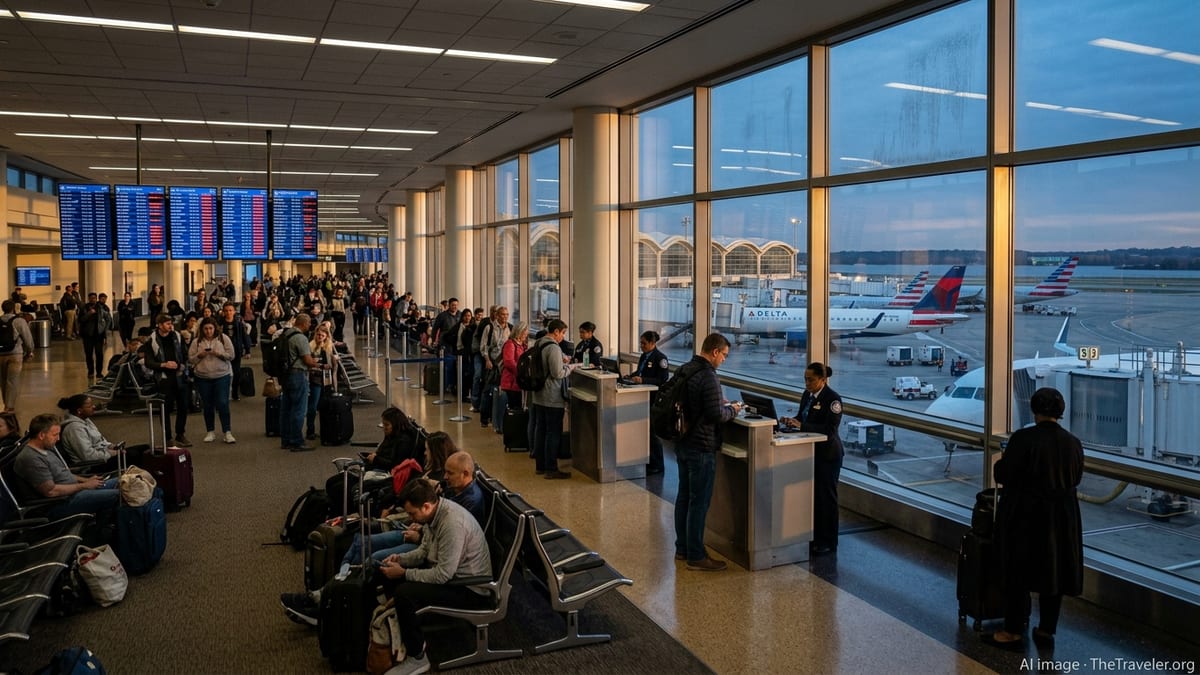
Chemical Smell at Potomac TRACON Halts Arrivals and Departures
Published coverage from national news outlets and aviation tracking data indicate that the disruption began Friday evening when staff at the Potomac Terminal Radar Approach Control, known as Potomac TRACON, reported a strong chemical odor in parts of the facility. The site, located in Virginia, manages approach and departure traffic for much of the mid Atlantic region, including the Washington metropolitan area.
As the odor spread, sections of the building were reportedly cleared while aviation authorities shifted to contingency procedures. According to public statements and airport briefings, the Federal Aviation Administration ordered temporary ground stops affecting traffic into and out of Ronald Reagan Washington National, Washington Dulles International, Baltimore Washington International Thurgood Marshall, Charlottesville Albemarle and Richmond International airports.
For travelers on evening departures and inbound flights, the precaution translated into extended tarmac waits, diversions and last minute gate holds as controllers worked with reduced capacity. Social media posts from passengers described aircraft taxiing back to gates, diverted arrivals and crews relaying updates about an ongoing air traffic control issue affecting the entire region.
The halt to normal operations lasted roughly an hour at the peak, according to available data, but knock on effects continued into the night as airlines attempted to reposition aircraft and crews.
American Airlines and Delta Bear the Brunt of Schedule Disruptions
American Airlines and Delta Air Lines, two of the largest operators at Washington National, Dulles and Baltimore, experienced significant schedule disruptions as a result of the ground stops. Flight tracking boards showed clusters of delayed and cancelled departures to and from East Coast and Midwest hubs, as well as missed connections on longer haul routes.
At Washington National, American Airlines’ shuttle style services to cities such as Boston and New York appeared particularly affected, with aircraft held at gates and several flights posting rolling departure times. Delta’s operations, centered on connections to Atlanta, New York and other domestic hubs, also saw delays that in some cases extended to several hours as crews timed out or aircraft missed their allotted slots.
Disruptions rippled outward to other airports as aircraft scheduled to overnight in the Washington region remained out of position. Travelers reported missed onward connections at large hubs including Atlanta, Charlotte and Chicago after departure holds at Washington area airports pushed arrival times late into the night.
Customer service updates from airlines emphasized that the cause of the delays lay with air traffic control constraints. Publicly available information shows that some carriers began to relax same day change fees and rebooking penalties on affected routes as delays mounted.
Second Chemical Odor Incident Raises Safety and Reliability Questions
Reports indicate that the March 28 event is the second time in recent weeks that a chemical smell at Potomac TRACON has disrupted air traffic along the Eastern Seaboard. Earlier this month, a similar strong odor led to an evacuation and an hour long halt to flights at several Washington area airports while the source was investigated.
In that previous case, transportation officials later described the issue as related to an overheating electrical component, and flights gradually resumed once the facility was declared safe. The repetition of a similar odor related problem has renewed attention on the resilience of key control centers that handle dense, complex airspace around the nation’s capital.
Aviation safety analyses released in recent years have already highlighted high workload and staffing challenges at Potomac TRACON and neighboring Washington Center in Leesburg, Virginia. The latest odor related evacuations underscore how quickly technical or environmental problems inside those facilities can translate into large scale schedule disruptions for passengers across multiple states.
Travel advocacy groups and aviation commentators are now raising questions about whether additional redundancy, upgraded equipment or expanded backup facilities may be needed to keep traffic flowing when a single center is temporarily unavailable.
Passenger Experience: Long Delays, Diversions and Crowded Terminals
For passengers, the impact of the chemical odor incident was felt most acutely in the form of uncertainty and extended time on the ground. Travelers reported sitting on parked aircraft waiting for new departure slots, while others described diversions to airports such as Cleveland and Philadelphia when inbound flights were unable to continue to the Washington region.
Inside terminals at Reagan National, Dulles and Baltimore, departure boards filled with red and yellow status lines as airlines attempted to rebuild schedules on the fly. Lines grew longer at customer service desks as travelers sought rebooking options, hotel vouchers and meal assistance while monitoring updates on mobile apps and overhead displays.
Some travelers arriving from international destinations into Dulles faced missed domestic connections as the knock on effects of the ground stop collided with existing delays elsewhere in the national airspace system. Families returning from spring break trips and business travelers heading home at the end of the workweek were among those most heavily affected.
Airport statements urged passengers to stay in close contact with their airlines and anticipate residual delays, even after the formal ground stops were lifted. Public messages emphasized that security checkpoints and terminal facilities remained open, but that departure timing was subject to air traffic control flow restrictions as operations ramped back up.
What Travelers Should Expect in the Coming Days
Although evening operations gradually resumed after staff returned to the Potomac facility, publicly available information from airports and airlines suggests that some residual disruptions may continue into the weekend. Aircraft and crew imbalances can take several cycles to fully resolve, particularly on short haul routes that rely on tight turnaround times.
Travel analysts note that both American and Delta run high frequency schedules in and out of Washington, which can help them recover more quickly by adding extra sections or upgauging aircraft, but also means that any capacity constraint in the airspace has an outsized impact on their networks. Connections through other East Coast hubs may remain congested while carriers work through the backlog.
Consumer advocates are encouraging passengers whose trips were affected to review airline policies on delays and cancellations, particularly for overnight disruptions or missed connections. While the root cause lies with an infrastructure issue at a government facility, some carriers may still provide meal vouchers, hotel discounts or fee waivers as a goodwill gesture to maintain customer loyalty.
For now, travel planners suggest building extra time into journeys that touch the Washington, Baltimore and central Virginia airports. Until the cause of the latest chemical smell is fully documented and any remediation steps are public, the incident will remain a reminder of how dependent modern air travel is on the smooth functioning of a handful of critical, and sometimes vulnerable, control facilities.