

More news on this day
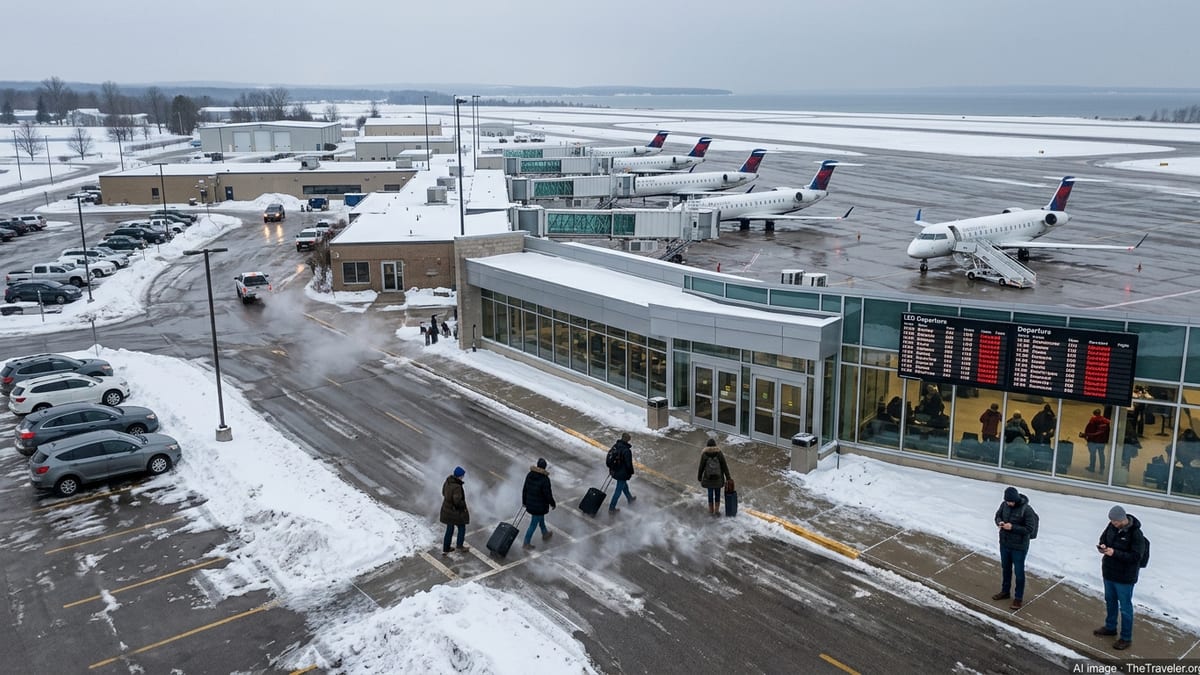
A series of winter storms, operational disruptions and tightened airline schedules have combined into a bruising season for Cherry Capital Airport in Traverse City, creating cascading flight cancellations that are rippling across northern Michigan’s tourism economy just as the state gears up for spring and summer travel.
Get the latest news straight to your inbox!
Weather Turbulence Meets Tight Airline Networks
Cherry Capital Airport, the primary air gateway to northern Michigan’s resort region, has faced a volatile start to 2026. A succession of severe winter systems, including January’s multi‑day storm that wiped out thousands of flights nationwide and a late‑February blast that snarled traffic across the Midwest and Northeast, has repeatedly disrupted already‑tight regional schedules. Publicly available aviation and weather data show that even modest airport closures or visibility drops in larger hubs can quickly back up into Traverse City, where most routes depend on connections through Detroit, Chicago, or Minneapolis.
When those hubs slow or shut down, Cherry Capital’s limited daily frequencies offer little cushion. Travelers bound for ski resorts, wine country stays, or winter festivals in the Grand Traverse region often find themselves stranded for 24 hours or more, because missed connections cannot easily be rebooked the same day. Industry schedule data indicate that northern Michigan still relies heavily on peak‑season, leisure‑focused service, with fewer off‑peak flights that could absorb disrupted passengers.
These patterns have turned localized weather in distant cities into a recurring problem for Michigan’s tourism heartland. Reports from recent storms describe full cancellations of evening banks into Traverse City, particularly on Fridays and Sundays, precisely when weekend leisure travelers most need reliability.
Economic Pressure on a Tourism‑Dependent Region
Northern Michigan’s visitor economy is unusually exposed to air travel shocks. Traverse area business and economic reports credit Cherry Capital Airport with helping draw hundreds of thousands of leisure visitors annually, supporting hotels, restaurants, wineries, golf courses, marinas, and outdoor outfitters across multiple counties. When flights are canceled or repeatedly delayed, the losses spread quickly from the airport to downtown storefronts and lakeshore resorts.
Tourism analysts note that even small dips in occupancy during peak weeks can have outsized effects in communities where seasonal revenue underwrites year‑round operations. A weekend of widespread cancellations can mean empty rooms during what should be sold‑out periods, fewer lift tickets at ski hills, and quieter tasting rooms on Old Mission and Leelanau peninsulas. For smaller operators with thin margins, a string of disrupted Saturdays in January and February can determine staffing levels and investment decisions for the rest of the year.
Local economic data released in recent years already show signs of strain from shifting travel patterns and higher consumer costs. Air disruptions layered on top of those pressures risk discouraging repeat visitors, especially those choosing between northern Michigan and competing lake or mountain destinations that may offer more direct or resilient air service.
Strained Infrastructure Amid Record Passenger Growth
The turbulence comes at a time when Cherry Capital Airport is simultaneously expanding to meet rising demand. Passenger counts have been climbing steadily, with regional business groups highlighting the facility as one of Michigan’s busiest non‑hub airports and a critical engine for tourism‑driven growth. Coverage of the 2025 spring break period, for example, detailed record‑shattering March traffic and temporary parking shortages as travelers packed outbound flights for warmer destinations.
In response, airport authorities have moved ahead with a major terminal expansion program valued at well over 100 million dollars, featuring additional passenger boarding bridges and upgraded facilities designed to better handle peak loads and adverse weather. The project is framed as a long‑term investment in reliability, allowing passengers to board and deplane under cover and giving airlines more operational flexibility during snow, ice and wind events.
Yet construction itself can introduce short‑term friction. Staging areas, temporary walkways, and changing gate assignments add complexity for carriers and ground crews who are already managing tight turnaround times. Travelers arriving during busy holiday periods have also encountered packed parking lots, prompting the opening of new economy parking options and overflow areas. While these upgrades aim to future‑proof the airport, they are unfolding in parallel with the very flight disruptions that are testing visitor confidence.
National Cherry Festival and Peak‑Season Stakes
The immediate concern for many in Michigan’s tourism sector is what continued instability could mean for marquee events such as Traverse City’s National Cherry Festival, scheduled to begin on July 4, 2026. The festival, an eight‑day celebration that typically draws hundreds of thousands of visitors to the region, relies heavily on reliable air access for out‑of‑state and international attendees, performers, and sponsors.
Historically, Cherry Capital Airport has had to temporarily adjust commercial schedules during air show activities associated with the festival, as safety rules limit flight operations when aerobatic displays are underway. Published coverage has noted that this pause in movements, once a minor inconvenience, has become more disruptive as the airport’s regular flight schedule has grown denser. Any cancellations or delays during this period can trigger what local airport board discussions have described as a domino effect across regional routes.
With demand for summer travel expected to be strong again in 2026, the risk is that weather disruptions in early peak season or constraints around festival airspace could make it harder for visitors to reach northern Michigan during its most important revenue window. Tourism businesses are watching closely, aware that a weakened performance in July can echo through the rest of the year.
What Travelers to Northern Michigan Should Know Now
For travelers planning trips to Traverse City, Petoskey, the Sleeping Bear Dunes area, or nearby lake and wine country destinations, this winter’s disruptions at Cherry Capital Airport offer several practical takeaways. Publicly available flight histories from recent storms show that early‑morning and mid‑day departures often fare better during volatile conditions than late‑evening flights, which are more vulnerable to rolling delays from other parts of the network. Booking the first leg of the day, particularly when connecting through Detroit or Chicago, can reduce the risk of misconnecting into Traverse City.
Industry guidance also suggests leaving additional buffer time for connections and considering itineraries that build in at least a few hours between inbound and outbound flights when TVC is the final destination. Given growing seasonal demand and the airport’s limited daily frequencies, same‑day recovery options can be scarce when weather or mechanical issues arise. Some visitors are opting for fully refundable rates or travel insurance that covers missed nights and activities tied to flight cancellations.
On the ground, travelers should anticipate busier parking facilities and evolving terminal layouts as construction advances. New economy parking options may help manage costs for longer stays, but arriving early remains essential during holiday periods and major events such as the National Cherry Festival. Monitoring airline apps and airport communications in the days leading up to departure has become a necessary part of trip planning to northern Michigan.
While long‑term investments in Cherry Capital’s infrastructure are aimed at reducing the very disruptions that have dominated recent seasons, the near‑term outlook remains choppy. For Michigan’s tourism industry, the stakes are high: keeping flights running on time at Traverse City is increasingly inseparable from keeping the state’s northern resorts, downtowns and shoreline communities thriving.