

More news on this day
An American Airlines flight bound for Chicago from New York diverted to Detroit on Sunday after an in-flight disturbance involving a disruptive passenger, according to multiple media reports and publicly available airport information.
Get the latest news straight to your inbox!
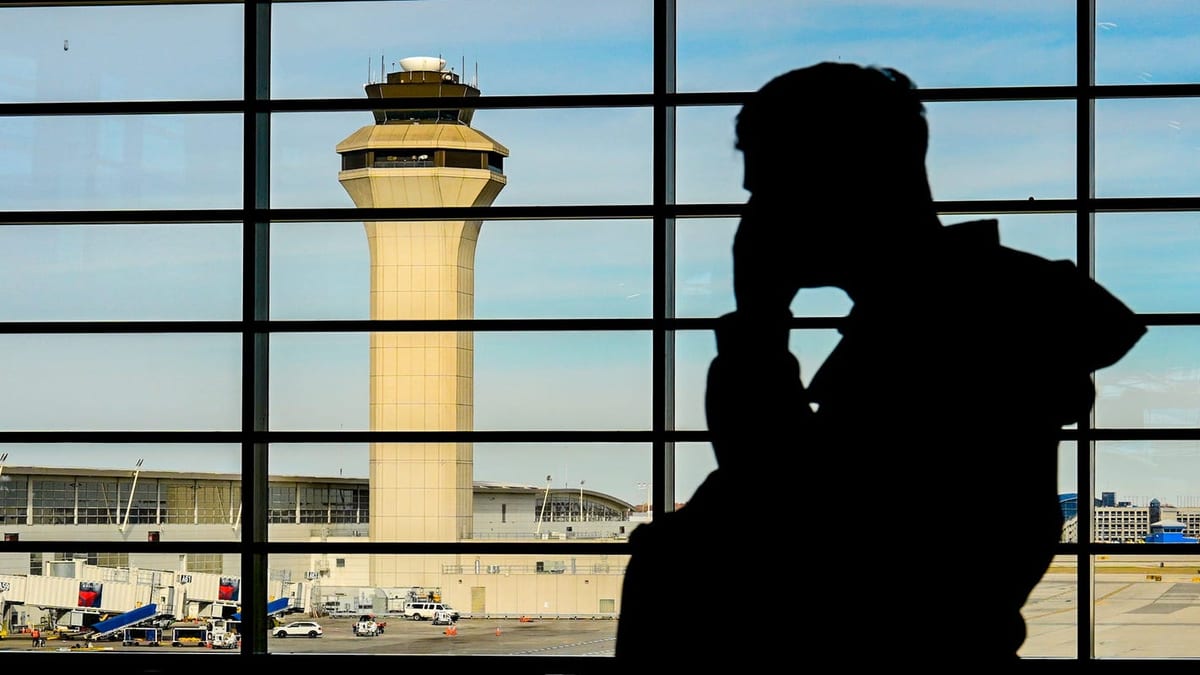
Image by freep.com
American Airlines service to Chicago diverts to Detroit
Published coverage indicates that the incident occurred on March 29, 2026, on an American Airlines flight that had departed from John F. Kennedy International Airport in New York and was scheduled to land at Chicago O’Hare International Airport. The aircraft instead diverted to Detroit Metropolitan Wayne County Airport after reports of a disturbance in the cabin.
Flight-tracking data referenced in news reports shows the aircraft altering course toward Detroit shortly before midday, touching down there instead of continuing to Chicago. The diversion added time and disruption to travel plans for passengers expecting to arrive in Chicago on a routine weekend flight.
Information released through media channels suggests that once the decision to divert was taken, the aircraft proceeded directly to Detroit, where it landed without further incident. No injuries were immediately reported in early coverage.
Disruptive passenger prompts law enforcement response
According to published coverage from regional outlets, the diversion was prompted by a disruptive customer whose behavior led the crew to seek an unscheduled landing. Specific details of the disturbance have not been fully disclosed, but reports describe the situation as significant enough to require intervention on the ground.
Publicly available information indicates that, upon landing at Detroit Metro, the aircraft was directed to a remote area of the airfield in line with local procedures for handling onboard disturbances. Law enforcement vehicles, including federal investigators and airport police units, were seen positioned around the aircraft while the situation was assessed.
Media reports state that the disruptive individual was removed from the aircraft in Detroit. As of the latest publicly accessible updates, no formal charges or further details about the individual’s status had been widely reported.
Impact on passengers and onward travel
The diversion forced an unplanned stop for passengers traveling between New York and Chicago, adding delays during an already busy spring travel period. Passengers were held on the ground while law enforcement completed initial checks and the aircraft was cleared.
Based on information reported by local Detroit media and travel trackers, passengers eventually deplaned at Detroit Metro and were expected to be rebooked or continue on to Chicago after the aircraft was released back to regular operations. American Airlines stated publicly that it was working to arrange alternate travel for those affected, with schedules adjusted to accommodate the disruption.
The incident contributed to a broader pattern of delays affecting major U.S. hubs, including Chicago, where weather and operational challenges have periodically disrupted schedules in recent weeks. Travelers were advised in news and airport bulletins to continue monitoring flight status information, especially on routes connecting through Detroit and Chicago.
Airline response and safety procedures
American Airlines acknowledged the diversion in a brief public statement cited by multiple outlets, noting that the flight was redirected to Detroit due to the behavior of a customer on board. The airline expressed appreciation for passengers’ patience and highlighted the crew’s handling of the situation, as summarized in media accounts.
Industry guidance and historical practice show that crews are encouraged to divert when in-flight behavior presents a potential risk to safety or significantly disrupts cabin operations. In such cases, aircraft are commonly routed to the nearest suitable airport, where local and federal law enforcement can meet the flight.
Publicly available aviation safety information underscores that such diversions, while disruptive, are treated as precautionary measures intended to prioritize the safety and security of passengers and crew. The Detroit incident follows a series of recent high-profile events that have drawn attention to onboard conduct and the threshold for involving law enforcement.
Context within broader U.S. flight disruptions
The diversion to Detroit occurred against a backdrop of wider disruption across parts of the U.S. air network in late March 2026, including weather-related delays and operational challenges at several major airports. Recent travel industry roundups have highlighted elevated delay numbers at Detroit Metro and Chicago O’Hare, among other hubs, in the days surrounding the incident.
Reports from travel-focused outlets note that airlines operating through Detroit and Chicago have been balancing heavier spring break demand with changing weather conditions and occasional airspace constraints, leading to a higher likelihood of re-routes and missed connections. In that environment, an in-flight disturbance that necessitates a diversion can compound existing strain on schedules.
While the American Airlines incident appears to be an isolated case related to a single passenger’s conduct, it serves as a reminder to travelers that unplanned events can rapidly alter even short domestic flights. Public guidance commonly encourages passengers to allow extra time for connections, keep contact information updated with airlines, and remain attentive to crew instructions when irregular operations occur.