

More news on this day
Air travelers in Chicago encountered significant disruption this weekend as a wave of delays and cancellations affected 358 flights across the city’s two major airports, with services operated by Air Canada, Delta Air Lines, Jazz Aviation, SkyWest and several other carriers among those impacted.
Get the latest news straight to your inbox!
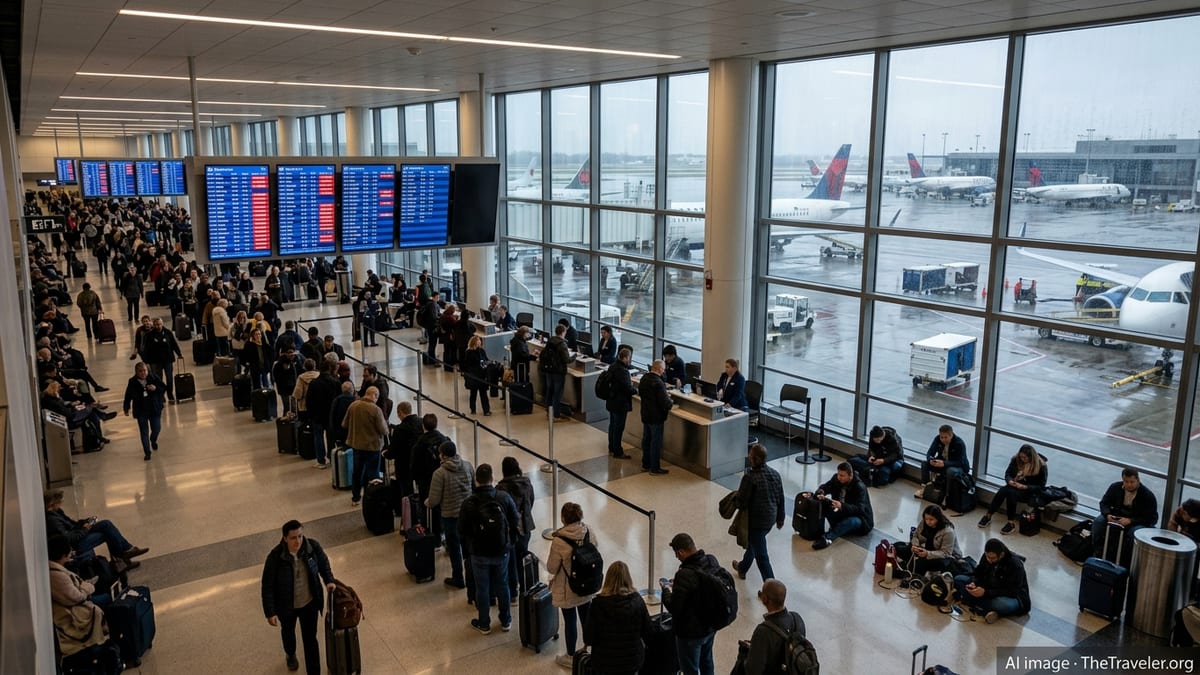
Widespread Disruption Across Chicago’s Major Airports
Publicly available flight-tracking data and local media coverage indicate that Chicago O’Hare International Airport and Chicago Midway International Airport saw elevated levels of operational disruption, with a combined 358 flights canceled or delayed over the course of the latest reporting period. The disruption affected both domestic and transborder traffic, complicating travel plans for passengers flying within the United States as well as to and from Canada.
The irregular operations left many travelers facing missed connections, extended layovers and last-minute itinerary changes. Chicago’s role as a central hub in the US air network meant that delays and cancellations there also had knock-on effects for flights at connecting airports across the country.
While exact breakdowns by carrier continue to shift as schedules are updated in real time, the disruption has been broadly spread across mainline and regional operators. Flights marketed or operated by Air Canada, Delta Air Lines, Jazz Aviation and SkyWest feature among those affected, alongside services from other US legacy and low-cost airlines.
Multiple Carriers, Shared Operational Strain
According to published airport and airline tracking data, the current wave of disruption in Chicago has not been limited to a single airline or alliance. Delta Air Lines and its regional partners, including SkyWest, have recorded a notable share of the affected departures and arrivals, while Air Canada and its regional affiliate Jazz Aviation have also seen interruptions on key cross-border routes.
Regional carriers play a central role in feeding passengers into Chicago from smaller markets, and when performance deteriorates on those networks, the impact can quickly cascade into the mainline carriers’ long-haul and hub-to-hub operations. Industry observers note that this pattern appears to be playing out again, with regional cancellations and late arrivals contributing to further delays later in the day.
Other large US airlines with substantial operations at O’Hare and Midway have also experienced schedule changes, though the balance between delays and outright cancellations varies by carrier. Public dashboards tracking on-time performance suggest that some airlines have opted to proactively cancel a number of flights to stabilize the remainder of their schedules, while others have leaned more heavily on rolling delays as conditions evolve.
Weather, Congestion and Crew Availability Among Key Factors
Operational disruption on the scale seen in Chicago is typically linked to a combination of factors, and initial indications suggest that weather, airspace congestion and crew positioning have all played a part. Recent storms and periods of poor visibility in parts of the Midwest and Northeast have constrained airport throughput, forcing traffic management initiatives that slow arrivals and departures.
When severe weather affects one or more hubs, aircraft and crew can find themselves out of position, leaving gaps in the schedule even after conditions improve. Industry data on past disruption patterns show that regional operators such as SkyWest and Jazz Aviation are particularly vulnerable to these ripple effects, because they operate dense schedules with smaller aircraft that leave less room for operational slack.
Published performance statistics from the US Department of Transportation and Canadian authorities also highlight how extreme weather, air traffic control constraints and late-arriving aircraft remain among the most common causes of delays and cancellations. The latest disruption in Chicago appears broadly consistent with those longer-term trends, though the precise mix of causes for each affected flight varies.
Knock-on Effects for Connections Across North America
Because both O’Hare and Midway function as important connecting points, disruption in Chicago often extends well beyond the local market. Passengers traveling between smaller US cities, or connecting between the United States and Canada or overseas destinations, have reported needing to rebook itineraries, overnight in hub cities, or reroute through alternative airports as the disruption unfolded.
Flight-status tools used by travelers show that some of the affected services in Chicago feed into transcontinental and transborder routes operated by larger jets. When those feeder flights are delayed or canceled, passengers can miss onward connections, putting additional strain on already busy flights later in the day and reducing the availability of same-day alternatives.
Travel forums and social media posts over the past several days describe a familiar pattern of long lines at customer service desks, busy phone queues and limited same-day rebooking options on certain routes. For some travelers, especially those on tightly timed business or family trips, the cumulative impact has meant substantial changes in travel plans.
What Travelers Can Do if Their Flight Is Affected
Consumer travel guidance from airline and government sources stresses the importance of monitoring flight status closely whenever widespread disruption occurs. For passengers flying via Chicago, checking airline apps and airport information screens frequently can provide the earliest notice of schedule changes, making it easier to request new routings or adjust ground transportation and accommodation plans.
Many major carriers, including those serving Chicago such as Air Canada and Delta Air Lines, offer flexible rebooking policies during periods of significant disruption, sometimes in the form of travel waivers that allow itinerary changes without additional fees. Publicly available information from recent events shows that these waivers are often time-limited and route-specific, so affected travelers are encouraged to act quickly once disruption becomes apparent.
Travel experts also point to a few practical steps that can reduce stress when disruptions occur: allowing extra connection time where possible, traveling with essential items in carry-on baggage, and maintaining up-to-date contact details in airline profiles so that alerts about cancellations or gate changes reach passengers promptly. While such measures cannot prevent irregular operations, they can help travelers respond more effectively when large hubs such as Chicago experience significant schedule upheaval.