

More news on this day
Chicago is stepping into the spotlight on a new American “dream itinerary,” joining New York, Miami, Charleston, New Orleans, Los Angeles and San Francisco in a curated list that blends blockbuster landmarks with under‑the‑radar neighborhoods, dining scenes and cultural experiences across the United States.
Get the latest news straight to your inbox!
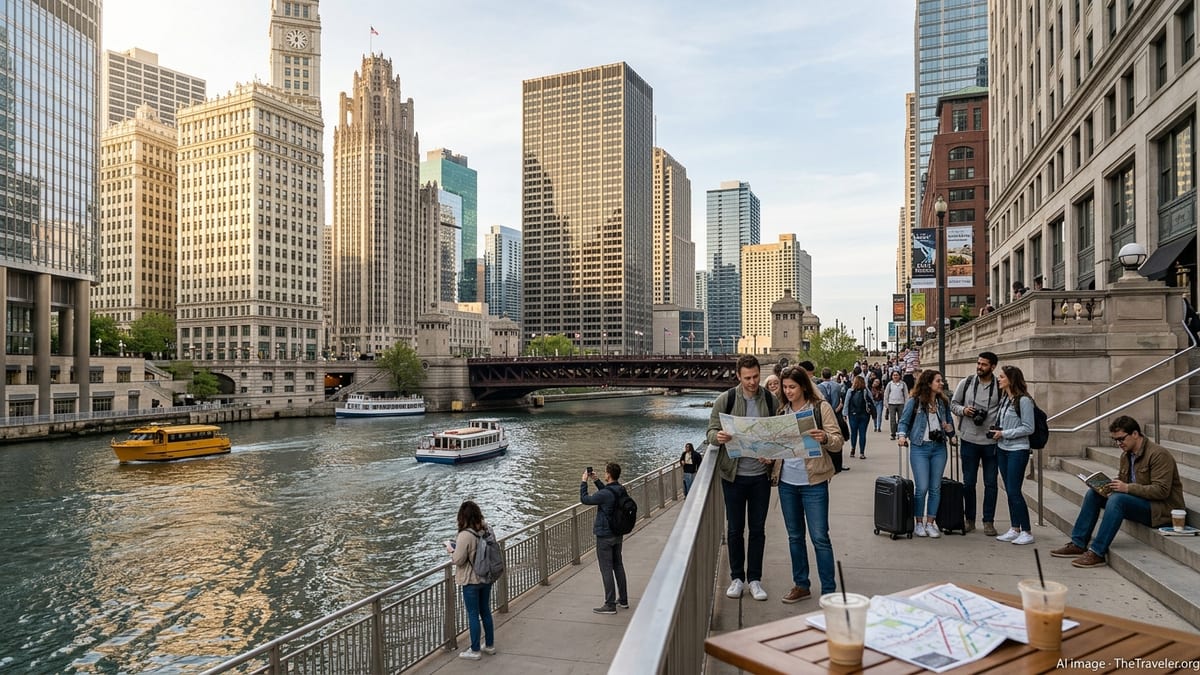
Chicago’s Rising Star in Urban Tourism
Recent visitor data and destination rankings indicate that Chicago is increasingly sharing the stage with coastal heavyweights as travelers look for culture‑rich, food‑forward cities that are still relatively affordable. While New York and Los Angeles continue to dominate overall visitor volume, reports show that travelers are widening their search to include Chicago’s architecture, music heritage and expanding waterfront developments as core reasons to visit.
Tourism analysts point to Chicago’s concentration of attractions within a walkable downtown as a key advantage. Visitors can move from historic skyscrapers and riverfront viewpoints to major museums and lakefront parks in a single day, a pattern that travel planners say fits growing demand for short, experience‑packed city breaks. Publicly available information shows that convention bookings and large‑scale events are also helping to sustain hotel demand in the city center.
At the same time, neighborhood‑level tourism is gaining attention. Areas such as Pilsen, Logan Square and Hyde Park are increasingly highlighted in travel coverage for their street art, independent music venues and global food. That pattern mirrors a broader U.S. shift in which visitors seek out everyday local life in addition to headline attractions, turning Chicago from a single‑stop city break into a pivotal hub in longer multi‑city itineraries.
Industry briefings suggest that this diversification of experiences is helping Chicago appeal to both first‑time visitors and repeat travelers who might once have limited their city trips to New York or San Francisco. In this emerging “bucket list loop,” Chicago is often framed as the Midwestern anchor that balances the coasts, making its inclusion alongside traditional coastal favorites a signal of how traveler priorities are evolving.
New York, Miami and Charleston Anchor the Eastern Leg
On the eastern side of the new itinerary, New York, Miami and Charleston continue to serve as key entry points for both domestic and international visitors. New York’s tourism statistics show that the city remains one of the busiest urban destinations in the country, with visitor volumes recovering strongly in the past two years. Analysts note that cultural tourism, including museums, theater and major events, continues to be a central driver of demand even as international arrivals face broader economic headwinds.
Miami, long associated with beaches and nightlife, is increasingly promoted in travel coverage for its expanding arts and culinary scenes. Neighborhoods such as Wynwood and the Design District appear frequently in recent destination features, underscoring how street art, contemporary galleries and chef‑driven restaurants are diversifying what has traditionally been a sun‑and‑sand narrative. Tourism reports also point to Miami’s role as a gateway for cruise passengers and Latin American visitors, keeping it firmly on long‑haul bucket lists.
Charleston, by contrast, offers a smaller‑scale but high‑impact stop. Studies from South Carolina’s tourism sector indicate that the Charleston area generates a significant share of the state’s visitor spending, supported by historic preservation, coastal landscapes and a prominent restaurant scene. National rankings over the past year have repeatedly placed Charleston among the top U.S. small cities to visit, reflecting demand for walkable historic districts and slower‑paced stays that complement busier urban centers such as New York.
Travel planners say this eastern trio creates a powerful arc of experiences: New York for its global skyline and culture, Miami for its resort energy and Latin influences, and Charleston for its heritage architecture and coastal charm. Chicago’s addition allows that arc to bend inland, turning a linear coastal journey into a more varied cross‑regional route.
New Orleans, Los Angeles and San Francisco Shape the Western Circuit
On the western and Gulf side of the itinerary, New Orleans, Los Angeles and San Francisco provide a contrasting mix of music, film, tech and Pacific landscapes. Tourism research highlights New Orleans as one of the country’s most distinctive cultural destinations, where live music, Creole and Cajun cuisine, and a dense calendar of festivals continue to attract visitors year‑round. The city’s ability to weave everyday neighborhood life with major events is frequently cited as a model for place‑based tourism.
Los Angeles, meanwhile, has been working to redefine its visitor narrative beyond Hollywood and Beverly Hills. Recent destination marketing materials and media coverage emphasize coastal neighborhoods, public art, urban hiking trails and food markets stretching from downtown to the South Bay. Analysts note that this broader story resonates with travelers seeking both iconic film landmarks and lived‑in neighborhoods, especially those building longer stays around remote work or extended family travel.
Further north, San Francisco remains a high‑profile entry on transcontinental itineraries despite broader reports of cost concerns and shifting travel patterns. Technology tourism, waterfront redevelopment and access to nearby wine regions and national parks continue to play a key role in the city’s appeal. Travel industry commentary suggests that visitors are adapting by pairing shorter city stays with longer road trips into surrounding regions, effectively turning San Francisco into a launch point rather than a standalone stop.
Together with Chicago, these western and Gulf cities create a loose circuit that can be navigated by a combination of flights, rail and road trips. Travel advisers say that this flexibility is increasingly important for visitors looking to combine iconic skylines with distinctive regional music, food and landscapes in a single extended journey.
From Icons to Hidden Gems: How the New Bucket List Is Evolving
The inclusion of Chicago alongside New York, Miami, Charleston, New Orleans, Los Angeles and San Francisco reflects a broader shift away from single‑city “once in a lifetime” trips toward modular itineraries built around themes. Data from recent booking patterns suggest that travelers are stitching together clusters of cities that share interests such as food, live music, design or waterfront access, rather than focusing solely on the largest visitor numbers.
Hidden‑gem neighborhoods and secondary attractions are central to this approach. In Chicago, this might mean riverfront architecture cruises paired with evenings in music clubs on the city’s North and West Sides. In New York, visitors increasingly look beyond Midtown to outer‑borough food districts and community‑run cultural spaces. In Los Angeles, coverage points to Koreatown, the Arts District and inland canyons as counterpoints to traditional studio tours and celebrity‑focused excursions.
Across these seven cities, many of the most talked‑about experiences now involve smaller venues, independent businesses and local festivals that do not always appear in traditional brochures. Travel publications highlight neighborhood markets in New Orleans, contemporary art spaces in Miami and historic corridor walks in Charleston as examples of how visitors can “unlock” settings that locals use every day. Analysts say this trend also spreads economic benefits beyond central tourist zones, a growing priority for many destination marketing organizations.
This evolution of the American urban bucket list suggests that the ultimate dream vacation is no longer a single city or coast, but a curated route that threads together multiple urban experiences. Chicago’s emergence as a key stop in that route signals both its own tourism momentum and a wider rebalancing of how travelers see the country’s most storied cities.