

More news on this day
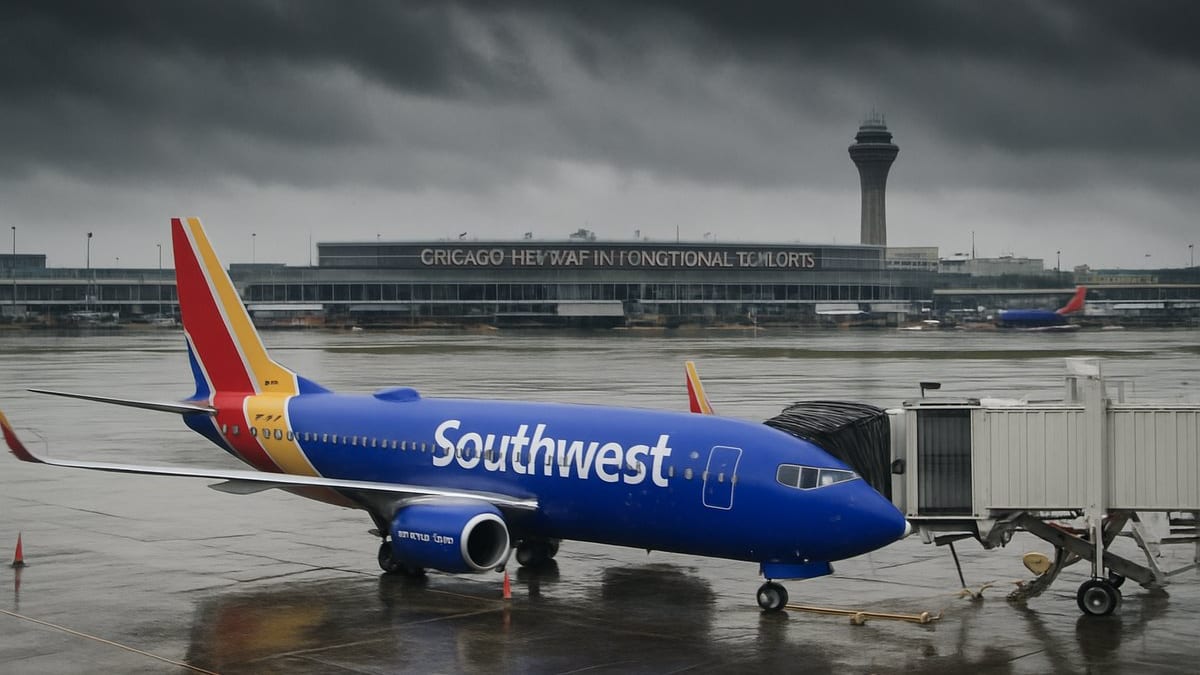
A turbulent stretch of spring weather and mounting congestion triggered a fresh operational breakdown for Southwest Airlines at Chicago Midway International Airport on April 3, with data showing 88 severe delays and 16 cancellations disrupting the carrier’s normally busy schedule.
Get the latest news straight to your inbox!
Weather Turbulence Meets a Crowded Spring Travel Rush
Publicly available flight tracking data and media coverage indicate that the latest disruption at Chicago Midway unfolded as powerful storms swept through the Chicago area in the evening hours of April 3. Thunderstorms, hail and localized flooding created difficult conditions for arrivals and departures across the region’s airports, forcing ground stops and extended spacing between flights.
Reports from local and national outlets describe a series of weather-related restrictions that quickly rippled through airline schedules. A ground stop affecting inbound Southwest operations at Midway coincided with broader constraints at Chicago O’Hare, resulting in cascading delays as aircraft and crews fell out of position. With Midway serving as a major operating base for Southwest, even a short period of intense disruption translated into a high volume of affected flights.
Flight-status dashboards reviewed on April 4 show that, during the peak of the so-called Chicago Midway meltdown, 88 Southwest departures and arrivals at the airport recorded severe delays, often stretching well beyond an hour. At least 16 flights were ultimately canceled, compressing demand onto the remaining schedule and swelling crowds at gates and customer service desks.
The timing of the disruption compounded the impact. Early April has already seen elevated traffic volumes as travelers take advantage of shoulder-season fares and school breaks. As a result, aircraft were heavily booked, leaving limited slack for rebooking and making each cancellation significantly more painful for those caught in the gridlock.
Southwest’s Midway Dependence Amplifies the Shock
Chicago Midway functions as one of Southwest’s most important strongholds, with publicly available airport and airline data showing the carrier operating the vast majority of flights at the airfield. That dominance normally offers frequent options for travelers, but it also means that when operational stress hits Southwest, Midway feels it more acutely than many other airports.
Analyses of airline performance statistics compiled from aviation data services indicate that Southwest runs tens of thousands of annual operations through Midway, linking Chicago to key business and leisure destinations such as Denver, Baltimore, Las Vegas, and multiple cities in Texas and Florida. On a normal day, on-time performance at Midway for Southwest trends in line with or better than the national average. During the April 3 disruption, however, the concentration of traffic under a single airline amplified the effect of each weather delay.
When the storms forced ground stops and arrival metering, Southwest had limited flexibility to lean on other carriers or alternate airports for capacity relief, particularly after the airline’s separate decision to focus Chicago flying at Midway rather than splitting operations with O’Hare. The result was an unusually sharp spike in what aviation analysts sometimes term “meltdown dynamics,” where delays accumulate faster than the system can recover.
Operational historians note that Midway has seen localized breakdowns before, including events triggered by dense fog, snow and holiday surges. The April 3 episode fits that pattern, but with spring storms rather than winter weather providing the catalyst and a fresh spotlight on Southwest’s concentration at the airport.
A Fresh Stress Test for a Carrier Still Under Scrutiny
The latest wave of severe delays and cancellations arrives as Southwest continues to face scrutiny over its resilience after the widely reported systemwide breakdown during the 2022 holiday period. In that earlier crisis, the airline’s scheduling tools and crew management processes struggled to keep pace with weather disruptions across the network, leading to thousands of cancellations and a series of internal reviews.
In the years since, Southwest has described multiple technology and process upgrades in public statements and investor materials, including enhancements to crew scheduling software and investments in winter operations. Even with those improvements, observers say, the April 3 Midway disruption underscores how quickly storms and tight turn times can challenge an airline heavily reliant on point-to-point flying rather than a traditional hub-and-spoke model.
Aviation analysts reviewing delay and cancellation data across U.S. carriers on April 3 noted that multiple airlines experienced weather-related disruptions at major airports. However, publicly available tallies cited by consumer travel outlets place Southwest among the hardest-hit carriers that day, with Midway featuring prominently alongside other key Southwest stations such as LaGuardia and Los Angeles International.
The 88 severe delays and 16 cancellations at Midway on a single day are modest compared with the scale of the 2022 systemwide crisis, but they remain significant for travelers who lost a day of a vacation, missed business meetings, or faced unexpected overnight stays. For Southwest, each such episode renews questions about how much buffer is built into its schedules at capacity-constrained airports like Midway.
Travelers Grapple With Ripple Effects Across the Network
By late evening on April 3, the Midway disruptions had spread far beyond Chicago. According to flight status boards and consumer travel coverage, cities linked tightly to Midway on Southwest’s network experienced knock-on delays as aircraft that were scheduled to arrive from Chicago never left on time or were canceled outright. Passengers departing from airports hundreds of miles away encountered rolling departure-time changes tied back to Midway storms earlier in the day.
For travelers already at Midway, long lines formed at customer service counters as they tried to secure hotel vouchers, meal assistance or rebooked flights. With spring break traffic loading many flights to capacity, same-day alternatives were scarce on some routes, leaving passengers to choose between multi-stop itineraries, overnight waits or creative ground-transport options.
Consumer advocates note that severe-weather disruptions frequently highlight the uneven patchwork of protections available to U.S. air passengers. While airlines typically rebook affected travelers on their next available flights and may provide additional consideration during extreme events, compensation policies differ, and there is no uniform standard requiring cash payments for delays or cancellations attributed to weather.
Some travel advisories published in the wake of the Midway meltdown encouraged flyers to build more margin into their itineraries, particularly when connecting through storm-prone regions in spring and summer. Others recommended that travelers monitor their flights closely on the day of departure and proactively seek alternative routings when early signs of widespread delays appear at a key airport like Midway.
Ongoing Questions About Infrastructure and Capacity
The April 3 disruption also renewed attention on the physical and operational constraints at Chicago Midway itself. The airport, located on the city’s Southwest Side, operates within a relatively compact footprint compared with O’Hare, with shorter runways and tightly spaced taxiways limiting the volume of aircraft that can safely move during adverse weather.
Airport performance summaries compiled from federal transportation databases show that Midway’s overall delay percentages fluctuate year to year, often tracking national trends but occasionally spiking during months marked by intense storms or winter systems. As Southwest’s presence has grown at the airport, each high-impact weather day now carries greater potential to translate into large numbers of disrupted passengers.
Transportation planners and aviation experts continue to debate how best to balance capacity and reliability at landlocked urban airports like Midway. Options range from further investments in airfield technology and approach procedures to broader network strategies that spread risk across multiple airports within a metropolitan region.
For now, travelers moving through Chicago in the wake of the Midway meltdown face a familiar reality. Even as airlines and airports adopt new tools, a potent mix of severe weather, tight schedules and concentrated traffic can still turn a routine travel day into a protracted ordeal, with the latest tally of 88 severe delays and 16 cancellations at Midway serving as the newest case study.