

More news on this day
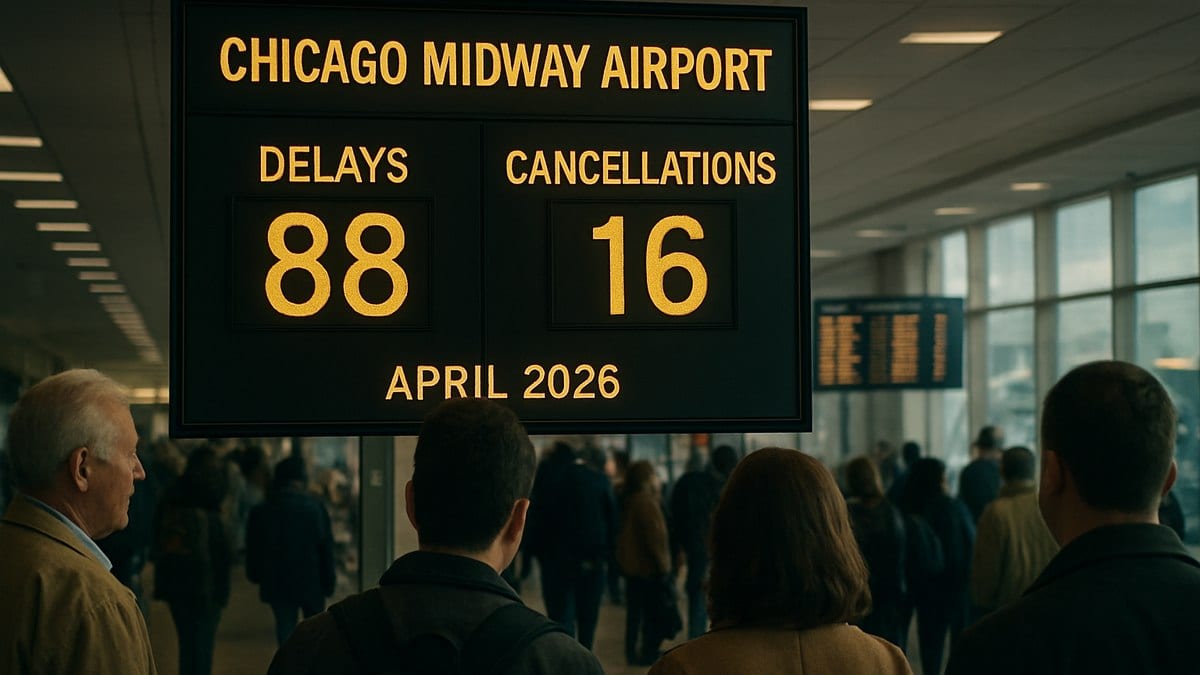
Chicago Midway International Airport is navigating a fresh round of operational turbulence in early April 2026, with publicly available tracking data indicating 88 delayed flights and 16 cancellations as a potent spring storm pattern disrupts air travel across the Midwest.
Get the latest news straight to your inbox!
Storm Systems Converge Over Chicago Aviation Hub
The latest disruption at Chicago Midway comes as a series of strong storm systems cross northern Illinois, bringing lightning, heavy rain and pockets of severe weather that have complicated takeoffs and landings at both of the city’s commercial airports. Recent coverage of the Chicago area details episodes of tornado watches, hail and flash flooding, with weather-related constraints repeatedly rippling into the aviation system.
Reports from early April outline ground stops and ground delay programs affecting the region, particularly on April 2 and April 3, when thunderstorms temporarily halted operations at O’Hare International Airport and imposed tighter arrival spacing across Chicago airspace. While Midway is smaller than O’Hare, it has still absorbed a significant share of schedule disruptions as airlines adjust to changing weather and flow-control instructions.
Data compiled from flight-tracking services for the first days of April shows Midway recording roughly 88 delayed flights and 16 outright cancellations linked to this unsettled pattern. These figures reflect a mix of late arrivals, extended departure holds and aircraft that never left the gate after connections elsewhere in the network were interrupted.
Operational summaries indicate that most Midway delays have clustered in the afternoon and evening periods, when storms and congestion have combined with the residual impact of earlier holding programs. Morning departures, while not immune, have generally performed better unless overnight storms or aircraft reassignments created knock-on effects at the start of the day.
Midway’s Role in a Wider Grid of Disruptions
The problems at Midway are one part of a broader national pattern that has emerged as spring weather intensifies. In the last week of March and the opening days of April, aviation industry outlets and travel publications have tracked more than three thousand delays and over one hundred cancellations across the United States in a single storm cycle, underscoring how quickly thunderstorms can destabilize airline schedules.
Within that national picture, Chicago’s airports have repeatedly appeared among the most affected hubs. Recent tallies for O’Hare alone have run into the hundreds of delays on active storm days, with additional cancellations spilling through major carriers and their regional partners. When those flights fail to operate on time, the impact often spills over to Midway, where aircraft and crews depend on punctual arrivals from other airports.
Travel-focused analyses point to a familiar cascading pattern. A weather delay on a morning leg into Chicago narrows turnaround windows, forces crews closer to federal duty limits and squeezes gate availability. By late afternoon, even modest new weather cells or minor technical issues can tip operations into further disruption, increasing the chance that airlines decide to cancel rather than risk stranding passengers well into the night.
For Midway, whose schedule is heavily concentrated in point-to-point domestic routes, disruptions at distant hubs in Texas, the East Coast and the Southeast have also contributed to April’s totals. Some of the 88 delayed flights recorded at the airport reflect earlier storms in those regions, which then reached Chicago in the form of late-arriving aircraft and missed connections.
Airlines and Passengers Adjust to a Volatile Start to April
The pattern of 88 delays and 16 cancellations has placed renewed focus on how airlines and travelers prepare for shoulder-season volatility in Chicago. Airlines operating from Midway have leaned on standard playbooks that include issuing travel waivers on the most unstable days, preemptively trimming schedules around the most intense storm windows and consolidating lightly booked flights in order to preserve later departures with higher demand.
Publicly available guidance from aviation and consumer advocates continues to emphasize flexibility for passengers using Midway in early April. Travelers are being encouraged to monitor their flight status frequently on days with elevated thunderstorm risk, build in longer connection times and consider earlier departures when possible to reduce exposure to cascading evening delays. Same-day rebooking tools and mobile notifications have become particularly important as conditions shift by the hour.
At the terminal level, observers report busy but generally orderly conditions, with staffing and security lines holding up despite the disruptions. However, the cumulative effect of rolling delays has meant fuller gate areas and longer waits at baggage claim when inbound flights arrive in bunches after weather holds lift. For some travelers, the experience has included missed connections at downline airports when Midway departures pushed back significantly behind schedule.
The 16 cancellations recorded so far in April have primarily affected flights later in the day or those that relied on aircraft cycling in from already stressed parts of the network. While the absolute cancellation number at Midway remains lower than at some larger hubs, each lost flight has required a round of rebookings and overnight accommodations, adding to the perception of a bumpy start to the month.
Comparisons With Past Disruptions and Broader Trends
Observers note that the April 2026 performance at Chicago Midway fits into a longer pattern of seasonal volatility at Midwest airports. Historical data from previous winters and springs shows that even modest storm systems can generate dozens of delays at Midway when they intersect with peak departure banks and already-tight schedules. The current tally of 88 delays and 16 cancellations is elevated but not unprecedented, especially when measured against major winter storms or severe summer squall lines of recent years.
Industry analyses have also highlighted structural pressures on airport operations that go beyond the day’s weather. Rising passenger volumes, schedules that maximize aircraft utilization and staffing challenges across airlines and ground-handling partners leave less margin to absorb sudden constraints. When flow-control measures or ground stops are introduced, Midway and O’Hare alike can reach capacity quickly, and minor disruptions scale into more visible systemwide issues.
At the same time, improvements in forecasting, air-traffic management tools and airline operations centers have helped limit what might otherwise be more severe fallout. In several recent storm cases affecting Chicago, adjustments such as rerouting around the most active cells and trimming marginal flights appear to have contained cancellation counts at Midway, even as delay numbers climbed.
Analysts following the situation suggest that the remainder of April will likely bring additional weather-related challenges for Chicago’s airports, particularly if warm, humid air continues to interact with passing frontal systems. For Midway travelers, the recent stretch of 88 delays and 16 cancellations serves as a reminder that spring travel through the Midwest often requires a flexible itinerary and close attention to evolving conditions.