

More news on this day
Chicago O’Hare International Airport has become the latest flashpoint in the United States spring travel season, with publicly available data showing 640 delayed flights and 87 cancellations in a single day, disrupting journeys across North America and beyond.
Get the latest news straight to your inbox!
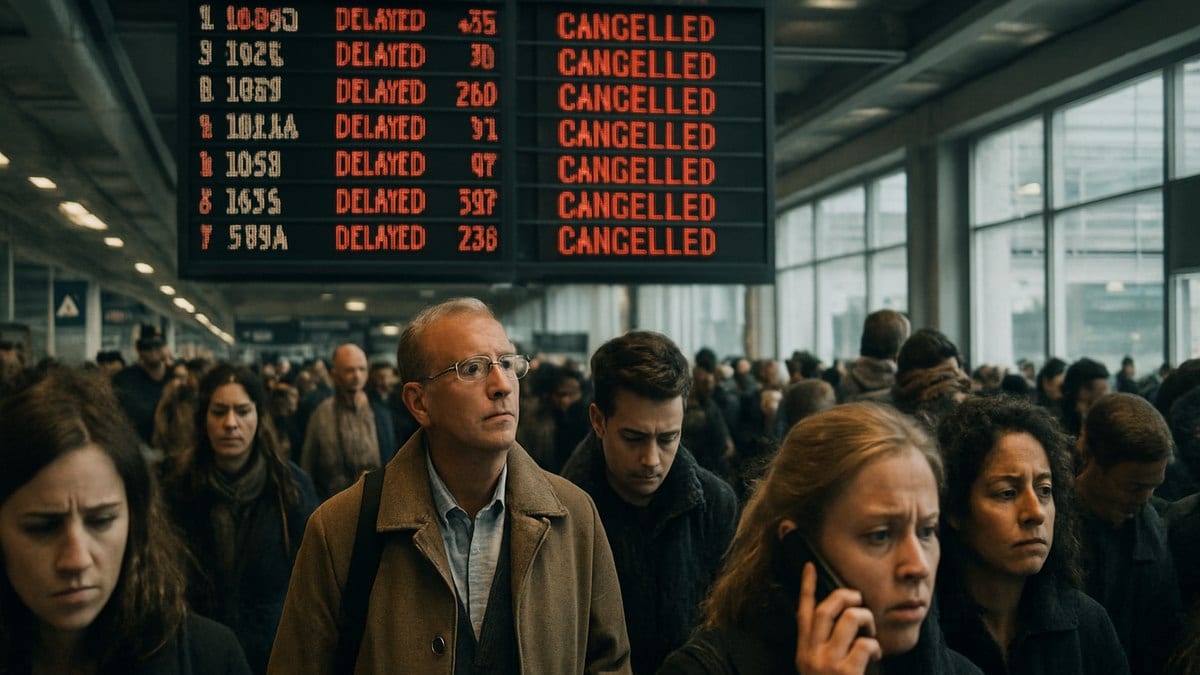
Stormy Skies And A Strained Spring Travel Network
The latest disruption unfolded as a band of strong spring storms pushed through the Chicago area, bringing heavy rain, gusty winds and localized flooding that complicated operations at one of the world’s busiest hubs. Reports indicate that the weather system triggered a series of ground delay programs at O’Hare, sharply reducing the number of arrivals and departures the airport could safely handle per hour.
Published coverage of recent weather in the region describes a pattern of thunderstorms and rapidly changing conditions that have repeatedly slowed traffic into and out of O’Hare. Ground stops and extended spacing between aircraft increased taxi times, forced aircraft to wait for available gates and left crews and aircraft out of position for later departures.
The timing has been especially punishing for passengers because the disruption coincides with Easter and early spring break travel, when airports are already coping with heavy crowds. Airlines schedule more flights and operate fuller aircraft during these peak periods, leaving less slack in the system when storms, congestion or staffing challenges emerge.
As the storm cells moved through, what began as manageable delays quickly cascaded into widespread knock-on effects. Flights arriving late from one region could not turn around in time to operate their next leg, and crews often ran into duty-time limits, compounding the operational bottlenecks.
Major Airlines Hit Across Domestic And International Routes
The 640 delays and 87 cancellations at O’Hare affected a broad cross section of airlines and routes, touching both domestic and international networks. According to data collated from aviation tracking services and industry coverage, American Airlines, United Airlines, Delta Air Lines, Southwest Airlines and Spirit Airlines were among the carriers most visibly impacted.
Many of the disruptions occurred on high-frequency domestic routes linking Chicago to key hubs such as New York, Washington, Denver, Los Angeles and Dallas, where a single missed departure can quickly ripple through the schedule. At the same time, international flights to destinations in Canada and Europe saw schedule changes, with some departures postponed for several hours and others cancelled outright.
Published analyses of recent disruption patterns at O’Hare highlight a growing vulnerability among regional affiliates that feed traffic into the major carriers. Regional operators, which often run smaller aircraft and tighter schedules, are more likely to cancel flights when weather or congestion cuts available runway capacity. The result is a patchwork of service gaps that can strand travelers in smaller cities with limited alternative options.
Even passengers whose flights ultimately operated often faced sharply lengthened travel days. Missed connections, unscheduled overnight stays and long detours through alternate hubs were common as airlines tried to reassemble their networks around the weather and staffing constraints.
Ripple Effects Felt From Canada To Europe
The disruption at O’Hare did not remain a local problem. Flight tracking data and media reports show that delays and cancellations at the Chicago hub quickly rippled outward to airports across the United States, Canada, Germany and Switzerland. Aircraft that were scheduled to depart Chicago for international destinations left late or did not depart at all, while inbound flights were held at origin or diverted when arrival slots vanished.
Airports with strong links to O’Hare, including Toronto and major European gateways such as Frankfurt and Zurich, reported elevated levels of delays and a smaller number of cancellations attributed in part to knock-on problems from Chicago. In some cases, a single late inbound aircraft forced a chain of rebookings for onward passengers, stretching the impact across multiple countries.
These ripple effects underscore the central role O’Hare plays in the transatlantic and cross-border travel ecosystem. As one of the primary connecting points between the American Midwest and international markets, any significant schedule disruption there can produce same-day complications for travelers who may not even be aware that their journey depends on smooth operations in Chicago.
For airlines, the challenge extended beyond passenger inconvenience. The need to reposition aircraft and crews added cost and complexity, while airport congestion and weather-related restrictions limited the speed at which operations could return to normal.
Why O’Hare Keeps Topping U.S. Disruption Rankings
The chaotic scenes at O’Hare are the latest in a series of high-impact disruption days that have repeatedly placed the airport near the top of national delay and cancellation tables. Recent tallies compiled by aviation data providers and travel-industry outlets show O’Hare leading the country on multiple days in early April, including occasions when the airport logged more than 1,300 delays and over 180 cancellations.
Analysts point to several structural factors that make O’Hare especially vulnerable when conditions deteriorate. The airport’s role as a dual megahub for both United and American concentrates a huge volume of connecting traffic into a limited number of runways and gates. Even minor slowdowns can therefore create long queues for takeoff and arrival, quickly spilling into gate shortages and missed connections.
At the same time, O’Hare is navigating long-running construction and modernization projects, which can complicate taxi routes and temporarily reduce available capacity. Travel commentary and passenger accounts in recent months have frequently noted extended taxi times and waits for gates even on clear-weather days, suggesting that the system is already operating near its limits.
Layered on top of these structural issues are broader pressures facing the national aviation system, including air traffic control staffing constraints and tight airline crew rosters. When storms or other disruptions coincide with these underlying stresses, Chicago’s central position in the network can transform localized problems into national headaches at remarkable speed.
What Travelers Can Expect In The Days Ahead
With spring weather patterns still in flux and the broader U.S. aviation network under strain, industry observers caution that further periods of disruption at major hubs like O’Hare are likely in the coming weeks. Forecasts for the Chicago area continue to point to intermittent storm systems and rapidly shifting conditions that can force last-minute schedule adjustments.
Publicly available scheduling data suggests airlines are attempting to restore normal operations while also preparing for potential continued volatility. Some carriers have been trimming frequencies on less profitable routes, adding buffer time into schedules and adjusting aircraft assignments to improve resilience when weather or congestion cuts capacity.
For passengers, the recent chaos at O’Hare offers a clear reminder of the importance of contingency planning during peak travel seasons. Travel advisories and consumer guidance widely recommend allowing extra time for connections through major hubs, monitoring flight status closely on the day of travel and being prepared for rebookings if storms, staffing issues or congestion again converge on the nation’s busiest airports.
As the immediate wave of 640 delays and 87 cancellations gradually clears from the boards, attention is already turning to how airports, airlines and federal agencies will adapt policies and infrastructure to reduce the severity of similar episodes in the months ahead. For now, Chicago O’Hare remains both a critical artery for global air travel and one of its most visible pressure points.