

More news on this day
Travelers moving through Chicago O’Hare International Airport faced significant disruption as 640 delayed flights and 87 cancellations piled up, snarling schedules across the United States and on several transatlantic and Canadian routes.
Get the latest news straight to your inbox!
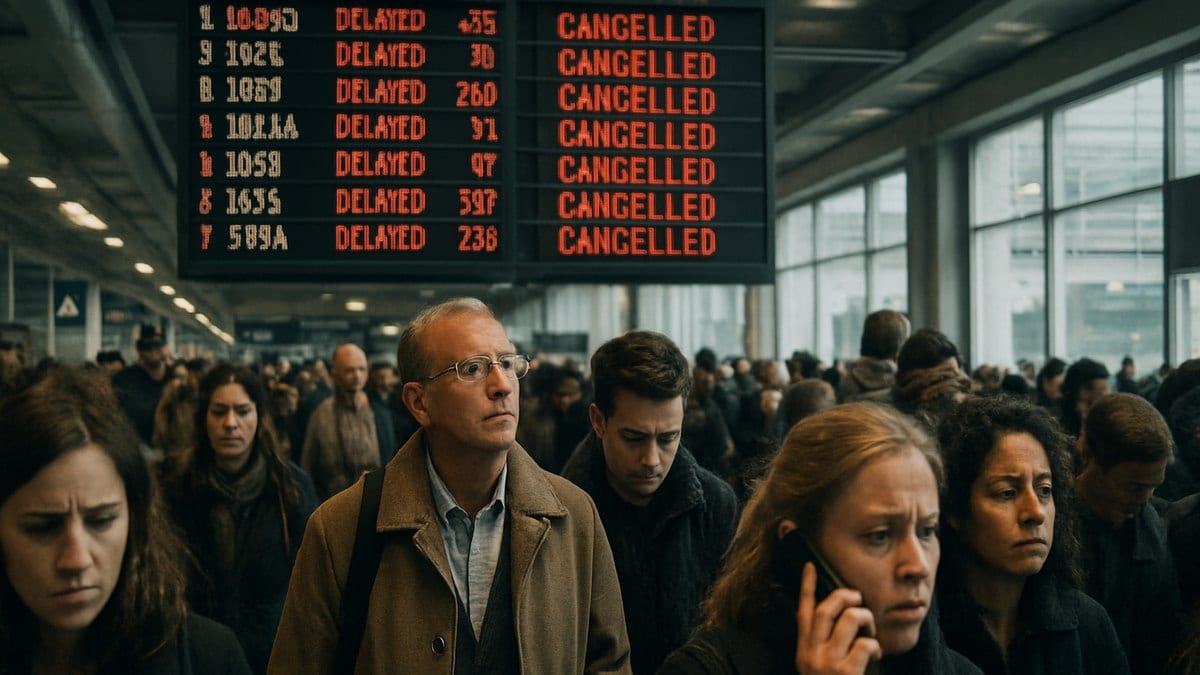
Severe Disruption Concentrated at a Critical U.S. Hub
Publicly available operational trackers for April 5 indicate that Chicago O’Hare once again sat at the top of global disruption rankings, with 640 delays and 87 cancellations recorded across arriving and departing services. The figures place the Chicago hub among the hardest hit airports worldwide for the day, echoing a broader pattern of spring volatility that has dogged the facility in recent weeks.
Reports indicate that a combination of lingering storm systems over the Midwest, high holiday passenger volumes and tight aircraft rotations left little margin for recovery once disruption began. Once early morning departures slipped behind schedule, afternoon and evening services quickly became entangled, turning even modest weather impacts into a full day of schedule upheaval.
The latest numbers follow a series of difficult days for O’Hare. Earlier in the week, industry disruption summaries highlighted the airport as an epicenter of national delays, with previous tallies citing close to one third of all U.S. delays concentrated at the Chicago hub. The new count of 640 delays and 87 cancellations underscores how quickly operational pressure can build at one of the country’s busiest connecting gateways.
Ripple Effects Across the United States and Beyond
Because O’Hare functions as a super hub for multiple large carriers, disruption there rarely remains local. Flight status data and industry reports show that the latest wave of delays affected a broad portfolio of destinations, including major domestic centers and a series of Canadian and European gateways.
Regional airports such as Fargo, Dayton and Omaha reported elevated disruption levels tied to O’Hare connections, with some facilities seeing a high share of their daily schedules cancelled or delayed. In practical terms, a single cancelled O’Hare feeder flight can erase the only nonstop option of the day for smaller communities, leaving travelers with lengthy rebooking windows or overnight stays.
Internationally, the Chicago backlog spilled into airports including Montreal, Vancouver, Frankfurt and Zurich, where arrivals and departures linked to O’Hare showed a mix of cancellations and late operations. For long haul passengers, missed connections in Chicago translated into missed onward flights in Europe and Canada, extending individual journeys by many hours.
Airlines Struggle With Cascading Operational Strain
The disruption wave at O’Hare involved a cross section of major and regional carriers. Published coverage highlights American Airlines, United Airlines, Delta Air Lines, Southwest Airlines and Spirit Airlines among the operators contending with large clusters of delayed flights, while regional partners such as Envoy, Republic, SkyWest and GoJet have also featured prominently in recent disruption tallies connected to Chicago.
According to multiple operational summaries, the dominant issue for many carriers in the latest event was not a high percentage of outright cancellations, but an accumulation of extended delays. Ground stops and ground delay programs implemented during periods of thunderstorms pushed average hold times at O’Hare close to or above the hour mark on some days, leaving aircraft, crews and passengers out of position for subsequent sectors.
This type of cascading disruption is especially pronounced at banks of connecting flights. When an early arrival from a regional city reaches O’Hare late, the same aircraft is then late departing for a second destination, often during already congested afternoon peaks. Over the course of a day, a single storm cell that passed through in the morning can therefore be traced in the late departure boards of cities far beyond the Midwest.
Weather, Crowding and Easter Travel Demand Collide
The 640 delays and 87 cancellations at O’Hare on April 5 did not occur in isolation, but against the backdrop of an intense Easter and early spring travel period across the United States. Publicly available weather and aviation data for the past several days show repeated lines of thunderstorms, heavy rain and low cloud impacting northern Illinois and the wider Great Lakes corridor.
In the days leading up to the latest disruption, industry analysts pointed to March 31 and the first days of April as especially challenging, with national delay totals in the thousands and O’Hare frequently topping the charts. In some of those earlier episodes, the Chicago hub alone was associated with close to a thousand delays in a single day, reinforcing its outsized influence on the broader network.
High passenger volumes around Easter have compounded the impact of each irregular operation. With load factors elevated and spare seats limited, airlines have had fewer options to rebook disrupted travelers, stretching recovery timelines. Crowded terminals and long lines at customer service desks have been a recurring feature in media imagery from O’Hare through late March and early April.
What Travelers Can Expect in the Coming Days
While weather systems move on, operational effects at a complex hub can linger. Industry reporting on recent storms suggests that even after ground stops are lifted, it can take airlines several cycles to reposition aircraft and crews, and for the Federal Aviation Administration’s traffic management initiatives to unwind fully.
Travelers scheduled to pass through Chicago O’Hare in the aftermath of the 640 delays and 87 cancellations are likely to encounter residual knock on effects, including swapped aircraft types, gate changes and tighter connection windows. Even flights listed as on time may be operating with aircraft arriving from cities that experienced disruption, raising the risk of last minute schedule shifts.
Publicly available guidance from airlines and aviation agencies consistently emphasizes early check in, close monitoring of flight status tools and flexibility in routing when severe weather targets a major hub. With O’Hare entering a season characterized by frequent thunderstorms, the recent chaos serves as a reminder that the strength of the U.S. air travel network can also be a vulnerability when one of its primary nodes becomes overloaded.