

More news on this day
Chicago O’Hare International Airport experienced one of its most turbulent days of the spring travel season on April 4, 2026, with flight-tracking data and published aviation coverage indicating 314 combined cancellations and delays that rippled through already crowded Easter weekend schedules.
Get the latest news straight to your inbox!
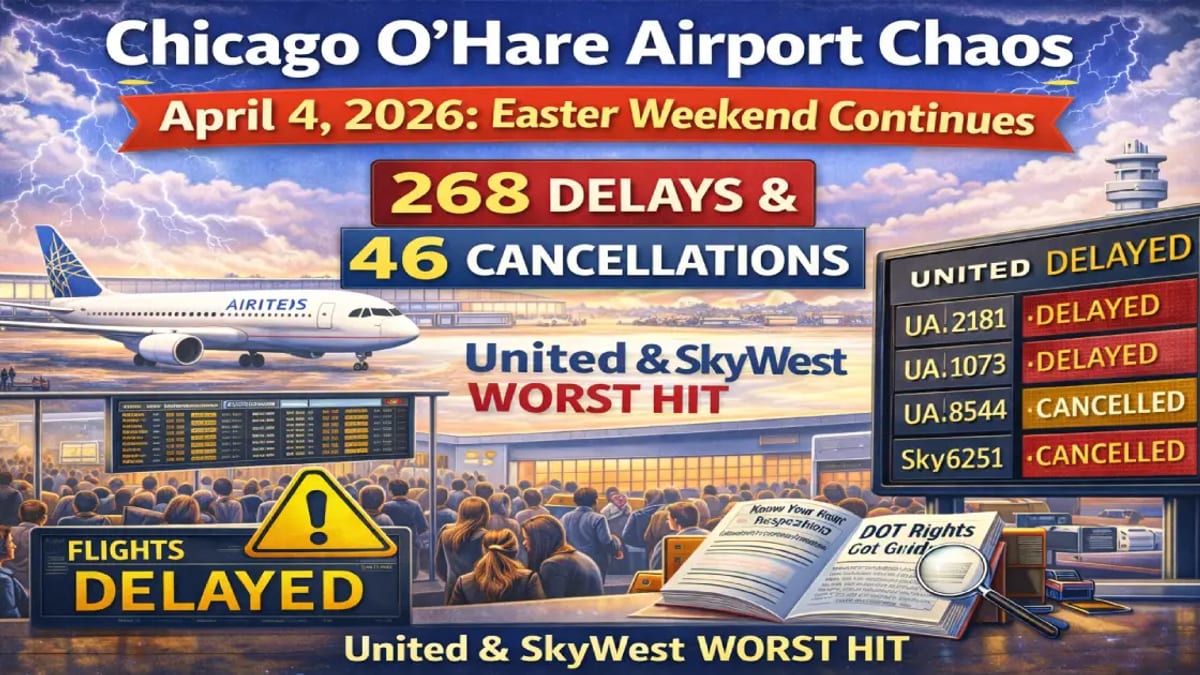
Easter Weekend Crowds Meet Volatile Spring Weather
The disruption at O’Hare unfolded at the height of the Easter holiday rush, when passenger volumes typically swell as families, students and leisure travelers converge on major hubs. Publicly available coverage of national flight performance shows that April’s first weekend was already under strain, with thousands of delays logged across the United States as unsettled weather and heavy demand intersected.
Reports indicate that a band of thunderstorms and low cloud ceilings in the Upper Midwest and Great Lakes region added fresh pressure on air-traffic capacity around Chicago. The conditions came on the heels of several March and late March weather systems that had already exposed how sensitive tightly packed schedules at large hubs can be to even moderate disruptions.
According to aggregated data cited by travel industry outlets, the 314 disruptions at O’Hare on April 4 were part of a broader nationwide spike that counted nearly 4,000 flight disruptions across the country that day. While not the most severe national event of the year, the numbers at O’Hare stood out because they followed a series of earlier storm-related problems that had only recently eased.
With airlines operating close to full capacity on many routes for the holiday period, even relatively short ground stops or weather holds early in the day translated into rolling delays that extended deep into the evening at the Chicago hub.
How 314 Disruptions Rippled Through a Major Hub
The 314 affected flights at O’Hare on April 4 consisted of both outright cancellations and late departures or arrivals. Aviation monitoring services and travel news outlets describe a familiar pattern: early morning schedule adjustments to avoid the worst of the weather, followed by a cascade effect as aircraft and crews fell out of position.
Chicago’s role as a central connection point for domestic and transborder traffic meant that the disruption did not stop at the city limits. Canceled or late flights on routes linking O’Hare with key destinations such as Toronto, Houston, Denver and various Midwest cities created knock-on delays for travelers who missed onward connections. Some passengers arriving from international leisure destinations also faced unexpected overnight stays after missing their last departures of the day.
Publicly accessible flight-status histories for several O’Hare routes on April 4 show a mix of status changes, including delays stretching well beyond scheduled departure times and, in some cases, cancellations announced only after boarding times had passed. Those irregular operations added to congestion at gates and customer-service counters as airlines worked within limited flexibility to rebook travelers on an already busy holiday weekend.
Because many flights on Easter weekend were running close to or at capacity, options for re-accommodating disrupted passengers were often confined to later departures or even travel on subsequent days, extending the impact of the April 4 chaos beyond a single 24-hour window.
Weather, Staffing and Structural Constraints Converge
While the immediate trigger for the April 4 problems at O’Hare was adverse weather in the Chicago region, analysts and recent public documents highlight broader structural challenges that magnify the impact of such events. Federal notices released in March describe ongoing discussions about schedule reductions and operating limitations at O’Hare, with regulators citing concerns about congestion and the resilience of the airport’s daily flight program.
Travel reporting from earlier in the spring also points to repeated use of weather-related travel waivers by major airlines serving O’Hare, reflecting a pattern of volatility that has characterized the late winter and early spring period. On several occasions in March and early April, carriers allowed customers traveling through Chicago to change plans without typical penalties in anticipation of storms, suggesting that operational planners were already wary of how little slack existed in the system.
In addition to the weather and scheduling pressures, anecdotal accounts from passengers in recent weeks have drawn attention to staffing strains in air-traffic control and ground operations. Social media posts and forum discussions describe pilots and crews citing controller shortages and ramp congestion as contributing factors to delays, particularly during peak afternoon and evening banks when O’Hare’s runways and taxiways are heavily utilized.
These elements combined on April 4 to create conditions in which a relatively localized band of storms produced disproportionate disruption, illustrating how quickly a large hub can tip from heavy but manageable traffic into widespread operational chaos.
Traveler Experience: Long Lines, Missed Connections and Uncertain Plans
For passengers on the ground at O’Hare, the figure of 314 disruptions translated into crowded concourses, long waits for updates and, in many cases, rapidly changing itineraries. Images and descriptions shared publicly over the Easter period depict snaking security and check-in lines, along with departure boards heavily populated by delayed indicators and revised departure times.
Travelers connecting in Chicago reported missed flights and rebookings that pushed arrivals to late night or the following day, particularly for those heading to smaller regional airports served only a few times daily. Families traveling for holiday gatherings often faced difficult choices between accepting multi-stop routings, overnight connections, or abandoning trips altogether.
With hotel availability around the airport tightening quickly during major disruption events, some travelers described resorting to terminal seating or improvised rest areas while they waited for morning departures. Others sought to reroute through alternative hubs such as Dallas, Denver or Atlanta, only to encounter congestion there as well due to the nationwide knock-on effects of the Chicago disruption.
Advisories from travel experts and consumer advocates consistently emphasize steps that can reduce exposure in these scenarios, including booking earlier departures, keeping airline mobile apps updated, and considering travel insurance products that cover missed connections and extended delays. The April 4 turmoil at O’Hare served as another high-profile example of why such precautions are increasingly recommended for peak travel periods.
What the April 4 Meltdown Signals for the Months Ahead
The concentration of 314 disruptions at O’Hare on a single day underscores the fragility of operations at one of the world’s busiest airports as the industry heads into the core of the 2026 travel year. With summer schedules typically even denser than those seen in early April, the incident raises questions about how well the system will cope with severe thunderstorms, heat-related restrictions or other seasonal challenges in the months ahead.
Regulatory efforts to explore schedule adjustments at O’Hare may play a role in easing long-term pressure, but any changes will take time to implement and will need coordination among multiple airlines. In the near term, observers expect carriers to continue relying on tactical tools such as waivers, strategic ground holds and preemptive cancellations to manage weather events, all of which still translate into significant inconvenience for travelers.
For passengers planning trips through Chicago in the coming weeks, the events of April 4 act as a reminder that high-demand dates, particularly holiday weekends, carry elevated risk of disruption. Those risks are heightened on itineraries requiring tight connections or involving late-evening arrivals and departures, where recovery options are limited when schedules begin to unravel.
As airlines and regulators review performance data from the Easter weekend, the 314 recorded disruptions at O’Hare are likely to feature prominently in discussions about capacity, staffing levels and infrastructure resilience at the hub. How those conversations evolve will help determine whether similar episodes become a recurring feature of peak travel periods, or a warning signal that prompts meaningful operational change.