

More news on this day
Spring travelers across the United States faced another day of schedule upheaval as operational disruptions at Chicago O’Hare International Airport resulted in six flight cancellations and 233 delays, triggering knock-on impacts for United, SkyWest, Spirit and other carriers on routes linking Chicago with Atlanta, Dallas, Denver and additional cities.
Get the latest news straight to your inbox!
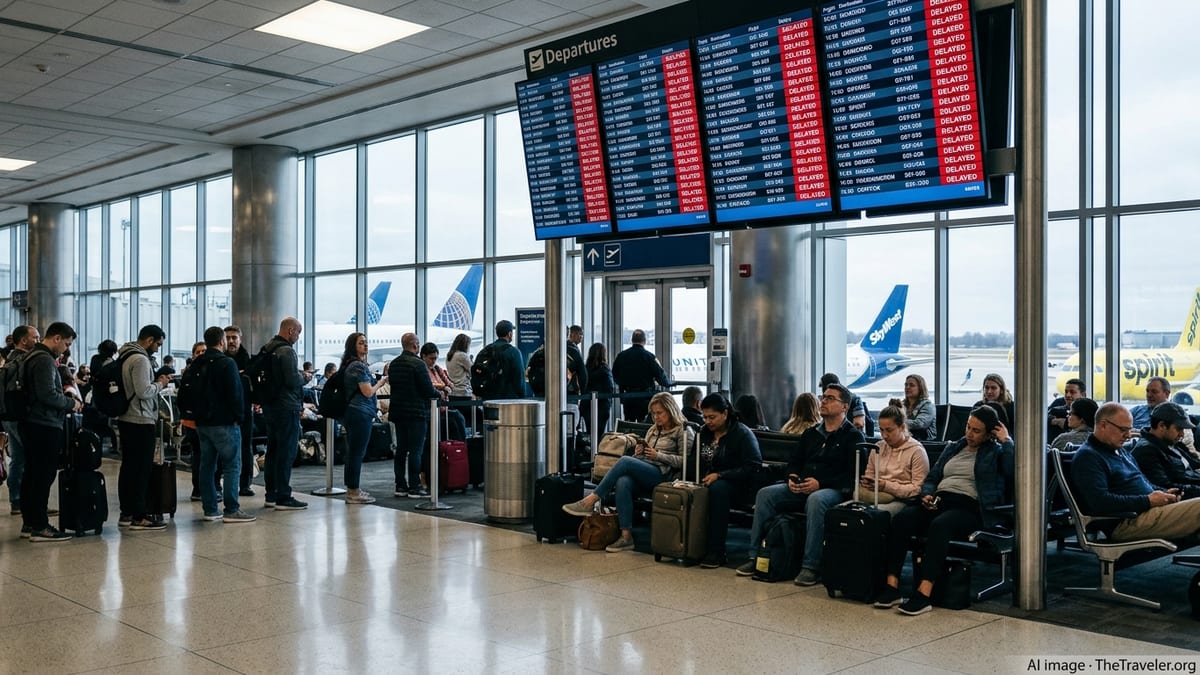
O’Hare Disruptions Add Strain During Busy Spring Travel Period
The latest wave of schedule problems at Chicago O’Hare comes at a time when passenger volumes are climbing for spring break and early-season leisure travel. Publicly available flight-tracking data on Saturday indicated a modest number of outright cancellations at the airport, but a far larger volume of delayed departures and arrivals, concentrating disruption into a relatively compact window of the day.
While six cancellations may seem limited compared with major winter storms or large-scale system outages, the 233 delays recorded at O’Hare translated into missed connections, extended ground holds and crews and aircraft falling out of position. As one of the country’s busiest hubs, even small shifts in O’Hare’s operations can reverberate quickly through networks built on tight connection banks.
The pattern comes on the heels of a turbulent late winter and early spring for US aviation, marked by weather-related waivers in the Midwest and along the East Coast, a significant blizzard affecting portions of the Upper Midwest, and a series of thunderstorms around Chicago that have repeatedly slowed airport operations. Together, these events have left airlines juggling recovery flights and tight schedules just as demand intensifies.
Recent federal filings also show ongoing concern about congestion at O’Hare, with regulators reviewing how to manage peak-period scheduling in an effort to reduce chronic delays. Against that backdrop, the latest cluster of late departures underscores how quickly the airport’s complex operation can become strained.
United, SkyWest and Spirit Among Most Affected Carriers
According to aviation data dashboards tracking day-of-travel performance, United Airlines and its regional partner SkyWest appeared prominently in the tally of delayed operations at O’Hare. United relies heavily on the airport as a central hub, while SkyWest operates numerous United Express services that feed smaller and midsize markets into Chicago’s long-haul network.
When delays mount at a hub like O’Hare, regional flights are particularly vulnerable. Short-haul segments are more easily pushed back as airlines prioritize keeping longer transcontinental and international services closer to schedule. This can leave passengers on smaller-city routes facing longer waits, missed onward connections and, in some cases, last-minute rebookings.
Spirit Airlines, which maintains a significant presence at O’Hare as part of its low-cost point-to-point network, also featured in the disruption pattern. For ultra-low-cost carriers with leaner schedules and fewer backup aircraft, even a single late-arriving inbound aircraft can cascade into multiple late departures over the course of a day.
Other domestic airlines serving O’Hare were also affected to varying degrees, as gate availability, shared ground handling resources and air traffic flow restrictions combined to slow movements across the airport. Passengers reported longer-than-expected waits on the tarmac and in departure lounges as crews awaited updated departure slots.
Ripple Effects From Chicago to Atlanta, Dallas, Denver and Beyond
Because many of the delayed flights at O’Hare were part of through-journeys, the impact spread quickly along key domestic corridors. Routes linking Chicago with Atlanta, Dallas and Denver were among those showing larger clusters of late operations, reflecting the prominence of these airports in the national network and their role as hubs for other major carriers.
In Atlanta, one of the primary gateways for the Southeast, aircraft arriving late from Chicago risked missing tightly scheduled turnaround slots, leading to outbound departures leaving behind schedule. Dallas area airports, already familiar with recent bouts of disruptive weather and flooding this spring, saw further knock-on schedule adjustments when inbound aircraft from O’Hare failed to arrive on time.
Denver, which has also dealt with significant weather-related disruptions in recent weeks, remained sensitive to any additional irregular operations. When flights from Chicago arrived late, they added pressure to an airport still working through its own recovery patterns from earlier storms and operational constraints.
Beyond these large hubs, secondary and regional airports connected to O’Hare by United and SkyWest services also felt the strain. Smaller communities often depend on a limited number of daily flights to connect to the broader network, meaning that a single delayed or cancelled O’Hare rotation can wipe out a majority of that day’s connectivity for some travelers.
Weather, Staffing and Congestion Create a Fragile Operating Environment
The specific causes behind Saturday’s O’Hare delays varied flight by flight, but they unfolded against a backdrop of broader structural challenges. Published coverage in recent weeks has pointed to weather volatility, air traffic control staffing constraints and long-standing airport congestion as key drivers of irregular operations at major US hubs, including Chicago.
Thunderstorm activity in the Midwest earlier in March prompted multiple travel waivers that allowed passengers to rebook without additional fees, a sign that airlines anticipated substantial disruption to their schedules. Separately, a major Midwest blizzard earlier in the month brought heavy snow and high winds to a wide swath of states, piling more pressure on already stretched airline operations.
At the same time, discussions documented in federal notices about managing schedule levels at O’Hare highlight the airport’s chronic susceptibility to delay during peak hours. Once departure or arrival rates are reduced by adverse weather or flow-control measures, it can take hours for the system to absorb the backlog of aircraft waiting to move.
Travelers navigating this environment are encountering a system operating with limited slack. Tight crew duty limits, high aircraft utilization and strong demand all mean that when one element falters, it is harder for airlines to restore normality quickly without further inconveniencing passengers.
What Travelers Experienced and How Airlines Responded
For many passengers, the numbers on delay boards at O’Hare translated into extended waits, last-minute gate changes and hurried rebookings. Some travelers reported being held on aircraft awaiting departure slots, while others saw connection times evaporate as arriving flights circled or waited for a gate.
Airlines responded by adjusting schedules, issuing rolling delay estimates and, in some cases, activating flexible rebooking policies previously introduced for weather and operational disruptions. Public-facing customer guidance has increasingly emphasized the value of using mobile apps and airport displays to monitor gate information and real-time status changes during periods of irregular operations.
Travel industry analysts note that these kinds of mid-scale disruption days, featuring a moderate number of cancellations but a very high volume of delays, can be especially frustrating for passengers. Unlike large storm shutdowns that generate widespread headlines and advance warnings, operational slowdowns at a single hub often evolve over the course of the day, leaving travelers little time to adjust plans.
As the busy spring and summer travel seasons approach, observers say O’Hare’s latest bout of delays serves as another reminder of how dependent the US air travel system remains on a handful of major hubs. Even on days without headline-grabbing storms or system failures, localized congestion in Chicago can ripple outward, affecting passengers hundreds or thousands of miles away.