

More news on this day
Passengers traveling through Chicago O’Hare International Airport are facing widespread disruption as publicly available tracking data shows 335 flight delays and 13 cancellations affecting services operated by United Airlines, Republic Airways, SkyWest and other carriers, with knock-on impacts to routes serving New York City, Winston-Salem, Hailey and additional destinations across the United States.
Get the latest news straight to your inbox!
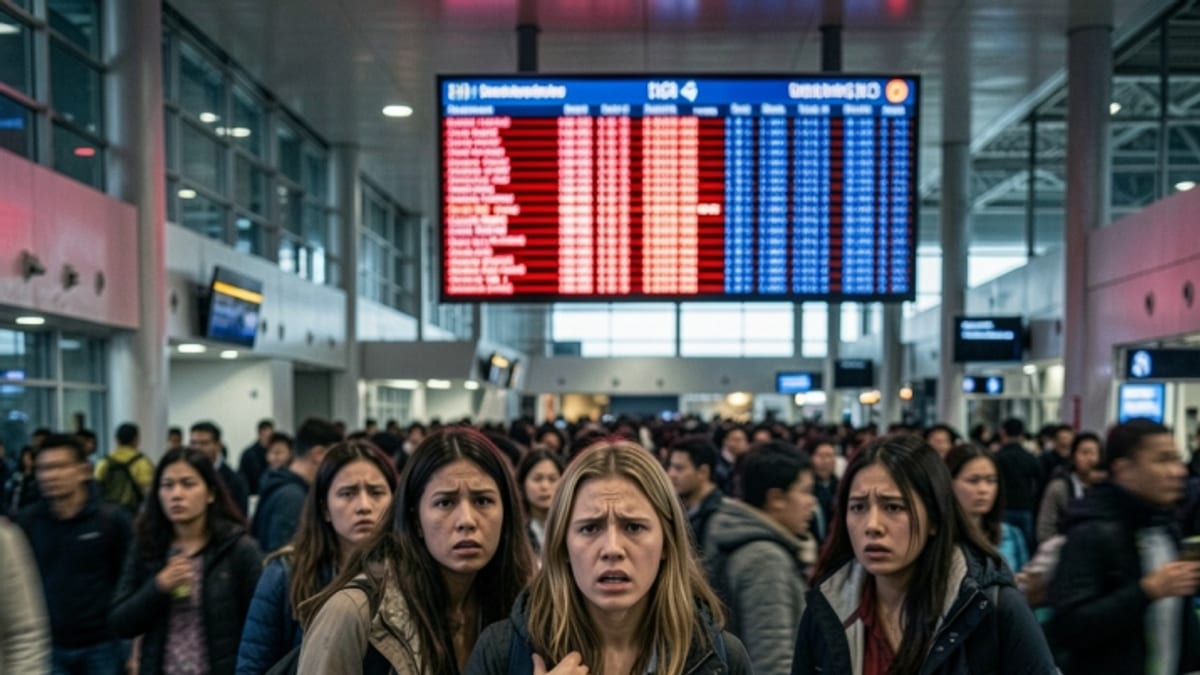
Image by Travel And Tour World
Ripple Effects Across Major and Regional Routes
The wave of schedule disruptions at Chicago O’Hare is affecting both trunk routes and smaller regional connections. Flights between O’Hare and New York City, one of the busiest domestic corridors, are reporting extended departure and arrival delays as aircraft and crews fall out of position. Services to LaGuardia and Newark are among those seeing pushed-back departure times, according to airport operations dashboards and airline tracking platforms.
Beyond the New York market, passengers booked on regional routes are also encountering interruptions. Flights linking O’Hare with mid-sized and smaller cities such as Winston-Salem, North Carolina, and Hailey, Idaho, are experiencing delays and a small number of cancellations. These routes frequently rely on regional jets operated by partners like Republic Airways and SkyWest, which are particularly vulnerable when a hub’s operations slow down.
Travel industry coverage indicates that the tight scheduling of regional fleets means any disruption at a major hub can quickly cascade into multiple markets. In practical terms, this has left some passengers facing missed connections, unplanned overnight stays, or rebookings via alternate hubs such as Denver, Houston, or Washington Dulles as airlines work to reassemble aircraft rotations.
The imbalance between arriving and departing flights at O’Hare is also contributing to equipment shortages at outstations. Aircraft delayed in Chicago are arriving late into downline airports, compressing turnaround times and increasing the likelihood of further delays as crews bump up against duty-time limits and ground teams work to reset schedules.
Operational Strain on United and Its Regional Partners
United Airlines, the dominant carrier at Chicago O’Hare, along with its United Express partners, is bearing much of the current disruption. Publicly accessible performance summaries show United mainline flights accounting for a significant share of the delayed departures, while Republic Airways and SkyWest, which operate many of United’s regional services from the hub, are shouldering additional schedule pressure.
Industry analysts often note that regional operators work with tighter buffers than mainline fleets, given their higher frequency and shorter stage lengths. When a surge of delays hits a hub, these carriers may have limited spare aircraft or reserve crews to absorb the shock, increasing the risk that late-running services turn into cancellations on lower-demand routes.
Reports from aviation data providers suggest that the 13 cancellations linked to O’Hare’s latest disruption are concentrated among shorter-haul flights where re-accommodating passengers on later departures or rerouting via alternative hubs is feasible. By contrast, long-haul and transcontinental services are more likely to operate with delays rather than be removed from the schedule, given their complexity and higher passenger loads.
United and its regional partners are also navigating a broader environment in which staffing and air traffic control constraints can limit flexibility. Recent federal advisories and airline communications have highlighted ongoing challenges with controller availability and ground delay programs in key airspace sectors, including those that serve Chicago and the New York metropolitan area. These limitations reduce the margin for recovery once a hub begins to fall behind schedule.
Weather, Airspace Programs and Systemic Vulnerabilities
The disruptions at Chicago O’Hare are unfolding against a backdrop of volatile late-winter and early-spring weather patterns across the Midwest and Northeast. Recent storms and atmospheric river events have triggered ground delay programs and volume controls at multiple major airports, and O’Hare is frequently among the hubs most exposed when convective weather or low visibility sweeps across the region.
Publicly available advisories from national airspace management systems show that traffic management initiatives, including ground delay programs and flow restrictions into Chicago and New York, have been used repeatedly in recent weeks. These measures are designed to keep arrivals and departures within safe limits when weather or staffing reduces available airspace capacity, but they also create long queues of delayed flights and can force airlines to trim schedules.
Industry reporting has underscored that the interconnected nature of US hub-and-spoke networks amplifies the impact of any single airport’s disruption. When O’Hare slows, the effects are soon visible at spoke airports like Winston-Salem and Hailey, where aircraft may arrive hours late or not at all. Because many of these communities depend on a single daily or twice-daily connection, a cancellation from Chicago can effectively wipe out same-day travel options.
Aviation analysts point out that seasonal patterns are a key part of this story. Late March often brings a mix of residual winter weather systems and early convective storms in the Midwest, alongside high demand for leisure and business travel. The combination can strain airport infrastructure, air traffic control capacity, and airline resources, leaving little room to absorb unexpected disruptions.
What Travelers Are Experiencing and How They Are Adapting
For passengers caught in the latest round of delays and cancellations, the most immediate impact is uncertainty around departure times and connecting itineraries. Airline trackers show multiple O’Hare departures experiencing rolling delays, where an initial short pushback in the schedule gradually stretches into a significantly later takeoff as constraints in the wider network persist.
Travel forums and social media posts indicate that some travelers are proactively adjusting their plans to avoid O’Hare amid recurring disruptions, opting instead for routings through alternative hubs when possible. Others are building in longer connection times when itineraries require a Chicago transfer, accepting a slower overall journey in exchange for a higher likelihood of making onward flights.
Publicly available guidance from travel experts continues to emphasize basic strategies for dealing with irregular operations, such as checking flight status frequently through airline apps, arriving early at the airport in case security lines or gate changes add further delays, and remaining flexible about rebooking through different hubs or on later departures when major weather or airspace issues are in play.
The recent pattern of disruptions is also prompting renewed attention to passenger rights and airline policies around rebooking and compensation. Consumer advocates are highlighting the importance of understanding each carrier’s contract of carriage, as well as any federal rules that may apply when significant delays or cancellations occur for reasons within an airline’s control, such as crew scheduling or mechanical issues. While many of the current problems are linked to weather and airspace constraints, which typically limit compensation, passengers still may have options for fee waivers or itinerary changes in certain circumstances.
Outlook for Operations at Chicago O’Hare
Looking ahead, operational data and aviation forecasts suggest that performance at Chicago O’Hare will continue to hinge on a combination of weather conditions, air traffic control capacity, and airline resource planning. If storms or low ceilings persist over the Upper Midwest, the risk of further ground delay programs and extended flight holds remains elevated.
Airlines with a heavy presence at O’Hare are likely to keep adjusting schedules in the near term, trimming some frequencies and consolidating lightly booked flights in an effort to create more recovery time between departures. Industry observers note that such tactics can help stabilize on-time performance but may reduce flexibility for passengers seeking last-minute seats on popular routes such as Chicago to New York.
Travel planners and aviation experts are advising that passengers with upcoming itineraries through Chicago monitor conditions closely and consider backup options, particularly if their plans involve tight connections or essential same-day arrivals. For communities like Winston-Salem and Hailey that rely heavily on regional links to O’Hare, even modest shifts in the hub’s operation can have an outsized effect on available capacity and schedule reliability.
As airlines, regulators, and airports continue to grapple with the combination of high demand, complex weather patterns, and infrastructure constraints, Chicago O’Hare remains a bellwether for the broader US aviation system. The current round of 335 delays and 13 cancellations illustrates how quickly operational stress at a major hub can reverberate across the national network, touching both marquee city pairs and the smaller communities that depend on them.