

More news on this day
Travelers across the United States faced another day of frustration as operational disruptions at Chicago O’Hare International Airport led to 87 flight cancellations and 163 delays, affecting key routes operated by United Airlines, American Airlines, Delta Air Lines and Spirit Airlines and rippling out to major destinations including New York, Los Angeles and Miami.
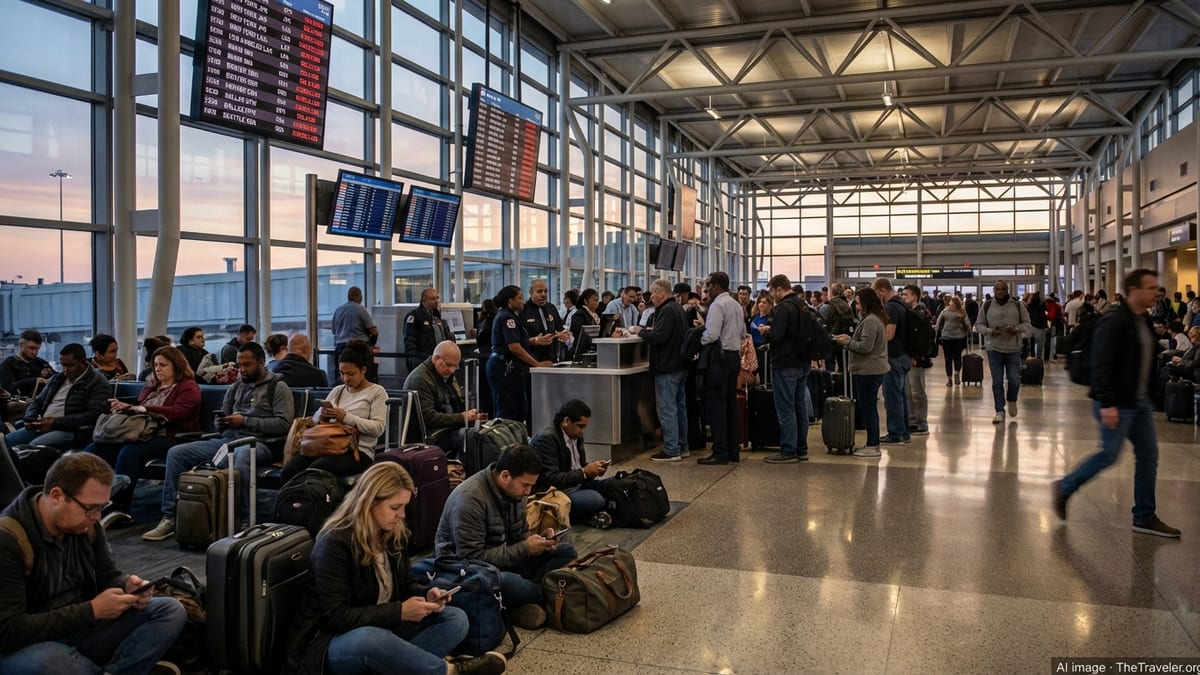
Spike in Cancellations at a Critical Midwest Hub
The latest disruption unfolded at Chicago O’Hare, one of the nation’s busiest hubs and a linchpin in the domestic networks of United and American. Aviation data from flight-tracking services showed scores of departures and arrivals scrubbed or significantly delayed, with 87 cancellations and 163 delays recorded across the four carriers over the course of the day. While the totals fall short of a full-scale meltdown, they were enough to snarl connections and strand passengers across multiple time zones.
United Airlines, O’Hare’s largest tenant, bore a significant share of the impact, with cancellations concentrated on short-haul domestic routes to the East and West Coasts as well as intra-Midwest services. American Airlines also reported a cluster of cancellations and late departures from its O’Hare operation, particularly on high-frequency business routes to New York and other financial and tech centers.
Delta Air Lines and Spirit Airlines, which maintain smaller but strategically important schedules at O’Hare, added to the totals with a mix of scrubbed flights and rolling delays. For many travelers, especially those booked on evening departures, the combined disruption across four airlines translated into missed connections, overnight stays and unexpected rerouting.
Although precise causes varied by flight, a combination of residual weather impacts in the upper Midwest, air traffic control flow restrictions and aircraft repositioning challenges contributed to the day’s irregular operations. Ground holds and slowed arrival rates at O’Hare created knock-on effects that cascaded through already tight schedules.
Nationwide Ripple Effects Hit New York, Los Angeles and Miami
Because O’Hare serves as a primary connecting point between coastal markets and the interior of the country, the disruption quickly rippled far beyond Chicago. Flights between O’Hare and New York area airports, including John F. Kennedy, LaGuardia and Newark, reported rolling delays as aircraft and crews repositioned late or not at all. Travelers headed to and from Manhattan and the broader Northeast corridor faced gate holds, last-minute cancellations and lengthy customer service lines.
On transcontinental corridors, Los Angeles-bound passengers reported delayed departures out of O’Hare, with some westbound services pushed back by several hours as airlines waited for inbound aircraft from earlier disrupted segments. In a few cases, late-arriving widebody aircraft forced carriers to swap to smaller jets or consolidate services, leaving some ticketed passengers rebooked onto flights departing the next day.
Miami and other key Florida gateways also felt the strain, particularly on leisure-heavy routes popular with winter and spring travelers. Delays on Chicago departures to Miami, Fort Lauderdale and Orlando meant missed cruise ship connections, late-night arrivals and added pressure on hotel capacity near South Florida airports. Secondary markets such as Boston, Dallas, Denver, Atlanta and San Francisco experienced their own pockets of disruption as O’Hare-centric aircraft and crew rotations fell out of sync.
Regional communities connected to Chicago by feeder services, including cities across the Great Lakes, the Plains and the Mountain West, saw a mix of cancellations and truncated schedules. For some smaller airports with only a handful of daily departures to O’Hare, the loss of a single round trip effectively eliminated same-day return options.
United, American, Delta and Spirit Respond to Passenger Backlog
As delays mounted, airline operations teams moved into recovery mode, with United and American focusing on restoring core hub-to-hub and coastal services while trimming or consolidating some lower-demand frequencies. Both carriers deployed additional staff at O’Hare customer service counters and gate areas to handle rebookings, meal vouchers and hotel arrangements for travelers unable to reach their final destinations.
Delta, whose O’Hare schedule is anchored by feeder routes into its own hubs, worked to protect onward connections in cities such as Atlanta and Detroit. By selectively holding some connecting departures and re-accommodating others, the airline sought to limit the number of passengers forced into overnight stays. Spirit, which caters heavily to price-sensitive leisure travelers, offered fee waivers on same-day changes for certain affected routes and encouraged customers to use digital channels rather than airport lines wherever possible.
Across all four airlines, rebooking options quickly tightened on popular evening departures to New York, Los Angeles and Miami. Some travelers reported being offered itineraries involving multiple connections or routings through secondary hubs, while others opted to cancel and request travel credits or refunds where eligible. Airport hotels near O’Hare and in downtown Chicago saw a surge in last-minute bookings as stranded passengers sought a place to stay.
Industry analysts noted that while the absolute numbers of cancellations and delays were moderate compared with major winter storm events, the concentration of disruptions at a single mega-hub amplified the impact. With aircraft and crew schedules already running close to capacity, even a partial schedule upset at O’Hare can take a full day or more to unwind.
What Passengers Should Know and How to Navigate the Turbulence
For travelers with upcoming itineraries through Chicago O’Hare, airlines and aviation experts continue to emphasize preparation and flexibility. Passengers are being urged to monitor flight status closely through airline apps and text alerts, as schedules may change multiple times in the hours leading up to departure. Same-day alternatives, when available, are generally easier to secure early, before peak evening waves of disruption.
Airlines typically offer waivers that allow customers on affected flights to change travel dates or routings without standard change fees, though fare differences may apply on some itineraries. During the latest disruption, carriers encouraged customers with nonessential travel to consider shifting to less congested days or to flights earlier in the day, when operations are often more resilient.
At the airport, travelers are advised to arrive with extra time, especially if they are connecting through O’Hare from other US cities. Security checkpoints and customer service counters can quickly become crowded during irregular operations, and additional time may be needed to navigate between terminals, particularly for passengers transferring between United and American or between full-service and low-cost carriers such as Spirit.
Travel insurance and premium credit card protections can play an important role when disruptions stretch into overnight territory. Coverage for hotel stays, meals and ground transportation varies by policy, but many stranded passengers discover too late that they lack documentation such as delay notices or receipts. Experts recommend keeping detailed records of communications with airlines and any out-of-pocket expenses during extended delays.
Broader Strains on the US Air Travel System
The latest disruption at Chicago O’Hare comes against a backdrop of sustained pressure on the US aviation system, where airlines, airports and federal agencies continue to balance pent-up travel demand with staffing and infrastructure constraints. Even on days without severe weather, relatively minor operational challenges at a few large hubs can cascade into widespread delays, particularly during peak travel seasons.
O’Hare’s role as a central interchange for east-west and north-south traffic makes it especially sensitive to broader network shocks. When flights into or out of Chicago are constrained, airlines must juggle limited aircraft, crews nearing duty-time limits and competing demands from other hubs. This often leads to difficult choices about which flights to protect and which to cancel preemptively to avoid even greater knock-on effects.
For passengers, the episode is another reminder that flexibility and contingency planning are increasingly essential parts of air travel in the United States. While most flights still operate broadly on time, clusters of cancellations and delays at chokepoints such as Chicago O’Hare, New York, Los Angeles and Miami can rapidly reshape travel plans across the country, leaving even well-prepared travelers searching for alternatives.
As airlines work to stabilize operations and clear backlogs, flight trackers indicate that schedules at O’Hare are gradually normalizing. However, with aircraft and crews still out of position, sporadic delays and isolated cancellations remain likely in the short term, particularly on routes linking Chicago with major coastal cities.