

More news on this day
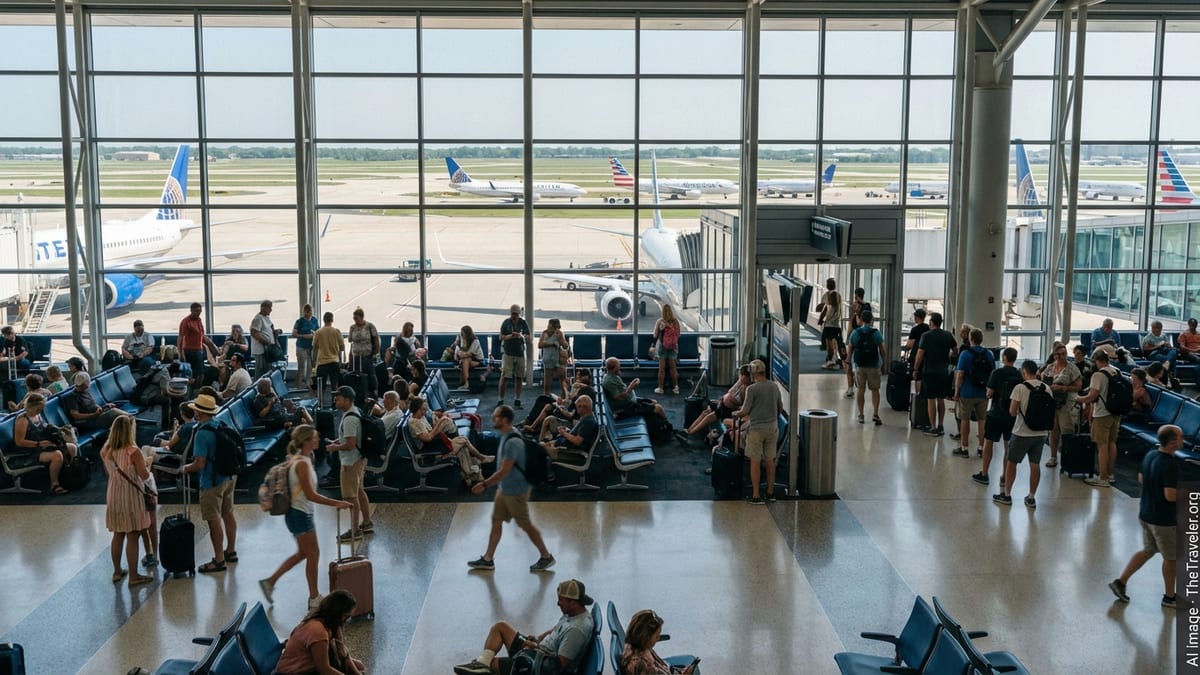
Federal regulators’ move to cap summer 2026 flights at Chicago O’Hare International Airport is poised to ripple through U.S. tourism, curbing capacity on some of the country’s busiest leisure corridors just as demand is set to surge.
What the New O’Hare Flight Caps Actually Do
The Federal Aviation Administration has begun a formal process to limit scheduled flights at Chicago O’Hare between March 29 and October 25, 2026, amid concerns that airlines have overscheduled the airport for the peak summer season. Published timetables show carriers planning roughly 3,080 daily operations at O’Hare for summer 2026, up from about 2,680 last summer.
Regulators have signaled that around 2,800 daily movements is a sustainable ceiling for the airport’s runways, terminals and air traffic control systems. That implies cutting approximately 280 operations on peak days, or close to 9 percent of the flights airlines had planned. The order will apply to U.S. carriers operating at O’Hare but not to foreign airlines, focusing the impact on domestic and transborder routes most heavily used by American travelers.
Before finalizing any caps, the FAA will publish a detailed half-hourly demand profile, identify time periods of severe congestion, and then work privately with each airline on voluntary schedule reductions. Those talks are expected to concentrate on trimming frequencies at the busiest morning and late-afternoon banks, which could mean fewer flight options at the very times leisure travelers prefer to depart.
While the intent is to prevent cascading delays and protect safety, the practical effect for tourists is likely to be fewer seats and less flexibility on some of the most popular domestic routes out of Chicago.
Why Tourism Destinations Are in the Crosshairs
Leisure markets are squarely in focus because Chicago is one of the country’s most important hubs feeding traffic to U.S. vacation hotspots. United Airlines and American Airlines, O’Hare’s dominant carriers, have both aggressively grown their domestic schedules for 2025 and 2026, adding frequencies to sun and entertainment destinations such as Orlando, Las Vegas and Phoenix. Industry schedule data already show United surpassing 700 daily departures from O’Hare in peak summer 2026.
That expansion built on a broader post-pandemic push to capture leisure demand, with American earlier touting 100 additional daily departures from O’Hare for spring break periods and a network of more than 75 high-demand destinations reachable from the hub. Low-cost competitors have joined in, with carriers like Frontier recently launching new routes such as Miami–Chicago, effectively turning O’Hare into a major gateway feeding beach and theme-park markets.
The FAA’s cap now collides with that growth strategy. Because airlines are unlikely to cut their highest-yield business routes first, network planners are expected to target frequencies on discretionary leisure segments where travelers are more price-sensitive and have some ability to shift dates or routes. That puts nonstop Chicago flights to resort and entertainment destinations at particular risk of thinning out, even if they are not eliminated entirely.
Tourism boards in Florida, Nevada and the Southwest are watching closely. Chicago is a top-10 origin market for visitor arrivals in many of these states, and a sustained reduction in nonstop capacity during key summer weeks could shave meaningful numbers off hotel bookings and attraction attendance.
How Airlines May Reshape Networks and Fares
Behind the scenes, airlines now face an intricate puzzle: preserve profitability and market share at O’Hare while complying with tighter operating limits. Because the FAA process targets specific congested time windows, carriers are expected to concentrate reductions in the busiest banks and to shift some flying to shoulder periods rather than simply abandoning routes outright.
For travelers, that could translate into fewer early-morning and post-work nonstop options from Chicago to major leisure destinations, with more departures pushed into mid-morning, midday and late-evening slots. Some thinly used midday flights are likely to disappear entirely, consolidating demand onto remaining departures and increasing average load factors.
On price, the picture is mixed. Fewer seats on popular routes like Chicago–Las Vegas or Chicago–Orlando typically support higher fares, especially around school holidays and big events. At the same time, competition between United, American and low-cost rivals could keep headline prices in check on marquee routes, even as discounted inventory becomes scarcer. Travelers may see the widest increases on secondary leisure markets, such as smaller mountain or desert cities that rely heavily on connecting traffic via O’Hare.
Airlines may also respond by funneling more Chicago-origin passengers through alternative hubs with spare capacity, such as Dallas–Fort Worth, Denver or Charlotte, to maintain overall network reach. That would keep many destinations accessible but add connections and potentially lengthen travel days for Midwest tourists who had grown accustomed to plentiful nonstops.
What 2026 Travelers Should Expect and Do
For travelers planning 2026 vacations from or through Chicago, the most immediate takeaway is that today’s schedules are not guaranteed. As the FAA’s cap is finalized and airline-by-airline adjustments are announced, many summer itineraries will be retimed, consolidated or, in some cases, canceled. This reshuffling will unfold throughout 2025 and early 2026, meaning that a flight time available when you book may shift well before departure.
Industry analysts advise that travelers with fixed-date trips to high-demand destinations build in extra flexibility where possible. That can mean favoring morning arrivals over tight same-day connections to cruises or events, allowing more buffer time in connecting hubs, and avoiding the very last flight of the day on critical legs when alternatives are limited. Reconfirming flight times regularly in the months leading up to travel will be essential.
Booking early is likely to be more important than ever for peak dates in June, July and August, especially for families seeking nonstops between Chicago and major vacation cities. As capacity constraints bite, remaining seats on prime departures are expected to sell out faster, pushing late bookers toward less convenient times or connecting routings. Travelers redeeming frequent-flyer miles should also anticipate tighter award availability on these routes and consider off-peak days or nearby alternate airports.
Tourism operators, from hotels to rental car firms and theme parks, may respond by adjusting early-booking discounts, air-inclusive packages and cancellation terms to account for the greater risk of schedule changes. Travelers who bundle flights with ground arrangements through a single provider could benefit from more streamlined rebooking support if schedules shift.
Regional Winners and Losers in the New Landscape
While the overall effect of O’Hare flight caps is to dampen capacity, not every destination will feel the pain equally. Large, year-round markets with diverse demand sources, such as Los Angeles, New York and Miami, are likely to remain well served, even if some departures are shifted outside traditional peak hours. In contrast, seasonal hotspots that rely heavily on summer traffic from the Midwest may see more pronounced swings in seat supply.
Destinations accessible via multiple hubs could partially offset any lost O’Hare capacity by courting additional flights from other cities. For example, a beach destination facing cuts on its Chicago nonstop might seek incremental service from Atlanta, Dallas–Fort Worth or Denver to keep visitor numbers stable. However, that strategy tends to favor markets with strong existing brand recognition and robust year-round demand, rather than emerging or niche destinations.
Closer to Chicago, secondary airports such as Milwaukee Mitchell and Indianapolis could see an uptick in demand from travelers willing to drive farther in search of more stable or better-timed flight options. Low-cost carriers operating from those airports may move quickly to market themselves as alternatives for Midwest vacationers frustrated by higher prices or fewer choices at O’Hare.
For tourism planners, the coming year will be a delicate balancing act. As airlines and regulators finalize the details of O’Hare’s 2026 caps, destination marketing organizations will need to track capacity trends closely, adjust forecasts and tailor outreach in the Chicago region to ensure that visitor pipelines remain as open as the new rules will allow.