

More news on this day
Chicago O’Hare International Airport is experiencing severe disruption as hundreds of flights are canceled or delayed amid powerful storms sweeping across the United States and mounting strain on the nation’s air travel system.
Get the latest news straight to your inbox!
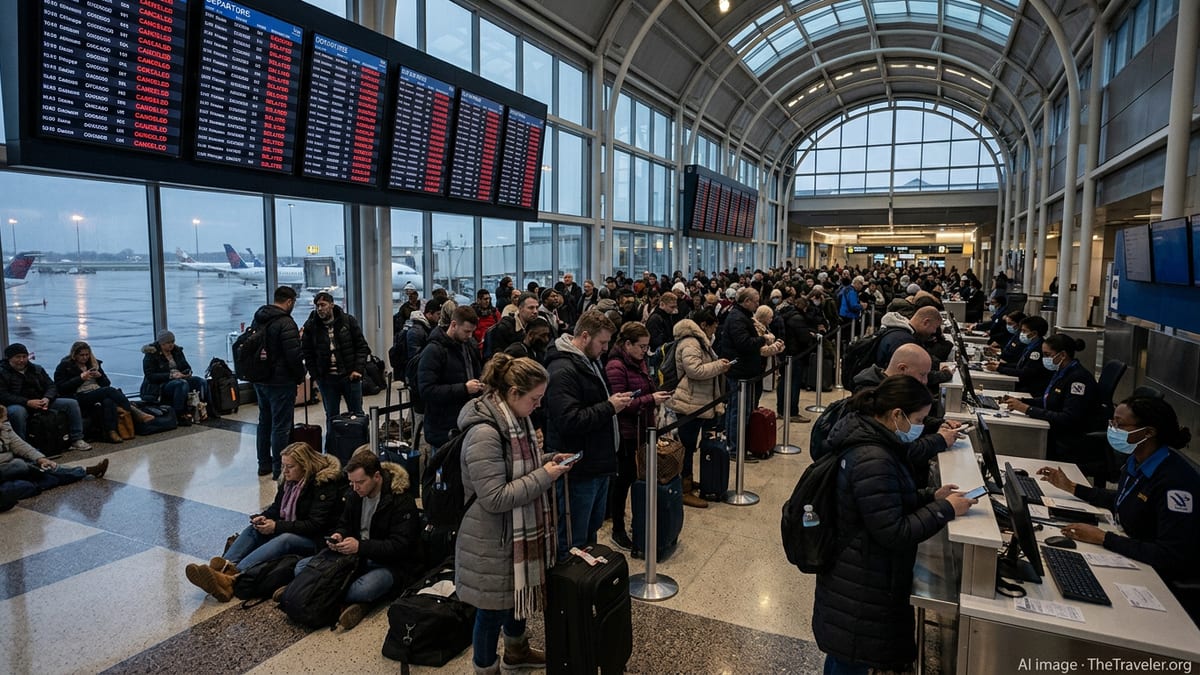
Severe Weather Turns One of the World’s Busiest Hubs Into a Bottleneck
Flight-tracking data and airline updates show that O’Hare has become one of the hardest-hit airports in the latest round of U.S. travel disruption, with carriers canceling and delaying large portions of their schedules. A strong storm system moving across the Midwest and into the eastern United States has brought snow, high winds and heavy rain, creating difficult conditions for both arrivals and departures.
Publicly available figures on Tuesday, March 17, indicate hundreds of flights across the country have been grounded or delayed, with Chicago among the leading trouble spots. Earlier in the week, thunderstorms, high wind advisories and low visibility had already forced crews to slow operations, stack incoming flights in holding patterns or divert them to other Midwest hubs.
For O’Hare, one of the top global airports by movements, small changes in runway capacity quickly ripple through the system. When weather limits the number of aircraft that can land or depart each hour, airlines adjust by grouping cancellations and pushing back departure times, often at short notice. That creates the kind of cascading disruption that many travelers are now confronting.
The stormy pattern follows an already unsettled start to the month across parts of the Midwest, with winter weather alerts and severe conditions periodically affecting aviation. Chicago’s position as a central connecting point means that any slowdown locally can rapidly influence flight options between the East and West Coasts as well as cross-border services.
Domestic Networks Face Rolling Disruptions and Tight Connections
Passengers flying within the United States are bearing much of the immediate impact from the O’Hare disruption. Major domestic carriers use the airport as a primary hub, routing large numbers of travelers from smaller regional airports through Chicago in order to reach other cities. When banks of connecting flights are canceled, entire portions of the domestic network can become misaligned.
Reports from flyers over the past week describe departure boards filled with rolling delays, gate changes and last-minute cancellations, particularly during periods of strong winds or active thunderstorms in the Chicago area. Some travelers have seen evening departures pushed into the late night or early morning hours, while others have been rebooked for flights several days later as seats run short on alternative services.
The situation is particularly challenging for those on tight connections. Even when flights are not canceled outright, extended ground holds and slower taxi operations can erode already narrow transfer windows. As a result, passengers may arrive in Chicago only to miss onward flights that are already boarding or have just departed, compounding the sense of chaos in concourses and gate areas.
Travel advisers note that during periods of heavy disruption at a hub like O’Hare, it can be safer to build in longer connection times than usual and to monitor flight status closely on airline apps. Same-day adjustments, including shifting to earlier departures or rerouting through less congested hubs, can sometimes reduce the risk of becoming stranded mid-journey.
Global Routes From Chicago Feel the Shockwaves
The impact has not been limited to domestic services. O’Hare’s role as a major international gateway means that disruptions quickly extend to global routes, affecting flights to Europe, Asia, the Middle East and Latin America. When feeder flights bringing passengers into Chicago are canceled, long-haul departures can leave with empty seats or face schedule shuffles as airlines attempt to consolidate passengers onto fewer services.
Travelers on transatlantic and transpacific routes have reported cancellations or significant delays on flights that typically depart in tightly timed evening waves. Some long-haul services have operated several hours behind schedule after late-arriving aircraft and crews, while others have been scrubbed entirely and rebooked for the following day, leaving passengers to secure overnight accommodation at short notice.
Global cargo flows are also affected when Chicago’s operations slow down. O’Hare is a key freight hub, and passenger widebody aircraft often carry significant amounts of belly cargo alongside travelers’ luggage. When those flights are delayed or canceled, shipments bound for overseas markets can face missed connections and rerouting, with knock-on effects for supply chains that depend on just-in-time deliveries.
For international travelers, the combination of weather-related disruption and tight immigration or customs windows adds another layer of complexity. Missed onward connections can trigger re-screening requirements and rebooking in unfamiliar terminals, making proactive information from airline apps, airport displays and customer-service channels especially important during periods of volatility.
Capacity Strain and Regulatory Scrutiny Add to the Turbulence
The latest disruption comes at a moment when Chicago O’Hare’s capacity has already been under renewed scrutiny. Recent public notices and local coverage describe federal aviation regulators in talks with major carriers about trimming peak schedules at the airport, citing concerns that planned growth in flight numbers could outpace what the current infrastructure and airspace can reliably handle.
Reports highlight that leading airlines have scheduled tens of thousands of additional departures at O’Hare for 2026, setting up what some analysts describe as an “arms race” for market share at the hub. At the same time, the airport is in the midst of a long-term expansion program, with construction affecting some gates and airfield areas even as new facilities are built out for the next decade.
Regulatory filings and statements indicate that the Federal Aviation Administration has explored mechanisms to encourage airlines to reduce flight volumes during the busiest hours, in an attempt to limit chronic delays and make the system more resilient when storms or other disruptions occur. Discussions about slot-like controls, voluntary cutbacks or adjusted scheduling practices have intensified in light of recent weather events.
For travelers, these behind-the-scenes debates can translate into fewer frequency options on some routes but potentially greater reliability on those that remain. However, as the current bout of cancellations shows, even a more carefully managed schedule can still be vulnerable when powerful weather systems sweep across much of the country simultaneously.
What Travelers Through O’Hare Should Know Right Now
For passengers with upcoming itineraries through Chicago O’Hare in the next several days, publicly available airline and airport data point to a travel environment that is likely to remain unsettled as operations gradually normalize. Residual delays from aircraft and crews being out of position can persist even after the worst of the weather has passed, particularly at complex hub airports.
Travel companies and aviation analysts broadly recommend that passengers check flight status frequently on official airline channels rather than relying solely on airport departure boards. Many carriers have activated weather-related travel waivers in recent days for Chicago and surrounding regions, allowing eligible customers to change flights without additional fees within a specified travel window and fare class constraints.
Those who must travel during this period may wish to arrive at the airport earlier than usual, especially given reports of longer security lines at some U.S. airports amid broader staffing pressures. Carrying essentials such as medications, chargers and a change of clothes in hand luggage can provide a safety net in the event of unexpected overnight delays or missed connections.
As the busy spring break and sports travel season overlaps with volatile early-spring weather, Chicago O’Hare is likely to remain a critical pressure point in the U.S. aviation network. For now, the combination of storms, capacity questions and high demand has created a challenging environment for both airlines and travelers navigating one of the world’s key aviation crossroads.