

More news on this day
Severe late-winter weather sweeping across the Midwest and East Coast, combined with mounting operational pressures at Chicago O’Hare International Airport, has triggered widespread flight cancellations and delays that are rippling across the United States and onto major international routes.
Get the latest news straight to your inbox!
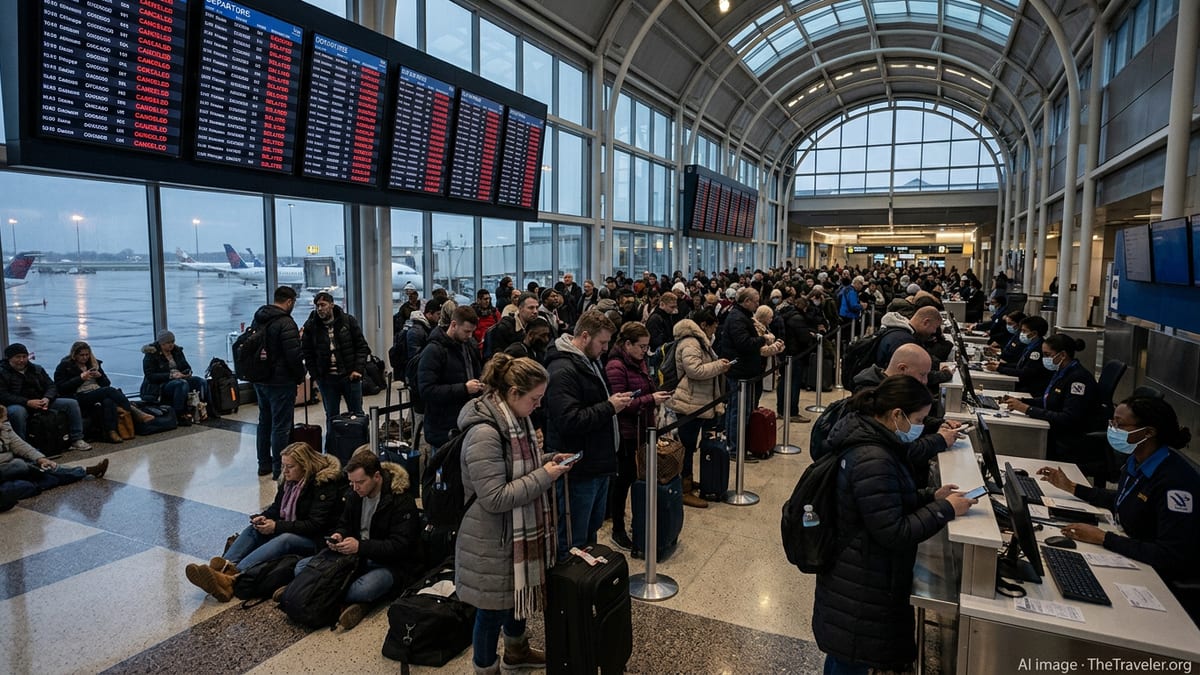
Storm System Pounds Midwest and Upends Air Travel
A powerful March storm system affecting large parts of the Midwest and eastern United States has become the primary driver of the latest wave of disruption at Chicago O’Hare. Heavy snow, high winds and poor visibility around Illinois and neighboring states have limited takeoffs and landings, forcing airlines to scale back schedules and divert flights.
Publicly available weather data for the March 13 to March 17 period indicates a broad storm complex stretching from the High Plains through the Upper Midwest into the Great Lakes, bringing blizzard conditions and hazardous crosswinds to major hubs. Chicago has sat squarely in the storm corridor, with O’Hare experiencing extended periods of strong, gusty winds that complicate runway operations and create unsafe conditions for aircraft movements on the ground.
National flight-tracking figures for Monday and Tuesday show several thousand flights canceled or delayed across the United States, with a significant share tied to Chicago, New York and Atlanta. With O’Hare acting as a central connecting point between coasts, even localized disruptions in Illinois have quickly cascaded into missed connections and cancellations for travelers far from the Midwest.
The latest weather turmoil follows days of severe conditions that included snow, thunderstorms and damaging winds across multiple regions. Reports indicate that airlines and air traffic managers are using ground stops and flow restrictions to manage congestion at O’Hare, further tightening capacity during already fragile weather windows.
Mass Cancellations Hit Domestic and Global Networks
The impact at Chicago O’Hare has spread rapidly through domestic routes, particularly those serving regional cities across the Midwest, Great Lakes and central United States. Short-haul flights into and out of O’Hare are among the most vulnerable to rolling delays and cancellations, since tight turnaround times and quick connection banks leave little flexibility when storms slow operations.
Medium-haul routes to the East Coast and South have also been heavily affected, as the same storm system has disrupted airports from the Mississippi Valley to the Mid-Atlantic. Travelers connecting between the coasts via O’Hare have faced extended waits, last-minute reroutes through alternate hubs and, in many cases, outright cancellations with limited same-day alternatives.
Long-haul international services are under strain as well. O’Hare is a key gateway for transatlantic and transpacific travel, and cancellations of feeder flights have left some overseas departures with sharply reduced passenger loads or forced rescheduling. Publicly available schedules show carriers trimming frequencies or consolidating flights where possible, particularly on routes to Europe and East Asia, to better align with reduced domestic flows.
Some passengers with onward international itineraries have reported being rebooked through alternate hubs such as Dallas-Fort Worth, Newark, Washington Dulles or Denver when Chicago connections fell apart. These reroutings extend travel times by many hours and, in some cases, require overnight stays as airlines work through the backlog created by several consecutive days of difficult weather.
Operational Strains at an Already Stretched Hub
The storm-related chaos is landing at a moment when Chicago O’Hare is already under scrutiny for capacity and operational issues. The airport is in the midst of a multi-year expansion and modernization program that includes major work on terminals and airfield infrastructure. While the long-term goal is to increase gate capacity and streamline flows, ongoing construction can tighten available space and complicate day-to-day operations.
Federal aviation notices released in recent weeks describe meetings and consultations focused on potential operating limitations at O’Hare, particularly for the coming summer season when schedules are set to grow sharply. Aviation coverage indicates that regulators are weighing temporary caps or reductions on peak-hour flights as a way to ease chronic congestion and reduce the risk of extended delays and cancellations when weather or staffing problems arise.
Airlines with large presences at O’Hare, including major full-service carriers that use the airport as a flagship hub, have been adding flights and new destinations to capture demand. That growth has increased the sensitivity of the network to any disruption. When high winds or snow cut available runway capacity, the number of aircraft vying for arrival and departure slots can quickly exceed what controllers and ground crews can safely manage, triggering the kind of large-scale schedule adjustments now being seen.
Travel industry analysts note that the current wave of disruption illustrates a broader challenge for hub airports operating near the limits of their infrastructure. Even short-lived storms or operational setbacks can cause multi-day ripple effects when flight schedules are densely packed and spare aircraft and crews are limited.
Travelers Face Long Delays, Diversions and Rebooking Headaches
For passengers, the chaos at O’Hare has translated into some of the most difficult travel conditions of the year so far. Social media posts and traveler forums describe departure boards dominated by red delay and cancellation notices, crowded gate areas and lengthy customer-service lines as flyers try to salvage their plans.
Some travelers report aircraft pushed back from gates only to sit on taxiways awaiting clearance, while others recount near-arrivals into O’Hare that were diverted at the last minute to alternate airports due to shifting wind conditions or runway constraints. In many cases, those diversions left passengers stranded far from their intended destination with limited options to continue the journey the same day.
Rebooking has been a particular pain point. With so many flights canceled or fully booked, same-day alternatives are scarce, especially for travelers bound for smaller regional markets or specific international connections. Airlines have issued weather-related travel waivers for Chicago and other affected Midwest airports, allowing itinerary changes without standard fees, but available seats remain the main bottleneck.
Reports also describe knock-on issues such as missing baggage, misaligned crew schedules and aircraft parked out of position, all of which further slow the recovery. For many travelers, a trip originally planned as a simple connection through Chicago has turned into an unplanned overnight stay or multi-stop detour.
What Passengers Should Monitor in the Coming Days
With the broader storm complex expected to continue influencing weather in the Midwest and East through at least March 17, travelers connecting through Chicago O’Hare in the near term should expect ongoing volatility. Forecasts suggest that while the most intense blizzard conditions will gradually ease, lingering high winds, low cloud ceilings and runway contamination from snow and ice can still limit airport throughput.
Published airline advisories encourage passengers to check the status of flights frequently on official channels, use mobile apps for rebooking where available and allow extra time to clear security and reach gates. Given the tight capacity at O’Hare, experts recommend that travelers consider early-day departures where possible, as morning flights often have a higher chance of operating before weather and operational delays accumulate.
Travelers beginning international journeys are advised to monitor both their domestic feeder flights into Chicago and their onward long-haul segments, since disruptions to the first leg can quickly jeopardize the second. Some itineraries may be more resilient when routed through alternate hubs less directly affected by the current storm track, though such changes depend on fare rules and seat availability.
As airlines, regulators and airport managers continue to assess both the immediate storm damage and longer-term capacity pressures at O’Hare, travel watchers expect the conversation around scheduling limits, infrastructure investment and hub resilience to intensify. For now, passengers face another challenging period of uncertainty at one of the world’s busiest and most strategically important airports.