

More news on this day
Travelers moving through Chicago O’Hare International Airport faced a wave of disruption as 447 flights were delayed and 11 canceled, tangling schedules for United, American and Delta passengers across key routes to New York, Los Angeles, London, Paris and Toronto.
Get the latest news straight to your inbox!
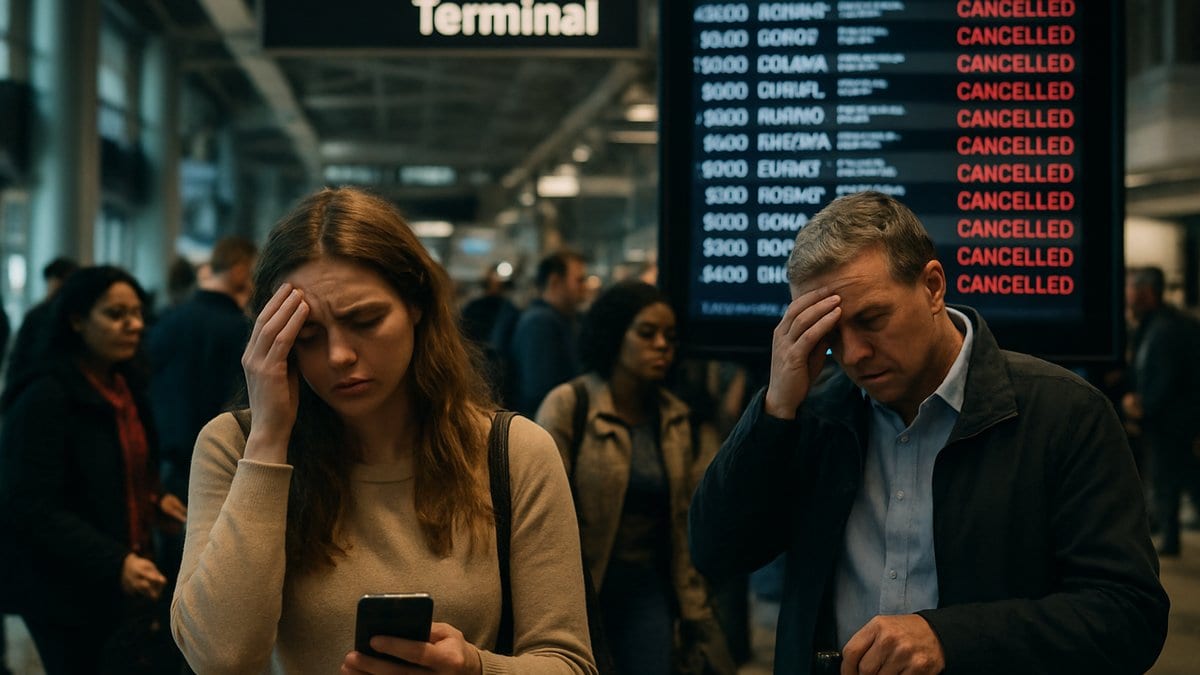
Severe Disruptions At One of America’s Busiest Hubs
The latest disruption at Chicago O’Hare unfolded over a single busy travel period, transforming the airport’s packed terminals into scenes of long queues, crowded gate areas and mounting frustration as departure boards filled with delay notices. Publicly available tracking data and industry reports indicate that the vast majority of affected flights were pushed back by at least 30 minutes, with some departures slipping by several hours.
O’Hare, which consistently ranks among the top U.S. airports for traffic volume, has seen repeated pressure from a combination of weather patterns, tight schedules and operational constraints. Aviation data for recent months shows the hub frequently appearing on lists of airports with elevated levels of delays, underscoring how quickly disruption in Chicago can ripple outward across airline networks.
The 11 cancellations recorded during this event represented a small fraction of the day’s operations but added another layer of complexity for travelers who suddenly needed rebooking, hotel vouchers or alternative airports. For passengers already in transit, missed connections through O’Hare meant rerouting via other hubs and, in some cases, overnight stays.
Observers note that while the number of cancellations was limited compared with the volume of delays, the combined impact severely tested the resilience of airline schedules and passenger patience at the height of a busy travel window.
United, American And Delta Networks Under Strain
United Airlines and American Airlines, both of which operate major hubs at Chicago O’Hare, were among the most heavily affected carriers, according to aviation tracking platforms. Delta Air Lines, which maintains a smaller but still significant presence at the airport, also experienced knock-on disruption as shared routes and connecting passengers fed delays across its network.
Industry coverage of the disruption indicates that affected flights spanned a wide range of departure banks, hitting early-morning business travelers, midday transcontinental services and evening international departures. The pattern mirrors broader trends seen in recent U.S. travel seasons, in which a mix of congested airspace, tight staffing and weather-sensitive schedules can push even minor issues into systemwide headaches.
Recent analyses of U.S. air travel performance show that large network carriers are particularly vulnerable when a major hub such as O’Hare slows down. Once aircraft and crews are out of position, delays can cascade into subsequent flights, often long after conditions at the original hub have improved. That dynamic appeared to be at work in the latest O’Hare episode, with some passengers reporting rolling schedule changes across the day.
While each airline publishes its own policies for rebooking and compensation, travel rights advocates stress that passengers should closely review their carrier’s contract of carriage in the aftermath of delays or cancellations. The complexity of U.S. and international rules can mean very different outcomes for travelers on similar itineraries, depending on the airline, route and cause of the disruption.
Ripple Effects From New York To London And Beyond
The disruption in Chicago did not stay local. Key domestic corridors between O’Hare and New York and Los Angeles saw significant knock-on impacts as aircraft arriving late into Chicago departed behind schedule, according to route-level tracking data. These busy business and leisure routes form part of a tightly timed web of connections, meaning a delay on one leg can quickly multiply across the country.
International links from Chicago to London and Paris were also affected, with late inbound aircraft and crew rotations contributing to schedule changes. Industry reporting shows that transatlantic routes involving O’Hare have faced elevated delay levels in recent seasons, in part because they rely on aircraft cycling through congested U.S. hubs earlier in the day.
Connections to Toronto felt the pressure as well, highlighting how quickly disruptions at one U.S. hub can spill into the wider North American network. Travelers on short cross-border hops can be particularly exposed when inbound U.S. feeder flights are delayed, as missed connections may leave few same-day alternatives.
Aviation performance studies from the past year have repeatedly flagged the vulnerability of hub-and-spoke systems to this sort of cascading effect. When a central node like Chicago O’Hare slows, flights touching multiple countries can be pushed off schedule even if local weather and conditions at origin or destination airports remain stable.
Weather, Congestion And Systemic Pressures
Although detailed breakdowns of the immediate causes for each delay and cancellation at O’Hare are still emerging, recent patterns suggest a familiar mix of contributing factors: intermittent weather, crowded airspace and tight turn times for aircraft and crews. In previous disruption waves, thunderstorms and low visibility around major Midwestern hubs have forced ground stops or flow-control measures that quickly backed up departures.
Operational data and government reports on U.S. aviation performance have repeatedly highlighted the challenge of matching aggressive flight schedules with finite runway and airspace capacity at peak times. Even small slowdowns in departure or arrival rates at a large hub can trigger delays that stretch across an entire day.
Analysts also point to broader structural issues in the aviation system, including staffing gaps in air traffic control and ground operations, as well as the knock-on effects of earlier large-scale disruptions. High-profile technology outages and previous periods of mass cancellations have left airlines with little slack in their networks, making it harder to recover quickly when new problems arise.
For travelers, these systemic pressures are largely invisible until they result in a missed connection or an overnight delay. However, the clustering of major disruption events across multiple travel seasons suggests that episodes like the one at O’Hare are becoming a recurring feature of modern air travel rather than isolated anomalies.
What Travelers Can Do When Chaos Hits
Consumer advocates and travel analysts generally recommend that passengers build extra time into itineraries that connect through busy hubs such as Chicago O’Hare, particularly during peak travel periods or seasons prone to storms. Booking longer connection windows can provide a buffer when departure banks begin to slip.
Publicly available guidance from regulatory agencies and passenger rights organizations also emphasizes the importance of monitoring flight status through both airline apps and independent tracking tools. Early awareness of a delay can help travelers rebook onto alternative flights or reroute through other hubs before options become scarce.
Travel specialists often advise keeping essential items such as medications, chargers and basic toiletries in carry-on luggage, in case delays at airports like O’Hare turn into unexpected overnight stays. For international routes to cities like London, Paris or Toronto, having accommodation and transportation options researched in advance can reduce stress if arrival is pushed into late-night hours.
The latest disruption at Chicago O’Hare underscores how quickly a concentrated burst of delays and a handful of cancellations can cascade through domestic and international networks. As airlines and regulators continue to examine performance data and resilience strategies, travelers connecting through major hubs face a new reality in which flexibility, preparation and real-time information are key to navigating an increasingly fragile system.