

More news on this day
Thousands of travelers were left stranded on February 23, 2026, after a fresh wave of disruptions at Chicago O’Hare International Airport caused 252 delays and 237 cancellations across United Airlines, American Airlines, Delta Air Lines, Republic Airways and their regional partners, snarling flight schedules to New York, Los Angeles, Miami and scores of other major US cities.
Operational Turmoil at One of America’s Busiest Hubs
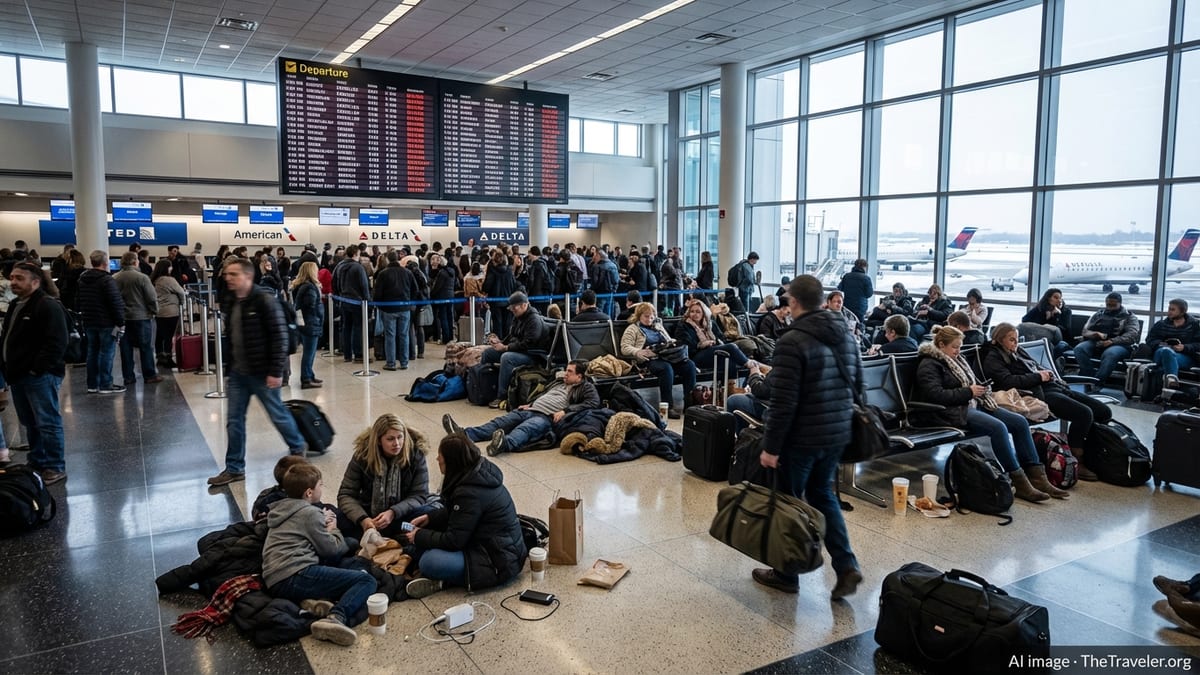
The latest bout of disruption at Chicago O’Hare International Airport underscored the vulnerability of one of the country’s primary aviation crossroads. With more than 250 flights delayed and nearly 240 cancelled in a single operational window, the airport’s tightly choreographed hub structure quickly unraveled. Gate areas filled with stranded passengers, departure boards cycled through rolling time changes, and rebooking lines stretched across concourses.
United Airlines and American Airlines, O’Hare’s dominant hub carriers, bore the brunt of the disruption, alongside regional operators such as Republic. Delta Air Lines, which maintains a smaller but strategically important presence at the airport, also reported significant schedule impacts. The ripple effect reached far beyond Chicago, with knock-on delays and aircraft repositioning challenges affecting busy coastal gateways and secondary cities alike.
Although real-time federal data showed no extended ground stop in effect at O’Hare, operational reports indicated that a combination of localized weather, air traffic flow restrictions and staffing constraints inside airline operations centers contributed to the breakdown. The timing of the disruption, intersecting with a peak weekend travel period, amplified its effect on passenger movements nationwide.
Major Airlines Hit as Hub Operations Seize Up
Preliminary tallies from aviation data providers and airline schedule trackers showed United Airlines accounting for dozens of cancellations and delays out of O’Hare, reflecting its role as the airport’s largest tenant. United’s extensive domestic and international network meant even a modest percentage of disrupted flights cascaded across multiple time zones, affecting aircraft and crews scheduled for subsequent rotations.
American Airlines, which uses O’Hare as a key Midwest hub feeding its domestic system and transcontinental routes, also logged a substantial share of the cancellations. Regional partners operating under the American Eagle and United Express banners, including Republic, were particularly exposed, as high-frequency shuttle services to nearby cities were trimmed back or scrubbed altogether when delays rendered tight turnarounds impossible.
Delta Air Lines, though operating a smaller schedule at O’Hare compared with its Chicago rivals, still saw enough disruption to inconvenience hundreds of passengers. Many of the affected flights were short-haul domestic services, where even relatively brief delays can cause passengers to miss onward connections at other hubs, magnifying the impact well beyond the original departure point.
Key Routes to New York, Los Angeles and Miami Disrupted
The worst of the disruption was felt on trunk routes linking Chicago with New York, Los Angeles and Miami, some of the most heavily trafficked corridors in the United States. Morning and midday departures between O’Hare and the New York area’s main airports faced rolling delays, while multiple round trips were cancelled outright as airlines attempted to stabilize their operations and reposition aircraft.
Chicago to Los Angeles services, which are vital for both business and leisure travelers, were also heavily affected. Passengers bound for California reported being rebooked onto later flights or rerouted through alternate hubs such as Denver, Dallas Fort Worth or Atlanta. Those traveling on tight schedules for conferences, film and media events, or international connections out of Los Angeles International Airport faced difficult choices between waiting for available seats or abandoning their itineraries.
Traffic between Chicago and Miami, a key gateway for Caribbean and Latin American flights and a major winter holiday destination, was similarly disrupted. Even where flights operated, many departed significantly late, putting passengers at risk of misconnecting to onward services. Airline agents spent much of the day working through complex rebooking scenarios, often juggling limited remaining seat capacity at the tail end of the busy winter travel season.
Passengers Endure Long Queues, Missed Connections and Mounting Costs
Inside O’Hare, the operational problems manifested as long queues at rebooking counters, crowded customer service desks and overwhelmed airline call centers. Passengers who had already boarded flights that later returned to the gate described being asked to deplane after extended tarmac waits, only to find that alternative departures were already oversold.
Travelers on multi-leg journeys were among the hardest hit. Those connecting through Chicago from smaller Midwestern cities to coastal destinations often saw their inbound regional flights delayed to the point that onward services had already departed. With hotel rooms in the airport area filling quickly, passengers scrambled to secure last-minute accommodation or braced for overnight stays in terminal seating areas.
Families traveling with children, international visitors unfamiliar with O’Hare’s sprawling layout and older passengers requiring assistance faced additional challenges navigating between terminals to reach revised gates or rebooking desks. Out-of-pocket expenses mounted as travelers purchased extra meals, arranged ground transport or paid change fees and fare differences on alternative routes when airline-provided options were limited.
Weather, Congestion and Structural Strain in the US Air System
While the immediate cause of the day’s disruption at O’Hare remained a complex mix of local conditions, the episode highlighted broader structural strains in the US aviation system. Recent industry data show that Chicago O’Hare regularly ranks among the US airports with the highest rates of delayed departures, reflecting both its heavy traffic volumes and its exposure to volatile Midwestern weather patterns.
In winter, snow, ice and low visibility can trigger deicing delays, runway capacity reductions and cascading schedule adjustments. Even when the official airport status shows “on time,” airlines may face internal constraints due to aircraft and crew scheduling limits, maintenance requirements and union work rules that restrict last-minute reassignments. These factors, combined with tight turnaround times built into modern airline schedules, mean that relatively small disturbances can expand into system-wide disruptions.
Aviation analysts note that the resurgence of air travel demand, coupled with lingering staffing challenges in pilot, ground and air traffic control ranks, has left carriers and airports operating with thinner margins for error. As a result, hubs like O’Hare can tip from normal operations into severe disruption more quickly than in previous years, particularly during peak travel days or when multiple airlines experience issues simultaneously.
Nationwide Ripple Effects for Major US Cities
Because O’Hare functions as a central node in national and international route networks, the disruption radiated outward across much of the United States. Airports in New York, including John F. Kennedy, LaGuardia and Newark, reported additional delays on flights arriving from and departing to Chicago as aircraft arrived late or were swapped at short notice. Similar patterns were seen on schedules linking Chicago with Los Angeles, San Francisco and Seattle on the West Coast.
In the Southeast, Miami and nearby Fort Lauderdale saw knock-on delays on inbound flights from Chicago, complicating operations during a period of strong seasonal demand. Passengers arriving late from O’Hare often missed tightly timed connections onto cruises, Caribbean holiday flights or South American departures, forcing travel agents and airline staff to scramble for alternatives.
Secondary hubs such as Denver, Atlanta, Dallas Fort Worth and Phoenix also felt the impact as airlines rerouted passengers around Chicago’s problems. Delta, United and American leaned on their other major hubs to absorb disrupted travelers, adding further strain to already busy schedules. In some cases, carriers downgauged frequencies on less-traveled routes to free up larger aircraft for overloaded Chicago-related services.
Airline and Airport Responses Focus on Recovery and Communication
By late afternoon, airlines were working to move additional aircraft and crews into position to support recovery flights from O’Hare and key downline cities. Operational control centers shifted from regular scheduling to irregular-operations mode, prioritizing flights with the highest numbers of stranded passengers and those feeding international departures later in the evening.
Carriers issued statements acknowledging the disruption and urging passengers to monitor mobile apps for real-time updates on departure times and gate changes. Some airlines temporarily waived change fees and fare differences for affected customers, allowing them to reschedule travel within a limited window. Others encouraged passengers with flexible plans to voluntarily move their trips to later dates in order to free capacity for those with urgent travel needs.
Airport officials at O’Hare coordinated with airlines, ground handlers and federal agencies to manage congestion in terminal areas and to keep security checkpoints flowing despite the volume of re-screened passengers. Additional customer service staff and volunteers were deployed to help direct travelers to rebooking counters, baggage services and ground transportation options, while public address announcements emphasized the importance of checking flight status before arriving at the airport.
What Travelers Can Do When a Hub Meltdown Hits
For passengers caught in large-scale disruptions such as the one at O’Hare, travel experts recommend a blend of preparation and flexibility. Booking earlier flights in the day, particularly on routes that depend on busy hubs, can reduce exposure to cascading delays that often build up by afternoon and evening. Keeping airline mobile apps updated and enabling notifications can provide faster access to rebooking options than waiting in line at the airport.
When significant delays or cancellations strike, travelers are advised to act quickly to secure alternative itineraries, as rebookable seats on later flights or different routings can disappear within minutes. Calling airline customer service, using online self-service tools and reaching out via social media channels can supplement in-person assistance at the gate. Those traveling on separate tickets for connecting journeys should allow generous connection times or consider consolidating itineraries under a single reservation where possible.
In the longer term, frequent flyers often respond to recurring disruption at specific hubs by diversifying their routings, even if that means connecting through secondary airports with stronger on-time performance. However, given Chicago O’Hare’s central role in US aviation, many travelers have limited alternatives when flying between the Midwest and coastal markets, making resilience and contingency planning an ongoing necessity for both airlines and their customers.