

More news on this day
Severe thunderstorms sweeping across the Chicago region have triggered a major operational meltdown at Chicago O’Hare International Airport, with 1,318 delays and 148 cancellations rippling across the U.S. air travel network.
Get the latest news straight to your inbox!
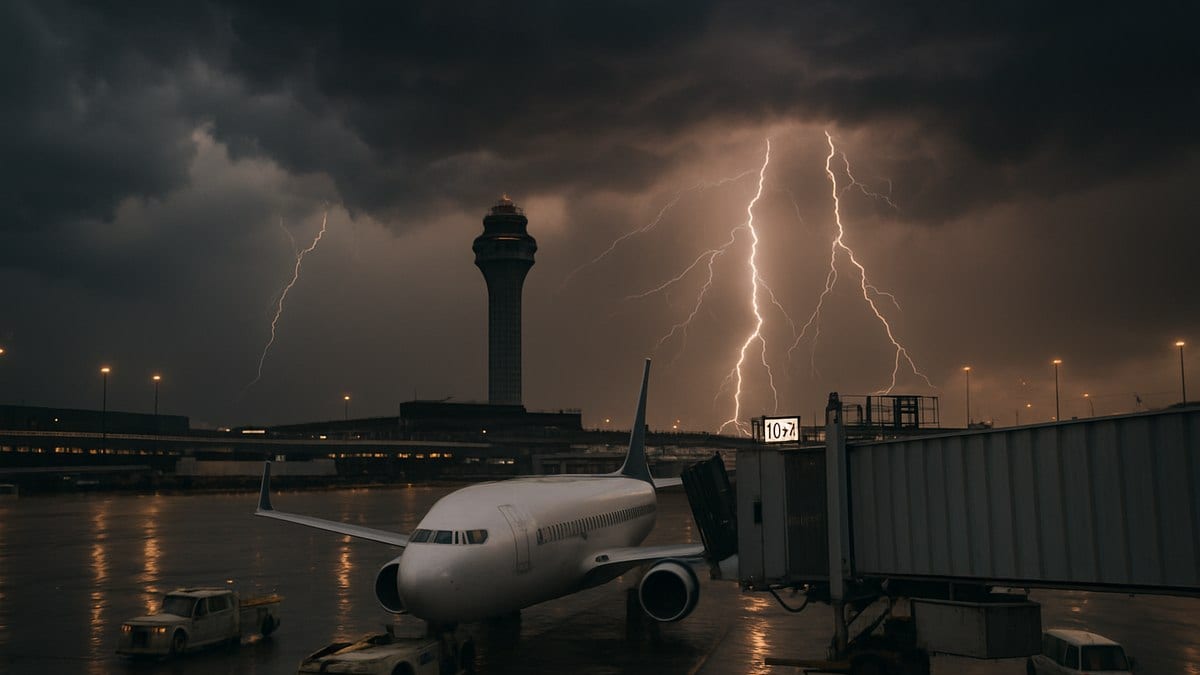
Image by Nomad Lawyer
Storm Cell Over Chicago Turns Into a Systemwide Disruption
The latest disruption unfolded between March 31 and April 1, 2026, when a line of strong thunderstorms moved through northeastern Illinois, forcing air-traffic managers to slow the flow of aircraft into and out of Chicago O’Hare. Publicly available data from airport trackers and aviation analytics indicated that as storms intensified around the airfield, a combination of ground stops and ground-delay programs were put in place to manage traffic.
By early April 1, compiled figures circulated by aviation news outlets showed 1,318 delayed flights and 148 cancellations tied to O’Hare’s operations. While the bulk of the impact was concentrated at the Chicago hub itself, the cascading nature of modern airline scheduling meant that disruptions quickly propagated along key spokes in the network.
The severe weather followed an already unsettled pattern around Chicago, with recent days bringing repeated bouts of heavy rain, hail, and strong winds across Cook County and the wider metro area. Those conditions left airlines and air-traffic planners with little margin to recover before the latest wave of storms moved in.
Observers noted that relatively localized thunderstorms over northern Illinois were enough to trigger widespread slowdowns, underscoring the vulnerability of national air travel to weather at a single high-volume hub.
Gridlock for Hub Carriers and Regional Partners
According to industry summaries of the disruption, the bulk of affected flights involved major network carriers and their regional partners that rely on O’Hare as a central connecting point. United Airlines and American Airlines, along with operators such as Envoy Air, Republic Airways, SkyWest, and GoJet, all saw significant schedule disruption as aircraft and crews were left out of position.
Operational tallies showed that delays vastly outnumbered cancellations, with airlines attempting to preserve as much of the schedule as possible by holding flights on the ground until weather and airspace capacity improved. This strategy helped limit outright cancellations but contributed to extensive late departures and missed connections throughout the day.
Regional jets serving short-haul routes to cities such as Detroit, Toronto, and smaller Midwestern communities were particularly exposed. With turn times compressed and crews approaching duty limits, even short pauses in operations at O’Hare cascaded into multi-hour delays on connecting legs.
Published coverage of airline performance on March 31 pointed to delay averages approaching or exceeding an hour at times, with some departures held significantly longer as lightning and low visibility forced temporary suspensions of ramp activity.
Ripple Effects Felt From New York to the South
Because O’Hare functions as a primary connecting point between the Midwest, East Coast, and cross-country routes, the thunderstorms quickly translated into wider gridlock. Flights inbound to Chicago from New York, Boston, Washington, Atlanta, Houston, Denver, and West Coast cities encountered holding patterns, diversions, or extended gate holds at point of origin.
Tracking services showed knock-on congestion at other hubs as aircraft scheduled to operate later segments remained stuck on the ground in Chicago. Passengers on early-morning flights from smaller markets found themselves misconnecting at O’Hare, leaving rebooking desks strained and same-day alternatives limited.
Transborder services between Chicago and Canadian cities such as Toronto also faced disruption, with delayed departures out of O’Hare compressing arrival windows for onward domestic connections in Canada. International long-haul operations, which often depend on timely inbound feeder traffic from regional flights, faced additional stress as missed connections forced airlines to re-accommodate travelers on later services.
The pattern mirrored previous weather-related events in March, where concentrated storms over the Midwest translated into multi-day disruption along some of the busiest corridors in the U.S. and Canadian aviation systems.
Travelers Confront Packed Terminals and Limited Options
Inside O’Hare’s terminals, the operational stress translated into crowded gate areas, long queues at customer service counters, and heavy demand for same-day hotel rooms and meal vouchers. Social-media posts and traveler reports described departure boards dominated by delayed flights and rolling estimates for new departure times.
With delays far exceeding typical buffer times built into itineraries, many connecting passengers missed onward flights and were forced to overnight in Chicago or wait for limited open seats on later departures. Those traveling at the start of spring break periods or for business at month-end faced particularly constrained rebooking options as aircraft went out with few spare seats.
Published commentary from frequent fliers in the Chicago area highlighted mounting frustration with the cumulative effect of recent weather and operational issues at O’Hare. Multiple bouts of storms in March, combined with existing staffing and congestion pressures, have fueled perception of the airport as increasingly prone to severe disruptions even outside the traditional peak summer thunderstorm season.
At the same time, aviation analysts noted that airlines have continued to schedule aggressively at major hubs, leaving less slack in the system when severe weather cuts arrival and departure rates. When storm cells pass directly over an airport the size of O’Hare, even a few hours of reduced acceptance rates can reverberate through schedules for the rest of the day.
Warning Sign for a Stormy Peak Travel Season
The March 31 O’Hare thunderstorm episode is being viewed by aviation observers as an early stress test for the U.S. system ahead of the busier late-spring and summer travel period. With leisure and business demand expected to remain strong, any significant weather event at a major hub has the potential to trigger a similar surge in delays and cancellations.
Publicly available performance data from earlier in March already showed multiple days when storms, high winds, or snow led to elevated disruption levels at Chicago and other hubs. The latest meltdown at O’Hare reinforces concerns that weather-sensitive bottlenecks in the Midwest and Northeast will again be a defining feature of the travel season.
In response, airlines have encouraged passengers to build more slack into itineraries, particularly when connecting through storm-prone hubs. Industry commentators also point to the growing use of travel waivers around forecast severe weather, allowing customers to move trips away from the worst-affected days when conditions allow.
For now, the March 31 thunderstorms provide a stark illustration of how a few hours of lightning, heavy rain, and low ceilings over Chicago can translate into more than a thousand delayed flights and nearly 150 cancellations nationwide, reinforcing the central role O’Hare plays in the broader U.S. aviation network.