

More news on this day
Chicago O’Hare International Airport has claimed an unwelcome new title in 2026, topping a fresh ranking of America’s most stressful airports that weighs flight disruptions, congestion and passenger experience at major U.S. hubs.
Get the latest news straight to your inbox!
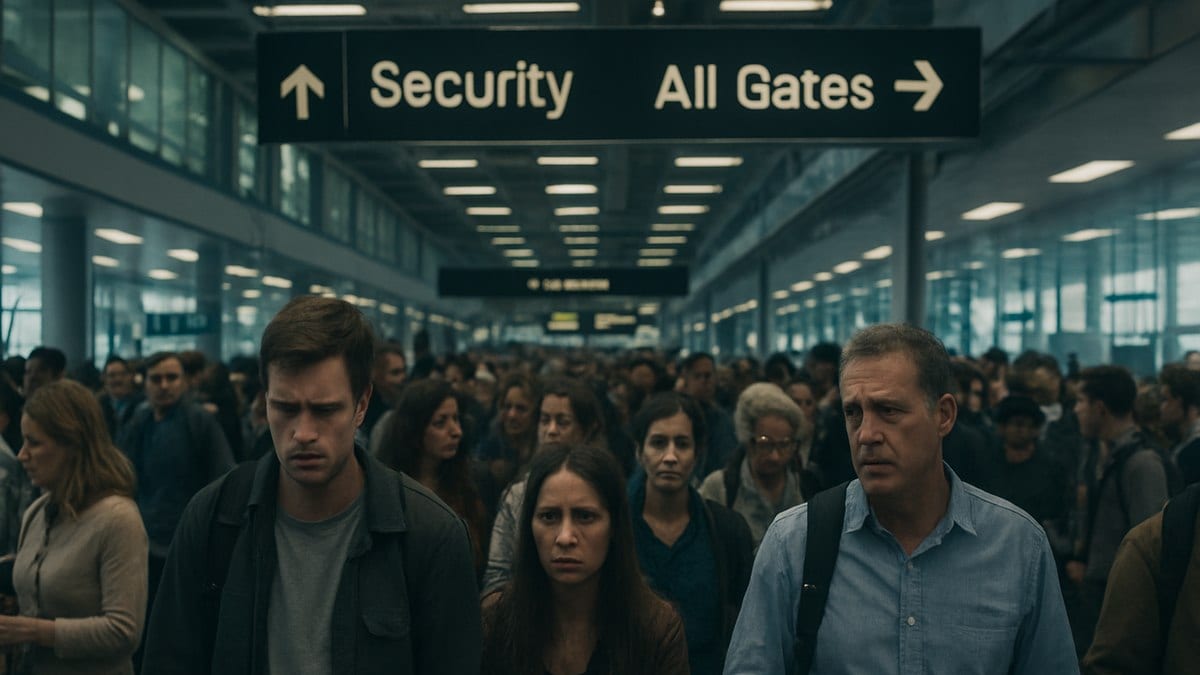
Data Behind O’Hare’s Stressful New Status
The latest ranking, compiled from publicly available aviation and government data for 2025 and early 2026, places Chicago O’Hare at the top based on a combination of high passenger volumes, delay and cancellation rates, and the intensity of daily flight operations. Analysts cross-referenced federal on-time performance statistics, airport capacity reports and industry disruption studies to build a composite stress index for large U.S. airports.
Travel industry coverage over recent months has highlighted how often O’Hare appears near the top of national lists for flight disruptions. A 2026 disruption study of U.S. airports serving more than 10 million passengers, for example, placed O’Hare among the leaders for the share of travelers impacted by delays and cancellations, underscoring how operational hiccups translate directly into passenger stress at the terminal level.
At the same time, O’Hare’s growing role in the global aviation network is intensifying pressure on its runways and terminals. Capacity reports for 2025 and early 2026 show the airport climbing into the top tier of the world’s busiest hubs by scheduled seats, while maintaining one of the highest counts of daily movements in North America. That scale, combined with Chicago’s volatile weather and heavy connecting traffic, is a key driver of the airport’s elevated stress score.
Researchers behind the new index note that “stressful” in this context does not necessarily mean unsafe or poorly managed. Instead, the label reflects the likelihood that an average traveler will encounter long queues, crowded concourses or significant schedule changes when passing through a particular airport on any given day.
Record Traffic, Crowded Gates and Competitive Growth
O’Hare’s stress ranking arrives as the airport enters one of the busiest periods in its history. Industry schedules for 2026 indicate that major carriers are still adding flights and destinations, even after several years of rapid post‑pandemic recovery. In January, new global capacity tables placed O’Hare among the ten busiest airports worldwide by available seats, with double‑digit year‑on‑year growth.
United Airlines, O’Hare’s largest tenant, has publicly outlined plans for a record schedule from Chicago this summer, with hundreds of daily departures touching more than 200 destinations. Aviation trade coverage describes this expansion as part of a broader contest among the largest U.S. carriers for dominance at key hub airports, with Chicago emerging as one of the central battlegrounds.
Local and academic analyses of O’Hare’s long‑term outlook suggest that the airport’s gate count and airfield configuration are designed to support continued growth through the end of the decade. Forecasts published in late 2025 projected additional increases in flights through 2026, implying that congestion at peak periods could become a persistent feature unless efficiency gains keep pace.
For passengers, those trends are already visible on social and traveler forums, where reports of lengthy taxi queues, backed‑up departure banks and busy gate areas at O’Hare have become a frequent theme over the past year. While such anecdotes are subjective, they align with the quantitative picture of an airport pushing against the upper limits of its current capacity.
How O’Hare Compares With Other U.S. Hubs
The new stress ranking places Chicago O’Hare ahead of other large U.S. hubs that have historically featured in similar analyses, including airports in New York, Los Angeles and South Florida. Previous nationwide lists of stressful airports often elevated smaller regional facilities with high disruption rates, but the 2026 index focuses squarely on major hubs processing tens of millions of passengers per year.
In recent years, some global surveys of stressful airports have already flagged O’Hare as one of the most demanding large hubs for travelers, both worldwide and within the United States. Those reports typically blend metrics such as average delay length, percentage of disrupted flights, number of connecting passengers and the complexity of terminal layouts to arrive at a composite stress score.
Comparative data also show that O’Hare’s delay and cancellation profile is shaped by its dual role as both an origin‑and‑destination gateway and a high‑volume connecting hub. When severe weather or airspace constraints hit the upper Midwest, the ripple effects at O’Hare can quickly spread across airline networks, amplifying the experience of disruption for passengers who may never set foot in Chicago itself.
At the same time, industry rankings of customer satisfaction illustrate that stress and satisfaction do not always move in lockstep. Some surveys place competing hubs ahead of O’Hare on overall passenger experience despite similar levels of crowding, suggesting that terminal design, amenities and communication practices can help soften the impact of delays and busy operations.
Why Passengers Feel the Pressure at Chicago O’Hare
For individual travelers, the statistical forces behind O’Hare’s top stress ranking translate into familiar pain points. High throughput at security checkpoints can mean longer lines during morning and late‑afternoon peaks, particularly in the busiest domestic terminals. Even modest schedule disruptions can cascade into missed connections, hurried terminal changes and gate area crowding when banks of flights depart within narrow time windows.
Weather is another recurring factor. Chicago’s climate exposes O’Hare to a wide range of conditions, including summer thunderstorms, strong winds and winter snow events that can temporarily reduce runway capacity or shut down segments of the airfield. Recent seasons have seen large numbers of flights delayed or cancelled during major storms, episodes that weigh heavily in disruption‑based stress rankings.
The airport’s complex layout also contributes to the perception of stress. Multiple terminals, long walking distances between certain concourses and a high reliance on connecting itineraries mean that passengers often navigate tight transfer times in unfamiliar surroundings. While O’Hare has invested in airside improvements and people‑moving systems over the years, its role as a sprawling legacy hub makes seamless connections more challenging than at some newer, more compact airports.
Nevertheless, travel experts point out that many of the same attributes that add to stress at O’Hare also reflect its importance in the wider network. Extensive route maps, frequent departures and deep long‑haul connectivity offer travelers significant choice, even if accessing that connectivity can occasionally test their patience.
What the Ranking Means for Travelers in 2026
The designation of Chicago O’Hare as America’s most stressful airport in 2026 is likely to resonate with frequent flyers but may not fundamentally change travel patterns. For many passengers in the Midwest and beyond, O’Hare’s vast network of domestic and international routes makes it a practical or unavoidable gateway, regardless of its stress score.
However, the new ranking may encourage some travelers to adjust their strategies. Travel industry guides increasingly recommend longer connection times through the busiest hubs, early‑morning departures where possible, and proactive monitoring of flight status during seasons prone to severe weather. Those suggestions apply broadly across the U.S. system, but they carry particular weight at a hub as busy and disruption‑sensitive as O’Hare.
For airport planners and airlines, the findings provide another data point in ongoing debates over capacity, infrastructure upgrades and schedule design at major U.S. hubs. As carriers continue to add flights and destinations from Chicago in 2026, balancing growth with reliability will remain a central challenge.
With O’Hare simultaneously climbing lists of the world’s busiest and most stressful airports, the airport’s performance over the next few peak travel seasons will be closely watched as an indicator of how the U.S. aviation system copes with sustained demand and increasingly crowded skies.