

More news on this day
Travelers moving through Chicago O’Hare International Airport are facing another day of disruption as publicly available tracking data shows at least 21 flight cancellations and 242 delays affecting major carriers including United, PSA, SkyWest, American, Delta, Republic and several smaller operators, with knock-on effects across the United States, Canada, Europe and Mexico.
Get the latest news straight to your inbox!
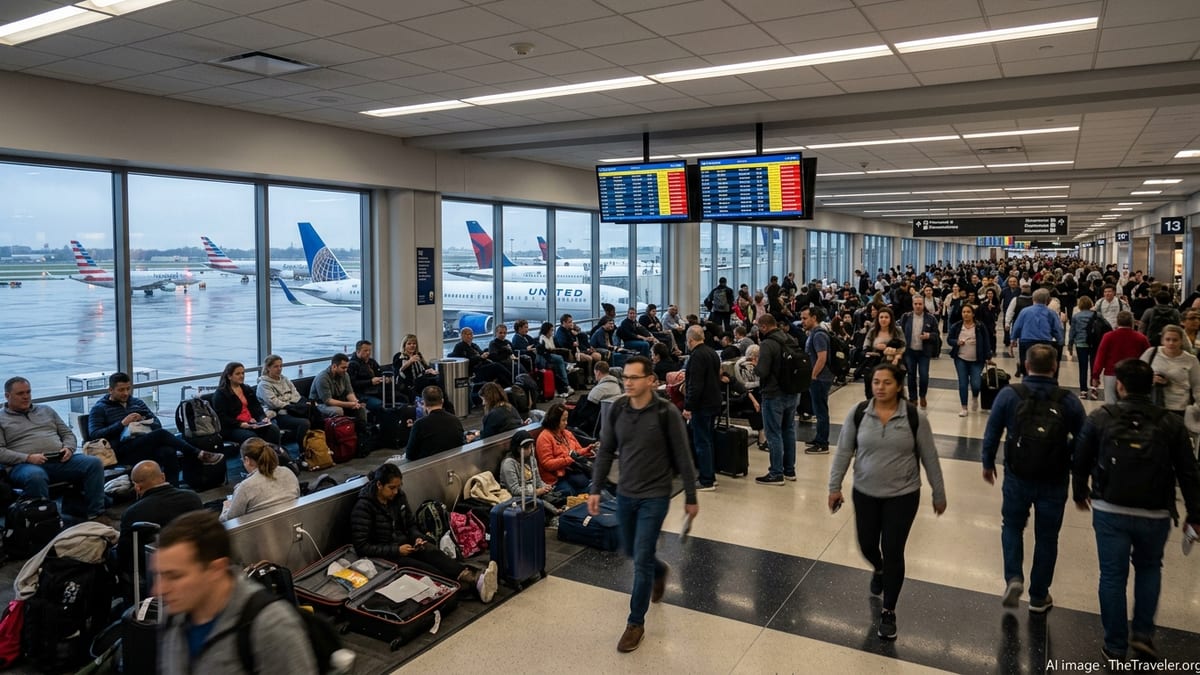
Operational Strain at a Critical U.S. Hub
Chicago O’Hare, one of the busiest connecting hubs in North America, has once again become a pressure point in the aviation system. Flight-tracking dashboards on Wednesday indicated that a cluster of cancellations and an extensive list of delayed departures and arrivals were building through the morning and early afternoon, placing strain on already tight schedules for multiple airlines that depend on O’Hare for domestic and international connectivity.
The 21 cancellations and 242 delays recorded span a broad mix of mainline and regional operations. United Airlines and American Airlines, which maintain large hub operations at O’Hare, appear prominently among the affected carriers, alongside regional partners such as PSA Airlines, SkyWest Airlines and Republic Airways. Delta Air Lines has also reported schedule disruptions on routes touching the Chicago market, reflecting the interconnected nature of hub-and-spoke networks.
Publicly available on-time performance statistics underscore how even a relatively modest number of cancellations at a major hub can cascade across the system. Federal transportation data and independent aviation analytics show that delays and cancellations at a large connecting airport like O’Hare tend to ripple outward as aircraft and crews fall out of position, particularly for regional affiliates operating dense banks of short-haul flights.
The disruption has come during a period when airline operations across North America are already under scrutiny following a series of weather-related events over the 2025–2026 winter and early spring travel seasons, which have repeatedly tested airline and airport resilience.
Weather, Staffing and Systemic Fragility
While O’Hare has not been in the direct path of every recent winter storm, the wider North American weather pattern has been volatile. Major blizzards and winter storms in January and February 2026 prompted thousands of cancellations and tens of thousands of delays at airports across the United States and Canada, creating lingering schedule imbalances. These disruptions forced airlines to reposition aircraft and crews over several days, leaving thinner margins for error when new operational challenges emerged.
Passenger accounts and publicly posted operational notices in recent weeks have pointed to a mix of contributing factors in Chicago, including thunderstorms, ground delay programs and intermittent staffing constraints in air traffic control and ground handling. Industry forums and aviation tracking platforms have noted that when O’Hare is placed under formal flow restrictions, even short ground holds can rapidly translate into extensive delays because of the airport’s role as a central transfer point.
Aviation analysts have repeatedly highlighted that the combination of tight crew scheduling, high aircraft utilization and strong demand leaves airlines more vulnerable to relatively small shocks. When a hub such as O’Hare experiences a series of minor disruptions, regional carriers that operate large numbers of short flights often see the most acute impact, as they have fewer spare crews and limited excess capacity to absorb irregular operations.
Recent government transportation statistics indicate that, nationwide, the rate of airline delays and cancellations has remained elevated compared to pre-pandemic norms. This environment means that localized turbulence at major hubs is more likely to translate into missed connections and extended travel times for passengers throughout the network.
Impact on Domestic and International Connections
The latest round of disruption at O’Hare is affecting a broad geographic spread of destinations. According to real-time dashboards, delayed and canceled flights include domestic services to key U.S. cities, transborder routes into Canada, transatlantic connections to major European gateways and leisure-oriented flights to Mexico.
United and American, with their extensive international networks from Chicago, are central to these impacts. Delayed departures to Canadian cities can have particular knock-on effects, as they often feed onward connections to Europe via U.S. hubs, while transatlantic services rely on timely feeder flights from smaller markets across the Midwest and Great Lakes regions. A delay in a regional jet arriving from a nearby state can therefore reverberate all the way to a long-haul departure bound for Europe or Mexico.
Regional carriers such as PSA, SkyWest and Republic, which operate many flights under the brands of major airlines, play a critical role in transporting travelers from smaller communities into O’Hare. When these flights are delayed or canceled, passengers may miss international departures that operate only once per day. In practice, this can mean overnight stays, rebookings across multiple airlines and lost vacation or business days for travelers whose itineraries depend on precise connections.
Travel data providers report that, on days when O’Hare experiences sustained delays, the proportion of missed connections and same-day rebookings tends to rise significantly. This can place additional pressure on customer service channels, hotel capacity near the airport and alternative routings through other hubs such as Dallas–Fort Worth, Atlanta or Denver.
Passenger Experience: Long Lines and Uncertain Timelines
For passengers on the ground, the numbers behind 21 cancellations and 242 delays translate into crowded departure halls, longer security and check-in lines and tightly packed gate areas. Social media posts and traveler forums on Wednesday described extended waits for updated gate information, rolling departure times and difficulty securing alternative routings on already busy flights.
Some travelers reported spending several hours on board aircraft awaiting clearance to depart or a gate to become available on arrival, a scenario that has become more familiar during peak disruption periods at large hubs. Others described having to queue at customer service counters and rebooking desks late into the evening as airlines worked through backlogs created earlier in the day.
Industry data and prior irregular-operations events suggest that passengers on regional connections often face the greatest uncertainty. When smaller jets are canceled or significantly delayed, there may be fewer backup options, particularly late in the day when the schedule is already compressed. As a result, travelers can find themselves waiting for morning departures or being rerouted through alternate hubs, extending total journey times by many hours.
Travel advocates have noted that, in these situations, clear communication about expected departure times, rebooking options and available passenger rights can significantly influence the overall customer experience. However, when disruption is widespread across multiple carriers and destinations, information flow can become fragmented or outdated quickly as operational teams respond in real time.
What Today’s Disruptions Signal for Spring and Summer Travel
The latest operational turbulence at Chicago O’Hare arrives just as airlines ramp up schedules for the spring break and early summer travel periods. Industry forecasts for 2026 point to strong demand on both domestic and international routes, with carriers planning high load factors and dense schedules from major hubs.
Aviation analysts suggest that the combination of strong demand and tight capacity means that even moderate disruption days, such as those currently seen at O’Hare, can have disproportionate effects on passengers. With aircraft flying fuller and fewer empty seats available for rebooking, travelers affected by cancellations or long delays may face limited same-day alternatives, especially on popular leisure routes to Mexico or transatlantic corridors to Europe.
Some consumer groups and travel commentators have argued that the pattern of recurring disruptions across the U.S. network highlights the need for continued investment in airport infrastructure, air traffic control staffing and airline operational resilience. They point to recent winters, when large storms and severe weather events quickly translated into record levels of cancellations, as evidence that the system is operating near its limits during peak periods.
For now, publicly available tracking data from O’Hare serves as a reminder that even a single day of elevated delays and cancellations at a key hub can echo across continents. Travelers planning itineraries through Chicago in the coming weeks may choose to allow more connection time, monitor flight status closely and consider flexible booking options as the busy spring and summer seasons move into full swing.