

More news on this day
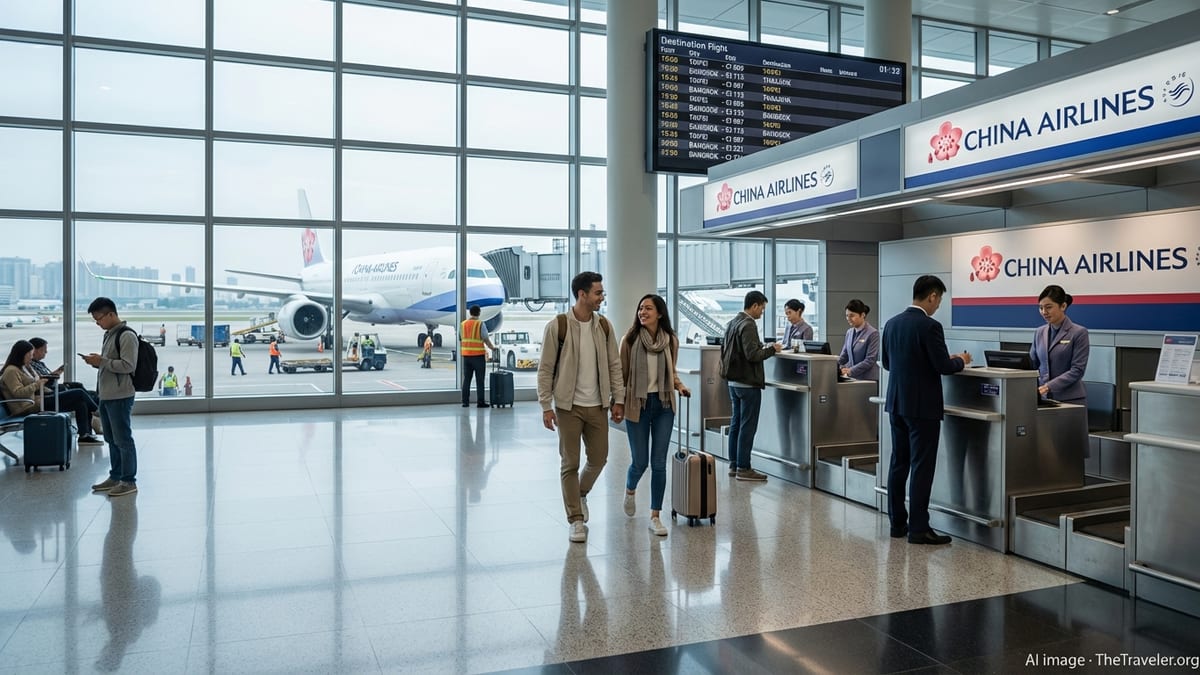
China Airlines and the Tourism Authority of Thailand have launched a joint 2026 promotion offering discounted airfares from the United States and Canada to Thailand, tying competitive long-haul fares to the kingdom’s wellness-focused “Healing is the New Luxury” tourism campaign.
Limited-Time North America Promotion Targets Long-Haul Recovery
The new promotion, announced in February 2026, is aimed squarely at travelers originating in the United States and Canada and looking to visit Thailand this year. The offer features discounted economy-class and premium-cabin fares on China Airlines itineraries connecting North America to Bangkok and other Thai gateways via Taipei, with sales available through February 28, 2026.
Both partners describe the initiative as a demand-stimulation tool at a moment when long-haul markets are rebuilding momentum. With transpacific traffic steadily returning and leisure travelers showing a greater willingness to commit to long trips, the fare cuts are designed to convert interest in Thailand into concrete bookings during a clearly defined sales window.
While specific fare levels vary by departure city and date, the promotion is being pitched as a way for North American travelers to lock in more competitive pricing for 2026 travel seasons that traditionally see high demand for Southeast Asia. Capacity constraints and lingering price sensitivity among long-haul passengers have made tactical discounts a central strategy for carriers and tourism boards across the region.
The collaboration underscores how national tourism organizations and airlines are aligning their commercial campaigns, combining destination branding with airfare incentives to push undecided travelers from browsing to booking. In this case, Thailand’s wellness-led narrative becomes the thematic backdrop for a fare sale that is grounded in value and accessibility.
“Healing Is The New Luxury” Puts Wellness at the Center of Thailand’s Pitch
Thailand’s “Healing is the New Luxury” campaign positions the country as a destination where restorative travel, holistic wellness, and cultural immersion take precedence over traditional notions of high-end consumption. Rather than emphasizing opulence, the message focuses on experiences that leave visitors feeling renewed physically, mentally, and emotionally.
For Thailand’s tourism authorities, wellness is a natural pillar. The country has long been known for traditional massage, herbal therapies, meditation retreats, and beach resorts that blend spa services with slow-paced coastal living. The current campaign, however, ties these elements together under a single, global-facing theme that resonates strongly with post-pandemic travelers seeking meaningful escapes.
Officials point to growing global wellness tourism forecasts as a key motivator for the new positioning. As travelers adjust their priorities, demand is shifting toward trips that combine rest with personal growth, from yoga and mindfulness stays to detox programs and nature-based itineraries. Thailand intends to leverage its existing infrastructure and reputation to capture a greater share of this evolving segment.
By integrating “Healing is the New Luxury” into a concrete airfare promotion, the Tourism Authority of Thailand and China Airlines are translating a branding concept into a bookable product. The discounted fares are pitched not merely as a cost-saving opportunity but as an accessible gateway to experiences that promise restoration and balance.
Expanded China Airlines Network Opens More Gateways to Thailand
China Airlines brings a growing North American footprint to the partnership, giving the campaign reach across key US and Canadian cities. The Taiwan-based carrier now serves multiple West Coast gateways, including Los Angeles, Ontario in California, San Francisco, Seattle, and Phoenix, alongside New York on the East Coast and Vancouver in Canada.
From these points, passengers connect through Taipei before continuing onward to Bangkok and other destinations in Thailand. The hub structure allows the airline to tap into both local metropolitan demand and connecting flows from across the United States and Canada, a critical factor for sustaining long-haul traffic to Southeast Asia.
The carrier has also been strengthening its partnerships in North America, including an interline arrangement with a major US domestic airline that facilitates one-ticket itineraries and through-checked baggage to more than 100 cities across the country. Those linkages allow travelers from secondary markets to reach Thailand with a single booking, even if they begin their journey far from an international gateway.
For Thailand’s tourism planners, that expanded network translates into broader market access. The promotion is not limited to residents of a few coastal cities; instead, it can reach travelers from the interior of the United States and across Canada who are willing to connect domestically before heading across the Pacific.
Wellness, Culture and Coastlines Shape the Thailand Experience
The fare promotion is built around the promise of a Thailand trip that blends wellness with culture and landscape. Visitors are being encouraged to explore traditional Thai spa treatments, from herbal compress therapies to aromatic oil massages, in both urban and resort settings. Major cities such as Bangkok and Chiang Mai now host a growing number of wellness-focused hotels and stand-alone spas targeting international guests.
Beyond treatment rooms, the campaign highlights immersion in Thailand’s spiritual and cultural heritage as a form of restorative travel. Morning meditation sessions at historic temples, gentle river cruises, and neighborhood food walks are presented as ways to slow down, reconnect, and experience the country at a human pace rather than racing through a checklist of attractions.
Coastal regions, including the islands of the Andaman Sea and the Gulf of Thailand, remain central to the narrative. Quiet beaches, low-rise resorts, and nature-forward retreats create the backdrop for yoga classes at sunrise, coastal hikes, and water activities in relatively calm tropical seas. The emphasis is on environments that feel intimate and grounded rather than overly crowded or hyper-commercialized.
Even urban experiences are framed through the lens of balance. Bangkok’s dining scene, for example, is marketed not only for its acclaimed restaurants and street food but also for its focus on fresh ingredients, local flavors, and the social rituals of shared meals. In this context, culinary exploration becomes part of a broader journey of well-being and connection.
North American Travelers Show Rising Interest in Renewing in Thailand
The timing of the joint promotion reflects data points that suggest renewed appetite among North American travelers for longer, more immersive journeys. Industry forecasts for 2026 indicate that transpacific demand is rebounding as capacity returns and travelers become more comfortable committing to complex itineraries that include multiple flights and extended stays.
Travel advisors in the United States and Canada report that Thailand frequently appears on clients’ shortlists for major trips, often framed as a once-in-a-decade journey that combines city exploration, countryside excursions, and time by the sea. The perception of Thailand as both accessible and excellent value for money once on the ground has helped maintain its appeal even as global airfares have fluctuated.
The wellness emphasis of the “Healing is the New Luxury” campaign appears to align closely with the motivations many travelers cite for heading to Southeast Asia. After several years of disrupted plans and shifting work patterns, customers are prioritizing itineraries that give them the space to reset. Thailand’s relatively mature tourism infrastructure and wide range of accommodation options make it easier to tailor trips to individual needs.
By pairing these demand trends with a concrete airfare incentive, China Airlines and the Tourism Authority of Thailand hope to convert aspirational interest into confirmed bookings within the short sales window. The expectation is that word of mouth, social media sharing, and repeat visitation will extend the impact of the promotion well beyond its formal end date.
Strategic Partnership Strengthens Thailand’s Aviation Connectivity
The 2026 promotion also reflects a wider strategic effort to tighten the links between Thailand’s tourism authorities and key airline partners in the region. China Airlines’ hub in Taipei functions as a practical bridge between North America and Southeast Asia, providing an additional option alongside routes that operate nonstop to Thailand or via other Asian gateways.
For the airline, deepening cooperation with Thailand supports its broader ambitions to be a major player in Asia-Pacific long-haul traffic. Promotions tied to specific destination campaigns help fill seats during shoulder periods, improve aircraft utilization, and build customer familiarity with its service offerings on routes that may be less well known to casual travelers.
From Thailand’s perspective, the arrangement with China Airlines complements existing ties with carriers based in the Middle East, Europe, and elsewhere in Asia. A diversified mix of partners reduces dependence on any single corridor and allows tourism planners to respond more flexibly to changes in demand, capacity, or geopolitical conditions that may affect air travel.
Both sides are also using the collaboration as a test bed for refining how destination marketing messages, such as the wellness-focused “Healing is the New Luxury” concept, can be integrated into concrete travel products. Lessons learned from the 2026 North American promotion could inform future campaigns targeting other regions or specific traveler segments.
Practical Details: Booking Window, Travel Flexibility and Market Positioning
Under the terms of the 2026 promotion, North American travelers have until February 28 to secure discounted tickets on eligible China Airlines routes to Thailand. Travel dates extend beyond the sales period, allowing passengers to plan journeys later in the year while still taking advantage of the limited-time pricing.
Exact conditions, including blackout dates, fare classes, and change or refund rules, vary by origin and itinerary. However, the campaign is broadly structured to appeal to leisure travelers who can exercise some flexibility in travel timing. Those able to avoid peak holiday periods and school breaks are best positioned to secure the most favorable combinations of price and schedule.
As with many contemporary fare campaigns, the 2026 Thailand promotion is most effective when paired with proactive trip planning. Travelers are encouraged to consider how wellness-focused activities, such as spa stays, nature excursions, and cultural experiences, can be built into itineraries from the outset rather than added on at the last minute. This aligns with Thailand’s goal of embedding the “Healing is the New Luxury” philosophy into the full travel experience.
For China Airlines and the Tourism Authority of Thailand, the campaign functions as both a commercial tool and a positioning exercise. It reinforces Thailand’s image as a restorative, experience-rich destination and highlights China Airlines’ role as a convenient and competitive bridge between North America and Southeast Asia throughout 2026.