

More news on this day
Taiwan’s China Airlines has moved to reduce its Airbus A350-900 and A321neo commitments, reshaping a previously ambitious expansion plan into a more tightly focused, efficiency-led fleet strategy.
Get the latest news straight to your inbox!
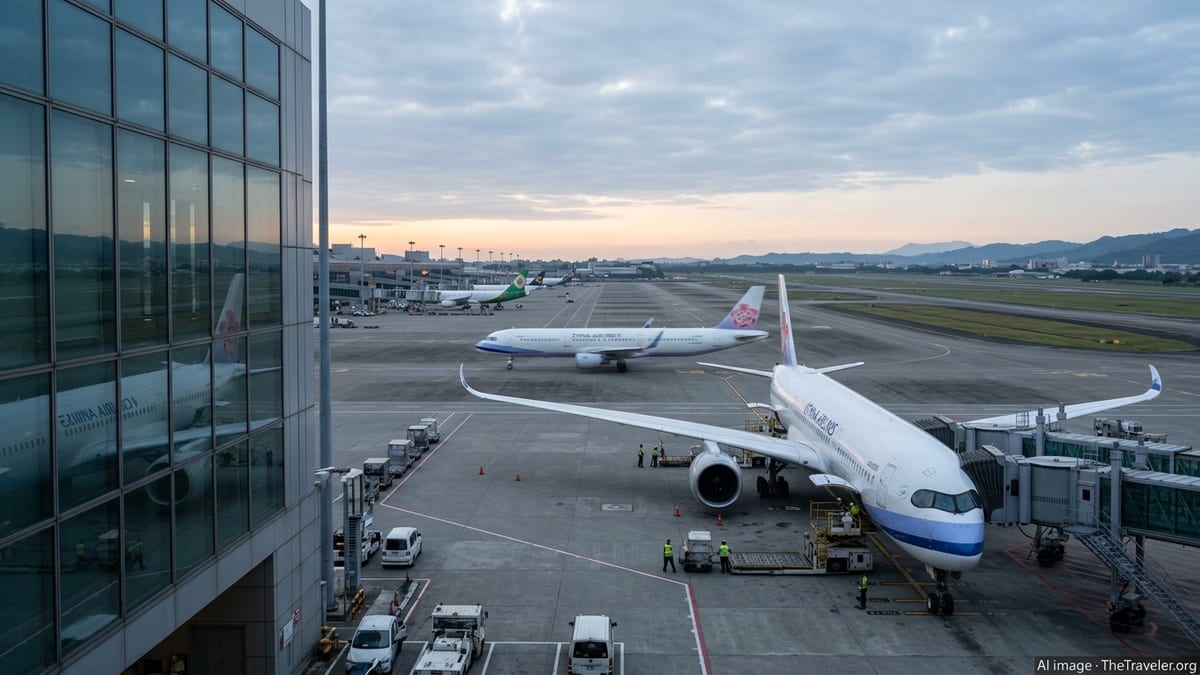
Recalibrating Widebody Growth With Fewer A350-900s
Publicly available disclosures indicate that China Airlines has scaled back part of its earlier plan to add Airbus A350-900s, even as it continues to build up its long-haul network. Earlier filings and media coverage outlined intentions to acquire additional A350-900 aircraft for intercontinental growth, but more recent fleet planning documents and updated Airbus order data show a moderation of those ambitions in favor of a leaner, more flexible order book.
The airline’s long-haul strategy is increasingly centered on a mixed Airbus and Boeing widebody fleet, including existing A350-900s, newly ordered A350-1000s, and forthcoming 777X aircraft. By trimming the number of A350-900s still expected to join the fleet, China Airlines appears to be prioritizing next-generation high-capacity variants and optimizing capacity on specific trunk routes rather than pursuing broad-based growth across all long-haul markets.
Industry analysts following the carrier suggest that this adjustment reflects a more cautious read of premium and connecting demand, particularly across transpacific and Europe services. Instead of adding multiple mid-size widebodies at once, the airline is concentrating on aircraft that bring step-change improvements in range, unit cost, and cabin appeal, while limiting exposure to long delivery tails and shifting macroeconomic conditions.
The recalibration also coincides with a broader pattern across Asia-Pacific, where several carriers are refining widebody commitments to better match a slower, though still positive, recovery curve for long-haul travel. China Airlines’ updated A350-900 stance fits within that regional trend of targeted, rather than expansive, growth.
A321neo Fleet Plan Scaled Back From Earlier Ambitions
China Airlines is making parallel adjustments to its narrowbody strategy, most notably by scaling back the ultimate size of its Airbus A321neo fleet compared with earlier projections. Previous plans outlined a substantial build-up of A321neo aircraft to serve as the backbone of regional operations, with a mix of direct purchases and leases supporting a steady delivery stream.
More recent fleet presentations and investor materials show a more conservative trajectory. While A321neo jets remain central to China Airlines’ regional network, the total number of aircraft now planned is lower than earlier targets. The carrier is instead focusing on maximizing utilization of existing frames, fine-tuning deployment across high-demand Asian routes, and pacing future deliveries to avoid excess capacity during periods of softer demand.
This shift does not represent a retreat from single-aisle growth but rather a refinement in timing and scale. The A321neo continues to anchor the airline’s short and medium-haul strategy, offering fuel savings and a modern passenger experience. However, by limiting the ultimate fleet size relative to prior ambitions, China Airlines gains more room to respond to competitive pressures, evolving traffic flows, and potential new aircraft technologies later in the decade.
Regional observers note that the move also reduces exposure to ongoing supply chain and engine-related constraints affecting the global narrowbody market. Fewer near-term narrowbody commitments can translate into greater scheduling resilience and less reliance on tight delivery timelines.
Balancing Risk, Demand Uncertainty, and Fleet Flexibility
The twin decisions to reduce A350-900 orders and scale back the A321neo plan fit into a broader effort to manage risk in an unpredictable demand environment. Although Asia-Pacific traffic has continued to recover, growth has been uneven across long-haul, regional, and cross-strait markets, leading carriers such as China Airlines to constantly revisit capacity assumptions.
By trimming specific order lines rather than undoing its entire Airbus strategy, China Airlines is retaining flexibility. The airline preserves the benefits of a modern Airbus fleet while preventing over-commitment to a single set of delivery years or aircraft sizes. This approach allows planners to shift capacity between widebody and narrowbody segments as demand patterns in North America, Europe, and intra-Asia markets become clearer.
Financially, a more measured delivery profile can support balance sheet strength at a time when fuel prices, currency movements, and interest rates remain volatile. Adjusted orders reduce near-term capital expenditure while keeping the option open to add capacity later through new orders, leases, or opportunistic second-hand acquisitions if market conditions justify accelerated growth.
Travel industry analysts point out that, for passengers, such strategic moves often translate into a more consistent onboard product. Instead of chasing rapid numerical growth, airlines can channel resources into cabin upgrades, reliability, and schedule stability on existing aircraft, areas that tend to matter most to frequent travelers and corporate accounts.
Implications for Travelers and Regional Competition
For travelers, China Airlines’ recalibrated fleet plan is likely to be felt less in the form of route withdrawals and more through nuanced schedule and aircraft type adjustments. Published schedules already show the A350-900 and A321neo being concentrated on routes where their economics and cabin features deliver the most benefit, such as high-frequency regional markets and key long-haul city pairs.
Passengers across Asia and on transpacific services can expect China Airlines to continue highlighting fuel-efficient aircraft as part of its branding, but with a stronger emphasis on reliability and consistent deployment rather than rapid expansion. The airline’s decisions suggest a focus on strengthening core hubs and existing partnerships over large-scale network experiments.
Within the competitive landscape, the strategy places China Airlines among a group of full-service carriers that are prioritizing disciplined growth after the volatility of recent years. Rivals in North Asia and Southeast Asia are pursuing similar recalibrations, adjusting order books and fleet renewal timelines to avoid capacity overshoots while still positioning for long-term demand growth.
For destinations served by China Airlines, particularly secondary cities that benefited from earlier expansion, the new approach may mean slower growth in direct connectivity but potentially more stable long-term service. As the airline refines its fleet and network, tourism boards and airports are likely to watch closely for signs of where future A350 and A321neo capacity will be concentrated.