

More news on this day
China Airlines is targeting North American travelers hungry for rest, renewal, and rich cultural experiences with a new 2026 promotion to Thailand, pairing discounted fares from the United States and Canada with a wellness-focused campaign built around slow travel, spa retreats, and temple-side mindfulness.
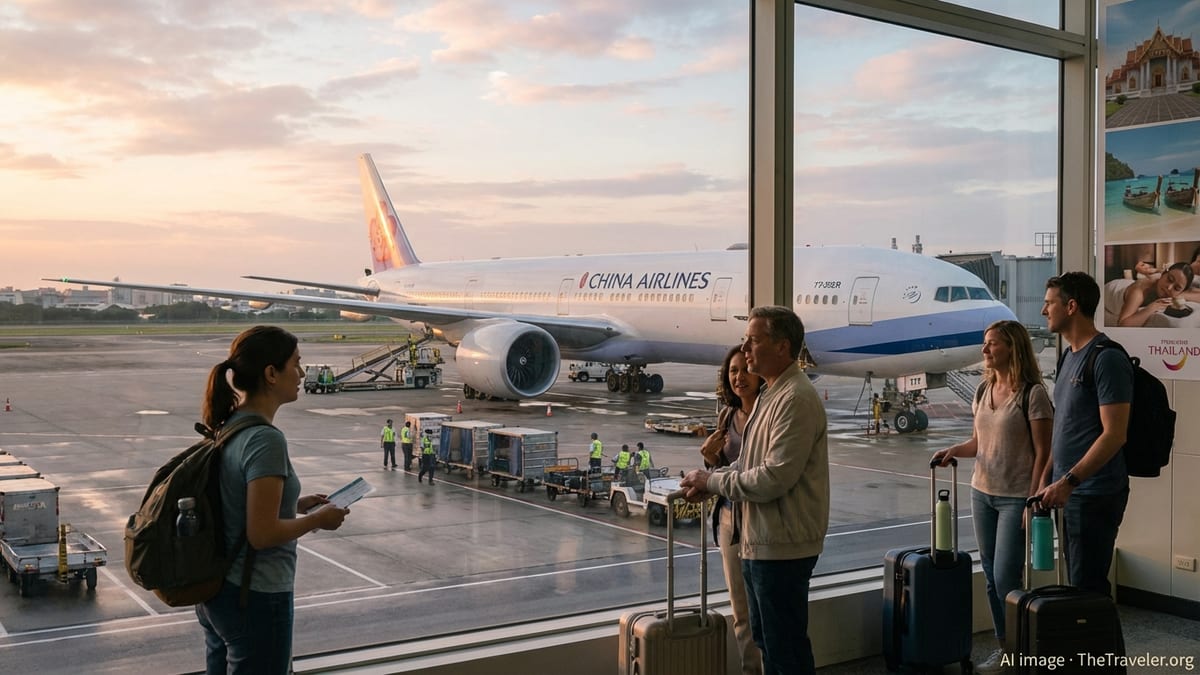
Exclusive 2026 Thailand Offer Puts Wellness in Focus
China Airlines and the Tourism Authority of Thailand are spotlighting Thailand as a long-haul sanctuary for stressed North American travelers, unveiling an exclusive 2026 promotion that bundles competitive fares with a campaign centered on recovery and cultural immersion. Branded around the theme “Healing is the New Luxury,” the initiative aims to reposition Thailand not only as a beach-and-temple favorite but as a place where visitors from the United States and Canada can reset their routines and reconnect with local traditions.
The promotion arrives as Thailand doubles down on its image as a global wellness hub, from traditional Thai massage and herbal therapies to meditation retreats and holistic resorts. Organizers are pitching the country as a destination where luxury is measured less in opulence and more in time, space, and personal renewal. For China Airlines, the campaign offers a timely way to convert resurgent North American demand into bookings via its transpacific hub in Taipei.
While precise fare levels fluctuate by origin city and departure date, the carrier is using discounted economy and premium economy pricing to make long-haul journeys more accessible to leisure travelers, couples, and families planning multi-week escapes. It is also emphasizing schedule flexibility and a broad travel window through 2026, allowing visitors to align their trips with cooler seasons, lesser-known festivals, or extended wellness programs in resort areas beyond Bangkok.
Marketing materials for the promotion highlight the ease of combining classic sightseeing with restorative experiences, suggesting itineraries that move from temple visits and riverfront walks in Bangkok to slow days on islands, jungle-fringed spas in the north, and culinary explorations that emphasize fresh, regional ingredients. The campaign’s message is that wellness is not a bolt-on activity but a thread that can run through an entire trip.
Expanded North American Network Feeds Bangkok and Chiang Mai
The 2026 promotion builds on China Airlines’ aggressive expansion in North America, where the carrier has quietly assembled a network of gateways spanning both coasts and the American Southwest. The airline now serves Los Angeles, Ontario in California’s Inland Empire, San Francisco, Seattle, New York, Phoenix, and Vancouver, a roster that gives U.S. and Canadian travelers multiple entry points into its Taipei hub for onward connections to Bangkok and Chiang Mai.
The most recent additions are particularly significant for travelers in secondary markets. A new nonstop Taipei to Phoenix service, inaugurated in December 2025, has opened a direct door for passengers across the U.S. Southwest, cutting several hours off typical connecting itineraries and reducing the need to route through traditional coastal hubs. For Western Canada, Vancouver remains a key bridge into Asia, feeding Thailand-bound traffic from British Columbia and neighboring provinces.
China Airlines is pairing these long-haul flights with competitive schedules into Thailand, positioning Bangkok and Chiang Mai as primary gateways for wellness and culture-focused trips. Bangkok offers extensive regional connectivity to beaches and islands, while Chiang Mai, in the country’s mountainous north, serves as a natural springboard into cooler highlands, meditation retreats, craft villages, and off-the-beaten-path cultural sites.
According to the airline, the aim is to make Thailand feel “one stop away” for much of North America. By consolidating flows through Taipei and then funneling passengers into Thai cities with high tourism capacity, China Airlines is betting that simplified itineraries and predictable transit experiences will appeal to travelers who might otherwise piece together multi-airline journeys.
Interline Tie-Up Extends Reach Across the United States
To extend the benefits of its Thailand promotion beyond its own gateway cities, China Airlines is leaning on a recently announced interline partnership with Southwest Airlines. The collaboration, which begins feeding traffic in early 2026, allows travelers from more than 100 U.S. cities to book single-itinerary tickets that combine domestic Southwest segments with China Airlines’ transpacific and regional flights.
For passengers in cities such as Chicago, Houston, Dallas, Denver, Orlando, and Washington, that means a smoother path to Thailand: one booking, through check-in, and baggage checked to the final destination. The setup promises to reduce stress at transfer points, a critical selling point for wellness-minded travelers who want the restorative portion of their trip to start as early as possible.
The interline arrangement is particularly important for those heading to Thailand for longer stays, including digital nomads, retirees, and wellness retreat participants who may be carrying extra luggage or sports equipment. With bags transferred automatically at gateways such as Los Angeles, San Francisco, Seattle, Phoenix, and New York, travelers can avoid re-checking procedures that often add time and uncertainty to complex itineraries.
China Airlines and Southwest executives have signaled that the interline deal is only the first phase of a deeper collaboration, with potential future cooperation on frequent flyer programs, code sharing, and co-branded products. For now, the 2026 Thailand promotion serves as an early test of how effectively the two carriers can funnel American travelers onto long-haul routes that prioritize value and comfort.
Travel Windows, Fare Conditions, and How the Promo Works
The Thailand-focused campaign for 2026 is structured to give travelers a broad booking and travel window, aligning discounted fares with periods of historically strong demand from North America as well as quieter shoulder seasons that appeal to slow-travel enthusiasts. While individual markets have their own restrictions and blackout dates, the overarching design allows for departures across much of the year, including spring and autumn months favored by wellness and culture seekers for their milder weather.
China Airlines is applying the promotion to select booking classes in economy and, on some routes, premium economy cabins, with the deepest discounts typically tied to advance purchase requirements and minimum stay conditions. The airline continues to underscore that promotional prices are capacity controlled and subject to change, a standard caveat in a market where fuel surcharges, taxes, and currency fluctuations can affect final ticket prices.
For travelers originating in the United States or Canada, the promotion is accessible from both primary gateways and inland cities feeding into hubs such as Los Angeles, Ontario, San Francisco, Seattle, Phoenix, New York, and Vancouver. Some North America sale campaigns running in parallel carve out Thailand from general long-haul discounts in order to support a separate, dedicated Thailand deal, signaling that the carrier sees distinct demand patterns for the market.
Industry analysts say that the structure reflects two overlapping trends: the rise of wellness travel as a premium but value-conscious segment, and Thailand’s push to attract higher-spend, longer-stay visitors rather than short-break bargain hunters. By anchoring fares within a promotional framework while still allowing for flexible itineraries, China Airlines is seeking to capture travelers willing to invest in longer, more meaningful stays.
Wellness, Temples, and Slow Travel Shape Thai Itineraries
The “Healing is the New Luxury” theme at the heart of the promotion mirrors broader shifts in how international visitors perceive Thailand. Instead of positioning a Thai holiday solely around beach time or shopping, the campaign encourages travelers from North America to build itineraries that include temple visits, mindfulness practices, local crafts, and slow-paced exploration of both urban neighborhoods and rural landscapes.
Bangkok remains a natural starting point, with its major temples, riverside promenades, and emerging wellness hotels that pair spa facilities with yoga, sound therapy, and plant-forward menus. China Airlines marketing materials highlight the ease of spending a few days acclimatizing in the capital before moving on to coastal or upcountry destinations, framing the city as both a cultural introduction and a gateway to deeper rest.
Farther north, Chiang Mai and surrounding provinces are being promoted as ideal for travelers seeking cooler temperatures and retreat-style experiences. Wellness resorts in the hills outside the city often combine meditation sessions, Thai herbal treatments, and guided walks with visits to nearby temples and craft villages. For culture lovers, night markets, cooking classes, and textile workshops provide additional ways to connect with local traditions.
The campaign also calls attention to Thailand’s coastline, from the Andaman side to the Gulf, as a setting for restorative stays that go beyond sunbathing. Beachfront yoga, marine conservation excursions, and quiet boutique properties are being positioned as complements to more structured retreat programs, appealing to travelers who want the freedom to mix structured wellness with unplanned days.
Visa Waivers and Entry Rules Ease the Journey
A significant part of the appeal for U.S. and Canadian visitors weighing a long-haul trip is the relative simplicity of entering Thailand. The country offers visa-free entry for many nationalities, including Americans and Canadians under existing conditions, provided travelers meet requirements on passport validity and length of stay. For those planning multi-week wellness programs or slow cultural tours, the ability to enter without lengthy advance paperwork can be a deciding factor.
Tourism officials and airline partners have been emphasizing this low-friction entry system in their outreach, positioning Thailand as an accessible choice for travelers considering Asia for the first time. With health-conscious visitors in mind, authorities also stress the availability of modern medical facilities in major cities and resort areas, a reassurance for older travelers and those incorporating medical checkups into their wellness itineraries.
China Airlines is aligning its own messaging with these policy advantages, drawing a link between streamlined visa regimes and its one-stop routing via Taipei. The airline’s sales teams in North America are promoting Thailand as a destination where the most complex part of the journey is the long-haul flight itself, with paperwork and arrival procedures kept relatively straightforward.
As airlines and tourism bodies compete for long-haul travelers in 2026, simplified entry rules have become a core part of the marketing toolkit. For Thailand, combining visa-free stays with an image centered on rest, culture, and gentle adventure is proving a powerful draw for U.S. and Canadian visitors looking beyond traditional European or Caribbean escapes.
China Airlines Positions Itself in a Crowded Asia Market
The 2026 Thailand promotion also reflects a wider strategic move by China Airlines to stand out in an increasingly crowded transpacific market serving Southeast Asia. Competing carriers from East Asia and the Gulf are running their own sales and highlighting wellness getaways in Thailand and neighboring countries, often backed by significant advertising budgets and loyalty program incentives.
China Airlines is countering with a mix of network depth, partnerships, and targeted promotions. Its growing footprint in North America, coupled with interline links and a focus on secondary gateways like Ontario and Phoenix, gives it an edge in reaching travelers who might not live near traditional coastal hubs. By tying a destination-specific campaign to those network strengths, it is attempting to build a stronger association between its brand and Thailand-bound travel.
Industry watchers note that the airline is also leaning on its reputation for solid service standards and modern long-haul cabins, including the deployment of newer aircraft on routes such as Taipei to Phoenix. For wellness travelers wary of cramped or dated cabins on a journey that can exceed 20 hours door to door, details such as seat comfort, cabin humidity, and inflight dining take on greater significance.
In that context, the 2026 Thailand promotion is about more than a short-term bump in bookings. It is part of a broader attempt to capture a slice of a growing segment: North Americans who view travel itself as part of their overall well-being, and who are willing to cross the Pacific for experiences that blend culture, rest, and gentle transformation.