

More news on this day
China and North Korea have restarted regular passenger train services between Beijing, Dandong and Pyongyang after a six-year suspension, a move that reshapes cross-border connectivity, opens new channels for trade and business travel, and hints at a carefully controlled return of tourism to one of the world’s most isolated destinations.
Get the latest news straight to your inbox!
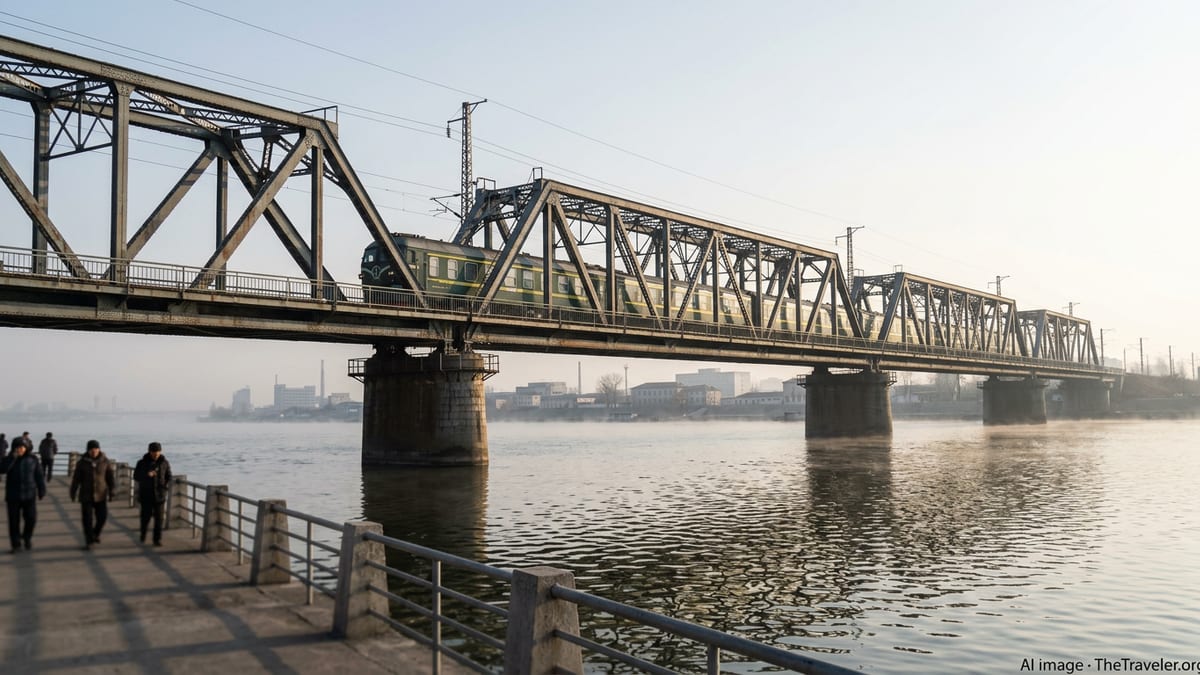
Cross-Border Rail Links Come Back to Life
According to recent coverage from Chinese and international media, China’s railway authorities have announced the resumption of passenger trains linking Beijing and the border city of Dandong with the North Korean capital, Pyongyang. The services are set to operate several times a week on the Beijing–Pyongyang route, with more frequent connections on the shorter Dandong–Pyongyang leg, restoring a corridor that was once a vital artery for cross-border movement.
Passenger services between the two countries were effectively frozen in early 2020 as North Korea sealed its borders in response to the COVID-19 pandemic. The halt extended and deepened an earlier pattern of disruption dating back to 2019, resulting in a break of around six years for regular international travelers using these trains. Freight traffic gradually crept back from 2022, but passengers were left waiting for a clear signal that movement could resume.
The latest rail timetable changes now provide that signal. Publicly available information shows that the restored trains will again traverse some of the most sensitive frontier territory in Northeast Asia, crossing the Yalu River bridge at Dandong and continuing deep into North Korea’s rail network. For travelers in China, the trains offer a direct overland route into Pyongyang that had long been popular with tour groups and a small number of independent visitors before the pandemic.
Reports indicate that, at least initially, tickets will only be sold in person at designated ticket offices in China rather than through online platforms. That limitation underscores the cautious and tightly managed nature of the reopening, even as railway officials highlight the potential benefits for regional connectivity and people-to-people exchanges.
New Momentum for Trade and Business Travel
The return of passenger trains is being framed by Chinese state-linked outlets as a practical step to deepen economic and trade cooperation with North Korea. While freight trains have carried coal, grain and manufactured goods across the border for several years, the absence of regular passenger services constrained in-person business engagement, site visits and negotiations that depend on mobility rather than just cargo flows.
Business observers note that having scheduled rail options again can lower the cost and complexity of travel for traders, logistics coordinators and other intermediaries operating along the China–North Korea frontier. The rail corridor links North Korea not only with Beijing, but also indirectly with China’s wider high-speed and conventional rail network, creating new possibilities for multi-leg journeys that combine domestic Chinese routes with the cross-border segment.
In practical terms, railway-linked border cities such as Dandong stand to gain from increased hotel bookings, restaurant patronage and services tied to travel formalities. These hubs have long functioned as staging points for trips into North Korea, and the resumption of trains may help revive local economies that were hit hard when border activity evaporated in 2020.
At the same time, analysts caution that North Korea’s broader sanctions environment and heavily restricted business climate remain unchanged. Any new commercial opportunities tied to the rail link will be shaped by existing international rules, as well as by Pyongyang’s own internal controls on foreign presence and investment.
Cautious Signals on Tourism Restart
Tourism into North Korea remains tightly limited, but the railway move is widely interpreted as a sign that authorities in Pyongyang are at least exploring a path back toward controlled foreign visitation. Publicly available reports indicate that North Korea began allowing select tour groups from Russia to visit again from 2024, breaking a complete tourism shutdown that had lasted since the border closure at the start of the pandemic.
That initial reopening did not extend to Chinese tourists, even though travelers from China were estimated by researchers and tour operators to account for the vast majority of pre-pandemic arrivals. The imbalance surprised many observers, given Beijing’s central role as North Korea’s primary trade partner. With passenger rail links to China now returning, attention is focusing on whether tour itineraries by train from Beijing or Dandong might follow.
For international travelers, even a partial tourism restart would create rare opportunities to experience North Korea by rail, a mode of travel long associated with classic itineraries into Pyongyang and onward to domestic destinations such as the east coast. Before 2020, foreign visitors frequently combined overnight trains with guided city tours, visits to historic sites and tightly choreographed excursions to newly built resort areas.
Industry specialists emphasize that any new tourism products will depend on visa policies, approved routes and the involvement of a small number of authorized travel agencies familiar with North Korea’s rules. For now, the reappearance of passenger trains is seen less as an open invitation to mass tourism and more as a tentative step that could, over time, make it easier to scale up visitor numbers if political conditions allow.
Regional Rail Reconnection in a Post-Pandemic Era
The China–North Korea restart is unfolding against a broader backdrop of regional rail reconnection as Asian countries restore and expand international passenger services paused during the pandemic. Over the past few years, other cross-border routes involving China, such as services to Laos and Mongolia, have gradually resumed or been upgraded after lengthy suspensions.
This wider trend reflects a renewed appreciation of rail as a resilient and environmentally friendlier alternative to short-haul air routes. In Northeast Asia in particular, overnight and long-distance trains also serve symbolic roles, linking capitals and reinforcing narratives of regional integration, even where political relationships remain complex.
From a travel perspective, the reopening of the Beijing and Dandong links to Pyongyang adds North Korea back into the mental map of overland route planners, rail enthusiasts and travelers who prefer to cross borders by train. While actual access will remain highly selective, the fact that scheduled passenger services are once again on timetables represents a notable shift from the total isolation of recent years.
For policymakers in Beijing and Pyongyang, the trains are also a tangible sign of normalizing routines along a frontier that has seen years of disruption. Public statements around the restart highlight goals such as expanding cultural exchanges and facilitating movement for students and workers, alongside the more visible flows of tourists and traders.
What It Means for Future Travelers
For now, prospective visitors should view the restored train services as an early indicator rather than a fully open door. Entry into North Korea continues to require prearranged tours or official invitations, and there is no sign that independent backpack-style rail travel will be permitted across the border.
Travel planners watching the region suggest that any future tourism restart built around these trains is likely to be gradual and highly curated, starting with limited departures, fixed itineraries and vetted partner agencies in China. Travelers who are able to join such trips could, however, experience one of the world’s more unusual rail journeys, combining a familiar Chinese railway environment with the starkly different urban and rural landscapes of North Korea.
Safety, insurance coverage and geopolitical risk assessments will remain central considerations for international travelers and the companies that might eventually sell rail-based tours into Pyongyang. As with any destination subject to complex sanctions and diplomatic tensions, advice from home-country governments and major travel insurers will play a significant role in determining how widely accessible these routes become.
Even with those caveats, the return of passenger trains across the Yalu River marks a symbolic turning point after years of closure. It suggests that North Korea, with China’s support, is prepared to experiment again with controlled openness, using the rails that long connected their capitals as a carefully monitored channel for people as well as goods.