

More news on this day
China has rapidly reclaimed its position at the heart of South Korea’s tourism revival, overtaking regional competitors and powering a sharp rise in foreign arrivals that is reshaping travel patterns across Asia in early 2026.
Get the latest news straight to your inbox!
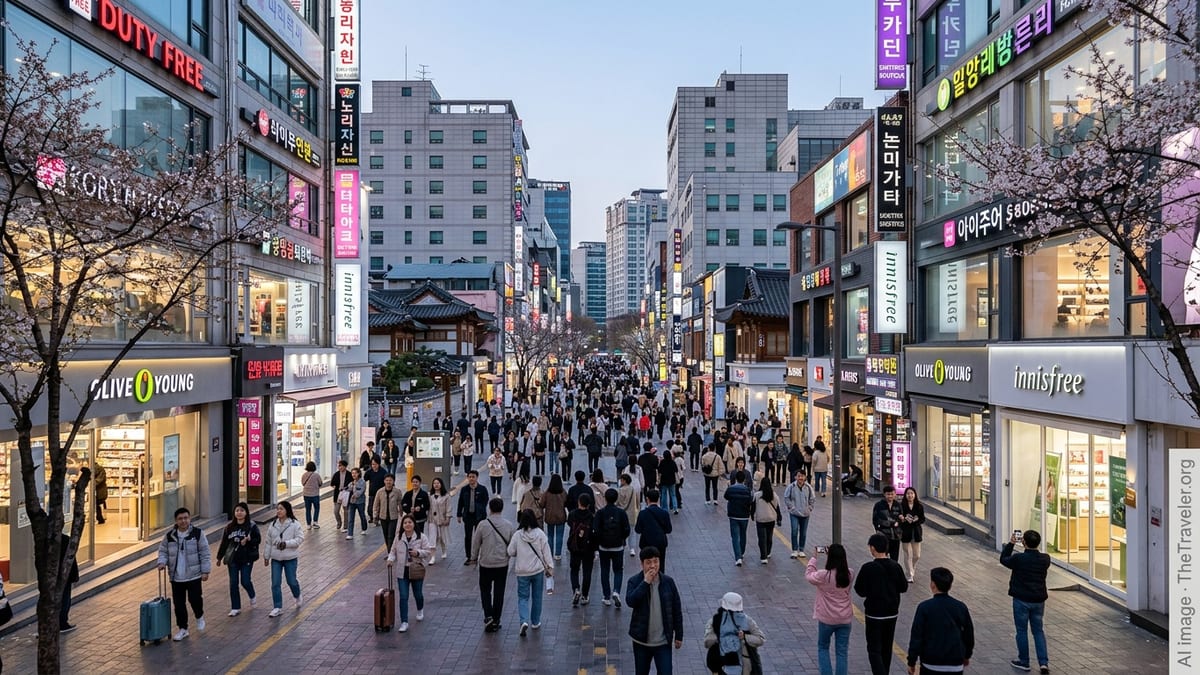
China Surges Ahead as Top Source Market for South Korea
Recent tourism statistics for early 2026 show that China has moved decisively to the front of South Korea’s inbound recovery, outpacing not only Japan but also key Southeast Asian markets such as Thailand, Vietnam, Singapore and the Philippines. Publicly available data from the Korea Tourism Organization for January 2026 indicate that China accounted for the largest share of foreign visitors to South Korea, with more than 418,000 arrivals, far ahead of Japan, Taiwan and the United States.
The scale of this rebound is significant for a market that had lagged other regions in its post-pandemic recovery. Reports indicate that Chinese travelers now make up roughly one in three foreign visitors to South Korea, reversing a period when Japan temporarily became the country’s top inbound source in 2023. The renewed dominance of Chinese tourism is providing a powerful tailwind for Korea’s broader goal of reaching the first 20-million-visitor year in 2026.
Analysts tracking the sector note that China’s return is being amplified by a combination of factors: pent-up demand after prolonged travel restrictions, a competitive exchange rate for the Korean won, and a shift in regional travel preferences amid geopolitical tensions elsewhere in Northeast Asia. Together, these trends are concentrating a larger share of Chinese outbound travel in South Korea at the expense of traditional rivals.
March Momentum Builds on Record-Breaking Start to 2026
Although official March 2026 totals have yet to be fully compiled, the trajectory set in January and February points to explosive growth through the first quarter. January arrivals exceeded 1.26 million foreign visitors, already 114 percent of pre-pandemic levels for the same month, according to tourism statistics released at the end of February. Within that total, China’s lead position has created a new baseline that industry watchers expect to carry into March as flight capacity and package offerings expand.
Tourism researchers and industry reports suggest that group bookings and independent travel inquiries from China for March departures have risen sharply compared with the previous year. The period encompasses key spring travel windows and coincides with an expanded visa-free regime for Chinese tour groups, which is in place until mid-2026 and is designed to attract several hundred thousand additional visitors over its duration. Market forecasts published by local research firms project that 2026 will be the year South Korea decisively surpasses 20 million annual arrivals, with Chinese travelers providing the single largest contribution to that jump.
Industry briefings also highlight that South Korea has advanced its longer-term inbound target, bringing forward the goal of attracting 30 million visitors from 2030 to 2028. That adjustment reflects confidence that the strong start to 2026, led by China, will continue through the year. March, traditionally a key month for city breaks and shopping-focused itineraries, is expected to consolidate the gains made in the first two months and further widen the gap between China and other Asian source markets.
Regional Realignment: China Diverts Flows From Japan and Southeast Asia
The surge in Chinese arrivals to South Korea is occurring against a backdrop of shifting regional travel flows. In Japan, recent data show a loss of momentum from the Chinese market, even as overall visitor numbers remain high. Travel coverage from Tokyo notes that while South Korea continues to supply record volumes of visitors to Japan, arrivals from China have declined amid diplomatic strains and evolving consumer sentiment, leading some Chinese travelers to look for alternative destinations.
South Korea appears to be one of the chief beneficiaries of that diversion. Travel industry analyses describe a redirection of Chinese package tours and independent itineraries away from Japan and toward Korea, especially for short-haul city trips that combine shopping, food and pop-culture tourism. This shift is occurring while Southeast Asian hotspots such as Thailand, Vietnam and the Philippines continue to attract substantial Chinese demand, but not at the pace seen in South Korea during early 2026.
Regional tourism outlook reports point to South Korea’s strengthening position within Asia’s competitive landscape. While Thailand and Vietnam are focused on balancing volume with higher-value tourism and longer stays, South Korea is capturing a greater share of short-term, high-spend urban breaks. The pattern suggests that, at least in the near term, China’s outbound market is tilting more heavily toward Korea than to its traditional mix of Japan and Southeast Asian beach destinations.
Policy Tailwinds: Visa-Free Moves and Aggressive Growth Targets
Government policy has played a critical role in magnifying the impact of China’s return. A time-limited visa-free program for Chinese tour groups, in effect through June 2026, is designed to lower barriers to entry for first-time visitors and organized travelers. Publicly available information on the scheme describes eligibility for groups of three or more Chinese nationals, with stays of up to 15 days, a format that aligns closely with common shopping and sightseeing itineraries.
The visa easing follows earlier steps by China to grant visa-free entry to Korean travelers, signaling a broader thaw in two-way tourism. Korean policymakers and tourism strategists have responded by tailoring marketing efforts and itineraries specifically to Chinese group and semi-independent travelers, particularly women in their 20s to 40s and families seeking K-culture experiences. These initiatives build on previous campaigns that targeted Japanese, Taiwanese and Southeast Asian visitors with differentiated products, but they now place Chinese demand at the center of growth plans.
At the strategic level, South Korea’s tourism authorities have raised their ambitions in line with the new influx. Forecasts circulated by local research bodies now suggest that inbound visitors could reach or exceed 21 million in 2026, surpassing earlier projections. Such figures, if realized, would mark the first time South Korea breaks the 20-million-visitor threshold, a milestone that has eluded the country despite earlier booms in K-pop and K-drama popularity.
Retail, Entertainment and Regional Cities Ride the Chinese Wave
The benefits of China’s resurgence are being felt most acutely in Seoul’s core shopping and entertainment districts, but the impact is spreading to secondary cities as well. Reports on retail performance in neighborhoods such as Myeongdong and Hongdae describe double-digit increases in foreign spending, with some flagship fashion and lifestyle stores now attributing more than half of their sales to overseas visitors. Chinese travelers, in particular, are gravitating toward Korean beauty brands, streetwear labels and character goods that are heavily promoted on social media platforms in China.
Beyond the capital, regional destinations including Busan, Jeju and Daegu are seeing growing numbers of Chinese package and cruise arrivals. Earlier initiatives aimed at Taiwanese and Japanese travelers, such as food-focused tours and coastal city itineraries, are now being adapted for Chinese-speaking groups. Tourist boards in these cities are positioning local festivals, traditional markets and coastal scenery as complementary experiences to Seoul’s shopping and entertainment draw, with the aim of lengthening stays and increasing per-capita spending.
The entertainment sector is also reinforcing the tourism wave. Major K-pop concerts and world tours scheduled in South Korea during 2026 are expected to attract thousands of international fans, many from China and Southeast Asia, who combine performances with multi-day itineraries. Industry observers note that this convergence of visa easing, entertainment events and favorable currency conditions has created a rare alignment of factors that could sustain high Chinese visitor volumes well beyond March 2026.
For now, the numbers suggest that China has firmly seized the lead in South Korea’s inbound tourism hierarchy, outpacing regional competitors and helping to rewrite Asia’s post-pandemic travel map. How long this configuration lasts will depend on geopolitical currents and economic conditions, but early 2026 has already marked a turning point that places China at the center of Korea’s tourism story once again.