

More news on this day
China Eastern Airlines is set to substantially expand its international network in 2026, unveiling new routes and additional frequencies that strengthen Shanghai’s position as a global aviation hub and deepen links to Europe, Asia and Oceania.
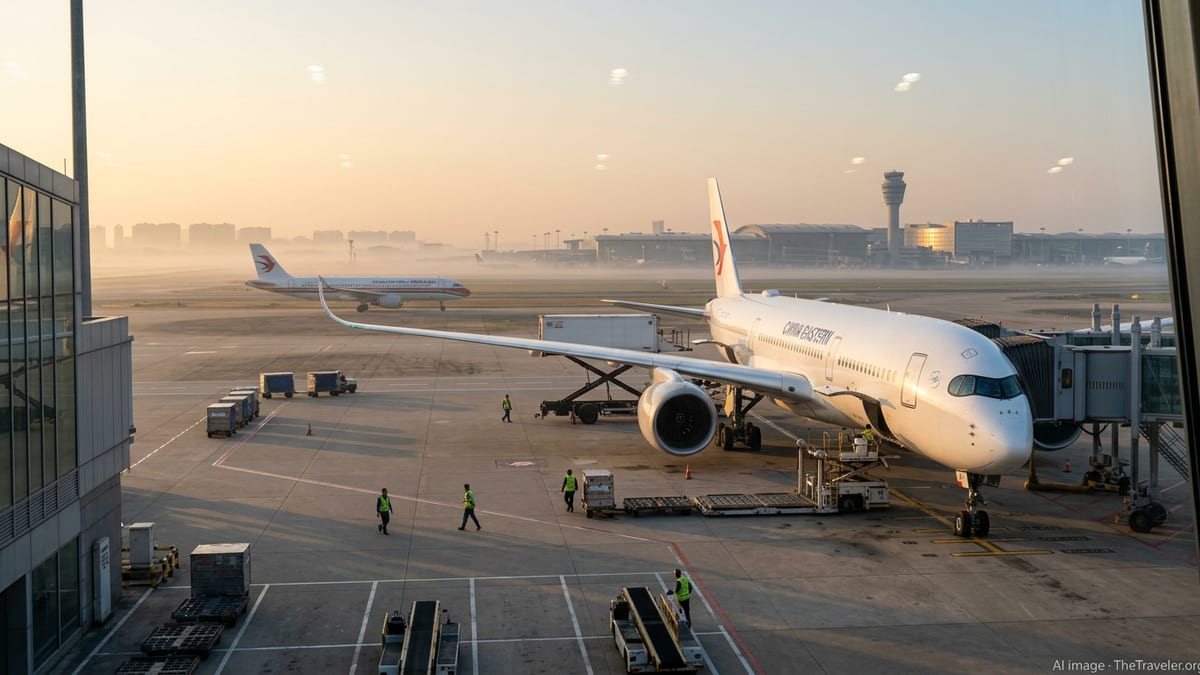
Strategic 2026 Expansion Targets Europe and the Asia-Pacific
China Eastern’s 2026 plans build on a rapid international recovery that has already seen the carrier return to near pre-pandemic capacity and claim one of the broadest global networks among Chinese airlines. Company disclosures and recent route announcements show the Shanghai-based carrier prioritizing connectivity between its core hubs and underserved international cities, while leveraging growing outbound and inbound demand for business and leisure travel.
In line with China’s broader push to enhance aviation links under its latest five-year planning cycle, China Eastern is focusing its international growth on Europe, Northeast and Southeast Asia, Central Asia, and Australia and New Zealand. The airline has signaled that it will pair new city pairs with higher frequencies on existing routes, positioning itself as the main gateway carrier through Shanghai Pudong and a growing number of secondary Chinese hubs.
Industry analysts say the strategy aims to consolidate China Eastern’s role as a bridge between China’s interior regions and major global markets. By increasing through-connectivity via Shanghai, Nanjing, Xi’an, Kunming and other regional bases, the airline is seeking to capture transfer traffic that previously relied on foreign hubs in the Middle East, Europe or North America.
For international travelers, the expansion translates directly into more nonstop options, shorter total journey times and a wider range of departure points both in China and overseas. For Chinese cities beyond Shanghai, new long-haul services are expected to support tourism, trade and investment flows as provinces step up efforts to attract foreign visitors and corporate partners.
New and Restored Routes Strengthen European and Nordic Links
One of the headline moves in China Eastern’s 2026 network plan is the restoration of nonstop flights between Shanghai Pudong and Stockholm Arlanda, reconnecting China’s largest commercial hub with the Swedish capital from June 22, 2026. The three-times-weekly service, using Airbus A330 widebody aircraft, will give Sweden its first direct link to mainland China from Stockholm since before the pandemic, and positions the Nordic region as an important growth market for the carrier.
Swedish airport operator announcements highlight the strategic value of the Shanghai–Stockholm route for both tourism and business travel. The flights are expected to stimulate arrivals from China to Sweden and neighboring countries, while giving Scandinavian travelers a one-stop pathway to an extensive Chinese domestic network via Shanghai, including popular destinations such as Beijing, Xi’an, Guilin and Kunming.
China Eastern is also deepening its presence in continental Europe through additional long-haul services originating outside Shanghai. Recent moves to resume and expand flights linking Nanjing with Paris Charles de Gaulle have reinforced Jiangsu province’s connections with Western Europe, turning Nanjing Lukou International Airport into a more significant regional hub for east China. The airline has already flagged plans to continue building out European links from secondary Chinese cities during the 2026 summer season.
Separately, aviation route filings and specialist industry reports point to new services connecting Xi’an with key European gateways, reflecting the city’s growing status as a hub on modern trade and tourism corridors. By diversifying its departure points in China, China Eastern is providing more direct European access for travelers who previously had to backtrack through Shanghai or Beijing.
Asia and Australia: Higher Frequencies and New City Pairs
Beyond Europe, China Eastern’s 2026 international expansion places heavy emphasis on regional and medium-haul markets in Asia and Oceania, where demand has rebounded strongly and is projected to keep growing. The airline has outlined plans to add capacity to Southeast Asian and Northeast Asian destinations, while reinforcing routes to Australia and New Zealand that are popular with tourists, students and visiting friends and relatives.
In South Asia, China Eastern is resuming its Kunming–Kolkata service from mid-April 2026, restoring a key air link between southwest China and eastern India. The route, which has been opened for reservations, is expected to support both tourism and trade, as Kunming positions itself as a gateway for overland and air connections between China and the Indian subcontinent.
In the Australia market, the carrier is set to introduce or expand seasonal frequencies between Shanghai and cities such as Adelaide, aligning capacity with peak southern hemisphere winter and school holiday periods. Additional flights will supplement China Eastern’s established services to major Australian gateways and provide more options for travelers looking to combine China itineraries with Australian coastal and wine-region tourism.
Across Northeast and Southeast Asia, the airline is planning more frequent flights to popular destinations in Japan, South Korea and key ASEAN markets. These increases are intended to give business travelers greater scheduling flexibility while offering leisure passengers more weekend and short-break options. The expanded timetable also enhances connection windows at Shanghai Pudong, easing same-day transfers to long-haul departures bound for Europe and Oceania.
Network Density and Hub Strategy Centered on Shanghai
China Eastern’s 2026 route expansion is closely tied to its hub strategy, with Shanghai Pudong at the core. Recent government and company data show that the airline already handles a dominant share of international transfer passengers at Pudong airport, and increasing route density is expected to further entrench its role as a primary transfer carrier on China-bound itineraries.
The airline has invested in a growing portfolio of feeder flights linking Pudong with cities across the Yangtze River Delta and beyond, including new and recently expanded services between Shanghai and regional commercial centers. By tightening these domestic links, China Eastern aims to make one-stop international journeys more seamless for passengers originating from inland provinces and smaller coastal cities.
China Eastern is also coordinating schedules between its own flights and those operated by subsidiaries and partner airlines to create more synchronized banks of arrivals and departures at its hubs. This approach is designed to cut connection times, widen onward destination choice and make Shanghai more competitive with regional rival hubs for connecting traffic between Asia, Europe and the South Pacific.
The airline’s growing fleet of modern widebody aircraft, supported by new-generation narrowbodies on shorter feeder legs, underpins its ability to expand frequencies without sacrificing efficiency. As it adds routes and boosts seat capacity, China Eastern is aiming to balance rapid growth with operational reliability and incremental improvements in onboard service standards.
Travelers Gain More Choice as Competition Heats Up
For international travelers, China Eastern’s 2026 expansion means more choice in routing, schedules and departure cities at a time when demand on many long-haul corridors is returning to or surpassing pre-pandemic levels. New point-to-point links such as Shanghai–Stockholm and restored services like Kunming–Kolkata open additional options for both leisure and business itineraries that previously required detours or multiple transfers.
In competitive markets, particularly Europe and the Asia-Pacific, the airline’s additional capacity is likely to intensify fare competition, especially in economy and premium economy cabins. While pricing will continue to reflect fuel costs, geopolitical constraints and bilateral traffic rights, the presence of more China Eastern services alongside other global carriers should give passengers greater flexibility in balancing schedule, price and service preferences.
China Eastern’s broader strategy aligns with efforts by Chinese aviation authorities to restore and expand the country’s international air connectivity following years of pandemic-related disruption. As 2026 progresses, further refinements to the carrier’s schedule are expected, with the possibility of additional route announcements and frequency upgrades depending on demand and regulatory approvals.
For now, the slate of confirmed new routes and increased frequencies signals that China Eastern intends to be an assertive competitor in the next phase of global aviation recovery, using a strengthened Shanghai hub and an expanding network of regional gateways to link more cities to China’s fast-growing travel and tourism market.