

More news on this day
Hundreds of passengers have been left scrambling for alternatives across China, India, the United Arab Emirates and Saudi Arabia as widespread disruption at China Eastern Airlines and China Southern Airlines results in at least 40 flight cancellations and more than 500 delays impacting major hubs including Shanghai, Guangzhou, Beijing and Dubai.
Get the latest news straight to your inbox!
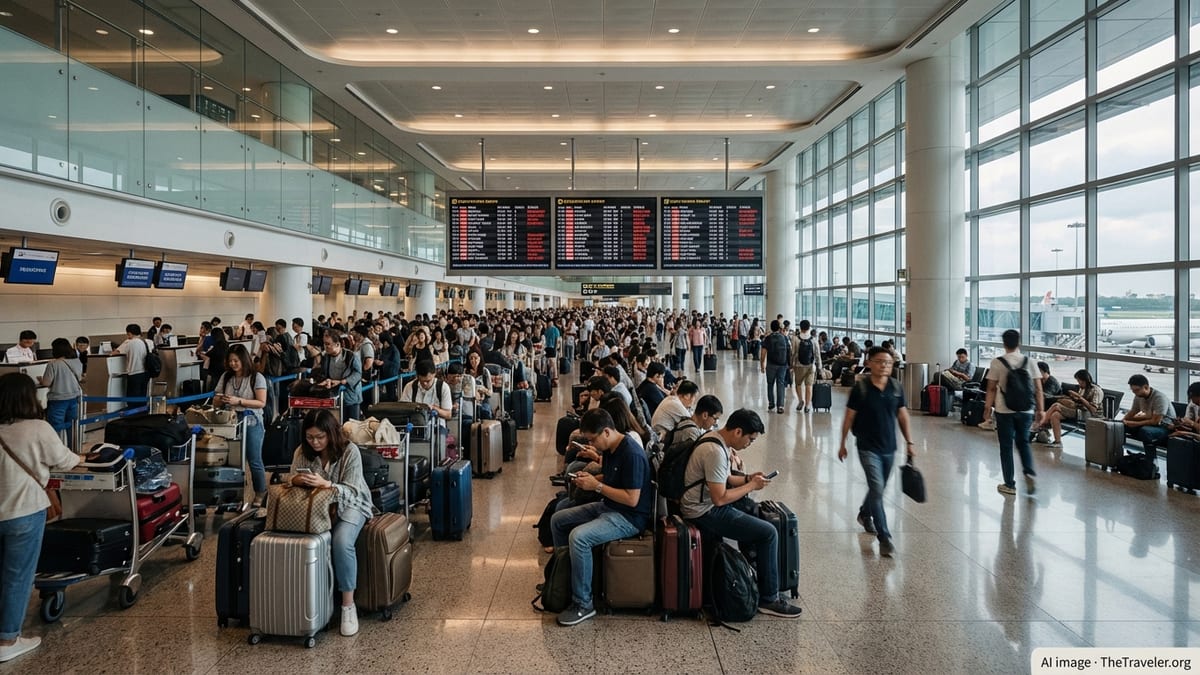
Ripple Effects From Chinese Hubs to the Gulf
Recent operational disruption affecting China Eastern and China Southern has rippled outward from core Chinese hubs, tangling itineraries across Asia and the Gulf. Publicly available flight-tracking data and timetable aggregators show a spike in cancellations and late departures on routes touching Shanghai, Guangzhou and Beijing, with onward connections to Dubai, other Emirates airports and major Indian and Saudi cities affected.
The pattern is especially visible on trunk routes between Shanghai and Guangzhou, and between secondary Chinese cities and the country’s coastal gateways, where both carriers operate dense schedules. Delays and cancellations in these feeder services have left long-haul passengers bound for the Middle East, India and beyond stranded mid-journey, sometimes forced to overnight in transit cities or rebook onto different airlines.
Travel routing tools indicate that China Eastern and China Southern remain pivotal operators on itineraries linking Chinese hubs with Dubai and other Gulf airports, often providing the sole or fastest one-stop option between medium-sized Asian cities and the UAE. When dozens of flights are pulled or heavily delayed in a short window, missed connections cascade across multiple continents, impacting travelers far beyond the immediate departure points.
Although exact commercial reasons are not fully detailed in open sources, aviation analysts note that Chinese carriers continue to balance recovering international demand, evolving airspace constraints over parts of the Middle East and tight aircraft utilization. When combined with local weather issues or congestion at large hubs such as Shanghai Pudong and Guangzhou Baiyun, this environment can quickly translate into large clusters of delays and cancellations similar in scale to the latest 40-flight and 575-delay tally.
Travel Disruption in Shanghai, Guangzhou and Beijing
Shanghai has again emerged as one of the focal points of disruption. The city’s dual-airport system relies heavily on China Eastern and its affiliated brands, with China Southern also operating key domestic and regional links. When schedules are cut on short notice, knock-on effects spread rapidly across the network, given the city’s role as both origin and transfer hub for passengers heading to India, the Gulf and Europe.
Guangzhou, a primary base for China Southern, has also seen elevated irregular operations during the current wave, according to timetable comparison sites and passenger reports. Routes from smaller Chinese cities feeding into Guangzhou for onward flights to Dubai, Jeddah and other Middle Eastern destinations are particularly vulnerable, since alternative same-day options can be limited once a China Southern or China Eastern leg cancels or slips by several hours.
Beijing’s main airports, already handling complex traffic flows and tight slot controls, are similarly exposed. Publicly available information shows that delays at Beijing can reverberate along Europe–Asia and Asia–Gulf corridors, particularly when Chinese carriers operate tightly timed connections. In the most recent disruption period, re-timed Beijing services have contributed to missed links onto China Eastern and China Southern flights heading toward the United Arab Emirates and Saudi Arabia.
For many travelers, these operational issues translate into long waits at departure gates, extended time in immigration queues and abrupt last-minute changes to carefully planned itineraries. In several documented cases, passengers connecting through Chinese hubs toward Dubai or Indian metros have been forced to split journeys across multiple tickets, seek overnight accommodation, or abandon nonrefundable bookings on separate onward flights.
Impact on Passengers Bound for India, UAE and Saudi Arabia
The latest wave of cancellations and delays is particularly disruptive for travelers moving between China and India, the UAE and Saudi Arabia, where direct capacity is still rebuilding and many routes rely on limited daily frequencies. Publicly available route data highlight China Eastern’s growing links between Shanghai and Indian gateways, as well as China Southern’s strong presence between Guangzhou, Beijing and Gulf hubs including Dubai.
When even a single departure on these corridors is removed, spare seats on alternative services can vanish quickly, especially during busy travel periods and holiday peaks. Passengers routed via Shanghai or Guangzhou to Delhi, Mumbai, Dubai, Abu Dhabi, Riyadh or Jeddah may find that the next available seat on any carrier is days away, turning what was meant to be a one-stop journey into an extended and uncertain wait.
Travel forums and customer feedback channels show a mixed picture of how rebooking is handled. Some stranded travelers report being moved to later China Eastern or China Southern services, while others turn to rival airlines via Hong Kong, Singapore, Doha or Istanbul when original tickets become unworkable. Those who booked separate tickets for different legs, a common strategy to save money on China–India or China–Gulf trips, are often the hardest hit, as missed connections on one reservation may not be protected on another.
The disruption is also affecting labor migrants, business travelers and students, many of whom rely on relatively low-cost services operated by Chinese airlines to reach work, study and family commitments in India and the Middle East. For these passengers, extra accommodation costs, visa implications from forced stopovers and forfeited days of work or study can significantly amplify the impact of a delayed or canceled flight.
Why So Many Delays and Cancellations at Once
Aviation specialists point to a combination of factors behind large clusters of delays and cancellations, rather than a single clear-cut cause. China Eastern and China Southern continue to navigate tight aircraft and crew availability as their fleets are redeployed to meet rising demand on both domestic and international routes. Any unplanned maintenance, weather disruption or short-notice airspace restriction can therefore have an outsized effect on punctuality.
Weather remains a persistent vulnerability at Chinese hubs. Past studies of large-scale delay events at airports such as Guangzhou Baiyun have documented how thunderstorms or low visibility can quickly push operations beyond capacity, forcing holding patterns, diversions and, ultimately, cancellations when aircraft and crews fall out of position. Once such a disruption window overlaps with peak travel days, recovering on-time performance can take many hours or even several days.
In the wider region, evolving security conditions and temporary airspace restrictions over parts of the Middle East have led to longer routings and congested corridors, according to open reporting on recent international operations. Flights between China and the Gulf occasionally need to detour around affected areas, extending block times and compressing turnarounds. When combined with already tight schedules, these longer routes increase the risk of crews timing out and subsequent services being delayed or canceled.
Operational policies at individual airlines also play a role. Publicly available customer documents from China Eastern and China Southern note that carriers may adjust or cancel services for commercial or safety reasons, while committing to take reasonable measures to reduce the impact. In practice, this can mean consolidating lightly booked flights, adjusting departure times to fit available crews or reshuffling aircraft across the network, each decision contributing to localized surges in disruption.
What Travelers Can Do If Their Flight Is Affected
For passengers caught up in the current wave of disruption, travel experts consistently recommend close monitoring of flight status through both airline channels and independent tracking apps. Schedules involving Shanghai, Guangzhou, Beijing and Dubai are particularly important to watch, given the concentration of China Eastern and China Southern services at these hubs and their central role in connecting onward to India, the UAE, Saudi Arabia and other destinations.
When a delay or cancellation appears likely, contacting the booking provider early can improve the odds of securing a workable alternative. Travelers who booked directly with the airline may have faster access to rebooking options on China Eastern or China Southern, while those using online travel agencies might find it easier to switch to other carriers serving similar corridors through Hong Kong, Singapore, Doha or Istanbul, if seats remain.
Passengers with tight connections or separate onward tickets are often advised to allow longer buffers when routing through Chinese hubs in the current environment. Leaving several hours, or even an overnight margin on critical journeys, can reduce the risk that a missed leg in Shanghai, Guangzhou or Beijing derails an entire multi-country trip. While this adds time and potentially cost, it minimizes exposure to sudden schedule changes during periods of elevated disruption.
For future trips, travelers may wish to consider flexible fares, comprehensive travel insurance that explicitly covers delays and cancellations, and itineraries with built-in redundancy, such as alternative routings through different hubs. As China Eastern and China Southern continue to adjust networks linking China with India, the UAE, Saudi Arabia and other markets, informed planning and a degree of flexibility remain the best tools for reducing the personal impact of large-scale operational upheavals.