

More news on this day
China Eastern Airlines has agreed to buy 101 Airbus A320neo family aircraft in a deal valued at about 15.8 billion dollars at catalogue prices, underscoring the Chinese carrier’s need for reliable near-term capacity growth as domestic manufacturer COMAC struggles to accelerate production of its C919 narrowbody.
Get the latest news straight to your inbox!
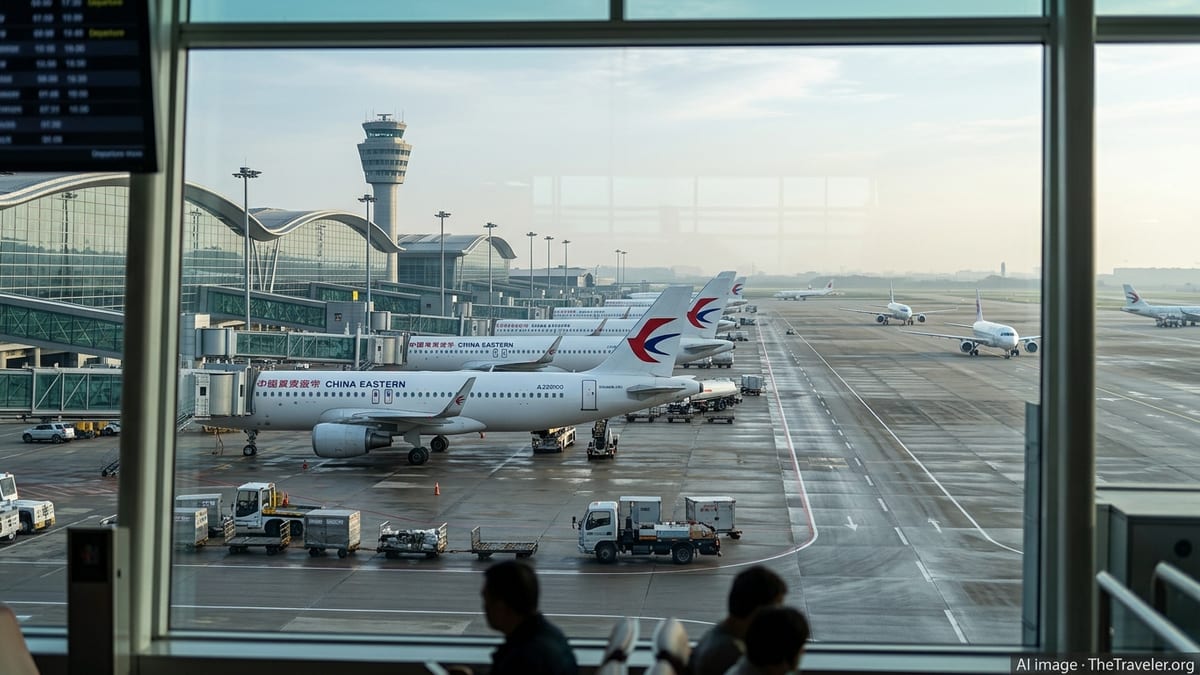
Biggest Single Airbus Narrowbody Deal Yet From a Chinese Carrier
Public filings and media coverage indicate that China Eastern’s new order covers 101 aircraft from the A320neo family, to be delivered between 2028 and 2032. While airlines seldom pay full list prices, the transaction is valued at roughly 15.8 billion dollars based on Airbus catalogue figures, making it one of the largest single narrowbody commitments ever placed by a Chinese airline.
The Shanghai-based carrier will use the jets primarily to reinforce its domestic and regional networks, where demand has rebounded strongly following the pandemic and continues to grow in step with China’s broader economic recovery. The A320neo’s lower fuel burn and maintenance costs compared with previous-generation single-aisle jets are seen as central to China Eastern’s long-term cost management and fleet renewal strategy.
Public information on China Eastern’s fleet shows that the airline already operates more than one hundred A320neo family aircraft, making it one of Asia’s largest users of the type. The new order will deepen that relationship and help the company standardize cockpit, cabin and maintenance procedures across a large portion of its short and medium haul operation.
The purchase also keeps Airbus firmly positioned in a Chinese market that is forecast to require thousands of additional single-aisle aircraft over the next two decades. The order follows a separate commitment by Air China for 60 A320neo family jets and comes as global lessors, including AerCap, add fresh A320neo capacity to their portfolios to meet airline demand well into the 2030s.
COMAC C919 Ambitions Meet Production Reality
The scale and timing of China Eastern’s Airbus deal arrive as the airline’s homegrown alternative, the COMAC C919, enters service more slowly than early projections suggested. Publicly available fleet and operations data show that only a small number of C919s are currently flying commercial routes, almost all with China Eastern and a handful of other Chinese carriers.
Industry reporting over the past year has highlighted a combination of hurdles to higher C919 output, ranging from supply chain constraints on Western-built engines and avionics to the time required to stabilize final assembly processes. The C919 relies on CFM LEAP engines similar to those used on the A320neo, linking its production pace to the same global bottlenecks that have challenged Airbus and Boeing.
Analysts note that while COMAC has accumulated a substantial order backlog, turning that backlog into delivered aircraft will require several years of steady ramp-up. Against that backdrop, airlines such as China Eastern still need proven, available platforms to handle traffic growth and replace aging jets that are approaching retirement.
The contrast between a triple-digit A320neo commitment and the modest number of C919s currently in passenger service illustrates the gap between China’s industrial aspirations and the realities of large-scale commercial aircraft production. For China Eastern, near-term reliability and capacity appear to outweigh any desire to rely exclusively on domestic equipment.
Strategic Fleet Balance Between Domestic and Western Aircraft
China Eastern’s latest order reinforces a dual-track fleet strategy visible across the country’s major airlines, combining Western-built workhorses with a gradual introduction of domestically produced types. Public fleet data show that the carrier operates large numbers of Airbus A320 family and Boeing 737 aircraft alongside a growing but still small contingent of C919s.
Travel industry observers say that such a mixed approach gives airlines flexibility as they navigate regulatory scrutiny, certification timelines and evolving passenger expectations. Western aircraft families like the A320neo offer long track records, global support networks and established residual value, features that remain important to both airlines and financiers.
At the same time, demonstrating confidence in COMAC products is politically and symbolically significant in China. China Eastern, as the C919 launch customer, has played a central role in proving the aircraft on high-density domestic routes, including trunk services from Shanghai. The airline’s decision to commit heavily to the A320neo family therefore looks less like a rejection of the C919 and more like a hedge against uncertainty in production schedules.
Over time, the balance may shift. If COMAC can lift output and broaden the C919’s in-service footprint, future Chinese fleet plans could tilt more heavily toward domestic designs. For now, China Eastern’s order suggests that Western narrowbodies will remain the backbone of Chinese short-haul capacity well into the next decade.
Implications for Travelers and Global Capacity
For passengers, the expansion of China Eastern’s A320neo fleet is likely to translate into more frequencies and potentially new nonstop routes within China and around the wider Asia Pacific region. The cabin experience on new-generation aircraft typically includes quieter engines, improved air quality systems and modern in-flight connectivity, all features that can enhance comfort on flights of two to five hours.
In capacity terms, the 2028 to 2032 delivery window lines up with forecasts that Chinese outbound and domestic travel will continue to expand beyond pre-pandemic levels. Additional single-aisle jets will allow China Eastern to upgauge some services from smaller aircraft while maintaining high daily utilization rates on its busiest city pairs.
The order also feeds into broader global trends in which airlines prioritize fuel-efficient narrowbodies as a primary tool for meeting emissions goals. Airbus markets the A320neo family as offering at least 20 percent lower fuel burn than earlier models, a reduction that can significantly shrink per-seat carbon intensity when combined with load factor improvements and increasingly available sustainable aviation fuels.
For international travelers connecting through Chinese hubs, an enlarged and modernized narrowbody fleet at China Eastern may mean tighter connections, more consistent onboard products and greater schedule choice as carriers across the region compete for transit traffic.
Airbus Strengthens Position as C919 Seeks Its Place
China Eastern’s commitment arrives at a time when global demand for the A320neo family is already straining production lines. Airbus has disclosed thousands of orders for the type worldwide and recently secured several major top-up deals from leasing companies and airlines seeking to lock in delivery slots before the end of the decade.
The Chinese market is particularly significant in that context. Large, multi-year orders from carriers such as China Eastern and Air China help anchor Airbus’s long-term production planning and justify continued investment in assembly capacity, including facilities in Tianjin that assemble A320 family aircraft for regional customers.
For COMAC, the announcement serves as both a challenge and an opportunity. The C919 now flies revenue services, and early passenger feedback shared in public forums often highlights a modern, quiet cabin comparable to contemporary Western jets. The question is how quickly COMAC can expand that experience beyond a small initial fleet into the hundreds of aircraft needed to make a meaningful dent in China’s overall narrowbody demand.
Until that happens, China Eastern’s 101-jet Airbus deal underscores a pragmatic reality in the world’s largest outbound travel market: while the C919 ramps up, proven Western aircraft will continue to carry the bulk of Chinese travelers across the country and the wider region.