

More news on this day
China Eastern Airlines is bringing back nonstop flights between Shanghai and Stockholm in time for the 2026 summer peak, restoring a key air bridge between China and Scandinavia that has been missing since before the pandemic.
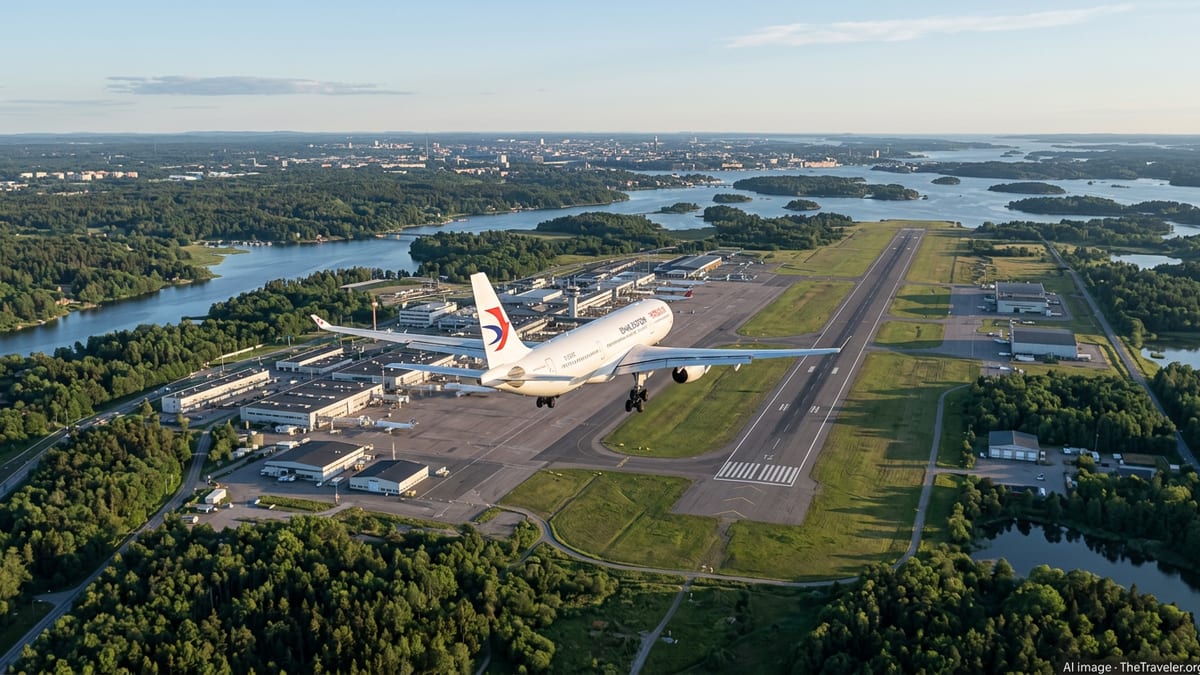
Nonstop Shanghai–Stockholm Service Returns in Late June
China Eastern has opened reservations for direct flights between Shanghai Pudong International Airport and Stockholm Arlanda Airport, with service scheduled to restart from June 22, 2026. The airline plans to operate three weekly round-trips, reconnecting one of China’s largest economic hubs with Sweden’s capital after a six-year hiatus.
According to industry schedule data, the route will be flown by Airbus A330-200 aircraft, departing Shanghai in the afternoon and arriving in Stockholm in the evening, before returning overnight to China. This timing is designed to capture both same-day business travelers and long-haul connections across Asia and the Pacific.
The route was last operated in early 2020, before being suspended as international air travel collapsed and China’s borders largely closed. Its return in 2026 is being viewed by aviation analysts as a symbolic milestone in the normalization and expansion of post-pandemic air links between China and northern Europe.
For travelers, the renewed nonstop option removes the need for connections through hubs such as Frankfurt, Helsinki, Istanbul or Doha, cutting total journey times by several hours and reducing the risk of missed connections and baggage delays.
Strategic Win for Stockholm Arlanda and Sweden’s Tourism Sector
Airport operator Swedavia has welcomed the announcement as a strong vote of confidence in Sweden’s long-haul market. Stockholm Arlanda has been working to rebuild and diversify its intercontinental network, and a direct link to Shanghai has long been seen as strategically important for both business and leisure traffic.
Industry observers note that a nonstop Shanghai route plugs directly into one of Asia’s largest catchment areas, serving the broader Yangtze River Delta region with its dense concentration of manufacturing, tech, finance and logistics firms. For Swedish exporters in sectors like automotive, mining technology, clean energy and design, easier access to partners and customers in eastern China is expected to be a clear advantage.
Tourism officials are also eyeing the potential to attract more visitors from China to Sweden, building on a rebound in Chinese outbound travel since border restrictions were lifted. Direct air connectivity tends to drive higher visitor numbers and longer stays, as travelers are more likely to choose destinations that can be reached without complicated transfers.
In recent years, Stockholm has marketed itself to Asian travelers as a compact, walkable capital that offers a mix of historic old town, contemporary Nordic cuisine and easy access to archipelago landscapes. A direct route from Shanghai gives tour operators and airlines new opportunities to package Sweden as a gateway to Scandinavia and the wider Nordic region.
Visa Policy Tailwinds and Business Travel Rebound
The relaunch of the Shanghai–Stockholm connection comes against a backdrop of gradually easing travel formalities between China and parts of Europe. Since late 2025, Swedish citizens have been able to enter China for short stays of up to 30 days without a visa for tourism, business and family visits, a policy that has already simplified trip planning for many Nordic travelers.
That visa-free access, combined with the return of a nonstop flight, is expected to make China more attractive for Swedish companies looking to resume on-the-ground meetings, trade fair visits and factory inspections that were largely moved online during the pandemic years. Travel agents report growing interest in multi-city China itineraries that start in Shanghai and continue to other commercial centers via domestic connections.
On the Chinese side, improving economic sentiment and a growing middle class with international travel experience are supporting a steady comeback in outbound tourism to Europe. Direct services from Shanghai to destinations such as Copenhagen and Geneva have already helped rebuild flows, and Stockholm is now poised to benefit from that same dynamic.
Corporate travel managers say that the combination of simpler visa rules, a predictable long-haul schedule and a single-carrier itinerary reduces friction for employees and can improve duty-of-care compliance, factors that are increasingly important in post-pandemic travel policies.
Schedule, Aircraft and Onboard Experience
China Eastern’s planned three-times-weekly service will use the Airbus A330-200, a twin-aisle widebody that the airline deploys on a number of medium- and long-haul routes. The aircraft typically features a two-class cabin with lie-flat or angled-flat business seats and a standard economy cabin, as well as personal in-flight entertainment screens and Wi-Fi on selected airframes.
Typical flight times between Shanghai and Stockholm are expected to be around 10 to 11 hours, depending on routing and seasonal winds. By operating an afternoon departure from Shanghai with an evening arrival in Sweden, the airline is aiming to offer a rest-friendly overnight return to China that allows passengers to arrive in Shanghai in the early afternoon.
The schedule also links into China Eastern’s broader international network, offering same-day connections to destinations across Asia-Pacific, including Australia and New Zealand, as well as domestic links to cities such as Beijing, Xi’an, Kunming and Chengdu. For Scandinavian travelers, this could make Shanghai an attractive alternative hub for reaching parts of Asia that currently require double connections via central or southern Europe.
Frequent flyer members of China Eastern and its SkyTeam partners are expected to be able to earn and redeem miles on the resumed route, a factor that can be decisive for corporate travelers and high-value leisure passengers choosing between carriers and transfer points.
Part of a Wider China Eastern Push in Europe
The decision to restore the Shanghai–Stockholm service is part of a wider rebuilding of China Eastern’s European network. Over the last two years the airline has progressively added or reinforced routes from Shanghai to cities including Copenhagen, Geneva and key hubs in southern Europe, reflecting a strategic focus on connecting China with major diplomatic, financial and tourist centers.
Aviation analysts say that Scandinavia occupies an important niche within that strategy. The region boasts high levels of outbound spending, strong interest in Asian destinations and a growing focus on green technology and innovation, sectors in which Chinese and Nordic companies are increasingly collaborating.
From a competitive standpoint, the return to Stockholm positions China Eastern against both European and Middle Eastern carriers that currently dominate one-stop connections between China and Scandinavia. Direct flights can appeal to time-sensitive travelers and those looking to minimize airport transfers, especially families and older passengers.
As airlines globally continue to adjust their long-haul networks in response to shifting demand, the Shanghai–Stockholm relaunch underlines how carriers are prioritizing routes that combine strong business demand with tourism potential. For travelers planning trips between China and Sweden in the summer of 2026, the restored nonstop service adds a convenient new option in a market that has been steadily rebuilding its connectivity.