

More news on this day
A fresh wave of cancellations and delays at China Eastern and China Southern is rippling through Asia and the Gulf, stranding passengers across China, India, the United Arab Emirates, Saudi Arabia and beyond as disruptions concentrate around key hubs such as Shanghai, Guangzhou, Beijing and Dubai.
Get the latest news straight to your inbox!
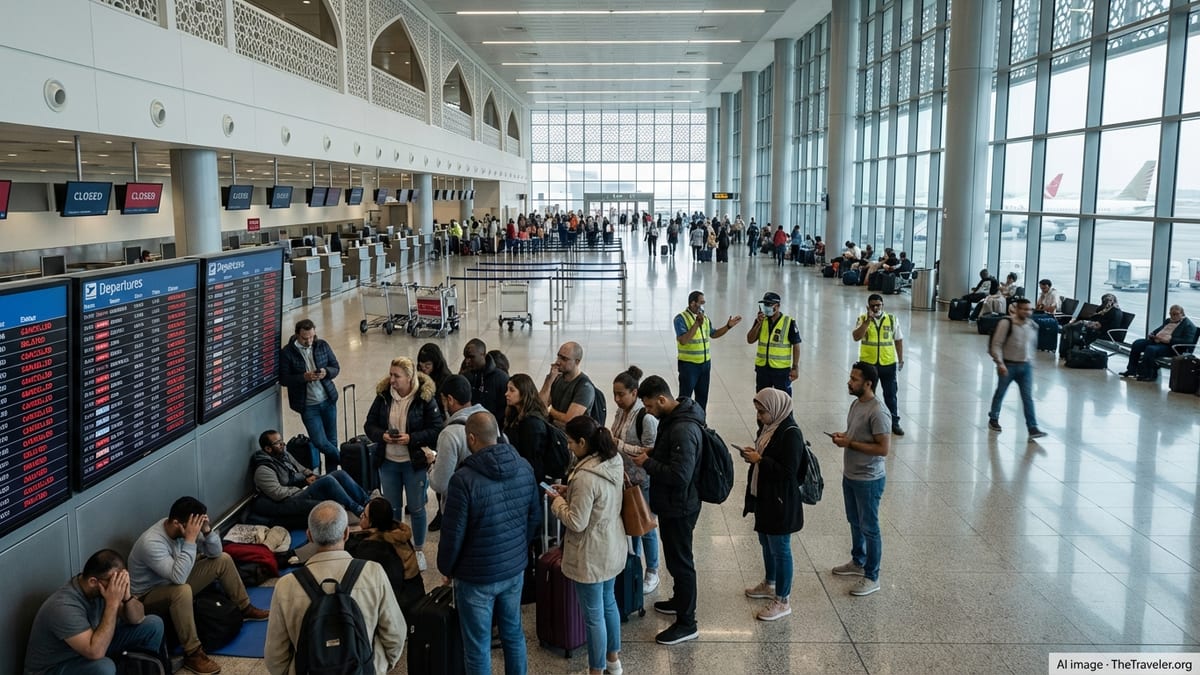
Flight Cancellations and Delays Mount Across Key Hubs
Publicly available flight tracking data and regional aviation analyses indicate that China Eastern and China Southern have together seen dozens of cancellations and hundreds of delayed departures concentrated into a single peak disruption window, with around 40 flights cancelled and more than 500 delayed across their combined networks. The impact has been most visible at Shanghai Pudong and Hongqiao, Guangzhou Baiyun and Beijing’s airports, where rolling schedule changes have pushed aircraft and crew out of position and triggered knock-on delays through the day.
Reports from flight status platforms show elevated cancellation and delay rates on trunk routes linking Shanghai, Beijing and Guangzhou, as well as on long haul and regional services connecting China with Dubai and other Gulf gateways. The pattern echoes a wider wave of disruption that has affected thousands of flights across Asia and the Middle East in recent weeks as airlines grapple with weather, airspace constraints and congested terminals at major hubs.
At ground level, terminals in Shanghai, Guangzhou and Beijing have seen long queues at check in and transfer counters as disrupted passengers seek new itineraries. Airport information displays have shown clusters of delayed departures in the China Eastern and China Southern banks, with some services pushed back by several hours and others withdrawn entirely from the day’s schedule.
In Dubai, where Chinese carriers feed traffic between mainland China, India and onward destinations in the Middle East and Europe, travel disruption has led to crowded transfer zones and extended layovers for passengers whose connections via China Eastern and China Southern no longer align with their original itineraries.
Wider Regional Pressures Behind the Disruption
The latest problems at China Eastern and China Southern are unfolding against a broader backdrop of volatility in Asian and Middle Eastern aviation. Recent airspace restrictions over parts of West Asia have forced many airlines to reroute or suspend flights, tightening capacity into and out of Gulf hubs such as Dubai and Abu Dhabi. While Chinese carriers are not alone in facing schedule disruption, their large domestic and regional networks mean that relatively small shifts can cascade quickly across multiple countries.
Analysts note that early spring is already a sensitive period for Chinese aviation, with seasonal weather around Shanghai and northern China often triggering storms, low visibility and air traffic control restrictions. When these conditions overlap with congested traffic flows and external constraints in distant air corridors, delays can multiply and leave aircraft and crew stranded in the wrong cities at the wrong times.
Industry data for March and early April 2026 points to heightened cancellation and delay counts across Asia, with China, Japan, Southeast Asia and the United Arab Emirates all reporting spikes in operational disruptions on certain days. Within that wider picture, China Eastern and China Southern have been among the carriers adjusting frequencies, consolidating flights and occasionally trimming routes to manage capacity and network reliability.
Capacity adjustments on some international routes have also contributed to instability. Chinese airlines have been fine tuning schedules to destinations in Japan, South Asia and the Gulf, responding to a mix of demand shifts, diplomatic considerations and the knock on effects of Middle East airspace changes. For passengers, these strategic moves often appear in real time as last minute cancellations or significant retimings.
Travelers Stranded From China to India and the Gulf
The practical outcome of the latest disruption has been a surge in stranded travelers across a broad geography. In China, passengers transiting through Shanghai, Guangzhou and Beijing on China Eastern and China Southern have reported missed domestic and international connections, leading to unexpected overnight stays and lengthy rebooking queues.
In India, publicly available reports describe travelers stuck in cities such as Delhi and Mumbai after onward flights operated by Chinese carriers were delayed or cancelled, severing their links to Shanghai and onward connections to the Middle East and Europe. For some, the interruption has meant rebooking on alternative airlines via Singapore, Hong Kong or other Asian hubs when capacity allows.
At Gulf airports, especially Dubai, the ripple effects of China Eastern and China Southern schedule changes have compounded existing crowding from wider regional disruptions. Passengers connecting between China and Saudi Arabia, Qatar or other Middle Eastern destinations have faced extended layovers when inbound flights arrived hours late or when onward sectors were removed from the schedule altogether.
Travelers from third countries have also been caught in the middle. Itineraries linking Europe or North America with India and Southeast Asia via Chinese hubs have been particularly vulnerable when a delayed China Eastern or China Southern sector caused a missed connection, forcing airlines or booking platforms to find scarce replacement seats on already busy routes.
What Public Guidance Suggests for Affected Passengers
Consumer advocates and aviation specialists have been reiterating practical steps for passengers hit by cancellations and long delays on China Eastern and China Southern. Public guidance typically starts with advising travelers to monitor their flight status through airline apps and airport departure boards from at least 24 hours before departure, since many schedule changes are being loaded close to travel time.
When a flight is cancelled, available information suggests that rebooking or refund options depend on fare rules, route and local regulations. On some international sectors, particularly those touching jurisdictions with strong passenger rights frameworks, affected travelers may be eligible for compensation or additional care, while on other routes arrangements may be limited to rebooking on the next available service or provision of basic vouchers.
Travel experts also recommend that passengers document their disruption by keeping boarding passes, delay notifications and receipts for meals, accommodation and transport purchased during an extended delay. This documentation can support later claims with airlines or travel insurers once the immediate priority of reaching the destination has been resolved.
Given the current volatility, many advisers suggest building additional buffer time into itineraries that rely on tight connections through Shanghai, Guangzhou, Beijing or Dubai, especially when those journeys involve cross carrier ticketing. Where possible, booking all sectors on a single ticket with one airline group or alliance can make it easier to secure through protection if a China Eastern or China Southern delay causes a missed onward flight.
Outlook for China Eastern and China Southern Operations
Aviation data providers indicate that schedule filings for the coming weeks show Chinese carriers aiming to maintain overall capacity growth compared with last year, even as they adjust specific routes and frequencies in response to operational pressures. For China Eastern and China Southern, that means continued focus on core domestic trunk routes and strategically important international links to the Gulf, South Asia and key Asian capitals.
However, analysts caution that the factors driving the current round of disruption are unlikely to vanish immediately. Weather variability around major Chinese hubs, tight crew and aircraft rotations, and lingering constraints in nearby airspace all leave China Eastern and China Southern exposed to further episodes of concentrated cancellations and delays, particularly on busy travel days.
Passengers booked with the two airlines are being advised by travel planners to remain flexible, to consider alternative routings where feasible, and to build in contingency plans such as changeable tickets or backup options on different carriers for time sensitive trips. For now, the latest wave of 40 cancellations and 575 delays serves as a reminder of how quickly conditions can change across interconnected aviation networks stretching from China to India, the United Arab Emirates, Saudi Arabia and beyond.