

More news on this day
China is consolidating its position as a global travel powerhouse in 2026, with surging domestic tourism, revitalized outbound trips and far-reaching visa reforms reshaping routes, investment and policy across the world’s tourism economy.
Get the latest news straight to your inbox!
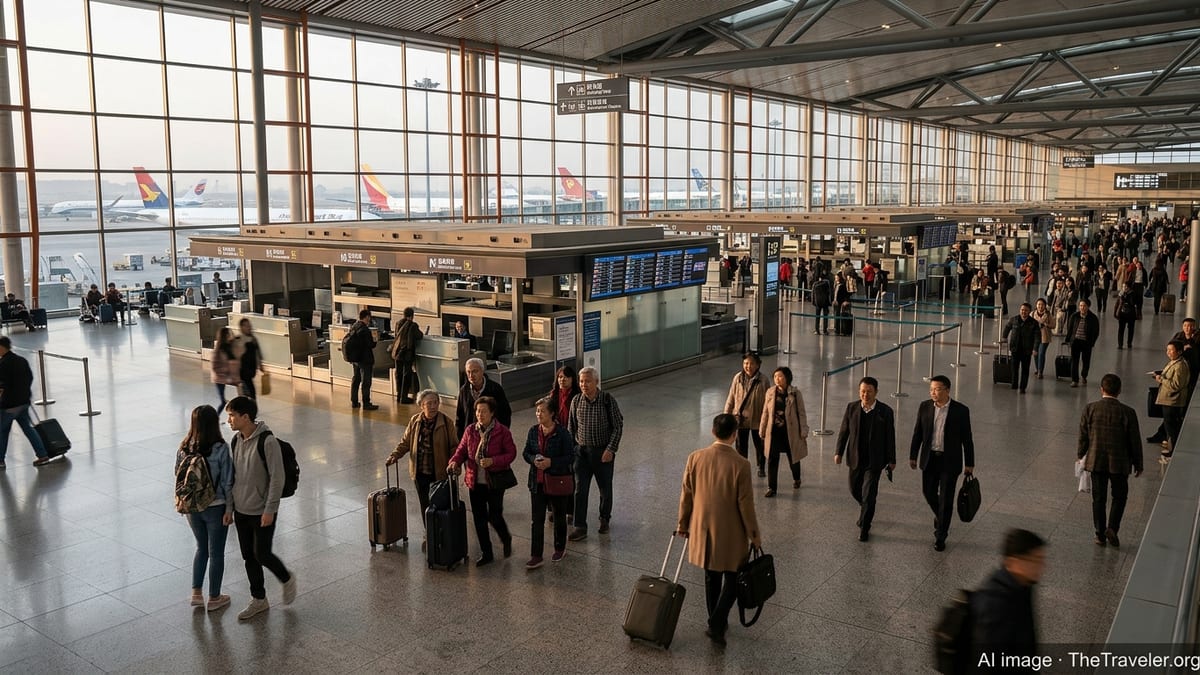
Domestic Tourism Surges Past Pre‑Pandemic Benchmarks
Recent data and industry analyses show China’s domestic tourism market not only recovering but expanding beyond pre‑pandemic benchmarks, turning the country’s vast internal travel demand into a critical engine for the wider sector. Official holiday statistics for 2024 highlighted a rebound in trips and spending during major travel periods, with Spring Festival and National Day holidays surpassing 2019 levels in both visitor volumes and tourism revenue according to widely cited government figures and financial research summaries. Analysts note that the rebound has been supported by pent‑up demand, improved transport connectivity and a wave of new cultural and nature‑based destinations.
Market research compiled in 2025 and 2026 points to structural shifts within this domestic boom, including rapid growth in family travel, short‑haul “weekend economy” trips and the so‑called silver‑tourism segment as older travelers spend more on culture, wellness and organized tours. Several reports estimate that tourism related to senior travelers alone could reach the equivalent of more than 1 trillion yuan in annual value by the mid‑2020s, underscoring how demographic changes are reinforcing tourism as a long‑term pillar of consumption rather than a transient post‑pandemic bounce.
Policy measures have also played a role. Publicly available documents on economic planning outline targeted fiscal support for cultural and tourism projects in 2024 and 2025, including investments in smart scenic areas, high‑speed rail expansion and rural homestay development. Industry observers note that this blend of physical infrastructure and digital services has made it easier for travelers from smaller cities to access lesser‑known destinations, spreading tourism revenue more evenly across regions and helping local economies diversify.
As a result, China’s domestic tourism market has become one of the world’s largest and most self‑sustaining travel ecosystems. For global brands and foreign destinations, this deep pool of experienced travelers at home is increasingly viewed as the training ground for the next wave of outbound tourism, shaping expectations for service quality, mobile payments and personalized experiences abroad.
China Regains the Top Spot in Global Outbound Spending
On the international stage, China has re‑established itself as the world’s leading outbound tourism spender. Updated figures from UN Tourism and subsequent syntheses published in 2024 and 2025 indicate that Chinese outbound travel expenditure reached around 196.5 billion US dollars in 2023, ahead of the United States, Germany and the United Kingdom. Follow‑up commentary and rankings released in 2025 confirm that China continued to lead global outbound spending into 2024, reinforcing its status as a pivotal source market for destinations worldwide.
Although the number of outbound trips from China has been recovering unevenly by region, industry reports suggest a clear upward trajectory. Short‑haul travel to Asia rebounded first, with Southeast Asian destinations such as Thailand, Singapore and Malaysia experiencing rapid increases in Chinese arrivals after mutual or unilateral visa exemptions took effect. Longer‑haul markets in Europe and the Americas have lagged but are climbing as air capacity rebuilds and travel confidence returns, with tourism‑economics forecasts pointing to Chinese outbound visits potentially exceeding 2019 volumes by around the end of this decade.
Spending patterns are evolving alongside volumes. Research aggregated from payment providers, travel platforms and consulting firms points to strong growth in premium and luxury Chinese outbound travel, including high‑end retail, fine dining and bespoke itineraries that emphasize culture, wellness and nature. At the same time, younger travelers increasingly favor independent trips booked through mobile platforms rather than traditional group tours, a shift that affects how tourism revenue is distributed in host countries and creates new opportunities for smaller operators and community‑based experiences.
For global tourism stakeholders, these trends mean that China’s role is no longer defined solely by headline numbers of tour groups, but by a diverse, segmented and digitally connected traveler base. Destinations are adapting by tailoring offerings to distinct Chinese market niches, from student travelers and adventure seekers to affluent multi‑generation families looking for longer stays.
Visa Liberalization Reshapes Travel Flows Into and Out of China
China’s expanding network of visa‑free arrangements has become one of the defining policy stories in global tourism over the past two years, altering both inbound and outbound travel dynamics. According to compiled government notices and policy trackers, from late 2023 through 2025 China introduced or expanded unilateral visa‑free entry for a growing list of countries, beginning with several European states and Southeast Asian neighbors and later extending to Australia, New Zealand, Japan, South Korea and a range of Latin American and Middle Eastern nations.
By November 2025, publicly available briefings indicated that citizens of about 45 countries could enter China visa‑free for short stays, with the arrangement extended through the end of 2026. Separate updates to the country’s transit‑without‑visa schemes and mutual exemption agreements, such as those with Singapore and Malaysia, further broadened access. Travel‑industry coverage and analytics report that these changes have been accompanied by sharp rises in foreign arrivals, hotel bookings and cross‑border flights, particularly during major holidays and sports or cultural events.
Outbound flows have also been influenced by partner countries’ policies towards Chinese citizens. Thailand, Malaysia and Singapore have all deployed visa‑waiver or simplified entry schemes for Chinese visitors over the past two years, with tourism authorities and regional research units documenting sizable increases in Chinese arrivals in 2024 and 2025. Separate reporting from Thailand, for example, shows that China reclaimed its place as the country’s largest source market in 2024 following the implementation of mutual visa exemptions, illustrating how policy coordination can quickly shift regional travel patterns.
Observers note that this wave of liberalization marks a significant departure from the stricter border controls of the early pandemic years and signals a strategic use of tourism as a tool of economic and people‑to‑people engagement. As more countries move towards reciprocal or unilateral visa‑free access with China, airlines, hotels and destination marketers are adjusting route planning and promotion strategies to capture anticipated gains in two‑way travel.
Domestic Growth Feeds a More Sophisticated Outbound Traveler
The strength of China’s domestic tourism market is feeding directly into a more experienced and demanding outbound traveler profile. Surveys and sentiment reports compiled by specialist research firms in 2024 and 2025 show that many Chinese travelers now take multiple domestic trips each year, experimenting with boutique hotels, rural stays and outdoor activities before considering similar experiences overseas. This progression is shaping expectations for service standards, digital convenience and sustainability when they travel abroad.
Digital ecosystems developed for domestic travel are also traveling with them. Super‑apps, mobile payments and online review platforms widely used within China are becoming indispensable tools for Chinese tourists overseas, influencing decisions on flights, hotels, dining and shopping. International merchants and destinations are responding by integrating Chinese payment options, language support and social‑media marketing, aiming to capture a higher share of this tech‑savvy segment’s spending.
At the same time, outbound travel is becoming more geographically dispersed within China itself. Research drawing on booking data from major online travel platforms shows that residents of lower‑tier cities now account for a growing share of outbound trips, narrowing the gap with traditional hubs such as Beijing, Shanghai and Guangzhou. This broadening base means that future growth will likely be driven by travelers with different income levels, interests and destination awareness, creating both opportunities and challenges for tourism boards seeking to appeal beyond the most familiar coastal metropolises.
Industry analysts argue that these developments collectively reinforce China’s status as a structural, rather than cyclical, force in global tourism. As domestic travel continues to deepen and outbound demand diversifies, destinations that invest early in understanding the preferences of China’s evolving traveler segments are expected to be better positioned to capture long‑term growth.
Global Destinations Pivot Strategies Around Chinese Demand
The combination of resurgent outbound spending, policy liberalization and changing traveler behavior is prompting destinations worldwide to recalibrate their tourism strategies around Chinese demand. Reports from national tourism organizations and regional tourism bodies in Europe, Southeast Asia and Oceania describe renewed marketing campaigns, new direct flight routes and partnerships with Chinese online travel agencies aimed at restoring or expanding market share.
In Southeast Asia, where Chinese visitors play a particularly large role, governments and businesses are diversifying products beyond shopping and group sightseeing to include wellness retreats, eco‑tourism and culinary experiences that appeal to repeat visitors. Economic research from central banks and think tanks in the region highlights how these efforts are linked to broader objectives such as attracting higher‑value visitors, lengthening stays and spreading tourism benefits to secondary cities and rural areas.
Further afield, European destinations are using visa policy shifts and restored air connectivity to promote multi‑country itineraries designed with Chinese travelers in mind, pairing major capitals with less visited regions. Retail and hospitality groups in cities such as Paris, London and Milan are also emphasizing personalized services, multilingual staff and tailored loyalty programs to compete for high‑spending Chinese shoppers.
With forecasts from tourism‑economics consultancies suggesting that Chinese outbound travel could be roughly half again higher in 2030 than it was in 2019, the current moment is increasingly framed as a pivotal phase in long‑term planning. For many destinations, successfully navigating China’s domestic boom and outbound momentum is becoming central to sustaining investment in infrastructure, preserving jobs and meeting broader economic goals linked to the visitor economy.