

More news on this day
A wave of cancellations affecting around 40 flights from Air China, China Southern, China Eastern and other carriers has triggered fresh travel disruption across Beijing, Shanghai, Guangzhou and Shenzhen, with knock-on effects for routes to Shenyang, Bahrain, Doha, Chengdu, Xiamen and additional cities in China and the Gulf region.
Get the latest news straight to your inbox!
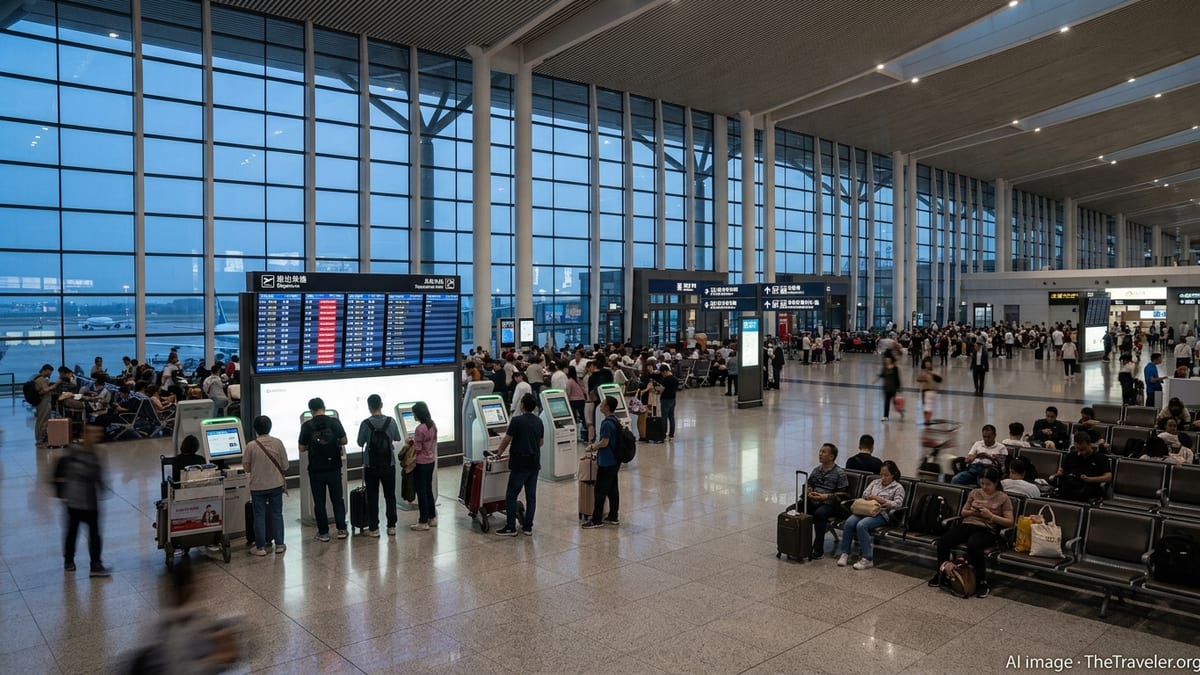
Flight Cancellations Hit China’s Biggest Aviation Hubs
Publicly available schedule data and media coverage indicate that multiple Chinese airlines have withdrawn or scrubbed about 40 flights in recent days from major hubs including Beijing Capital, Beijing Daxing, Shanghai Pudong, Guangzhou Baiyun and Shenzhen Bao’an. The affected services span both domestic and international routes, concentrating on links to northeastern cities such as Shenyang, key western and coastal centers including Chengdu and Xiamen, and long-haul services toward the Middle East.
Air China, China Southern and China Eastern appear among the most affected operators, alongside smaller carriers and codeshare partners. Many of the cancellations involve services that connect China’s primary coastal gateways with secondary cities, which serve as feeders into longer international journeys. Travelers on itineraries involving one or more connections are therefore experiencing a higher likelihood of disruption, rebooking or extended layovers.
Reports from online flight trackers and passenger accounts suggest that several of the cancellations have been clustered within short time windows, concentrating disruption into peak travel periods. This pattern has led to bottlenecks at departure halls and transfer desks, as travelers seek same-day alternatives on already busy routes.
While the total number of flights removed remains small compared with China’s overall daily schedule, the concentration of cancellations among a handful of trunk routes has outsized impacts on business travelers, migrant workers and tourists who rely on tight connections between domestic and international services.
Gulf Airspace Restrictions Amplify Disruption to Bahrain and Doha
The flight changes intersect with a volatile airspace situation in the Gulf region, where recent conflict-related developments have led to temporary closures and restrictions. Published international coverage of the Iran conflict and subsequent missile strikes on Qatar describes how Bahrain, Qatar and several neighboring countries have intermittently restricted airspace since late February 2026, causing widespread rerouting and cancellations for flights crossing the region.
Services linking Chinese hubs with Bahrain and Doha are particularly exposed. Routes that would normally cross directly over parts of the Gulf have in some cases been rerouted via alternative corridors or suspended. For passengers booked from China to Bahrain’s capital Manama or to Doha’s Hamad International Airport, this has translated into last-minute schedule changes, extended flying times and, in some cases, cancellations when operational workarounds are not viable.
Chinese carriers with established Gulf networks, including Air China, China Southern and China Eastern, have been adjusting timetables in line with evolving airspace permissions and safety assessments. Public schedule information shows thinning frequencies on some city pairs and alternating-day service patterns on others, creating uncertainty for travelers who booked months in advance on what were previously stable routes.
The ripple effects extend beyond point-to-point traffic. Many travelers use Bahrain and Doha as transit points to Africa, Europe and South Asia, so cancellations on these sectors can disrupt multi-leg itineraries far from China’s borders.
Domestic Links to Shenyang, Chengdu and Xiamen Also Affected
Within China, several of the affected flights connect the four coastal megacities with important regional centers such as Shenyang in the northeast, Chengdu in the southwest and Xiamen on the southeast coast. These routes form part of the country’s dense domestic network, providing onward links for both international arrivals and departures.
Disruptions on Beijing–Shenyang and Shanghai–Shenyang services are particularly sensitive, as they feed travelers into and out of northeastern industrial hubs at times when factory production, trade and corporate travel are already exposed to geopolitical uncertainty. Cancellations on these sectors can force travelers onto slower rail options or indirect routings via other hubs, extending door-to-door travel times significantly.
In the southwest, Chengdu acts as a major aviation gateway to western China, while Xiamen handles both tourism and cross-strait business traffic. Cancellations between Guangzhou or Shenzhen and these cities can lead to missed connections for flights heading deeper into inland provinces, as well as complications for travelers transiting onto regional routes around the South China Sea.
Domestic passengers affected by these schedule changes are generally being offered rebooking on alternative departures where space is available, or refunds in accordance with carrier policies. However, peak-season load factors and limited spare capacity on popular trunk routes mean that same-day or next-day alternatives are not guaranteed.
Online Platforms and Travelers Scramble to Manage Itineraries
As the cancellations have unfolded, Chinese and international online travel agencies, airline apps and fare-comparison platforms have become critical tools for managing the disruption. Publicly available information from major Chinese booking sites shows prominent alerts related to Middle East airspace issues and flexible rebooking policies for itineraries touching affected destinations.
Some platforms have activated dedicated disruption-support teams, offering messaging channels and call-back services to help travelers adjust their plans. These services typically focus on reissuing tickets, rebooking passengers on different carriers where permitted, and securing hotel accommodation when an overnight stay becomes unavoidable due to missed connections.
Travelers sharing experiences on social media and travel forums describe long waits to reach carrier call centers, but also report successful rebookings when contacting airlines through mobile apps or direct messages. Many advise fellow passengers to monitor flight status repeatedly in the 24 hours before departure and to check both airline and airport information screens, as schedules are adjusted on short notice.
For those connecting from smaller Chinese cities into the big four hubs, travel advisers recommend allowing longer layovers than usual to accommodate potential delays or aircraft swaps that could cascade into further disruptions.
What Passengers Should Consider Before Flying
Given the fluid situation, travelers with upcoming flights involving Beijing, Shanghai, Guangzhou or Shenzhen, especially on routes to Shenyang, Bahrain, Doha, Chengdu, Xiamen and other regional hubs, may wish to take additional precautions. Checking bookings directly on airline websites or apps, rather than relying solely on third-party confirmations, can help passengers spot silent schedule changes or aircraft downgrades ahead of time.
Travel insurance policies that cover disruption related to airspace closures or conflict zones may offer partial financial protection, although coverage details vary considerably. Travelers are encouraged, based on publicly available consumer guidance, to review policy wording carefully and to retain documentation such as cancellation notices, boarding passes and receipts for hotels or onward transport.
Passengers starting or ending journeys in the Gulf region face an added layer of uncertainty. With flight schedules into Bahrain and Doha evolving alongside security assessments, flexibility on travel dates, willingness to accept rerouting via alternative hubs and readiness for extended journey times can all help reduce stress at the airport.
For now, aviation analysts note in published commentary that the scale of cancellations remains modest relative to pre-crisis traffic levels. However, the combination of airspace restrictions, operational adjustments and strong travel demand means that even a cluster of around 40 cancellations across China’s biggest hubs can quickly ripple outward, reshaping travel plans far beyond the immediate routes involved.