

More news on this day
Travelers across China’s busiest aviation hubs faced fresh disruption as around 40 flights operated by major state-backed carriers were canceled on routes linking Beijing, Shanghai, Guangzhou and Shenzhen with cities including Shenyang, Chengdu, Xiamen, Bahrain and Doha, according to early reports from Chinese and international flight-tracking data on March 23, 2026.
Get the latest news straight to your inbox!
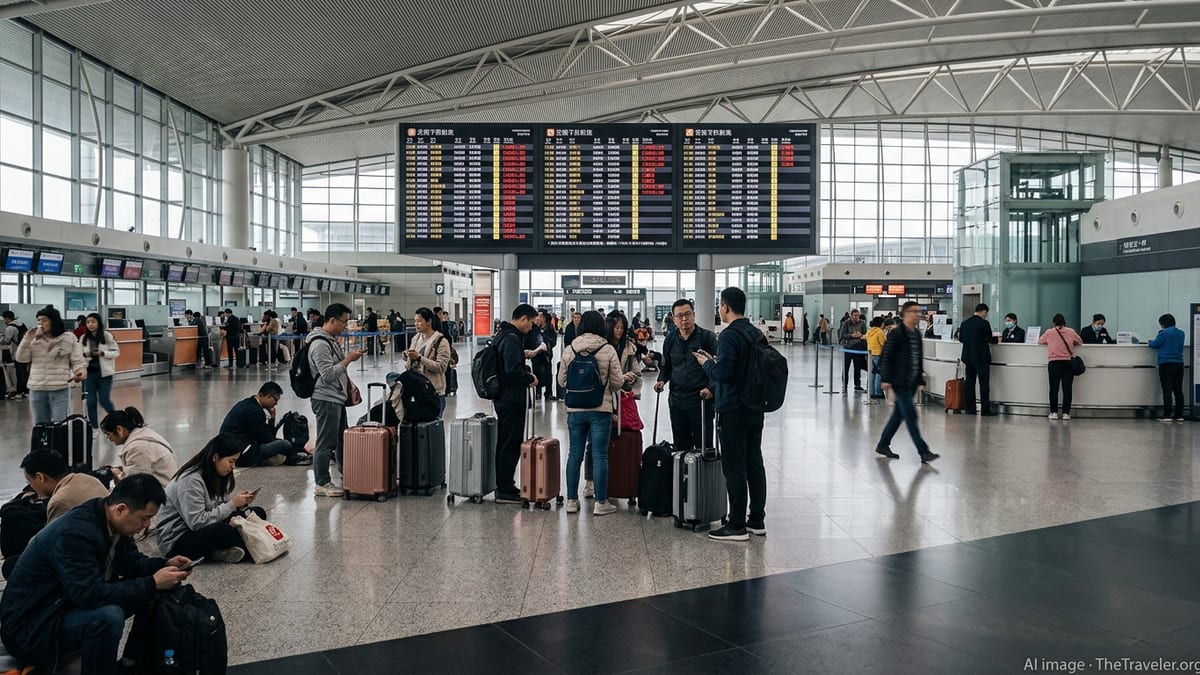
Major Chinese Hubs See Fresh Wave of Cancellations
Publicly available flight-monitoring data and local media coverage indicate that the latest disruption centers on the four main mainland gateways of Beijing, Shanghai, Guangzhou and Shenzhen, which collectively handle a significant share of China’s domestic and international traffic. Air China, China Southern Airlines and China Eastern Airlines appear among the most affected carriers, with additional schedule changes reported for at least one Shenzhen-based airline.
The approximately 40 cancellations reported on March 23 span both domestic and international sectors. On the domestic side, travelers on routes between the coastal metropolises and regional centers such as Shenyang in the northeast, Chengdu in the southwest and Xiamen on the southeast coast have been advised to recheck itineraries as same-day operations shift. International passengers on services linking China with Bahrain, Doha and other Gulf and South Asia points have also encountered last-minute adjustments.
While the total represents a small fraction of daily departures from these hubs, the concentration of cancellations around peak morning and evening banks has amplified the impact. Tight connection windows, particularly at Beijing and Shanghai, mean that even a limited number of pulled flights can cascade into missed onward segments for passengers traveling between Asia, Europe and the Middle East.
Published aviation data from previous seasons show that these four hubs form a dense network of overlapping routes for Air China, China Eastern, China Southern and Xiamen Airlines, including services to Shenyang, Chengdu and Xiamen as well as Gulf destinations such as Bahrain and Doha. The latest schedule disruptions are therefore rippling quickly through existing peak-season travel flows.
Domestic Routes to Shenyang, Chengdu and Xiamen Hit
Domestic itineraries appear to bear much of the immediate strain, especially on corridors where travelers rely on frequent services to connect regional centers with the country’s political and financial capitals. Flight-tracking snapshots for March 23 show a cluster of short-haul cancellations between Beijing and Shenyang, Shanghai and Chengdu, as well as services linking Guangzhou and Shenzhen with Xiamen and other coastal airports.
These routes are typically operated by narrowbody aircraft in high-frequency patterns, which makes them sensitive to any upstream disruption in aircraft or crew rotation. When multiple carriers adjust the same corridor on a busy travel day, options to move stranded passengers onto alternative departures narrow quickly, forcing many to accept longer layovers or overnight stays in hub cities.
Travel data from earlier seasons highlight Shenyang and Chengdu as important spokes in Chinese domestic and regional travel, feeding onward traffic to international services and secondary cities. Disruptions there can therefore create knock-on effects for travelers heading to or from Northeast and Southwest China, especially those relying on tightly sequenced itineraries involving more than one carrier.
For Xiamen, an important coastal tourism and trade hub, cancellations from multiple mainland gateways have arrived just as spring travel demand picks up. Travelers heading to nearby islands and coastal resorts are reporting the need to rebook onto later flights or reroute via alternative cities, adding both time and cost to journeys that are normally straightforward.
Gulf and International Links to Bahrain and Doha Affected
The latest cancellations extend beyond China’s borders, touching a growing network of flights linking mainland hubs to the Gulf region. According to published schedules and route overviews, Bahrain and Doha are among the primary Middle Eastern gateways served in cooperation with partner airlines from hubs such as Guangzhou, Shanghai and Beijing, forming key links for business travelers and long-haul connections to Europe and Africa.
Reports based on day-of-operations data indicate that several of the roughly 40 canceled flights involve segments into or out of these Gulf points, affecting passengers mid-journey on itineraries that connect via Chinese hubs. For travelers transiting through Doha or Bahrain to reach destinations in Europe, South Asia or the wider Middle East, the loss of a single China-bound leg can mean significant delays while they wait for the next available connection.
Published airport and airline timetables from recent seasons show a gradual rebuilding of China–Gulf capacity following the pandemic-era downturn, with carriers such as Air China, China Southern and China Eastern re-establishing or expanding services via major coastal hubs. The present disruptions underline how sensitive these still-recovering long-haul links remain to schedule changes affecting aircraft positioning, crew availability or demand recalibration.
Travel analysts note that Gulf sectors are particularly exposed when domestic feeders from cities such as Shenyang, Chengdu or Xiamen are removed from the schedule at short notice. Passengers who miss their long-haul connection in Beijing, Shanghai, Guangzhou or Shenzhen often have limited same-day alternatives, especially if onward flights operate only a few times per week.
Travelers Face Rebooking Challenges and Longer Journeys
The wave of cancellations has led to familiar challenges for passengers trying to rebook. Social media posts and online travel forums monitored on March 23 describe travelers encountering long call-center wait times and crowded airport service desks as they seek new itineraries on Air China, China Eastern, China Southern and their partners. Those who purchased tickets through online travel agencies or consolidators often face an additional layer of coordination to secure changes or refunds.
Reports from recent months show that large-scale schedule adjustments by Chinese and regional carriers can strain customer service channels, with some passengers waiting an hour or more to reach agents by phone during peak periods. This latest round of cancellations across multiple airlines and hubs appears to be reproducing that pattern in Beijing, Shanghai, Guangzhou and Shenzhen, particularly for travelers needing to coordinate hotel changes or visa requirements linked to altered transit plans.
Travel advisors routinely recommend that passengers monitor their booking status directly with the operating carrier, especially in the final days before departure. With domestic and international legs interlinked, even a seemingly minor change to a short-haul segment can require a complete reissue of the ticket. In the current environment, passengers with flexible dates or routing options are having more success finding viable alternatives.
For some, the only immediate solution is to accept a longer, multi-stop journey. Travelers bound for Gulf destinations such as Bahrain or Doha report being rerouted via third-country hubs, adding several hours and additional border checks to their trip. Others heading to domestic cities including Shenyang, Chengdu or Xiamen are being shifted to later departures, red-eye flights or routings that require backtracking through a different Chinese hub.
What Airlines and Passengers Are Watching Next
While there has been no single overarching explanation publicly detailed for the pattern of cancellations on March 23, industry watchers point to a combination of factors that have affected Chinese aviation in recent years. These include tight crew availability, rolling airspace restrictions and ongoing adjustments to international capacity in response to shifting demand and geopolitical conditions.
Historical data compiled during earlier disruption episodes show that Chinese airlines have periodically implemented same-day or short-notice cancellations on both domestic and international routes, particularly during shoulder seasons when carriers test new schedules and adjust for operational constraints. Observers are now watching to see whether the roughly 40 cancellations reported across Beijing, Shanghai, Guangzhou and Shenzhen remain a one-day event or extend into the final week of March.
Passengers with upcoming trips involving Air China, China Southern, China Eastern or related carriers are being urged by travel intermediaries and online advisories to check their flight status repeatedly in the days and hours before departure. For those connecting through the four major hubs to reach cities such as Shenyang, Chengdu, Xiamen, Bahrain or Doha, building longer connection buffers and confirming terminal information may help reduce the risk of misconnection.
As China’s airlines continue to rebuild complex domestic and international networks ahead of the summer 2026 season, the latest wave of cancellations serves as a reminder that schedules remain subject to rapid change. For now, publicly available information indicates that travelers should remain prepared for further short-notice adjustments, particularly on multi-leg itineraries that rely on precise connections through Beijing, Shanghai, Guangzhou and Shenzhen.